


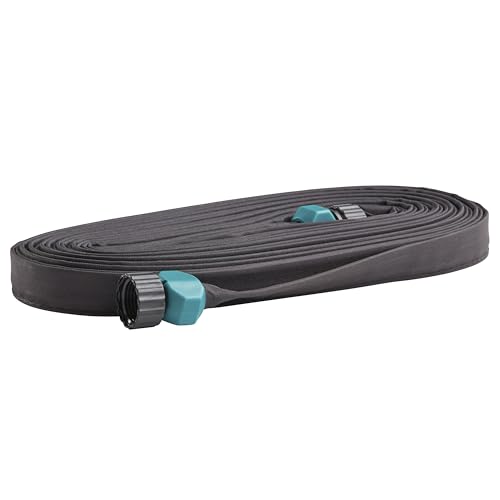
The best soaker hose for vegetable garden use delivers slow, even water right to plant roots.
If you have ever watched a sprinkler spray dry soil, wet leaves, and half the driveway, you know the problem. Vegetable plants need steady moisture at the root zone, not a sudden flood from above. A soaker hose helps solve that issue by releasing water along its length. I tested the most useful features for home growers, including flow control, hose length, flexibility, fittings, storage, and water savings. These six options suit raised beds, rows, containers, greenhouses, and larger garden plots.
Gilmour 50-Foot Flat Soaker Hose

The Gilmour 50-foot flat soaker hose is a simple choice for long vegetable beds and flower borders. Its flat profile makes it easy to carry, coil, and store when the growing season ends. The hose releases water through small openings across its surface, so moisture reaches the soil instead of spraying high into the air. I like this design for gardeners who want a basic setup without a large number of drip parts.
This hose works best when I place it with the porous side facing the soil and run water at low pressure. A pressure regulator or partly closed spigot can help create a softer, more even flow. The 50-foot length can cover a long row, but I would avoid sharp bends because flat hoses may kink when pulled across rough ground. For many home plots, it offers a practical balance of reach, easy storage, and low cost.
Pros:
- Long 50-foot reach for garden rows
- Flat shape stores in a small space
- Useful for vegetable beds, borders, and lawns
- Simple design needs little setup
- Applies water close to the soil surface
- Light enough for most home gardeners to move
Cons:
- Can kink if sharply folded
- Needs low water pressure for best results
- May need extra connectors for several beds
My Recommendation
The Gilmour 50-foot model is best for gardeners with one long bed or several beds arranged in a line. It is also a good fit for anyone who wants the best soaker hose for vegetable garden use without building a complex irrigation system. I would choose it for tomatoes, peppers, beans, squash, and flower borders where a 25-foot hose is too short. Its flat build makes winter storage easy, and its familiar design is widely available. Overall, this is a dependable first choice for simple garden watering.
Upgraded 230-Foot Drip Irrigation System

This 230-foot drip irrigation system is made for gardeners who need more than one short hose. Its narrow tubing can run through raised beds, greenhouse rows, planters, and container areas. The smaller line helps deliver water near plant roots, which can reduce waste when compared with overhead watering. I see it as a flexible kit for people who enjoy adjusting their garden layout as plants grow.
The long total length is useful, but installation takes more planning than a standard flat soaker hose. I would sketch the bed first, measure each row, and keep the tubing away from sharp tools and busy walkways. Small lines may clog if the water supply contains sediment, so a filter can protect the system and keep flow more even. Once installed, this setup can water many plants with less hand watering and fewer wet leaves.
Pros:
- Very long total reach for large garden layouts
- Useful in raised beds and greenhouses
- Supports root-level watering
- Flexible tubing suits custom garden designs
- Can help reduce water lost to evaporation
- Good choice for gardeners who want a planned system
Cons:
- Installation takes more time than a flat hose
- May need a filter and pressure control
- Thin tubing needs protection from cuts and garden tools
My Recommendation
I recommend this system for serious home growers, greenhouse owners, and gardeners with many beds. It may be the best soaker hose for vegetable garden layouts that need long runs and careful root watering. It is less convenient for someone who wants to connect a hose and start watering in five minutes. The large coverage area is the main value, especially when one water source must serve many rows. Check the included fittings and plan the layout before buying so the long tubing works to its full potential.
Gilmour 25-Foot Flat Soaker Hose

The Gilmour 25-foot flat soaker hose fits small vegetable beds, short borders, and compact urban gardens. Its shorter length is easy to handle, and I can move it from one bed to another without dragging a heavy coil. The flat design sits neatly along a row of plants and takes little room in a shed. It is a useful option when a 50-foot hose would leave extra material lying across the soil.
Short hoses also make it easier to control water flow and spot dry areas. I recommend laying it near the plant stems, then covering it with a thin layer of mulch to slow evaporation and hold it in place. Use low pressure and give the soil time to absorb the water. This is not a full-yard irrigation system, but it can be a neat and affordable tool for targeted watering.
Pros:
- Easy to carry around small gardens
- Good fit for raised beds and short rows
- Flat profile stores easily
- Less excess hose to manage
- Simple setup for new gardeners
- Works well under light mulch
Cons:
- Limited coverage compared with longer models
- May require moving between several beds
- Can kink when folded too tightly
My Recommendation
This 25-foot Gilmour hose is best for balcony gardens, small yards, and one or two compact raised beds. I would select it when ease of handling matters more than maximum coverage. For a gardener seeking the best soaker hose for vegetable garden spaces under 25 feet, this model keeps the job simple and tidy. It also makes a smart second hose for a side bed or newly planted area. Its value comes from easy use, easy storage, and a size that does not overwhelm a small plot.
Apgooface 50-Foot Soaker Hose Two-Pack

The Apgooface two-pack gives gardeners two 50-foot flat soaker hoses and a splitter for a broader watering setup. I like the two-hose design because it can serve two beds at once or reach beds on opposite sides of a path. The linkable format also lets me use one hose alone when the garden needs less water. This flexibility is helpful for gardens that change from season to season.
A splitter can save time, but it also makes water pressure more important. If both lines receive water at the same time, I would open the spigot slowly and check that each hose wets the soil evenly. The flat material should lie straight, with no tight twists under mulch or plants. For gardeners who want wide coverage and a ready path toward a DIY irrigation system, this pack offers strong practical appeal.
Pros:
- Includes two long hoses for broad coverage
- Splitter supports two watering zones
- Can be used as separate lines
- Linkable design supports future expansion
- Useful for vegetables, trees, lawns, and beds
- May reduce the need to move one hose repeatedly
Cons:
- Two lines need enough water pressure
- More fittings mean more points to inspect
- Flat hoses may fold if stored carelessly
My Recommendation
I recommend the Apgooface two-pack for medium and large gardens with separate watering zones. It may be the best soaker hose for vegetable garden owners who want more coverage without buying two unrelated products. The included splitter is useful for parallel beds, while the linkable design leaves room for changes later. I would not choose it for a single small planter, where one short hose is easier. For multiple rows, its coverage and flexible layout can save both time and trips across the yard.
Thickened 100-Foot Flat Soaker Hose Two-Pack

This thickened 100-foot two-pack is aimed at gardeners who need long coverage and want a spare line. Each hose can serve a different bed, or I can place both hoses in one larger garden. The flat shape helps the lines rest close to the ground rather than standing above low plants. A two-pack also gives useful backup if one hose needs cleaning, repair, or seasonal storage.
Long hoses can make watering easier, but they need careful placement. I would unroll each line fully, remove twists, and test the flow before adding mulch. Thick material may feel more durable, yet no soaker hose should sit on sharp stones or drag across rough concrete. This set is a practical match for long rows, orchard edges, and vegetable plots where a short hose would require constant moving.
Pros:
- Provides two long hoses for larger gardens
- Thickened construction may handle regular use well
- Flat body sits close to the soil
- Useful backup hose included
- Works for long vegetable rows and borders
- Can support separate watering zones
Cons:
- Long lines take more room to store
- May be heavy when filled with water
- Needs careful layout to prevent folds
My Recommendation
This two-pack suits gardeners with long beds, several rows, or a large perimeter garden. I would consider it when I want the best soaker hose for vegetable garden coverage and prefer a spare rather than a small accessory kit. It is less ideal for tight spaces where 100-foot lines create extra loops. Place the hoses on smooth soil or mulch, and inspect the connectors at the start of each season. The overall value is strongest for gardeners who need reach, backup capacity, and a simple flat-hose setup.
Raindrip 50-Foot Soaker Hose Tubing
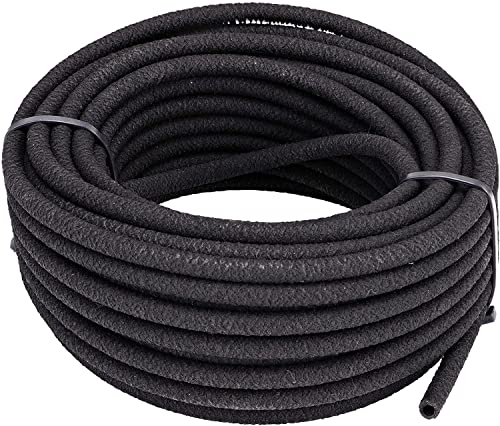
Raindrip 1/4-inch soaker tubing is designed for more precise drip irrigation work. Its narrow size fits planters, borders, grow bags, and compact rows where a wide flat hose may not fit. I can route it close to individual plants and build a more controlled watering pattern. This makes it a useful option for gardeners who enjoy hands-on irrigation design.
Because the tubing is small, the system needs clean water and careful handling. I would pair it with suitable connectors, a filter, and pressure control when the garden layout calls for them. It may take longer to install than a ready-to-use hose, but the final layout can look neat and focused. This tubing is especially useful around herbs, seedlings, containers, and plants with different water needs.
Pros:
- Fits narrow beds and container gardens
- Supports precise root-zone watering
- Easy to route around individual plants
- Useful for custom drip irrigation layouts
- Good for herbs, seedlings, and planters
- Uses less visible material than a large hose
Cons:
- Usually needs extra fittings and irrigation parts
- Small tubing can clog without clean water
- Not the fastest option for large open beds
My Recommendation
I recommend Raindrip tubing for detail-focused gardeners, container growers, and anyone building a custom drip layout. It can be the best soaker hose for vegetable garden areas where precision matters more than quick setup. I would use it for pepper pots, herb boxes, seedling trays, and narrow borders. It is not my first pick for a large garden that needs instant coverage. Its main value comes from control, low visibility, and the ability to place water exactly where plants need it.
TigeJoy 150-Foot Flat Soaker Hose

The TigeJoy 150-foot flat soaker hose is built for broad garden coverage. Its long length can reach several rows, a large border, or a mix of vegetables and fruit plants from one water source. I would use it when moving a short hose from bed to bed starts to feel like a daily chore. The flat shape also makes it easier to spread along rows before the growing season becomes crowded.
With a hose this long, water pressure and layout matter. I would test the first few feet and the far end before relying on it for thirsty crops. Keeping the line straight helps reduce uneven watering, while mulch can hold it in place and protect it from sunlight. It is a strong choice for large plots, but small gardens may find the extra length harder to coil and store.
Pros:
- 150-foot length covers large areas
- Useful for many rows and garden sections
- Flat design spreads easily along the soil
- Can reduce repeated hose moving
- Good match for large vegetable plots
- Works well with mulch and planned row layouts
Cons:
- Needs careful storage to avoid kinks
- Far-end flow may vary with water pressure
- Too long for many small beds
My Recommendation
The TigeJoy 150-foot model is best for large gardens, orchard edges, and gardeners who want one long watering line. I would choose it as the best soaker hose for vegetable garden layouts that stretch across a wide yard. It is less suitable for a tiny raised bed or a patio planter. Test the water pattern before covering it with mulch, and keep the hose away from sharp stakes. When the garden is large, the time saved can make the extra length worth the storage effort.
How to Choose the Best Soaker Hose for Vegetable Garden Use
Choosing a soaker hose is not only about buying the longest model. A good match depends on bed size, water pressure, plant spacing, soil type, and how often you move the hose. I start by measuring the garden and drawing the rows on paper. This small step prevents a common mistake: buying a long hose that creates loops, bends, and uneven water flow.
Measure the Beds First
For a short raised bed, a 25-foot hose often feels easier than a 50-foot model. A long garden row may need 50 feet or more. Large plots can benefit from a 100-foot or 150-foot hose, though long runs need more careful pressure checks. Leave a little extra length for the connection, but do not buy so much that the hose must coil on the soil.
Flat Hose or Narrow Tubing?
Flat soaker hoses are quick to place and simple for rows. They work well when plants sit in a fairly straight line. Narrow tubing is better when plants grow in pots, tight borders, or mixed patterns. Tubing takes more setup, but it can give better control around plants with different moisture needs.
Check Water Pressure
Most soaker hoses work best at low pressure. High pressure can cause water to spray from the holes, stress the fittings, or create uneven flow. I turn the spigot on slowly and watch the hose expand. If the first section becomes very wet while the far end stays dry, I reduce the length, add pressure control, or divide the garden into zones.
Think About Soil and Mulch
Sandy soil drains fast and may need shorter, more frequent watering. Clay soil holds water longer, so slow watering helps prevent runoff. Mulch can reduce evaporation and keep the hose in place. I leave space around plant stems and check the soil below the surface instead of judging moisture by the top alone.
Look at Connectors and End Caps
A hose body may be excellent, but a weak connector can ruin the setup. Inspect the washer, inlet, outlet, and end cap before installation. A small leak at the faucet may waste water and lower pressure across the bed. Quick-connect fittings can save time, but they should lock firmly and remain easy to remove before winter.
How I Use a Soaker Hose in a Vegetable Garden
I place the hose with the porous side close to the soil and keep it near the root zone. I avoid laying it directly against a plant stem for long periods. For a row of tomatoes, I run the hose beside the plants rather than wrapping it tightly around each one. This spreads moisture across the root area without making one small spot too wet.
Before I cover the hose, I run water for a few minutes and inspect the full length. I look for dry sections, leaks, sharp folds, and puddles. If the flow looks even, I add a light layer of mulch. I never bury the hose deep because buried lines are harder to check, clean, and repair.
Watering time depends on soil, climate, hose design, and plant size. There is no single timer value that fits every garden. I use a finger or soil meter to check moisture several inches down. The soil should feel moist, not muddy. Morning watering is often helpful because it gives plants time to use water before the hottest part of the day.
Soaker Hose Care and Storage Tips
Drain the hose before moving it. A water-filled hose is heavier, and pulling it can stress the fittings. I lift and coil it in wide loops instead of making tight bends. At the end of the season, I rinse the line, let it dry, and store it away from sharp tools, rodents, and strong sunlight.
Inspect the hose each time you set it up. Look for cracks, crushed sections, clogged openings, and loose washers. If one area sprays like a small fountain, the pressure may be too high or the material may be damaged. Replacing a washer or connector can solve a small leak before it becomes a larger problem.
Do not leave a soaker hose in a busy walkway. Garden carts, shovels, and repeated foot traffic can damage it. I use landscape pins or soft clips when needed, but I avoid piercing the hose. Gentle support keeps the line straight without creating a new leak.
Best Uses for a Vegetable Garden Soaker Hose
Soaker hoses work well for tomatoes, peppers, cucumbers, beans, lettuce, squash, herbs, and many other garden crops. They are also useful around shrubs, fruit trees, flower borders, and new plantings. The slow release helps water reach the ground without the harsh spray that can disturb loose soil.
They are less useful for washing leaves, cooling a large lawn, or covering plants that sit far apart. A sprinkler may suit those tasks better. I use a soaker hose when the goal is focused soil moisture. It is a root tool, not a replacement for every watering method.
Best For Comparison
| Best for | Why |
|---|---|
| Small raised beds | The Gilmour 25-foot hose is easy to handle and store. |
| Large vegetable plots | The TigeJoy 150-foot hose covers long rows with fewer moves. |
| Custom irrigation layouts | The Raindrip tubing fits containers, borders, and narrow plant spaces. |
FAQs Of best soaker hose for vegetable garden
How long should I run a soaker hose?
Start with about 20 to 30 minutes, then check the soil several inches below the surface. Adjust the time for soil type, weather, hose length, and plant size. Water longer if the soil stays dry, and stop sooner if puddles form.
Can I leave a soaker hose on overnight?
It is usually better to water with a timer and check the soil first. Overnight watering can make some beds too wet, especially in clay soil or cool weather. If you use a timer, start with a short cycle and inspect the results.
Should a soaker hose go above or below mulch?
Place it on the soil and cover it with a light layer of mulch. This position helps reduce evaporation and keeps the hose from shifting. Avoid deep burial because it makes leaks and clogs harder to find.
What water pressure is best for a soaker hose?
Low pressure usually gives the most even flow. Open the faucet slowly and watch for gentle seepage instead of sprays. A pressure regulator may help when household water pressure is high.
Do soaker hoses save water?
They can save water by directing moisture toward the root zone and reducing spray, runoff, and wet foliage. Results depend on the hose, soil, pressure, and watering time. A timer and regular soil checks help prevent overwatering.
Final Verdict: Which Should You Buy?
For most home growers, the Gilmour 50-foot hose is the best soaker hose for vegetable garden use. Choose the 25-foot model for small beds, TigeJoy for large plots, and Raindrip for precise layouts.
Measure first, use low pressure, and check the soil often. The right soaker hose can make vegetable garden watering simpler, calmer, and more efficient.
