
How Much Does A Cordless Lawn Mower Cost: Price Guide
In the United States, a cordless electric lawn mower usually costs $200 to $800. Basic push models often cost $200 to $400, while self-propelled models commonly cost $400 to $800. Premium models, extra batteries, and riding mowers can raise the total to $1,000 or more.
The price depends on the mower’s cutting width, motor power, battery size, drive system, brand, and whether a battery and charger are included. A mower listed as “tool only” may look cheap but require a separate battery and charger.
This guide explains typical U.S. prices, hidden costs, battery needs, and how to compare cordless mowers without paying for features you do not need.

Typical Cordless Lawn Mower Prices in the United States
The best starting point is to separate cordless mowers by design. A small push mower and a large self-propelled mower serve different yards, so their prices should not be compared as if they were the same product.
| Cordless mower type | Typical U.S. price | Best for |
|---|---|---|
| Small push mower | $200–$350 | Small, flat lawns |
| Standard push mower | $300–$500 | Small to medium yards |
| Self-propelled mower | $400–$800 | Larger or sloped lawns |
| Premium dual-battery mower | $600–$1,000+ | Thick grass and larger areas |
| Cordless riding mower | $2,500–$6,000+ | Large properties |
| Extra battery | $100–$400+ | Longer mowing time or backup power |
| replacement charger | $50–$200+ | Lost or damaged chargers |
These are planning ranges, not fixed quotes. U.S. prices change with sales, seasonal demand, battery size, and whether the mower is sold as a kit or as a bare tool. Sales tax, delivery, assembly, and local recycling fees may also increase the final price.
A basic cordless mower can cost less than a gas mower at the time of purchase. However, a comparable battery mower may cost more when it includes a large battery, a fast charger, self-propel drive, or a second battery.

What Does a Cordless Lawn Mower Include?
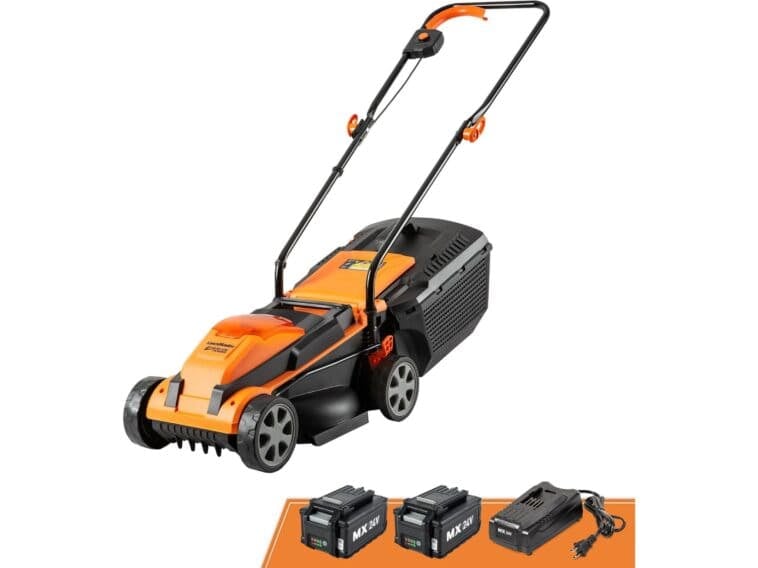
A cordless lawn mower may include the mower deck, blade, grass bag, battery, and charger. Some packages include only the mower body.
Always check the product listing for these terms:
- Kit: Usually includes the mower, battery, and charger.
- Tool only: Includes the mower but not the battery or charger.
- Bare tool: Another term for tool only.
- Single-battery kit: Includes one battery.
- Dual-battery kit: Includes two batteries or uses two batteries at once.
The battery and charger can add a large amount to the cost. For example, a $250 tool-only mower may need a $150 battery and a $100 charger. Its practical purchase price is then about $500 before tax.
A battery from the same brand may not work with every tool. Even within one brand, larger batteries may fit physically but may not be recommended for every mower. Check the mower manual and battery system before buying.
A simple total-cost formula
Use this calculation:
Total purchase cost = mower price + battery cost + charger cost + required accessories + tax or delivery
A realistic example:
- Tool-only mower: $300
- Battery: $180
- Charger: $90
- Replacement blade or mulch plug: $30
- Estimated pre-tax total: $600
This is why the lowest advertised mower price is not always the lowest cost.

Cordless Push Mower Cost vs. Self-Propelled Mower Cost
A push mower usually costs less because it has a simpler drive system. You supply the force needed to move it. A self-propelled mower uses a motor to turn the wheels, which adds cost, weight, and battery demand.
Push mowers
A cordless push mower often costs $200 to $500 in the U.S. It may be a good fit when:
- The lawn is small.
- The yard is mostly flat.
- You want a lighter mower.
- You do not mind walking behind the mower.
- You want the lowest purchase price.
Push mowers may also use less battery power because they do not drive their own wheels. The actual difference depends on grass height, slope, speed, blade design, and mowing conditions.
Self-propelled mowers
A cordless self-propelled mower commonly costs $400 to $800. It can help when:
- The yard has slopes.
- The mower is heavy.
- The grass is thick.
- You mow for a long period.
- Pushing the mower causes strain.
Self-propel drive does not make every yard easier. It adds another motor and can shorten runtime. If your lawn is small and flat, a push model may provide better value.
Wider cutting decks
Many cordless walk-behind mowers have decks from about 18 to 22 inches wide. A wider deck may reduce the number of passes needed, but it can also cost more and require more power.
A wide deck is useful when the yard is large and open. A narrower deck may work better around trees, beds, gates, and tight corners.

How Much Do Batteries and Charging Add to the Price?
Batteries are one of the largest cost differences between cordless lawn mowers. A small battery may be enough for a compact lawn, while a large battery or two-battery setup may be needed for a bigger area or heavy grass.
Battery prices vary by brand and voltage system, but a replacement battery commonly costs $100 to $400 or more. High-capacity batteries usually cost more. A second battery may cost less than buying a new mower, but only if it works with the same battery platform.
What affects battery runtime?
Runtime depends on more than the battery’s advertised amp-hour rating. It can change with:
- Lawn size
- Grass height and moisture
- Blade sharpness
- Cutting height
- Mowing speed
- Slope
- Temperature
- Self-propel use
- Mulching versus bagging
- Battery age
Manufacturers often state runtime under specific test conditions. Treat those figures as estimates rather than a guarantee for your yard.
Estimating your battery need
Measure the lawn area that you actually mow. Remove patios, beds, driveways, and other areas that do not need cutting.
Then compare your area with the manufacturer’s stated coverage. Leave a safety margin because real lawns may require more energy than ideal test conditions.
For example, if a mower is rated for up to 7,000 square feet and your lawn is close to that size, one battery may be marginal. A second battery can reduce interruptions, especially when the grass is wet, tall, or dense.
Do not store lithium-ion batteries in direct sun, near a furnace, or in a wet location. Follow the charger and battery manual for storage, charging, and disposal instructions.

What Other Costs Should You Budget For?
The purchase price is only part of the cost of owning a cordless mower. Most owners should also consider blades, batteries, charging, storage, and repairs.
Replacement blades
A replacement blade often costs about $20 to $60, depending on mower design and brand. A dull blade can produce a poor cut and may make the mower work harder.
Inspect the blade before each mowing session. Remove the battery before cleaning, inspecting, or servicing the mower. Never rely only on the safety key or power button.
Battery replacement
A battery may eventually lose capacity. Its service life depends on use, heat, storage, charging habits, and the battery design. The replacement cost can be a major part of long-term ownership.
Keep the battery platform in mind when comparing brands. A battery that powers a mower, trimmer, blower, or chainsaw may offer more value than a battery used for only one tool.
Electricity
Charging a cordless mower usually adds a small amount to the electric bill compared with the mower’s purchase price. The exact cost depends on battery capacity, charging losses, local electricity rates, and how often you mow.
You can estimate charging cost with this formula:
Charging cost = battery kilowatt-hours × local electricity price × charging-loss factor
A battery’s watt-hours can be estimated with:
Watt-hours = volts × amp-hours
For example, a 56-volt, 10-amp-hour battery stores about 560 watt-hours, or 0.56 kilowatt-hours, before charging losses. Your utility bill will reflect somewhat more than the stored energy because charging is not perfectly efficient.
Storage and repair
A cordless mower does not need gasoline, oil changes, spark plugs, or fuel stabilizer. That can simplify seasonal care.
It still needs:
- Dry indoor storage
- Periodic blade inspection
- Deck cleaning
- Battery care
- Charger storage
- Tire and handle checks
- Service after damage or unusual noise
If the mower vibrates, smells hot, loses power suddenly, or makes a new grinding sound, stop using it and inspect it only after removing the battery. Use the manual or an authorized service center when the cause is unclear.
Is a Cordless Lawn Mower Cheaper Than a Gas Mower?
A cordless mower may cost more at first but can have lower routine operating costs. A gas mower may have a lower entry price, but it requires fuel and regular engine maintenance.
Cordless mower advantages
- No gasoline storage
- No oil changes
- No spark plug
- Lower operating noise than most gas mowers
- Quick electric start
- Less routine engine maintenance
- No exhaust from the mower while operating
Gas mower advantages
- Refueling is quick
- Many models can run for long periods
- Fuel is widely available
- Some heavy-duty models handle demanding conditions well
- No need to wait for a battery to charge
The better financial choice depends on your lawn size and how long you plan to keep the mower. A cordless mower may provide strong value when you already own compatible batteries. It may be less attractive when you need to buy a large battery, charger, and spare battery at the same time.
A simple five-year comparison can help:
Five-year cost = purchase price + batteries + blades + energy or fuel + repairs − resale value
This does not need to be exact. Its purpose is to reveal whether a low purchase price hides a costly battery package or whether a higher-priced kit replaces several other tools.

What Features Raise the Price?
The most expensive features are usually related to power, cutting capacity, convenience, and battery use.
Features that often increase cost
- Self-propelled drive
- Larger cutting deck
- Dual-battery operation
- High-capacity batteries
- Steel cutting deck
- Adjustable drive speed
- Foldable or vertical storage
- LED headlights
- Electronic blade control
- Premium suspension or wheels
- Connected app features
- Brushless motor systems
A higher price does not automatically mean a better fit. For a small lawn, a large battery and self-propelled drive may add weight and cost without solving a real problem.
Features worth prioritizing
Focus first on:
- Battery and charger inclusion
- Battery coverage for your lawn
- Deck width
- Push or self-propelled design
- Weight and storage space
- Warranty terms
- Availability of blades and replacement batteries
- Service support in the United States
A bright display or app may be convenient, but it should not outrank battery compatibility, safe controls, or access to replacement parts.

How to Choose the Right Price Range
Your lawn size, terrain, and existing battery tools should guide the budget.
| Lawn condition | Practical starting point |
|---|---|
| Small, flat lawn | $200–$400 push mower |
| Medium lawn with mild slopes | $350–$600 push or self-propelled mower |
| Large lawn or thick grass | $500–$1,000+ high-capacity system |
| Steep or tiring terrain | $500–$900 self-propelled mower |
| Multiple battery tools from one brand | Consider a tool-only mower |
| Large acreage | Compare riding mowers and commercial equipment |
These ranges are not strict rules. A smaller lawn with very thick grass may need more power than a larger lawn with thin grass.
A useful buying process
-
Measure the mowable lawn area.
Do not count the driveway, house, patio, or garden beds. -
Check the terrain.
Note slopes, narrow gates, soft ground, and obstacles. -
Decide whether you need self-propel drive.
Choose it for hills, heavy mowers, or physical strain—not simply because it is available. -
Compare complete kits.
Add the battery and charger when they are not included. -
Check the battery platform.
Confirm that the battery works with the exact mower model. -
Check parts and warranty support.
Look for blades, batteries, chargers, and service options in the United States. -
Compare final cost, not sticker price.
Include tax, delivery, accessories, and any second battery.
The right mower is the least expensive model that can cover your lawn safely, complete the job without excessive stops, and remain supported for the years you expect to use it.

Common Mistakes That Increase the Cost
Many buyers overspend because they compare mower prices without checking what the package includes.
Buying a tool-only mower without a battery
This is the most common pricing mistake. Add the battery and charger before comparing the mower with complete kits.
Choosing too little battery capacity
A low-cost mower may become frustrating if it cannot finish the lawn on one charge. The mower may still work, but repeated charging can reduce convenience and encourage cutting wet or overgrown grass.
Paying for self-propel drive on a flat lawn
Self-propelled drive is useful on slopes and with heavy mowers. On a small, level lawn, it may add cost and weight without much benefit.
Ignoring battery availability
A mower can become difficult to maintain if replacement batteries are unavailable or discontinued. Check the battery system before buying.
Using the wrong replacement blade
A blade that does not match the mower can damage the machine or create a safety risk. Use the part listed in the owner’s manual or an approved equivalent.
Mowing wet grass
Wet grass can clog the deck, reduce cut quality, and increase the load on the motor. It can also make slopes more dangerous. Wait for safer conditions and follow the mower manual.

Safety and Care Basics
A cordless mower still has a sharp blade and can cause serious injury. Electric power does not remove the need for careful operation.
Before mowing:
- Read the owner’s manual.
- Wear sturdy, closed-toe shoes and eye protection.
- Check the lawn for stones, sticks, wire, and toys.
- Keep people and pets away from the mowing area.
- Inspect the blade, deck, wheels, and controls.
- Do not use a damaged battery or charger.
Before clearing a clog, adjusting the deck, removing the grass bag, or cleaning beneath the mower, turn it off and remove the battery. Wait for the blade to stop completely.
Do not modify the battery, charger, safety switch, or blade system. Charge the battery with the approved charger and follow the manufacturer’s storage instructions. For end-of-life batteries, check local hazardous-waste rules or a recognized battery recycling program in the United States.
If a battery is swollen, cracked, leaking, unusually hot, or damaged in a crash, stop using it. Do not place a damaged lithium-ion battery in household trash or a regular recycling bin unless local guidance specifically permits it.

Key Takeaways
- Most cordless walk-behind mowers in the U.S. cost $200 to $800.
- Basic push models often cost $200 to $500.
- Self-propelled models commonly cost $400 to $800.
- Premium dual-battery systems may cost $600 to $1,000 or more.
- A battery and charger can add $100 to $400 or more.
- Always check whether the mower is a complete kit or a tool-only product.
- Choose based on lawn size, slope, grass density, battery compatibility, and parts support.
- Include blades, replacement batteries, tax, delivery, and storage when estimating long-term cost.
Frequently Asked Questions
Is $300 enough for a cordless lawn mower?
Yes, $300 can be enough for a basic push mower, especially during a sale or if the package includes a small battery and charger. Check the included battery, cutting width, coverage rating, and warranty before buying.
Are cordless lawn mowers worth the money?
They can be worth the money for small and medium U.S. lawns, especially when you want less engine maintenance and already own compatible batteries. A gas mower may still make more sense for very large areas or long, continuous mowing.
How long does a cordless mower battery last?
Runtime varies by battery size, grass conditions, cutting height, terrain, and mower design. Use the manufacturer’s coverage estimate as a starting point, then leave extra capacity for thick, wet, or overgrown grass.
Can one battery power a lawn mower and other tools?
Often, yes, when the tools use the same battery platform and the battery is approved for the mower. Confirm compatibility by checking the exact model numbers and the manufacturer’s instructions.
Do cordless lawn mowers need maintenance?
They need less maintenance than gas mowers, but they still require blade care, deck cleaning, battery storage, control checks, and occasional replacement parts. Remove the battery before cleaning or servicing the mower.
Conclusion
For most U.S. homeowners, a realistic cordless lawn mower budget is $300 to $700. A basic push mower may cover a small flat lawn for less, while a self-propelled or dual-battery mower may be a better fit for slopes, thick grass, or larger yards.
Before you buy, compare the complete package rather than the mower body alone. Confirm the battery and charger, estimate runtime, check replacement-part support, and include long-term battery costs. The best value is not the cheapest model—it is the mower that finishes your lawn safely without forcing you to buy costly extras later.


