How To Buy A Riding Mower: Smart Buying Guide
Introduction
The best way to buy a riding mower in the United States is to match the mower to your lawn, not to the largest engine or the lowest advertised price. Start with your lot size, slope, grass type, storage space, and budget. Then compare mower type, cutting deck, transmission, power source, comfort, safety features, service access, and long-term cost.
A riding mower can save hours on a large U.S. yard. But the wrong model may struggle on hills, leave poor cut quality, fail to fit through a gate, or cost more to maintain than expected. This guide explains how to choose a riding lawn mower with clear steps and practical checks.

Start With Your Lawn and Property
Your property determines which riding mower will work well. Before visiting a dealer or comparing online prices, measure the lawn and inspect the ground.
Measure the mowing area
You do not need a survey-grade measurement. A rough estimate is enough for most buying decisions.
For a rectangular lawn:
Length × width = area
If a lawn is 200 feet long and 150 feet wide:
200 × 150 = 30,000 square feet
One acre contains 43,560 square feet. That lawn is about 0.69 acre before subtracting the house, driveway, beds, and other areas.
Your actual mowing area may be much smaller than the total lot size. Subtract space covered by:
- The house
- Patios and decks
- Driveways
- Gardens
- Pools
- Outbuildings
- Tree beds
- Fences and landscape borders
Check the terrain
Walk the property before choosing a mower. Look for:
- Slopes and hills
- Wet or soft soil
- Ditches
- Tree roots
- Rocks
- Narrow passages
- Low branches
- Hidden sprinkler heads
- Areas that require frequent backing
A standard riding mower may work well on a mostly level lawn. A lawn with steep slopes needs more careful selection. A zero-turn mower can be fast on open ground, but its steering style may feel less stable on slopes. A lawn tractor may offer a more familiar driving position and may suit mixed terrain better.
Never assume that a mower is safe on every slope. Read the owner’s manual for the exact model. Mow across a slope only when the manual permits it, and avoid turning or stopping where the machine could lose traction.
Measure gates and storage areas
Measure the narrowest gate, shed door, trailer ramp, and storage path. Include the width of posts and hinges.
A mower that fits its advertised deck width may still need extra room for the tires, discharge chute, control levers, or side attachments. Also check the mower’s total length. A model that fits through a gate may not fit inside your shed with the hood or seat in its normal position.
Choose the Right Type of Riding Mower
The main riding mower types are lawn tractors, garden tractors, rear-engine riders, and zero-turn mowers. Each design solves a different problem.
| Mower type | Best for | Main strengths | Main limits |
|---|---|---|---|
| Lawn tractor | Medium to large, mostly level lawns | Familiar controls, good general use, can pull some attachments | Slower than many zero-turn models around obstacles |
| Garden tractor | Larger properties and heavier work | Strong frame, larger tires, attachment support | Higher cost and larger storage needs |
| Rear-engine rider | Smaller lawns with limited storage | Compact size and simple layout | Less comfortable and less capable for large or rough properties |
| Residential zero-turn mower | Open lawns with many trees or obstacles | Fast turning and efficient trimming | Requires a learning period; slope limits vary |
| Commercial zero-turn mower | Large areas or frequent professional use | Heavy-duty construction and high productivity | Expensive and often unnecessary for a typical homeowner |
Lawn tractors
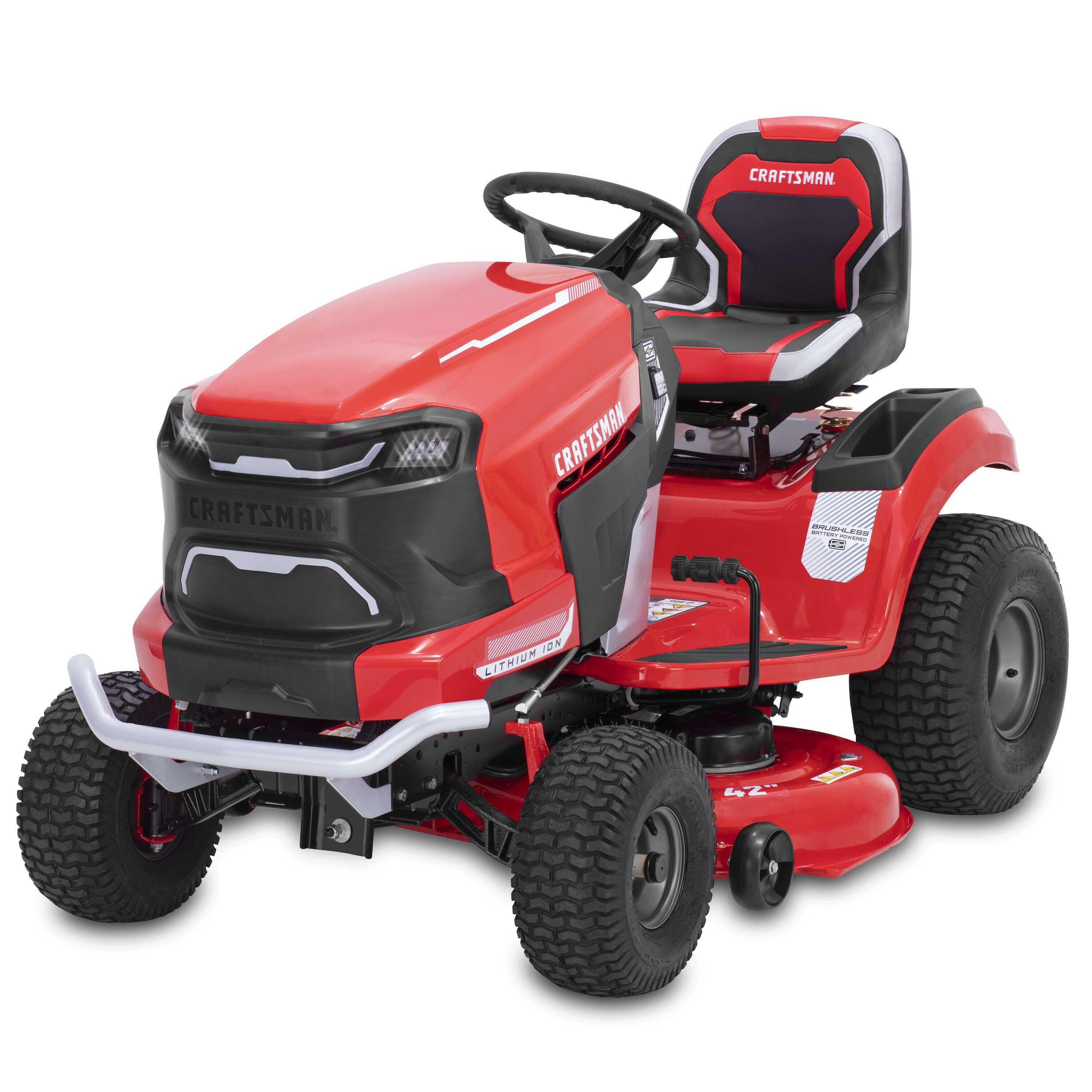
A lawn tractor is often the most balanced choice for a typical suburban or rural U.S. property. It has a front-mounted engine, a steering wheel, and a mid-mounted cutting deck.
Choose one when you want:
- Familiar driving
- A stable platform on appropriate terrain
- Optional bagging or towing
- A mower that can handle more than simple grass cutting
Lawn tractors may take longer than a zero-turn mower to cut around trees and beds. Their turning circle can leave more uncut grass near obstacles.
Garden tractors
Garden tractors are built for heavier use than basic lawn tractors. They may have stronger frames, heavier transmissions, larger tires, and better support for ground-engaging tools.
They may make sense when you need to:
- Move a utility cart
- Use a snow blade or snow thrower
- Manage a large property
- Work on rougher ground within the manual’s limits
Do not buy a garden tractor only because it has a larger engine. The frame, transmission, hitch rating, hydraulic system, and approved attachments matter just as much.
Rear-engine riding mowers
Rear-engine riders are compact and can suit a smaller lawn where a walk-behind mower feels too slow. They may be easier to store and transport.
Their limits often include:
- Smaller cutting decks
- Less seat room
- Less power for heavy grass
- Fewer attachment options
- Lower comfort on long mowing sessions
They are useful when storage and maneuverability matter more than speed.
Zero-turn mowers
A zero-turn mower uses two drive wheels that can move at different speeds. This lets the mower turn within its own footprint and trim around trees, beds, and posts with fewer wide turns.
A zero-turn mower is usually a strong choice for:
- Open lawns
- Large properties
- Many landscape obstacles
- Buyers who value shorter mowing time
It may not be the best choice for steep or uneven areas. The exact slope limit depends on the model, tire grip, operator position, and ground conditions. Learn the controls in a flat, open area before mowing near a slope, pond, road, or drop-off.

Select the Correct Cutting Deck Size
The cutting deck controls how much grass the mower cuts in each pass. A wider deck can reduce mowing time, but it is not always better.
Common residential deck sizes include:
- 30 to 42 inches: Small lawns, narrow gates, and tight spaces
- 42 to 48 inches: Medium lawns and many suburban properties
- 50 to 54 inches: Larger, more open lawns
- 60 inches or more: Large properties or commercial-style use
Use lawn size and layout together
A wider deck works best on a broad, open lawn. A narrow deck may work better when the property has:
- Tight gates
- Many trees
- Small lawn sections
- Narrow strips
- Uneven paths
- Sharp corners
A large deck can reduce the number of passes. It can also be harder to maneuver and may scalp uneven ground.
Estimate mowing time
A simple planning formula is:
Mowing time ≈ lawn area ÷ effective mowing rate
The mower’s theoretical rate is:
Speed in miles per hour × deck width in feet ÷ 8.25 = acres per hour
This is only an estimate. Turning, overlap, hills, stopping, and obstacles reduce the real rate.
For example, a mower traveling at 4 miles per hour with a 48-inch deck has a theoretical rate of about 1.94 acres per hour. Real mowing time will be lower because the mower cannot cut every foot at full speed.
Consider the discharge side
Most riding mower decks discharge grass from one side. Check whether that side will throw clippings toward:
- A road
- A pond
- Flower beds
- Fences
- Cars
- Neighboring property
A mulch kit can return cut grass to the lawn, but it works best when the grass is dry and cut on a regular schedule. Bagging can create a cleaner appearance but adds stops, weight, and disposal work.

Compare Gas, Battery, and Electric Options
The right power source depends on lawn size, charging access, noise limits, and your tolerance for routine maintenance.
Gas riding mowers
Gasoline models remain common for larger lawns and long mowing sessions. They can be refueled quickly and do not require a long charging period.
Typical gas mower maintenance may include:
- Engine oil changes
- Air filter service
- Spark plug replacement
- Fuel management
- Battery care
- Belt inspection
- Blade sharpening
Use only the fuel and storage method listed in the owner’s manual. Gasoline should be stored in an approved container, away from ignition sources and living spaces.
Battery riding mowers
Battery riding mowers produce no direct exhaust at the mowing site and are usually quieter than gas models. They can be a good fit for smaller or medium lawns, neighborhoods with noise concerns, and buyers who want less engine maintenance.
Before buying, check:
- Battery capacity
- Number of batteries included
- Charger type
- Full-charge time
- Expected runtime under load
- Replacement battery price
- Cold-weather storage instructions
- Warranty coverage
- Whether the battery works with other tools
Do not compare battery runtime and gas runtime as if they were fixed ratings. Tall, wet grass, slopes, heavy blades, high speed, and frequent stops can reduce battery runtime.
A battery mower may be a poor fit if the lawn is large and there is no practical time to recharge between mowing sessions.
How much power do you need?
Do not select an engine or motor by horsepower alone. Consider the entire machine.
Power matters more when the mower must handle:
- Tall grass
- Wet grass
- Dense turf
- Hills
- Heavy grass discharge
- Frequent bagging
- Approved towing tasks
A larger engine does not correct a weak transmission, poor traction, dull blades, or an undersized deck design. Use the manufacturer’s intended lawn size and duty class as a starting point, then verify the mower’s limits in the manual.

Inspect the Mower’s Build and Controls
A riding mower should be comfortable and easy to service. You may spend many hours in the seat each season, so small design details matter.
Check the transmission
Riding mowers may use manual, automatic, hydrostatic, or electric drive systems.
- Manual transmissions require gear and clutch control.
- Automatic transmissions reduce shifting work.
- Hydrostatic transmissions use fluid power for smooth speed control.
- Electric drive systems use motors and electronic controls.
A hydrostatic drive can be useful when you change speed often or mow around obstacles. A manual transmission may be simpler for some uses, but it can require more operator effort.
Ask about service requirements, cooling, warranty terms, and replacement cost. The transmission is one of the most important parts of a riding mower, yet buyers often focus only on the engine.
Sit on the mower
Test the mower before you buy when possible. Check whether:
- Your feet reach the pedals
- The steering wheel or control levers feel natural
- You can see the deck edges
- The seat supports your back
- The seat adjusts far enough
- Controls are easy to reach
- The parking brake is clear and simple
- The hood or body blocks your view
For a zero-turn mower, practice moving both control levers slowly. Make sure you understand neutral, reverse, braking, and the parking brake before operating near obstacles.
Review the cutting system
Look for:
- Number of blades
- Deck material
- Deck leveling method
- Cutting-height range
- Blade engagement control
- Ease of deck removal
- Belt access
- Wash-port instructions, if supplied
- Availability of replacement blades
A deck that is easy to level and clean can save time each season. The cutting height should match the grass species and local lawn practice. Avoid removing more than the grass can handle in one cut.
Check service access
Open the hood and inspect the layout. You should be able to reach:
- Oil drain or service points
- Air filter
- Spark plug
- Battery
- Belts
- Grease fittings
- Deck adjustment points
If routine service requires special tools or extensive disassembly, factor that into ownership cost.

Set a Realistic Budget
The purchase price is only part of the cost. Include setup, delivery, fuel or charging, maintenance, storage, and repairs.
Costs to include
Plan for:
- Mower purchase price
- Sales tax
- Delivery or assembly
- Extra blades
- Oil and filters
- Fuel can and fuel
- Battery replacement
- Mulching kit
- Bagging system
- Snow or utility attachments
- Trailer or loading equipment
- Winter storage supplies
- Professional service
A cheaper mower may cost more over time if parts are difficult to find or local service is limited.
Compare warranty and service
Read the written warranty before buying. Check:
- Length of coverage
- Engine or motor coverage
- Battery coverage
- Commercial-use exclusions
- Who performs warranty work
- Transport requirements
- Parts availability
- Labor coverage
- Whether attachments have separate terms
A nearby dealer or repair shop can be more valuable than a small discount. Ask how long common parts usually take to arrive and whether the shop services the exact brand and model.
Decide whether financing fits
Financing can make a mower easier to buy, but compare the total amount paid, not just the monthly payment. Include interest, fees, required down payment, and promotional terms.
Do not stretch your budget for features that do not fit your property. A simple mower that suits the lawn is usually a better purchase than a larger machine that adds storage, maintenance, and operating cost.

Buying a Used Riding Mower
A used riding mower can offer good value, but its condition matters more than its age. Inspect it in daylight and ask to see it start from cold.
Used mower inspection checklist
Before buying, check the following:
- Engine or motor: Look for oil leaks, unusual smoke, hard starting, loud knocks, or unstable idle.
- Transmission: Test forward, reverse, stopping, and speed control. Listen for grinding or whining.
- Deck: Inspect for cracks, heavy rust, bent edges, and poor welds.
- Blades: Check for damage and ask when they were last replaced.
- Belts and pulleys: Look for fraying, cracking, wobble, or excessive noise.
- Steering: Turn the wheel from lock to lock. Excessive play may signal worn parts.
- Tires: Check for cracks, uneven wear, and slow leaks.
- Safety switches: Confirm that the mower behaves as the manual describes when the seat, brake, and blade controls are used.
- Battery and wiring: Look for corrosion, loose connections, damaged insulation, or improvised repairs.
- Hour meter: Treat the reading as one clue, not proof of condition.
Ask for maintenance records, the owner’s manual, model number, serial number, and receipts for major repairs. Confirm that the mower is not subject to a lien and that the seller’s information matches the machine.
Never bypass a safety switch to make a used mower run. A missing or defeated safety system is a reason to stop the purchase or require proper repair by a qualified technician.

Use This Riding Mower Buying Checklist
Take this checklist to a dealer or use it while comparing listings.
Property fit
- Estimated mowing area
- Slope and terrain reviewed
- Gates and storage doors measured
- Obstacles and narrow areas listed
- Grass type and mowing frequency considered
Mower fit
- Correct mower type selected
- Deck width suits the property
- Turning space is adequate
- Transmission matches the terrain and use
- Fuel or battery system suits the mowing schedule
- Cutting height meets lawn needs
- Bagging or mulching needs considered
Ownership fit
- Dealer or repair support is available
- Parts are easy to obtain
- Warranty terms are understood
- Routine maintenance is practical
- Storage is secure and dry
- Total budget includes accessories and service
Safety fit
- Owner’s manual is available
- Slope limits are understood
- Controls are familiar
- Parking brake works correctly
- Roll-over protection, if supplied, is understood
- Hearing and eye protection requirements are clear
- Children, pets, and bystanders can stay away during use
The U.S. Consumer Product Safety Commission and mower manufacturers warn users to follow the exact manual, keep people away from the mowing area, avoid unsafe slopes, and shut off the engine or motor before clearing a blockage or servicing the machine. Read the manual for your model because safety systems and slope guidance vary.

Common Riding Mower Buying Mistakes
Buying the widest deck
A wide deck may reduce passes on an open lawn. It can also fail to fit through a gate and make tight areas harder to mow.
Choosing by horsepower alone
Engine size does not reveal deck quality, traction, transmission strength, service access, or comfort. Compare the complete mower.
Ignoring slopes
A mower that works well on level ground may be unsuitable for a sloped property. Review the manual before purchase and do not rely on a sales label alone.
Forgetting the discharge path
Clippings can land on roads, sidewalks, flower beds, or nearby property. Confirm that the discharge system fits the way you mow.
Skipping the dealer and parts check
A low purchase price is less attractive when routine parts are hard to find or repairs require long-distance transport.
Buying more mower than the property needs
A commercial-style zero-turn mower may be wasteful for a small lawn. Extra speed and size can mean higher cost, more storage space, and a steeper learning curve.
Failing to plan for maintenance
Blades become dull, belts wear, batteries age, and tires lose pressure. A mower that is easy to maintain is more likely to cut well for many seasons.
Frequently Asked Questions
What size riding mower do I need for one acre?
For one acre of mostly open, level grass, a mower with a deck around 42 to 54 inches may be suitable. A smaller deck can work when the lawn has narrow gates or many obstacles. A larger deck may save time on open ground but can be harder to maneuver.
Is a riding mower or zero-turn mower better?
A lawn tractor may be better for a familiar driving experience, mixed terrain, towing, and moderate slopes within the manual’s limits. A zero-turn mower may be better for open lawns with many obstacles and a need for fast trimming. The safer choice depends on the exact terrain and model instructions.
Are battery riding mowers worth buying?
A battery riding mower may be worth buying when you want lower engine maintenance, less noise, and convenient electric operation. Check runtime, recharge time, battery replacement cost, and warranty coverage before purchase. Large lawns may require spare batteries or more than one mowing session.
How many hours is a lot on a used riding mower?
There is no single hour count that defines a worn-out mower. Maintenance history, storage, operating conditions, and repairs matter more than the hour meter alone. Inspect the engine, transmission, deck, steering, belts, tires, and safety systems.
Can a riding mower cut wet grass?
Most mower manuals advise avoiding wet or waterlogged grass. Wet grass can reduce traction, clog the deck, leave clumps, and increase the risk of sliding on slopes. Wait until the lawn is firm and the grass is dry enough for the mower to operate safely.
Do I need a trailer to move a riding mower?
You may need a trailer if the mower must travel between properties, visit a repair shop, or move across public roads. Use a trailer rated for the mower’s weight, secure it with suitable tie-downs, and follow local transport rules. Never place a riding mower in a vehicle that cannot safely support its weight.

Conclusion
To buy the right riding mower, measure the lawn, study the terrain, check gate and storage dimensions, and choose the mower type before comparing brands. Then match the deck size, transmission, power source, comfort, safety systems, service support, and total ownership cost to your actual needs.
For a typical U.S. homeowner, a lawn tractor is often the practical all-purpose choice. A zero-turn mower can save time on a large, open lawn with many obstacles. A rear-engine rider can suit a smaller property, while a garden tractor may fit heavier attachment work.
Before paying, read the exact owner’s manual, test the controls, verify warranty and parts support, and confirm that the mower fits your property and storage area. The best purchase is not the biggest mower—it is the one you can operate safely, maintain easily, and use efficiently for years.