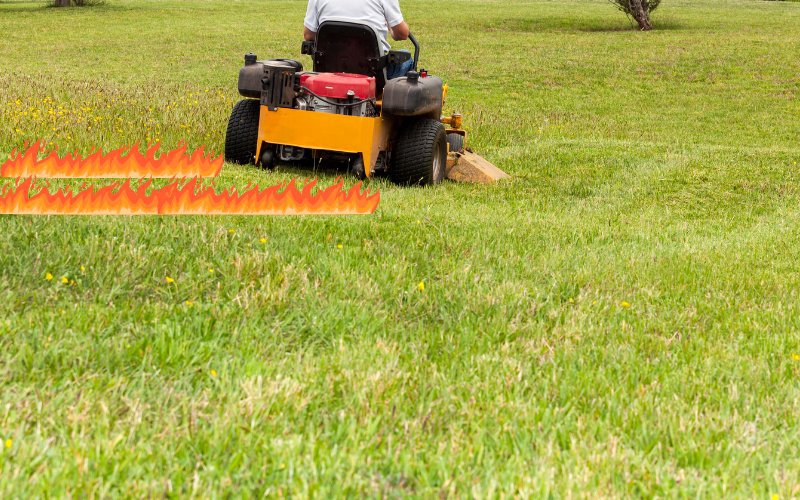
Most zero turn mowers go between 5 and 8 mph during normal mowing, while some commercial models can reach speeds of 10 mph or more on open, flat ground.
Across the United States, homeowners, landscapers, and property managers use zero turn mowers because they can cut large lawns efficiently while navigating trees, garden beds, and obstacles with precise steering. The speed of a zero turn mower depends on its engine power, mower deck size, transmission, terrain, and whether it is designed for residential or commercial use.
A zero turn mower is not always faster simply because it has a higher top speed. Real mowing performance depends on how quickly the machine can maintain a consistent cutting pace while turning, avoiding obstacles, and producing an even lawn finish. Understanding both travel speed and practical mowing speed helps buyers choose the right mower for their property.
A typical zero turn mower reaches about 5 to 8 miles per hour (mph) when mowing residential lawns. Many homeowner models are designed around this range because it provides a balance between productivity, control, and cut quality.
Commercial zero turn mowers often have higher top speeds because professional operators need to cover large properties quickly. Depending on the design, some commercial machines can travel around 10 to 12 mph when conditions allow, although mowing at maximum speed is not always recommended.
Source: coveredbridgesite.com
Residential zero turn mowers
Most homeowner models typically provide enough speed for suburban lawns, acreage, and regular maintenance without sacrificing control.
Commercial zero turn mowers
Commercial units are built for long mowing hours and larger properties, often offering stronger transmissions and higher operating speeds.
Maximum speed versus mowing speed
The fastest possible speed is usually measured during transport, while actual grass-cutting speed is lower for a cleaner result.
What Determines the Speed of a Zero Turn Mower?
Several mechanical and environmental factors determine how quickly a zero turn mower can move. Two machines with similar horsepower ratings can have different real-world speeds because of differences in transmission, weight, tires, and deck design.
The best speed for mowing depends on maintaining enough blade performance to cut grass evenly. Driving too quickly can cause missed areas, uneven cutting, or poor mulching performance.
Source: ariens.eu
Engine horsepower
A stronger engine can provide the power needed to maintain speed, especially when using wider cutting decks or mowing thicker grass.
Hydrostatic transmission
The transmission controls how efficiently engine power reaches the wheels and affects acceleration, control, and maximum speed.
Mower deck size
A wider deck can reduce mowing time because it covers more grass per pass, even if the mower does not travel faster.
Terrain conditions
Hills, wet grass, uneven ground, and obstacles can require slower speeds for safety and better cutting results.
Why a Bigger Deck Can Matter More Than Higher Speed
A mower with a wider deck may finish a lawn faster without increasing its travel speed. For example, a 60-inch deck covers more ground per pass than a 42-inch deck, which can reduce total mowing time on large, open properties.
Efficiency advantage
Coverage area per pass often has a greater effect on mowing time than a small increase in mph.
Zero Turn Mower Speed Compared With Other Lawn Mowers
Zero turn mowers are generally faster and more maneuverable than traditional lawn tractors because they can rotate within their own footprint and reduce time spent making wide turns. However, speed depends on the specific model and operating conditions.
The following comparison shows typical speed ranges rather than exact limits for every machine.
Source: i.ytimg.com
Zero turn mower
Approximately 5 to 12 mph depending on residential or commercial design.
Lawn tractor
Often around 4 to 7 mph, with slower turning and less maneuverability.
Walk-behind mower
Usually around 2 to 4 mph because the operator provides the movement.
How to Use Speed Safely When Operating a Zero Turn Mower
A zero turn mower should be operated at a speed that allows full control. Fast acceleration and sharp turns can affect stability, especially on slopes or uneven ground.
Following safe operating practices helps protect the operator, the mower, and the lawn surface.
Source: classicturfequipment.com
Reduce speed on slopes
Operate carefully on hills because zero turn mowers have different handling characteristics compared with traditional tractors.
Slow down near obstacles
Trees, landscaping features, fences, and other objects require controlled movement to avoid collisions.
Match speed to grass conditions
Tall, wet, or thick grass usually requires slower mowing speeds for better cutting performance.
Signs You Are Mowing Too Fast
If the mower leaves uncut strips, creates uneven grass height, or struggles to discharge clippings properly, the travel speed may be too high for the conditions.
Uneven cut quality
Reduce speed so the blades have enough time to process the grass.
Engine strain
A struggling engine can indicate that the mower is moving faster than the cutting system can handle.
Common Mistakes When Judging Zero Turn Mower Speed
Many buyers focus only on the advertised maximum speed, but that number does not always represent real mowing performance. A faster mower may not save time if the operator must slow down frequently because of terrain or poor cutting conditions.
Source: hips.hearstapps.com
Ignoring property size
A small yard may not benefit from a high-speed commercial mower because maneuverability and storage may matter more.
Confusing transport speed with cutting speed
Manufacturers may list maximum speeds that are achieved under conditions different from normal mowing.
Choosing speed over fit
The right mower should match lawn size, terrain, maintenance needs, and operator experience.
Frequently Asked Questions
Q
Can a zero turn mower go 10 mph?
Yes, some commercial zero turn mowers can reach around 10 mph or higher in certain conditions. However, actual mowing speed is usually lower to maintain cut quality and operator control.
Q
Are zero turn mowers faster than riding lawn tractors?
Generally, yes. Zero turn mowers often complete mowing jobs faster because they can turn more efficiently and reduce time spent maneuvering around obstacles.
Q
What is the best mowing speed for a zero turn mower?
The best mowing speed depends on grass type, terrain, and mower capability. Many homeowners find moderate speeds provide the best balance between efficiency and lawn appearance.
Q
Does horsepower make a zero turn mower faster?
Higher horsepower can help a mower maintain performance under load, but maximum speed also depends on transmission design, gearing, weight, and manufacturer settings.
Q
Why is my zero turn mower moving slowly?
Slow movement can result from low tire pressure, transmission issues, engine problems, incorrect settings, or operating conditions that require reduced speed. Checking the owner’s manual and performing basic maintenance are good first steps.
✦ Wrapping Up
Conclusion
A zero turn mower typically travels between 5 and 8 mph during normal mowing, while some commercial models can reach higher speeds when conditions allow. The fastest mower is not always the most efficient because mowing quality depends on control, terrain, and deck performance.
Choosing the right speed means balancing productivity with safety and cut quality. Consider your lawn size, terrain, and mowing habits before prioritizing maximum speed.
💡 Key Takeaway
For most homeowners, a zero turn mower with a comfortable mowing speed around 5 to 8 mph provides an effective balance of speed, control, and lawn quality.
Learn how sharp a lawn mower blade should be, how to check blade sharpness, why over-sharpening is harmful, and how to maintain the correct cutting edge for a healthier lawn.
Learn how to edge with a weed eater using proper techniques, safety steps, and practical tips for creating clean lawn borders around sidewalks, driveways, and flower beds.
If your Honda lawn mower has started to lose its self-propel power, make strange grinding noises, or stall when engaging the blades, there’s a good chance your pulley is to blame. Many homeowners overlook this small metal wheel, but it plays a huge role in how smoothly your mower runs. The pulley controls how power…
Learn how a lawn edger works, including manual, electric, and gas-powered models, blade movement, edging techniques, common mistakes, and safety tips for creating clean lawn borders.