
Lawn Mower Won’t Stay Running Unless Choke On: Quick Fixes
A lawn mower that will not stay running unless the choke is on is telling you something important: the engine is getting too much air or too little fuel when the choke opens. The choke temporarily enriches the fuel mixture, so the mower may keep running only while that extra fuel is present. This problem is common on push mowers, self-propelled mowers, riding mowers, and some snowblower-style small engines.
The good news is that the cause is often simple. A dirty carburetor, blocked fuel passage, clogged air filter, old gasoline, or loose intake seal can create this exact symptom. You may be able to fix it with basic tools. However, a damaged carburetor, failing fuel line, or engine problem may need a repair shop.
Affiliate Disclosure: This article may contain affiliate links. If you buy a product through one of these links, we may earn a commission at no extra cost to you. Product details, prices, and compatibility can change, so confirm current information on the manufacturer’s page and in your owner’s manual.
Why a mower runs only with the choke on
A mower that runs only with the choke on usually has a lean fuel mixture. “Lean” means the engine receives too much air for the amount of gasoline entering the cylinder. The choke partly closes the air supply, which adds more fuel to the mixture and helps the engine keep running.

What the choke does
The choke is a starting aid. On a cold engine, it limits air so the engine receives a richer mixture. Once the engine warms up, you normally move the choke to the run or open position.
A healthy mower should not need full choke after warm-up. If it dies as soon as you move the choke off, the engine is often not getting enough fuel through its normal fuel circuit.

Why this problem is common
Small mower engines use narrow fuel passages. Even a small amount of varnish from old gasoline can block one of these passages. Dust, grass clippings, and oil can also affect the air filter or carburetor.
Fuel left in a mower over winter can become stale. Ethanol-blended fuel can absorb moisture, and that moisture may lead to corrosion or poor engine performance. A mower stored in a damp shed may show the problem sooner than one kept in a dry garage.
🔧 Quick Fix: Before taking the carburetor apart, try fresh fuel, check the air filter, and inspect the fuel line. These three checks often find the cause without a full rebuild.
Quick answer: what should you check first?
If your lawn mower will not stay running unless the choke is on, turn the engine off and check the fuel quality, air filter, fuel flow, and carburetor. Fresh gasoline and a clean air filter are easy first steps. If those do not help, clean the carburetor’s main jet and fuel passages. Do not keep mowing with the choke on, because the rich mixture can waste fuel, foul the spark plug, and cause carbon buildup.

For safety, remove the spark-plug wire before working near the blade or carburetor. On a battery mower, remove the battery. Wear safety glasses, work gloves, and closed-toe shoes. Follow the owner’s manual before removing any part.
Common symptoms and what they mean
The exact symptoms can help you narrow down the fault. Watch what the engine does when you move the choke from start to run. Also note whether it starts easily, surges, smokes, or dies when you engage the blade.

| Symptom | Likely cause | First check |
|---|---|---|
| Runs only with full choke | Restricted fuel passage or dirty main jet | Clean the carburetor and use fresh fuel |
| Dies when choke opens | Lean mixture or air leak | Inspect intake gasket and fuel flow |
| Runs with partial choke | Partly blocked jet or weak fuel flow | Clean jet and replace old fuel |
| Surges at idle | Dirty carburetor or governor issue | Clean carburetor and inspect linkage |
| Black smoke with choke on | Too much fuel or dirty air filter | Replace or clean the air filter |
| Starts, then stops | Fuel cap vent, clogged filter, or stale fuel | Loosen cap briefly and inspect fuel system |
These clues are not a final diagnosis. For example, a blocked fuel cap vent can look like a carburetor problem. A cracked intake gasket can also create a lean condition.
The engine dies when the choke is moved to run
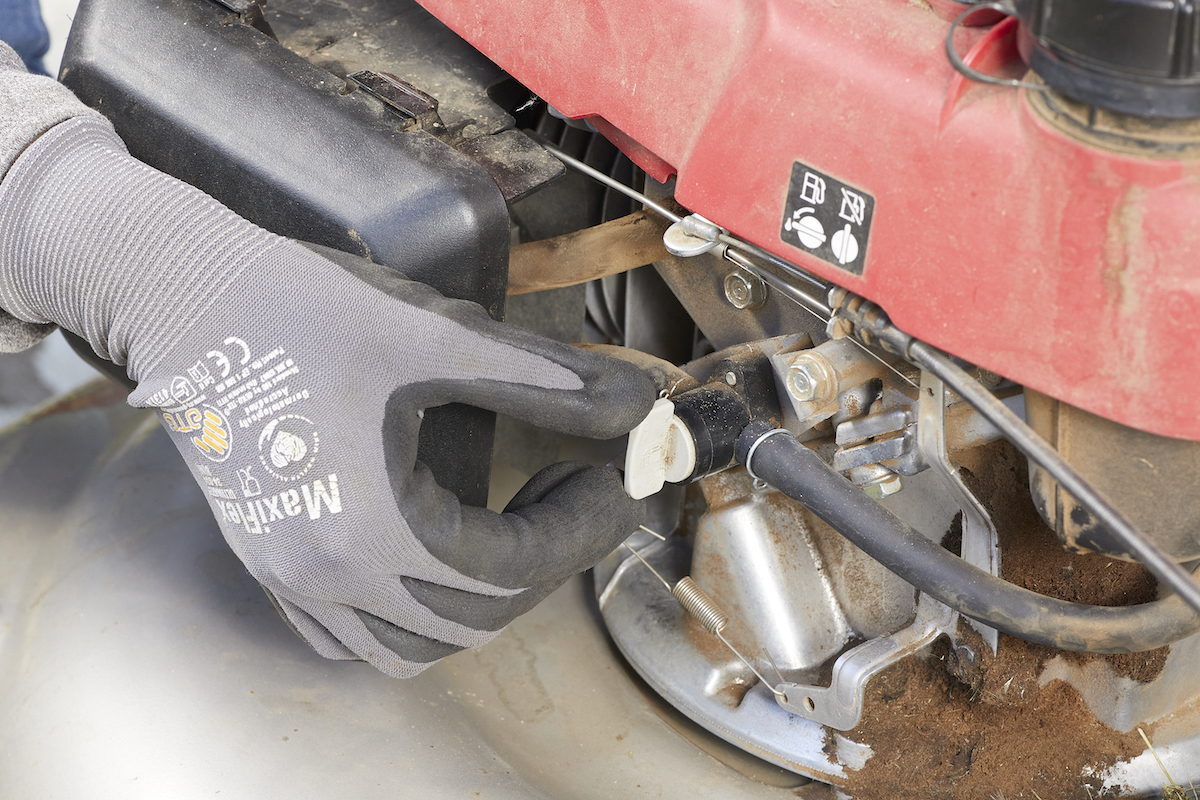
This is the classic sign of restricted fuel delivery. The choke adds fuel by reducing air. When you open the choke, the engine needs the carburetor’s main fuel circuit to provide the correct amount of gasoline.
If that circuit is dirty, the engine starves. It may cough, surge, or stop within a few seconds.
The engine runs with half choke
Partial choke often means the blockage is not complete. Some fuel is passing through, but not enough for normal operation. A mower in this condition may sound uneven and may lose power when cutting thick or wet grass.
Do not treat half choke as a permanent operating setting. It is a clue that the carburetor needs attention.

The engine smokes or smells strongly of fuel
Black smoke usually points to a rich mixture. A dirty air filter can restrict air and create a rich condition. A stuck choke plate, leaking float needle, or overfilled crankcase can cause similar symptoms.
Blue smoke suggests burning oil. White smoke may appear briefly after tipping a mower, but continuous smoke needs more inspection.

Main causes of a mower that needs choke to run
The most common causes are a dirty carburetor, stale gasoline, poor fuel flow, a blocked air filter, or an intake air leak. Start with the least expensive checks. Move to carburetor repair only after confirming the basic fuel and air systems.

| Cause | Why it causes the problem | Typical repair |
|---|---|---|
| Dirty main jet | Not enough fuel reaches the engine | Remove and clean the jet |
| Stale gasoline | Fuel loses quality and leaves deposits | Drain and replace fuel |
| Clogged fuel filter | Flow to the carburetor is too low | Replace the filter |
| Blocked fuel cap vent | Tank cannot replace used fuel with air | Clean or replace the cap |
| Dirty air filter | Airflow becomes too low | Clean or replace the filter |
| Intake air leak | Extra air creates a lean mixture | Replace gasket or tighten fasteners |
| Stuck float or needle | Fuel level becomes incorrect | Clean or rebuild carburetor |
| Weak spark | Combustion is poor under load | Inspect or replace spark plug |
Dirty carburetor main jet
The main jet controls fuel flow when the engine runs above idle. It has a very small opening. Gum, varnish, or fine debris can reduce that opening enough to cause a lean mixture.
This is the most common reason a mower runs only with the choke on. Cleaning spray may help, but removing the jet and cleaning the small passage is often more effective.
Never enlarge the jet with a steel wire. A larger opening can change the fuel mixture and damage the part. Use the correct soft cleaning tool or a carburetor cleaning kit.

Old or contaminated gasoline
Gasoline can degrade during storage. Fuel that looks dark, smells sour, or contains water should not be used. Drain it into an approved fuel container and take it to a local hazardous-waste site or fuel recycling location.
Use fuel that matches the mower manual. Some engines allow ethanol-blended gasoline up to a stated limit, while others recommend ethanol-free fuel. Do not guess. Check the label and the engine manual.

Restricted fuel flow
Fuel must travel from the tank through the fuel line, filter, and carburetor. A kinked hose, blocked filter, or stuck shutoff valve can reduce flow.
With the engine off, inspect the line for cracks and soft spots. A brittle fuel line can leak air or gasoline. Replace it with the correct fuel-rated hose and clamps.

Clogged air filter
A dirty air filter usually creates a rich mixture, not a lean one. Still, it can cause rough running, hard starting, and stalling. It is worth checking because it is easy to reach and often neglected.
Foam filters may be washable and lightly oiled if the manual allows it. Paper filters should usually be replaced rather than washed.

Intake gasket or carburetor air leak
An air leak between the carburetor and the engine allows unmeasured air into the intake. The engine then runs lean. Common leak points include a damaged gasket, loose bolts, or a cracked intake tube.
A leak can be harder to find than a dirty jet. If cleaning the carburetor does not solve the problem, inspect the gasket and mounting surfaces.

How to fix the problem step by step
The best repair plan moves from simple checks to deeper work. You do not need advanced mechanical skills to inspect fuel, the air filter, the spark plug, and the choke linkage. Carburetor removal requires more care because small parts are easy to lose.

1. Work safely and prepare the mower
Move the mower to a flat, well-ventilated area. Keep flames, cigarettes, and sparks away from gasoline. Let the engine cool fully before opening the fuel system.
Disconnect the spark-plug wire and secure it away from the plug. If the mower has an electric start battery, follow the manual before disconnecting it. On a battery mower, remove the battery pack.
Wear safety glasses and gloves. Clear grass and debris from the deck. Do not service a mower with the blade able to start.
2. Check the fuel
Look inside the tank. Fresh fuel should look clean and smell normal. If the fuel is old, drain it into an approved container.
Do not pour gasoline on soil, into a storm drain, or into household trash. Contact your city or county hazardous-waste program for disposal instructions.
Add fresh fuel only after the tank and fuel system are ready. If the mower manual recommends fuel stabilizer, mix it at the stated rate. Stabilizer helps stored fuel last longer, but it cannot restore badly degraded gasoline.
3. Inspect the fuel cap and fuel line
A fuel tank needs air as fuel leaves. A blocked vent in the cap can create a vacuum and stop fuel flow. One quick test is to loosen the cap after the engine begins to die. If the engine briefly improves, the cap vent may be blocked.
Do not operate the mower with a loose cap as a permanent fix. Replace the cap with the correct part if the vent is faulty.
Check the fuel line for kinks, cracks, and wet spots. Replace damaged lines with the correct size and material.
4. Check and service the air filter
Remove the air-filter cover. Take a photo before removing parts so you can reinstall them correctly.
Clean a reusable foam filter as directed in the manual. Let it dry fully before applying the specified amount of oil. Replace a dirty or damaged paper filter.
Do not run the mower without its air filter. Dust can enter the engine and wear the cylinder, piston, and rings.
5. Inspect the spark plug
Remove the spark plug with the correct socket. Check the electrode and porcelain for heavy carbon, oil, cracks, or a wet fuel coating.
A worn spark plug can make the engine hard to start or weak under load. Check the gap against the owner’s manual. Replace the plug if it is damaged or badly worn.
The spark plug may not be the main cause of a mower that needs choke, but a clean fuel system still needs a strong spark.
6. Test the choke linkage
Move the choke control while watching the choke plate or lever. It should move smoothly from the choke position to the open position. A bent rod, loose cable, or sticky plate can keep the choke from working correctly.
The choke should close for starting and open for normal running. If it stays partly closed, the engine may smoke, use more fuel, and foul the spark plug.
Do not force the linkage. Small stamped parts can bend. Use the adjustment method shown in the manual.
7. Clean the carburetor
If the basic checks fail, clean the carburetor. Take clear photos before disassembly. Work over a clean tray so the bowl screw, gasket, float, needle, and jet do not disappear.
Shut off the fuel or clamp the fuel line with a tool made for that purpose. Remove the carburetor bowl if the manual allows it. Inspect the bowl for water, rust, and sticky deposits.
Use carburetor cleaner in a well-ventilated area. Do not spray cleaner on painted surfaces, rubber parts, skin, or your eyes. Clean the main jet and its passages with the correct tool.
Replace damaged gaskets and O-rings. Tighten screws evenly, but do not overtighten them. A warped bowl or cracked gasket can create another fuel leak.
8. Reassemble and test
Reinstall the carburetor, air filter, fuel line, and cover in the correct order. Check that the throttle and choke controls move freely.
Reconnect the spark-plug wire. Add fresh fuel, place the mower outside, and start it according to the manual. Let it warm briefly, then move the choke toward run.
Listen for a steady sound. Do not put your hands near the blade or deck. If the engine still dies, shut it down and inspect the intake gasket, fuel flow, and carburetor again.
⚠️ Safety Warning: Never refuel a hot engine. Keep children and pets away during testing. Do not mow wet grass on slopes, and never reach under the deck unless the spark-plug wire is disconnected or the battery is removed.
Tools and parts that may help
Most first checks need only basic hand tools. A carburetor repair may need a socket set, a carburetor cleaner, a soft jet tool, and replacement gaskets.
| Item | Use | Typical skill level |
|---|---|---|
| Safety glasses and gloves | Protect eyes and hands | Everyone |
| Spark-plug socket | Remove and inspect the plug | Beginner |
| Fresh fuel container | Drain and store gasoline safely | Beginner |
| Carburetor cleaner | Remove fuel deposits | Beginner to intermediate |
| Soft jet-cleaning tool | Clear small fuel passages | Intermediate |
| Fuel-line clamp | Stop fuel flow during service | Intermediate |
| Replacement gasket kit | Seal the carburetor and intake | Intermediate |
| Torque wrench | Tighten parts to manual specs | Advanced but useful |
The correct replacement parts matter. Confirm the mower model, engine model, carburetor number, filter type, spark-plug number, and gasket shape before ordering.
When a carburetor cleaner is enough
A light film or small deposit may come off with spray cleaner. This can work when the bowl is clean and the jet opening is not fully blocked.
If the mower still needs choke after cleaning, remove and clean the jet. A fuel additive may help prevent deposits, but it is not a reliable substitute for cleaning a blocked passage.
When to replace the carburetor
A replacement carburetor may make sense when the original unit is corroded, cracked, badly worn, or cheaper to replace than rebuild. Many small-engine carburetors are simple bolt-on parts.
Confirm the exact engine model and mounting pattern. Similar-looking carburetors may use different throttle linkages, gaskets, or fuel connections.
For an older mower with a damaged deck, worn wheels, and engine oil leaks, compare the repair cost with a replacement mower. A repair is more worthwhile when the mower has a sound deck and good controls.
Prevention and a practical maintenance schedule
Good fuel habits prevent many choke-related problems. Use fresh fuel, avoid storing a mower with untreated gasoline for long periods, and follow the manual for seasonal storage.
| Task | Suggested timing | Why it matters |
|---|---|---|
| Check engine oil | Before each use | Protects the engine from low oil |
| Inspect the air filter | Every few uses | Keeps airflow steady |
| Check the blade | Monthly or as needed | Supports even cutting |
| Clean grass from deck | After mowing | Reduces corrosion and clumping |
| Inspect fuel line | Each season | Finds cracks and leaks |
| Change oil | Per the manual | Removes heat and wear contaminants |
| Stabilize or drain fuel | Before long storage | Reduces stale-fuel deposits |
These are general intervals. Hot climates, dusty yards, sandy soil, and frequent mowing can require more frequent care.
Mow at the right height
Cutting too low stresses turfgrass and can overload the engine. The correct mowing height depends on the grass type and season. Cool-season grasses often need a different height from warm-season grasses.
Follow the one-third rule when possible: remove no more than about one-third of the grass blade at one time. Tall, wet grass creates more resistance and can make a weak engine sound worse.
A sharp mower blade helps the engine cut with less strain. Dull blades tear grass and may increase fuel use.
Store the mower correctly
Keep a gas mower in a dry, ventilated shed or garage. Follow local rules for fuel storage. Store gasoline only in an approved container, away from heat and ignition sources.
For long storage, follow the manual. Some manufacturers advise draining the tank and carburetor. Others permit treated fuel. Never assume one method fits every engine.
Store battery mowers with the battery removed if the manual says to do so. Keep lithium-ion batteries cool and dry. Do not leave them in a hot vehicle or charge a damaged pack.
🌿 Eco or Disposal Note: Recycle lithium-ion batteries at a designated drop-off. Take old gasoline and oil to a hazardous-waste facility. Usable mowers can often be donated, repaired, or recycled through local programs.
Climate, grass, and storage effects
Weather can change how a mower behaves. Cold fuel evaporates less easily, so cold starts may need choke even when the engine is healthy. Once warm, the choke should normally open.
Wet grass is harder to cut and can clog the deck. Mowing wet slopes also increases slip risk. In drought, dry grass and dust can clog air filters quickly.
Humidity can cause moisture in fuel and corrosion in metal parts. Coastal air may speed rust on the deck and fasteners. A covered, dry storage space helps, but it does not replace inspection.
Cold-start trouble versus a real fuel fault
A mower may need choke for a short time on a cold morning. That is normal. The problem begins when it still needs choke after warming up or dies every time the choke opens.
If the mower starts with choke, runs for several minutes, and then stalls, suspect fuel flow, tank venting, or a dirty carburetor. If it only struggles in cold weather, check the oil grade, spark plug, and starting procedure in the manual.
Wet grass and engine load
Wet grass makes the blade work harder. A small 140–160 cc gas push mower may bog in tall, wet turf, especially with a dull blade or clogged deck. A larger engine does not remove the need for proper mowing height and dry conditions.
For a small flat yard, a battery mower can avoid carburetor issues altogether. For a larger yard, thick turf, or long mowing sessions, a gas mower or a higher-voltage battery mower may better match the workload.
When to repair the mower and when to replace it
A basic fuel-system repair is often worth doing when the mower starts easily, has a solid deck, and has no major oil leak. Cleaning a carburetor or replacing a spark plug can extend the useful life of a dependable machine.
| Repair or replacement choice | Suits this situation | Main drawback |
|---|---|---|
| Clean the existing carburetor | Sound mower with stale-fuel symptoms | Takes time and small parts can be lost |
| Install a replacement carburetor | Corroded or badly worn carburetor | Must match the exact engine |
| Replace the mower | Multiple worn systems or damaged deck | Higher upfront cost |
| Switch to battery power | Small or medium yard near a charger | Battery and charger cost extra |
| Use a repair shop | Limited tools or uncertain diagnosis | Labor adds to the total cost |
A first-time homeowner may prefer a shop if fuel work feels uncomfortable. A DIY owner with a clean workspace may save money by cleaning the carburetor. A gift buyer shopping for a senior should consider weight, starting effort, handle height, noise, and repair support rather than choosing only by price.
Gas, battery, corded, and reel alternatives
A gas mower can suit larger yards, thick grass, and areas far from an outlet. It needs fuel, oil, spark-plug checks, and seasonal storage care.
A battery mower can suit small and medium yards, noise-sensitive neighborhoods, and users who want push-button starting. Confirm battery voltage, amp-hours, runtime claims, charger type, and whether the battery is included.
A corded mower can work for a small yard with an outdoor-rated extension cord and nearby outlet. It is less suitable for complex yards, distant corners, or large lots.
A reel mower can suit small, flat yards with fine grass and frequent mowing. It requires more effort in tall grass and will not replace a gas or battery mower for every yard.
Signs the mower needs professional service
Call a repair shop when the engine has severe knocking, low compression, repeated fuel leaks, damaged wiring, or a bent crankshaft. Seek help if the mower backfires, overheats, or continues to run dangerously fast.
A shop can test compression, ignition timing, governor operation, and vacuum leaks. These faults are harder to diagnose with basic tools.
Stop using the mower if gasoline reaches the hot muffler, oil level rises because of fuel contamination, or the blade vibrates badly. A damaged blade adapter or crankshaft can create a serious hazard.
📜 Check Local Rules: Some cities limit gas-powered lawn equipment by time of day, noise level, or season. Some HOAs restrict visible equipment, fuel storage, or gas mowers. Check your city, county, HOA, and local air-quality rules before buying or operating equipment.
Common mistakes to avoid
Many owners make the problem worse by trying to force the mower to run. Avoid these errors during diagnosis.
- Do not keep mowing with full choke.
- Do not spray starting fluid near a hot engine.
- Do not poke a jet with a hard steel wire.
- Do not mix random fuel additives.
- Do not wash a paper air filter.
- Do not tip a mower without checking the manual.
- Do not test a mower near dry leaves or gasoline fumes.
- Do not ignore a fuel leak.
- Do not service the blade with the spark-plug wire connected.
- Do not store old gasoline in an unapproved container.
A rich mixture from extended choke use can foul the spark plug and leave carbon deposits. It can also dilute engine oil if excess fuel reaches the crankcase.
FAQs
Q: Can I mow with the choke on?
A: It is not a good normal operating method. The choke is for starting or brief warm-up. Running with it on can waste fuel, foul the spark plug, increase carbon buildup, and hide a fuel-system fault.
Q: Why does my mower start but then die when I release the choke?
A: The engine likely has a restricted main jet, poor fuel flow, stale gasoline, or an intake air leak. Check the fuel, air filter, fuel cap, and carburetor.
Q: Will replacing the spark plug fix a mower that needs choke?
A: It may help if the plug is fouled or worn, but it is not the most common cause. A dirty carburetor or blocked fuel passage is more likely.
Q: Can bad gasoline make a mower run only with choke?
A: Yes. Old or contaminated fuel can leave deposits and reduce fuel flow. Drain questionable fuel safely and use fresh fuel that matches the manual.
Q: Should I use carburetor cleaner in the gas tank?
A: Some products are made for fuel tanks, but they may not clear a blocked jet. Follow the product label and engine manual. Do not mix cleaners at random.
Q: How do I know if the fuel cap vent is blocked?
A: If the mower runs briefly and improves after the cap is loosened, the vent may be restricted. Replace the cap if cleaning does not restore proper venting. Do not use a loose cap as a permanent repair.
Q: Is it cheaper to replace the carburetor or clean it?
A: Cleaning is usually less expensive when the carburetor is sound. Replacement can make sense if it is cracked, corroded, or badly worn. Confirm the exact part number first.
Q: Why does my mower need choke only when the grass is tall?
A: Tall or wet grass adds load. A dull blade, low cutting height, clogged deck, dirty air filter, or weak engine can make the problem appear under load. Start with the blade, deck, air filter, and mowing height.
Q: Does a battery mower avoid this problem?
A: Yes, a battery mower has no carburetor, fuel line, or spark plug. It can suit small and medium yards, but you must check battery capacity, charging space, replacement cost, and local recycling options.
Q: Is a self-propelled mower better for a senior?
A: It can help on larger or sloped yards because the drive system assists movement. It adds weight, cost, and maintenance. For a small flat yard, a lightweight push mower may be easier to store and control.
Q: How long should a lawn mower last?
A: Service life varies with engine quality, storage, mowing frequency, terrain, and maintenance. A well-maintained mower can last many seasons, while a neglected mower may develop problems much sooner.
Q: Can a mower’s air filter cause a lean mixture?
A: A clogged air filter usually restricts air and creates a rich mixture. A missing filter or intake leak can allow extra unfiltered air and create poor running. Inspect the full intake system.
Q: When should I stop troubleshooting at home?
A: Stop when you find a fuel leak, severe vibration, engine knock, damaged wiring, overheating, or a suspected governor problem. A qualified repair technician can test these faults safely.
Final thoughts
A lawn mower that will not stay running unless the choke is on usually needs better fuel flow or less unwanted air. Start with fresh gasoline, the air filter, fuel cap, fuel line, spark plug, and choke linkage. If the issue remains, clean the carburetor and inspect the intake gasket.
Work slowly and take photos before removing small parts. Match every replacement filter, spark plug, gasket, carburetor, battery, and blade to the mower’s exact model. With safe service and good storage habits, many choke-related problems can be repaired before they become expensive engine damage.



2 Comments