
Lawn Mower Leaving Strips Of Uncut Grass: Fix It Fast
A lawn mower leaves strips of uncut grass when its blades are dull, deck is uneven, or mowing speed and overlap are wrong.
A lawn mower leaving strips of uncut grass can make a healthy lawn look patchy in just one afternoon. The good news is that this problem is usually easy to trace. With a few checks to the blade, deck, wheels, and mowing method, you can restore clean, even cuts and avoid repeat damage.
Why Your Lawn Mower Is Leaving Strips of Uncut Grass
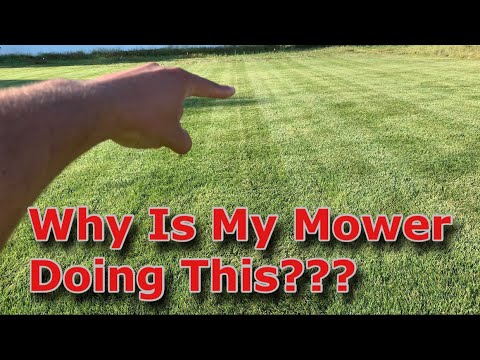
A mower should cut a slightly overlapping path across the lawn. If narrow lines of grass remain between passes, the machine is either not cutting across its full width or the blades are not moving through the grass correctly.
The most common causes include:
- Dull or damaged mower blades
- A bent blade or blade spindle
- An uneven mower deck
- Incorrect wheel height
- Wet, tall, or thick grass
- Mowing too fast
- Poor overlap between mowing rows
- Low engine power
- Grass buildup under the deck
- A worn or loose drive belt on some riding mowers
Think of the mower deck as a flat table and the blade as a fast-moving fan beneath it. If the table tilts, the fan bends, or the fan cannot spin fast enough, some grass will escape.

Dull Mower Blades Are the Most Common Cause
A dull blade may still spin, but it will not slice grass cleanly. Instead, it can bend grass down, push it aside, or leave thin rows standing behind the mower.
A sharp blade creates a clean cut across the full deck width. A dull blade loses cutting power, especially in thick spring growth or damp grass. The mower may also leave clumps, ragged tips, or brown edges after mowing.
Inspect the blade after turning off the mower and removing the spark plug wire on a gas model. Battery mower users should remove the battery before working under the deck.
Look for these signs:
- A rounded cutting edge
- Small nicks or dents
- A bent blade
- Heavy rust
- Grass that looks torn instead of sliced
- Vibration while the mower runs
Most mower blades need sharpening after about 20 to 25 hours of use, though sandy soil, sticks, and rough ground can shorten that time. Many mower makers recommend replacing a blade when it is badly bent, cracked, or too thin to sharpen safely.
In my experience, people often sharpen the blade once and expect the problem to vanish. That can help, but balance matters too. A blade that is sharp on one side and heavy on the other can cause vibration and an uneven cut.

Check for a Bent Blade or Spindle
A sharp blade will not solve the problem if it is bent. Even a small bend can change the blade’s cutting height as it spins. One end may cut well while the other end rides too high and leaves a strip.
A bent blade can result from hitting:
- Tree roots
- Rocks
- Hidden sprinkler heads
- Metal edging
- Sticks
- Concrete borders
The blade spindle can also bend after a hard impact. On a walk-behind mower, place the machine on a stable surface and inspect the blade from below. Never put your hands near the blade, even when the engine is off.
A simple check is to remove the blade and place it on a flat surface. If it rocks or does not sit flat, it may be bent. Do not try to hammer a cracked or badly bent blade back into shape. Replacement is safer.
If the blade looks straight but the mower still shakes, the spindle, adapter, bolt, or engine shaft may need inspection. Strong vibration is a safety warning, not just a cosmetic problem.

An Uneven Mower Deck Can Leave One-Sided Strips
A mower deck should sit level from side to side. If one side is lower, it may scalp the lawn while the other side leaves tall strips. A deck can become uneven after hitting an object, carrying the mower incorrectly, or using a wheel that is set at the wrong height.
To check the deck:
- Park the mower on a flat driveway or garage floor.
- Turn off the engine and disconnect the spark plug wire or battery.
- Set all wheels to the same height.
- Measure from the blade tip to the ground on both sides.
- Rotate the blade by hand only when the mower is fully safe to inspect.
- Compare the left and right measurements.
The exact measurement method depends on the mower design. Always check the owner’s manual before adjusting deck parts.
On riding mowers, the deck may need leveling with adjustment rods. On push mowers, a bent deck or damaged wheel bracket may be the real cause. Do not assume the height lever is correct simply because it clicks into place.

Incorrect Wheel Height Can Create Mowing Stripes
Many push mowers use separate wheel height levers. If one wheel is set differently, the deck may tilt and leave a strip of taller grass on one side.
This often happens after cleaning, blade service, or changing the cutting height for summer. A wheel may also slip from its setting if the adjustment spring or bracket is worn.
Set each wheel to the same notch. Then push the mower over a flat surface and look at the deck. If it leans, check for:
- A bent wheel arm
- A loose height adjustment lever
- A damaged wheel
- Packed grass near the wheel bracket
- A deck that is bent
A higher mowing height is often healthier for grass because it protects the crown and soil from heat. However, the height must be even. An uneven six-inch cut can look worse than a level three-inch cut.

Wet or Tall Grass Can Overload the Mower
Wet grass sticks to the deck and blocks the airflow that lifts clippings toward the blade. It can also bend down under the mower, allowing some blades to pass over it.
Tall grass creates a similar problem. If you remove too much height in one pass, the engine may slow down and the blade may lose cutting force. The result can be uncut strips, clumps, and a rough lawn surface.
For a cleaner cut:
- Mow when the grass is dry.
- Cut no more than one-third of the grass height at a time.
- Raise the deck for an overgrown lawn.
- Mow slowly through dense areas.
- Make a second pass at a different angle if needed.
- Clean the underside of the deck after mowing.
If the lawn is very tall, use a brush cutter or take several mowing sessions to bring it down. Cutting a neglected lawn all at once can stress both the grass and the mower.
Mowing Too Fast Can Leave Uncut Rows
Walking speed affects cutting quality. When you push a mower too quickly, the blade has less time to lift and cut the grass. The engine may also slow under load, reducing blade speed.
This is common when the mower is self-propelled. Some users set the drive speed too high and then notice strips between passes. Thick grass makes the issue more obvious.
Try walking at a steady pace that allows the engine to maintain a strong, even sound. If the engine pitch drops, slow down or raise the deck. A smooth pace is usually more effective than forcing the mower through the lawn.
Riding mower operators should also avoid driving at maximum speed in tall grass. Use a lower ground speed while keeping the engine at the recommended throttle setting.

Poor Overlap Between Mowing Passes
Sometimes the mower is working correctly, but the mowing pattern is the problem. If each pass is placed exactly beside the last one, small gaps can remain because the blade does not cut right to the advertised deck width.
Most mower decks need a small overlap. Aim to place one wheel partly inside the previous tire track. This gives the blade enough coverage to reach the grass missed by the last pass.
Use straight rows and keep your eyes on the previous track instead of staring at the front edge of the mower. For a wide lawn:
- Start along a straight boundary.
- Keep the first row steady.
- Overlap each new pass by a few inches.
- Turn carefully at the end.
- Change direction every few mowings to reduce grass leaning.
Grass can lean in the direction of repeated mowing. Changing the mowing pattern helps the blades stand upright and can improve the finished look.

Low Engine Power Can Reduce Blade Speed
A mower needs enough power to keep the blade spinning at cutting speed. If the engine bogs down, the blade may leave strips even when it is sharp.
Common power problems include:
- A dirty air filter
- Old or contaminated fuel
- A clogged fuel filter
- A dirty carburetor
- A weak spark plug
- A restricted muffler
- A low battery charge on an electric mower
- A worn drive belt on a riding mower
Gas mower engines often need fresh fuel and a clean air filter. Electric mowers may lose cutting strength when the battery is low or when the battery is cold and heavily loaded.
Do not remove safety covers or adjust engine parts while the mower is running. If the engine surges, smokes, stalls, or lacks power after basic maintenance, have a qualified technician inspect it.

Grass Buildup Under the Mower Deck
Clippings can form a thick layer under the deck. This buildup reduces airflow and prevents cut grass from moving away from the blade. It can also interfere with blade movement.
Clean the deck after the mower is off, cool, and disconnected from its power source. Use a plastic scraper or stiff brush. Avoid spraying water directly into the engine, battery housing, electrical parts, or bearings.
Do not use your hand to remove grass near the blade. A blade can move unexpectedly if the crankshaft turns or the mower rolls.
A clean deck improves discharge and makes it easier to spot cracks, bends, and loose hardware. Cleaning also helps prevent wet clippings from hardening into a layer that is difficult to remove.
How to Fix a Lawn Mower Leaving Strips of Uncut Grass
Use this troubleshooting order. It starts with simple checks and moves toward mechanical repairs.
- Let the grass dry before mowing again.
- Clean the underside of the deck.
- Check that all wheels use the same height setting.
- Inspect the blade for dull edges, bends, and cracks.
- Sharpen or replace the blade if needed.
- Confirm that the blade is installed with the correct side facing down.
- Check for excessive vibration.
- Inspect the air filter, fuel, spark plug, or battery.
- Slow your mowing speed.
- Overlap each pass by a few inches.
- Inspect the spindle, deck, belt, or height brackets if the issue continues.
The blade’s cutting edge must face the correct direction. Installing a blade upside down is a common mistake after home maintenance. The mower may run, but it will cut poorly and may create unusual noise.
If the mower still leaves a lawn mower leaving strips of uncut grass after these checks, stop using it until the deck and spindle are inspected. Repeated vibration can damage other parts and create a safety risk.
How to Sharpen a Mower Blade Safely
A mower blade does not need to be razor sharp. It needs a clean, even edge with the correct balance.
Follow these basic steps:
- Disconnect the spark plug wire or remove the battery.
- Tip the mower according to the owner’s manual.
- Mark the blade’s top side before removing it.
- Block the blade so it cannot turn.
- Remove the blade bolt with the correct tool.
- Clamp the blade firmly in a vise.
- File or grind along the existing bevel.
- Remove only enough metal to restore the edge.
- Balance the blade on a nail or blade balancer.
- Reinstall it with the correct torque.
Wear eye protection and gloves while handling the blade. If the blade has a deep crack, major bend, or missing section, replace it instead of sharpening it.
A professional sharpening service is a good choice if you do not have a vise, balancer, or safe work area. The cost is often small compared with the cost of a damaged spindle or deck.
How to Prevent Strips in the Future
Good mowing habits prevent most uneven-cut problems. Before each mowing session, walk the lawn and remove branches, toys, stones, and other objects.
Use this simple routine:
- Check the blade at the start of the season.
- Clean the deck when buildup appears.
- Keep tires inflated to the pressure listed by the manufacturer.
- Mow dry grass when possible.
- Follow the one-third cutting rule.
- Keep the engine or battery system maintained.
- Overlap each pass.
- Change mowing direction from week to week.
- Store the mower under cover.
- Replace damaged blades and hardware promptly.
Tire pressure matters more on riding mowers, but it can also affect some walk-behind models. A soft tire changes deck height and may cause a strip on one side.
Do not rely only on the look of the lawn. Run a hand over the cut area and inspect the grass tips. A clean cut usually has a smooth, even appearance. Torn or frayed tips suggest a dull blade or poor blade speed.
When to Call a Repair Professional
Some problems are simple to fix at home. Others need proper tools and mechanical training.
Call a qualified repair professional when:
- The mower has strong or sudden vibration.
- The blade will not stay tight.
- The spindle feels loose.
- The deck is cracked or badly bent.
- The engine loses power despite basic maintenance.
- The mower produces smoke or unusual metal noise.
- A riding mower deck will not level.
- The drive belt slips or breaks repeatedly.
Never bypass a safety switch or remove a blade guard to make the mower cut better. Safety parts protect you from moving blades, thrown objects, and unexpected starts.
Manufacturer manuals are the best reference for blade torque, deck measurements, tire pressure, fuel type, and maintenance intervals. Advice that works for one mower may not be correct for another model.
Frequently Asked Questions About a Lawn Mower Leaving Strips of Uncut Grass
Why does my lawn mower leave a strip between passes?
The most likely causes are poor overlap, a dull blade, an uneven deck, or mowing too fast. Overlap each pass by a few inches and inspect the blade and wheel settings.
Can a dull blade cause uncut strips?
Yes. A dull blade may bend or tear grass instead of cutting it cleanly. Sharpen the blade evenly or replace it if it is bent, cracked, or badly damaged.
Why does my mower cut unevenly after hitting a rock?
The impact may have bent the blade, spindle, blade adapter, or deck. Stop using the mower if it vibrates, then inspect the blade and have the spindle checked if needed.
Should I mow wet grass if my mower leaves strips?
It is better to wait until the grass is dry. Wet grass can bend under the deck, stick to the housing, reduce airflow, and overload the blade.
What is the best mower height to prevent strips?
There is no single height for every lawn. Set all wheels evenly and follow the grass type’s needs, while removing no more than one-third of the blade length in one mowing.
Why does my riding mower leave strips of grass?
A riding mower may leave strips because of an unlevel deck, worn blades, low tire pressure, a slipping belt, or a slow blade spindle. Check the deck level and tire pressure before replacing parts.
How often should I sharpen my mower blade?
Many blades need sharpening after about 20 to 25 hours of mowing. Sandy soil, rocks, sticks, and rough lawns can require more frequent sharpening.
Conclusion
A lawn mower leaving strips of uncut grass usually has a clear cause: a dull blade, uneven deck, wrong wheel height, wet grass, poor overlap, or low blade speed. Start with safe, simple checks, then inspect the blade and deck before looking at engine or spindle problems.
Keep the blade sharp, mow at a steady pace, use a small overlap, and clean the deck often. These habits can improve the cut and help your mower last longer. If vibration or mechanical damage appears, stop mowing and seek professional service. Share your mower model and symptoms in the comments, or explore your owner’s manual for model-specific maintenance tips.