What Psi Should Lawn Mower Tires Be: PSI Guide
Most lawn mower tires should be 10 to 14 PSI, but the exact pressure depends on the mower and tire.
Knowing what PSI should lawn mower tires be helps your mower cut evenly, steer safely, and protect the grass. The correct pressure is not always the number printed on the tire sidewall. In this guide, you’ll learn how to find the right pressure, check it correctly, avoid common mistakes, and adjust tires for smooth, reliable mowing.
What PSI Should Lawn Mower Tires Be?
For many riding lawn mowers and lawn tractors, the correct tire pressure falls between 10 and 14 PSI. However, some models need more or less pressure based on tire size, mower weight, terrain, and the manufacturer’s design.
A typical starting range looks like this:
| Mower tire | Common pressure range |
|---|---|
| Riding mower front tires | 10 to 14 PSI |
| Riding mower rear tires | 12 to 14 PSI |
| Zero-turn front caster tires | 20 to 25 PSI |
| Zero-turn drive tires | 15 to 20 PSI |
| Walk-behind mower tires | 12 to 20 PSI |
These are general ranges, not fixed rules. The owner’s manual is the best source for what PSI should lawn mower tires be on your specific machine.
Many lawn tractor tires use different pressure settings at the front and rear. Rear tires often carry more weight, so they may need slightly higher pressure. Zero-turn mowers can also use higher pressure in their small front caster tires.

Where to Find the Correct Lawn Mower Tire Pressure
The most accurate answer to what PSI should lawn mower tires be is usually found in one of three places: the owner’s manual, a label on the mower, or the tire itself.
Check these areas before inflating the tires:
• Owner’s manual: Look under “Specifications,” “Tires,” or “Maintenance.”
• Frame label: Some mowers have a pressure chart near the seat, engine, deck, or transmission.
• Tire sidewall: The sidewall may show a recommended pressure or a maximum pressure.
• Manufacturer website: Search the mower model and tire size if you lost the manual.
Be careful with the number on the tire sidewall. It may show the maximum safe pressure, not the ideal working pressure for your mower. Filling the tire to that number can make the ride harsh and reduce traction.
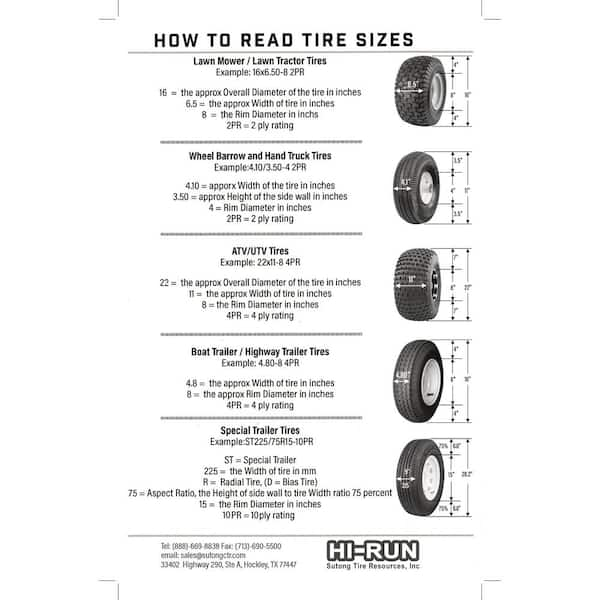
The tire size also matters. Two tires that look similar may have different load ratings and pressure needs. Always compare the full tire marking, such as 20×8-8, with the mower’s manual.
Why Correct Tire Pressure Matters
Correct air pressure does more than make the mower ride comfortably. It affects cutting height, steering, traction, fuel use, and tire wear.
If the pressure is too low, the tire may flatten against the ground. This increases rolling resistance and can make the mower feel sluggish. Low pressure may also cause the tire to come off the bead or wear along the outer edges.
If the pressure is too high, the tire becomes hard and less flexible. The mower may bounce over bumps instead of following the ground. This can create an uneven cut and reduce grip on wet grass or slopes.
The main benefits of correct pressure include:
• More even mowing: The deck stays at a more consistent height.
• Better traction: Drive tires can grip the lawn without excessive slipping.
• Easier steering: Properly filled front tires respond more smoothly.
• Longer tire life: Even pressure helps prevent uneven tread wear.
• Less turf damage: Correct pressure lowers the risk of ruts and divots.
• Better comfort: The tires help absorb small bumps and vibrations.
A useful way to think about it is this: your mower tires are part of the suspension system. They act like small cushions between the machine and the lawn.

How to Check Lawn Mower Tire PSI
Check tire pressure when the tires are cold. Driving or mowing warms the air inside the tire and can give you a higher reading than the true cold pressure.
You will need a basic tire gauge and an air pump or compressor. A small digital gauge can make the job easier, but a standard pencil gauge also works well.
Follow these steps:
-
Park the mower on a flat, stable surface.
-
Turn off the engine, remove the key, and engage the parking brake.
-
Let the tires cool for at least 30 minutes if the mower was recently used.
-
Remove the valve cap from the tire.
-
Press the gauge firmly onto the valve stem.
-
Read the pressure and compare it with the mower manual.
-
Add air in short bursts if the pressure is low.
-
Press the center pin in the valve stem to release air if needed.
-
Check the pressure again.
-
Replace the valve cap.
Check all four tires, even if they appear to match. A small pressure difference can change the mower’s balance. On a zero-turn mower, uneven drive tire pressure can also make the machine pull to one side.
For the most accurate result, check pressure before mowing each month and whenever the mower has been stored for a long period.

Should Front and Rear Mower Tires Have the Same PSI?
Not always. Front and rear tires often have different pressure recommendations because they carry different loads and perform different jobs.
Rear tires support much of the mower’s weight and transfer engine power to the ground. Front tires mainly support the steering system and help the mower roll and turn.
For example, a lawn tractor may use 10 PSI in the front tires and 12 PSI in the rear tires. Another model may require 14 PSI in all four tires. A zero-turn mower may need 22 PSI in the front caster tires and 18 PSI in the rear drive tires.
Do not copy pressure from one axle to another unless the manual says to do so. When someone asks what PSI should lawn mower tires be, the correct answer depends on the position of the tire as well as the mower model.
What Happens When Lawn Mower Tires Are Overinflated?
Overinflated tires contain more air pressure than the mower needs. They become stiff and offer less contact with the ground.
Common signs of overinflation include:
• A bouncy or rough ride
• Reduced traction on hills
• More slipping on wet grass
• An uneven cutting height
• A mower that feels unstable when turning
• Faster wear in the center of the tread
Overinflation can also increase turf damage. A hard tire puts more concentrated pressure on a smaller contact area. On soft soil, this may leave marks or shallow ruts.
Never exceed the maximum pressure printed on the sidewall. More importantly, use the mower maker’s recommended pressure rather than treating the sidewall number as the target.

What Happens When Lawn Mower Tires Are Underinflated?
Underinflated tires flex more than they should. This can make the mower harder to steer and less efficient.
You may notice these problems:
• The tire looks wider or flatter at the bottom.
• The mower pulls to one side.
• Steering feels heavy.
• The tire slips on the rim.
• The tread wears along both outer edges.
• The mower leaves deeper tracks in soft soil.
Low pressure is especially risky on slopes. A soft tire can flex during a turn, which may reduce stability. If a tire loses air often, inspect it for a nail, damaged valve stem, cracked rubber, or a poor bead seal.
Do not keep adding air without finding the cause. A slow leak can leave you with a flat tire during the middle of a mowing job.

How Tire Pressure Affects Cutting Height
Your mower deck does not work alone. The deck height depends partly on the mower’s position above the ground, and the tires help determine that position.
If one tire has less air than the others, that side of the mower may sit lower. The result can be a lawn with short strips, uneven lines, or a stepped appearance.
To improve cutting quality:
• Set all tires to the recommended cold pressure.
• Confirm that the tires are the same size on each axle.
• Check the deck level from side to side.
• Inspect the deck wheels and anti-scalp rollers.
• Replace tires with damaged or badly worn tread.
Proper tire pressure cannot fix a bent deck or worn spindle. Still, it is one of the simplest checks to make before adjusting the cutting deck.

A Practical Example of Mower Tire Pressure
Imagine a lawn tractor manual that recommends 10 PSI for the front tires and 12 PSI for the rear tires. After several months, the front tires measure 7 PSI and one rear tire measures 9 PSI.
The mower may still run, but it will not sit at its intended height. The steering may feel heavy, and the deck may cut lower on one side. Restoring the tires to the recommended cold pressure can improve the cut right away.
A common mistake is to inflate every tire to 30 PSI because that number appears on a tire sidewall. That pressure may be safe for the tire, but it may be far too high for the mower. This is one of the most important lessons when checking what PSI should lawn mower tires be.
Tips for Maintaining Lawn Mower Tires
Good tire care takes only a few minutes but can prevent expensive problems.
Use these simple habits:
• Check pressure at least once a month during mowing season.
• Inspect tires before mowing over rough ground.
• Look for cuts, cracks, bulges, and exposed cords.
• Keep valve caps installed to block dirt and moisture.
• Store the mower indoors or under a cover when possible.
• Avoid parking for months with a flat tire.
• Clean grass and mud from around the valve stem.
• Replace tires that are dry-rotted or badly damaged.
When storing a mower for winter, check the pressure before covering it. Cold weather can reduce tire pressure, while warmer weather can raise it. A seasonal check helps keep the tires ready for spring.
Never use a damaged tire simply because it still holds air. Lawn mower tires carry a heavy machine, and a sudden failure can cause loss of control.
Can You Use a Car Tire Gauge on a Lawn Mower?
Yes. A standard car tire gauge can measure lawn mower tire pressure. Most mower tires use ordinary Schrader valve stems, just like car tires and bicycle tires with similar valves.
A gauge designed for low pressure can be easier to read on lawn equipment. Many mower tires use pressure below 20 PSI, so a gauge with clear markings in the 0 to 30 PSI range is useful.
Avoid guessing by pressing the tire with your thumb. Tire stiffness is not a reliable measure of PSI. A tire can feel firm while still being several pounds below the recommended pressure.
Frequently Asked Questions About What PSI Should Lawn Mower Tires Be
What PSI should lawn mower tires be on a riding mower?
Many riding mower tires use about 10 to 14 PSI. Check the owner’s manual because front and rear tires may have different recommendations.
What PSI should lawn mower tires be on a zero-turn mower?
Zero-turn mowers often use about 15 to 20 PSI in the rear drive tires and 20 to 25 PSI in the front caster tires. The exact setting depends on the model and tire size.
Should I inflate lawn mower tires to the maximum PSI?
No. The maximum PSI on the sidewall is not always the correct operating pressure. Use the pressure listed in the mower manual or on the manufacturer’s tire chart.
How often should I check lawn mower tire pressure?
Check the pressure once a month during the mowing season and before using the mower after long storage. Also check it after hitting a sharp object or mowing over rough ground.
Can low tire pressure cause an uneven cut?
Yes. A low tire can lower one side of the mower and change the deck height. This may leave uneven strips or cause the deck to scalp parts of the lawn.
Should mower tires be checked hot or cold?
Check them when cold for the most accurate reading. Heat from driving or mowing expands the air and can make the pressure appear higher.
Conclusion
For most riding lawn mowers, the answer to what PSI should lawn mower tires be is about 10 to 14 PSI, but your mower’s manual should always guide the final setting. Zero-turn mowers and specialty tires may need different pressures.
Check every tire when cold, keep front and rear settings separate, and never confuse the sidewall maximum with the recommended working pressure. A few minutes with a tire gauge can improve cutting quality, traction, comfort, and tire life.
Check your mower’s manual today, set the tires correctly, and enjoy a safer, cleaner cut. If this guide helped, share your mower model and recommended PSI in the comments.