


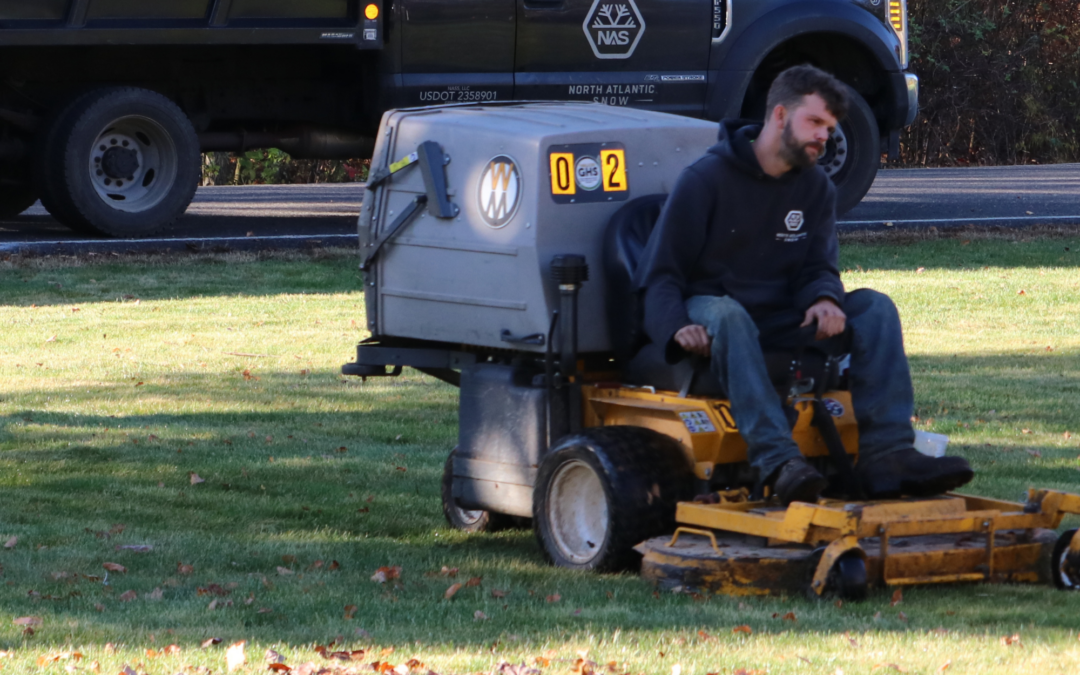
Cut cool-season grass to about 2½ to 3 inches before winter, but never remove more than one-third at once.
Knowing how short to cut grass before winter helps protect the crown, roots, and soil from cold weather. The best height depends on your grass type, local climate, and how fast the lawn is still growing. Cut it too high, and snow mold may develop; cut it too short, and the grass may suffer from winter injury. This guide explains the right final mowing height, timing, tools, and mistakes to avoid.
The Best Grass Height Before Winter
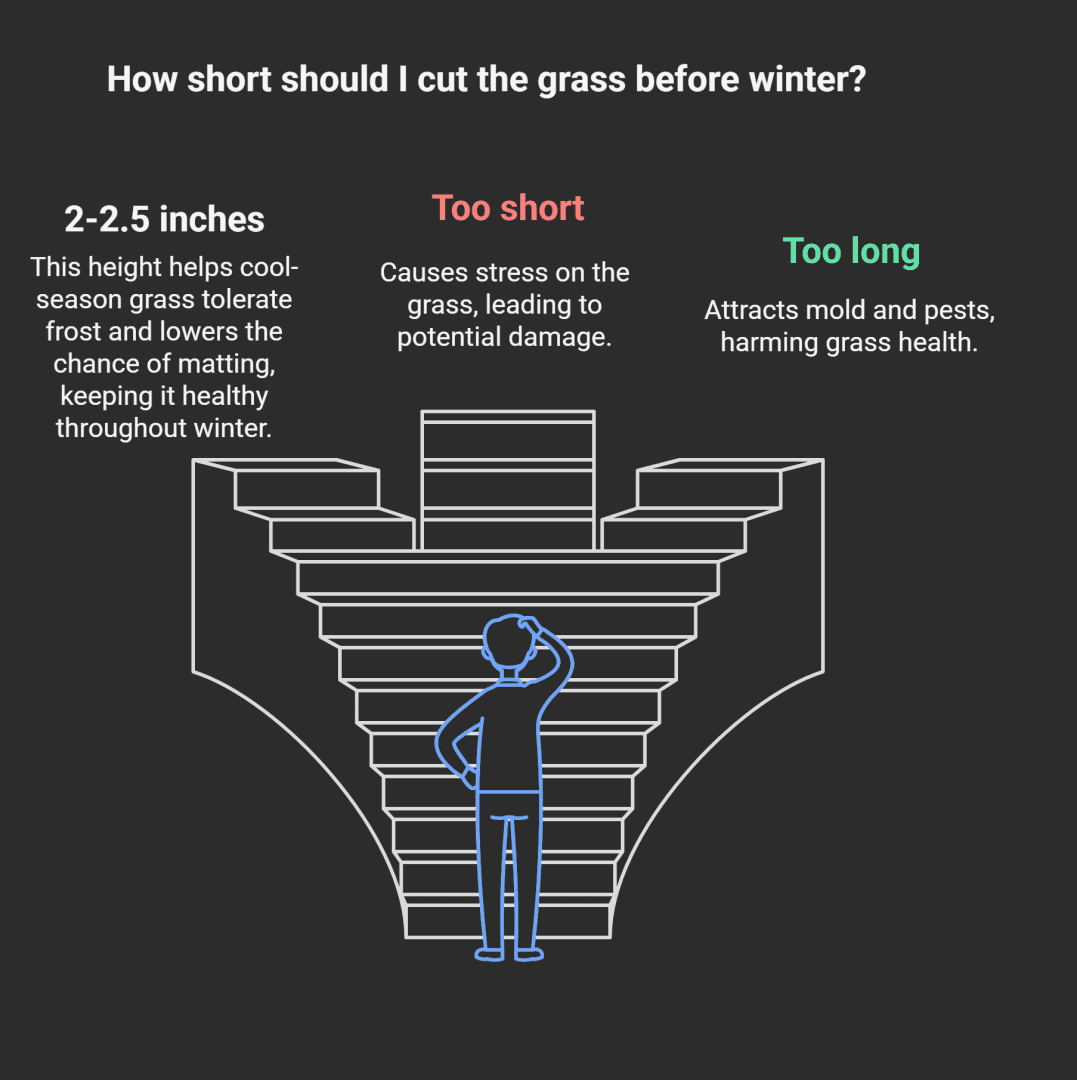
For most cool-season lawns, the ideal final height is about 2½ to 3 inches. This height gives the grass enough leaf surface to store energy while keeping the blades short enough to reduce matting under snow.
Here are common final mowing heights by grass type:
• Kentucky bluegrass: 2½ to 3 inches
• Perennial ryegrass: 2½ to 3 inches
• Tall fescue: 2½ to 3½ inches
• Fine fescue: 2½ to 3 inches
• Bermudagrass: 1 to 1½ inches before dormancy
• Zoysiagrass: 1 to 2 inches before dormancy
• St. Augustine grass: About 2 inches before dormancy
• Centipedegrass: About 1½ to 2 inches before dormancy
Cool-season grasses usually remain green during much of fall and grow during mild winter periods. Warm-season grasses often turn brown after the first hard freeze and stop growing until spring.
The answer to how short to cut grass before winter is not the same for every lawn. Your grass type matters more than a one-size-fits-all rule.
Why the Final Mowing Height Matters
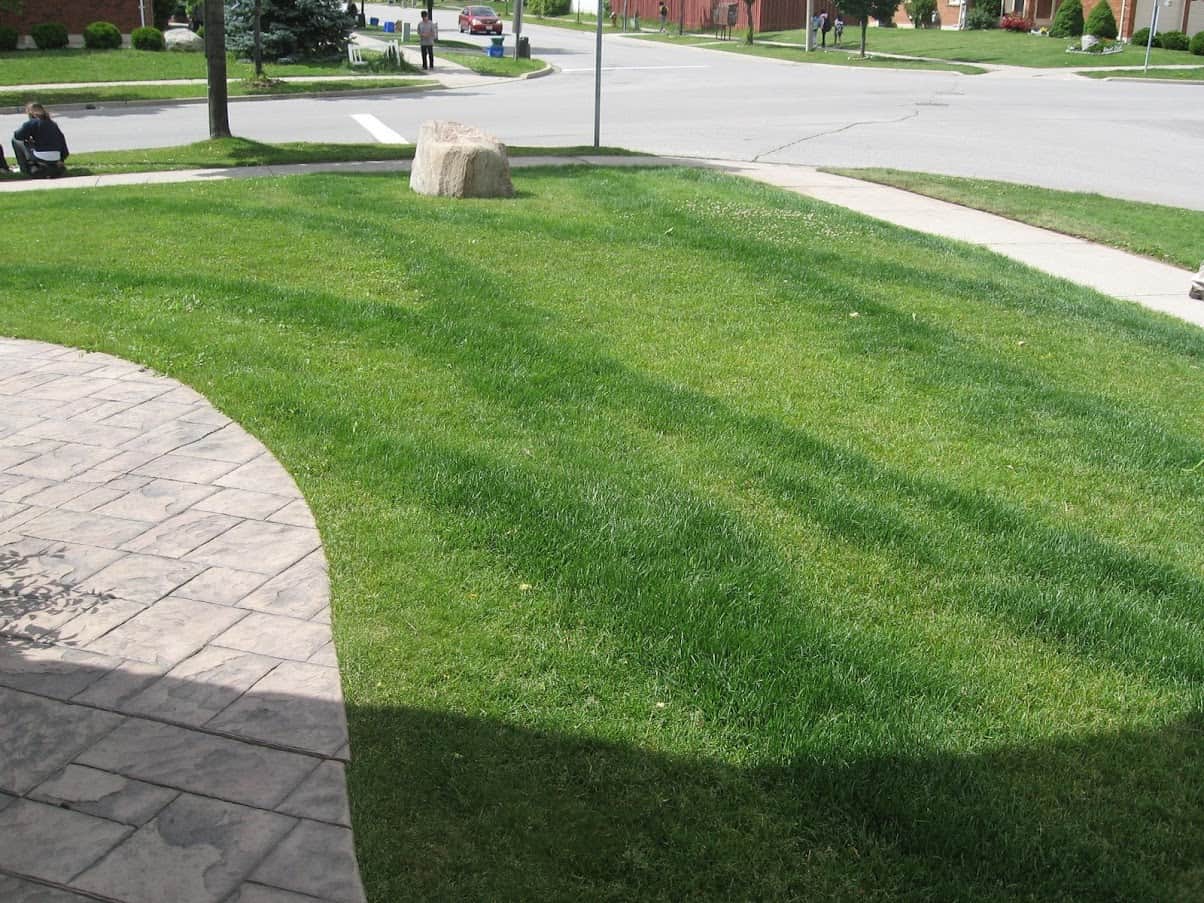
Grass enters winter in a resting state. It still needs stored energy to survive cold weather and begin spring growth. A moderate mowing height leaves enough leaf tissue for the plant to protect its crown and maintain healthy roots.
Grass that is too tall can bend and form a damp mat. That mat blocks air and light near the soil surface. It can increase the risk of snow mold, especially where snow stays on the ground for many weeks.
Grass that is cut too short has a different problem. Short blades expose the crown to wind, cold, and sudden temperature changes. Scalping can also weaken the lawn and allow weeds to gain space in spring.
A good final cut is like tucking the lawn in for winter. It should be neat and short, but not shaved down to the soil.
How Short to Cut Grass Before Winter by Grass Type
Cool-season grass
Cool-season lawns are common across the northern United States and parts of the transition zone. They include Kentucky bluegrass, fescue, and perennial ryegrass.
For these lawns, set the mower near 2½ to 3 inches for the final cut. Tall fescue may perform better at the upper end of that range because its deeper roots and coarser blades benefit from a little extra leaf height.
If your grass is still growing, lower the height gradually. For example, mow at 3½ inches first, then make the final cut at 3 inches several days later. This follows the one-third rule and reduces stress.
Warm-season grass
Warm-season grasses grow best in hot weather. Common types include Bermuda, Zoysia, St. Augustine, and centipedegrass.
These grasses usually go dormant after cold weather arrives. Many can be cut shorter than cool-season grass, but the exact height depends on the variety and your mowing habits.
Bermudagrass often handles a final height near 1 to 1½ inches. Zoysia may be left around 1 to 2 inches. St. Augustine and centipedegrass should not be scalped unless local turf guidance recommends it.
The answer to how short to cut grass before winter for warm-season lawns should always consider the plant’s natural growth pattern. A low cut may help reduce winter matting, but an overly low cut can expose the crown.

When to Make the Final Mow
The best time for the last mow is based on grass growth, not a fixed calendar date. In many areas, the final cut happens between late October and early December. Northern lawns may stop growing sooner, while southern lawns may need mowing well into late fall.
Watch for these signs:
• Night temperatures are often below 50°F.
• Daytime growth has slowed.
• The lawn needs more than a week between mowing sessions.
• A hard frost is approaching.
• The grass has not yet become wet and matted.
Try to finish the final mowing before the ground freezes. If the lawn continues to grow after that cut, you may need one more light mow during a mild spell.
Avoid mowing when the grass is frozen. Frozen blades can break instead of cutting cleanly. Also avoid mowing very wet soil because mower wheels can create ruts and compact the root zone.
Learning how short to cut grass before winter is useful, but timing is just as important as height. A perfect height at the wrong time can still cause damage.

How to Prepare the Lawn for Its Last Cut
A little preparation makes the final mow safer and cleaner. Walk over the lawn and remove branches, toys, stones, and other objects. Cold weather can make some debris hard to see beneath leaves.
Check the mower blade before cutting. A sharp blade makes a clean cut, while a dull blade tears the grass. Torn tips lose moisture faster and may look brown or ragged.
Use this simple preparation checklist:
-
Rake or mulch heavy leaf cover.
-
Check the mower blade for sharpness.
-
Set the deck to the planned final height.
-
Mow only when the grass is dry.
-
Change direction from your usual mowing pattern.
-
Remove clumps of grass after mowing.
Changing direction helps prevent ruts and reduces the chance of pushing grass into one repeated pattern. It also helps the lawn stand upright before winter.
One mistake I often see in home lawns is making a dramatic height change during the last mow. Gradual cuts are kinder to the plant and usually produce a better spring lawn.

The One-Third Mowing Rule
Never remove more than one-third of the grass blade in a single mowing session. This rule applies in fall, spring, and summer.
For example, if your lawn is 4 inches tall, do not cut it straight down to 2½ inches. Remove no more than about 1⅓ inches first. Wait several days, then make another cut if needed.
The one-third rule protects the grass from sudden stress. It also reduces the amount of clippings left on the surface.
If the grass became too tall because of rain or a busy schedule, raise the mower deck. Make a second cut later rather than forcing the mower to remove too much at once.
This is one of the most important answers to how short to cut grass before winter. The final number matters, but the way you reach that number matters too.
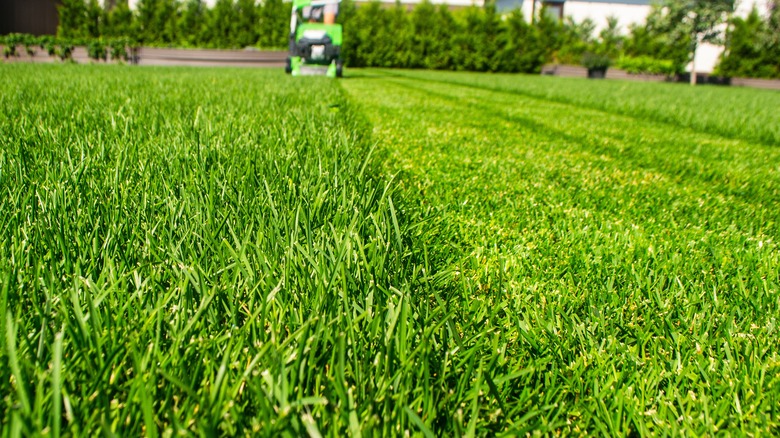
Should You Bag or Mulch the Grass?
You can mulch the final clippings if they are light and spread evenly. Small clippings break down quickly and return nutrients to the soil. They do not usually cause a problem when they do not form thick piles.
Bag clippings when the grass is long, wet, or covered with leaves. Heavy clumps can block light and air. They may also create damp patches that last through winter.
Leaves deserve special attention. A thick layer of leaves can smother grass, trap moisture, and encourage disease. Mulch a thin layer with the mower or rake away heavier coverage.
A useful rule is simple:
• Light leaf cover: Mulch it into the lawn.
• Heavy leaf cover: Remove it or compost it.
• Wet clumps: Bag or rake them away.
The goal is not to make the lawn perfectly bare. The goal is to leave the surface open, dry, and free of thick plant debris.

Common Mistakes to Avoid Before Winter
Many winter lawn problems begin with one rushed fall mowing session. Avoid these common errors:
• Cutting the lawn extremely short: This can weaken the crown and expose the soil.
• Leaving the grass too tall: Long blades may bend under snow and remain wet.
• Mowing wet grass: Wet mowing creates clumps and may compact the soil.
• Using a dull blade: Torn grass tips heal slowly in cold weather.
• Ignoring leaves: A thick leaf layer can block air and light.
• Mowing frozen grass: Frozen blades may crack or break.
• Fertilizing without a soil test: Extra nutrients are not always helpful and may wash away.
• Parking equipment on the lawn: Heavy weight can compact soil and crush dormant grass.
Another common mistake is assuming that every brown lawn is dead. Warm-season grass often turns brown naturally after frost. Avoid cutting it repeatedly once growth has stopped unless you need to remove long or uneven blades.

Other Fall Lawn Care Steps
The final mow is only one part of winter preparation. Healthy soil and good drainage also help grass handle cold weather.
Consider these fall tasks:
• Aerate compacted soil while the grass is actively growing.
• Overseed thin cool-season areas at the proper local time.
• Apply fertilizer only when a soil test or local guidance supports it.
• Repair drainage problems that leave standing water.
• Keep leaves and heavy debris off the lawn.
• Clean and store the mower after the final cut.
Fall aeration is most useful when soil is compacted and the grass can recover before winter. Do not aerate frozen or waterlogged soil.
A soil test can show whether the lawn needs lime, potassium, or other nutrients. Avoid guessing. More fertilizer does not always mean a healthier lawn, and excess nutrients can move into waterways.
Regional Advice for Winter Mowing
Northern states
Northern lawns often contain cool-season grass. The final mow is commonly near 2½ to 3 inches. Finish before regular snow cover and remove heavy leaves.
Southern states
Southern lawns often contain warm-season grass. The lawn may go fully dormant after a hard freeze. Cut according to the grass type, and avoid scalping unless a local specialist recommends it.
Transition zones
Transition zones can be difficult because both cool-season and warm-season grasses may grow there. Weather can change quickly, so watch the lawn instead of relying only on the calendar.
Local extension offices, turf specialists, and university lawn programs often provide region-specific mowing heights. Their advice is useful because soil, rainfall, grass varieties, and winter conditions vary widely.
A Simple Final-Mow Plan
Use this five-step plan when preparing your lawn:
-
Identify the grass type.
-
Watch for slower growth and colder nights.
-
Reduce the height gradually if the grass is too tall.
-
Make the final cut on a dry day.
-
Clear thick clippings and leaves from the surface.
For most cool-season lawns, finish near 2½ to 3 inches. For warm-season lawns, use the lower height recommended for that variety, but do not scalp healthy crowns.
If snow is expected soon, prioritize a clean, dry lawn over a perfect measurement. A slightly taller lawn is usually safer than one cut too short.
Frequently Asked Questions About How Short to Cut Grass Before Winter
How short should I cut my lawn before the first snow?
Most cool-season lawns should be cut to about 2½ to 3 inches before winter. Warm-season grasses may be cut shorter, but the correct height depends on the variety and local weather.
Is it better to cut grass short or leave it long for winter?
Neither extreme is best. Grass that is too long may mat under snow, while grass that is too short may suffer crown and root damage.
Should I mow after the first frost?
Avoid mowing when the grass is frozen or covered with frost. Wait for a dry, mild day if the lawn still needs a light final cut.
Can I cut grass to 1 inch before winter?
A 1-inch cut may work for some warm-season grasses, such as certain Bermuda lawns. It is usually too short for most cool-season lawns and can increase winter stress.
Should I bag grass clippings during the last mow?
Bag clippings when they are wet, heavy, or mixed with thick leaves. You can mulch light, dry clippings if they spread evenly and do not form piles.
What happens if I cut grass too short before winter?
Very short grass has less leaf tissue to protect the crown and store energy. It may also be more exposed to cold, wind, drying, and weed pressure in spring.
Conclusion
The best answer to how short to cut grass before winter is usually 2½ to 3 inches for cool-season grass. Warm-season lawns may need a shorter final height, but the grass type and local climate should guide your choice. Mow on a dry day, follow the one-third rule, use a sharp blade, and remove thick leaves and clippings.
A careful final cut gives your lawn a better chance to rest through winter and return strong in spring. Check your grass type, set the mower correctly, and share your lawn-care questions or results in the comments.
