How Much Does A Remote Control Lawn Mower Cost: Price Guide
Introduction
A remote control lawn mower costs about $5,000 to $30,000 in the United States for most professional-grade machines. Heavy-duty commercial units for steep slopes, brush, and land clearing can cost $30,000 to $60,000 or more. Smaller remote-controlled units may cost less, but they often have fewer safety features, a smaller cutting width, and lower output.
The final price depends on the mower type, cutting width, engine or battery system, remote range, slope rating, attachments, shipping, and dealer setup. A mower that looks affordable at first can cost much more after adding a flail head, spare batteries, a trailer, maintenance tools, and sales tax.
This guide explains the real cost of a remote control lawn mower in the U.S., what affects the price, and how to compare the total cost before you buy.

Remote Control Lawn Mower Price Ranges in the U.S.
The broad price range is easiest to understand by separating consumer, commercial, and slope-mowing equipment.
| Mower type | Typical U.S. price | Best suited for |
|---|---|---|
| Small remote-controlled mower | $3,000–$8,000 | Small lots, light grass, basic private use |
| Professional remote-controlled mower | $8,000–$20,000 | Landscapers, farms, estates, and large properties |
| Heavy-duty slope mower | $15,000–$35,000 | Hillsides, roadsides, drainage areas, and rough land |
| Commercial land-clearing mower | $30,000–$60,000+ | Thick brush, steep terrain, and long work cycles |
| Remote-control conversion kit | $2,000–$10,000+ | Converting a compatible mower or equipment platform |
| Robotic autonomous mower | $1,000–$6,000+ | Routine lawn mowing on prepared lawns |
These are planning ranges, not guaranteed retail prices. Many commercial remote mowers are sold through dealers and priced by quote. Attachments, freight, setup, and local taxes may not appear in the first advertised price.
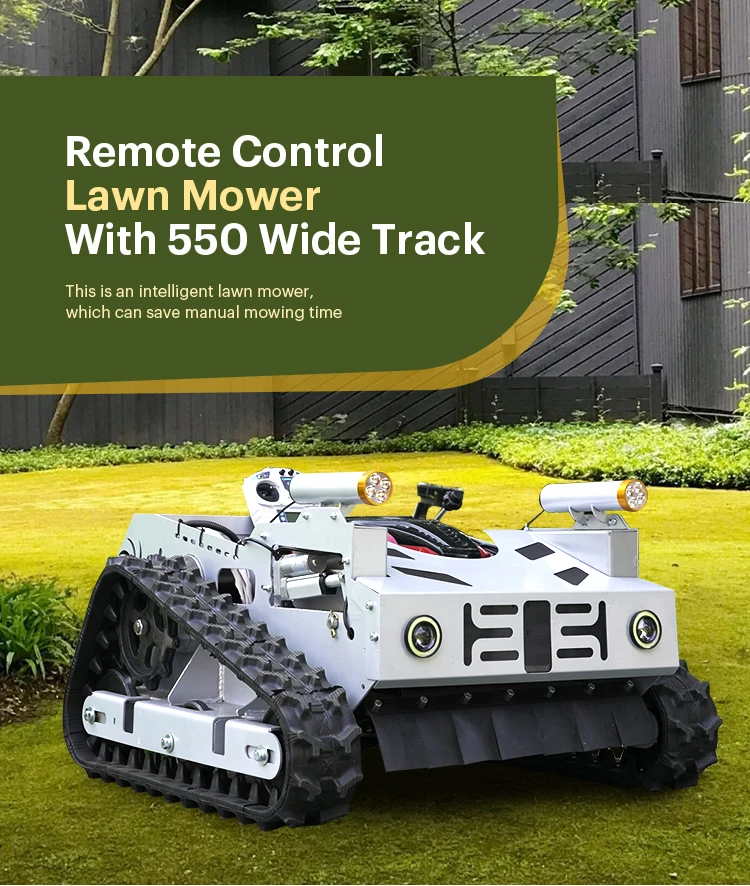
A remote-controlled mower is not always the same as a robotic lawn mower. A robotic mower usually follows a programmed route and cuts grass on its own. A remote-controlled mower is operated by a person using a handheld transmitter. It is often built for steep slopes, tall vegetation, and areas where a person should not sit on or walk behind the machine.
What most buyers should budget
For a serious U.S. buyer, a practical starting budget is:
- $8,000 to $15,000 for a basic professional machine.
- $15,000 to $30,000 for a stronger slope mower with a flail deck or similar attachment.
- $30,000 or more for commercial land clearing and frequent heavy use.
If a machine costs $12,000 but needs $3,000 in accessories and $1,500 in freight and setup, the real purchase price is closer to $16,500 before tax. Compare the complete package, not only the mower body.

What Affects the Cost of a Remote-Controlled Mower?
The mower’s cutting system, power source, control system, and intended terrain have the greatest effect on price.
Cutting width and mower deck
A wider cutting deck can cover more ground in each pass. It also needs more power and stronger drive parts. This raises the price.
Common cutting widths may range from about 20 inches on smaller units to more than 60 inches on large commercial machines. A wider deck is useful on open land, but it may be harder to control around trees, gates, ditches, and narrow paths.
A flail mower head usually costs more than a basic rotary deck. Flail cutters use many small blades or hammers and can handle heavier vegetation. They may also produce a more even cut in rough areas, but replacement parts and maintenance can cost more.
Engine or battery system
Gas-powered remote mowers often cost less to operate for long work periods because refueling is fast. They can also provide steady power for thick grass and brush. Their drawbacks include engine maintenance, fuel storage, noise, fumes, and vibration.
Battery-powered models may cost more at the start. They can be quieter and simpler to maintain, but the usable work time depends on battery size, grass height, slope, temperature, and cutting load.
A battery model may require:
- One or more high-capacity battery packs
- A commercial charger
- A second battery for continuous work
- A protected charging area
- Battery replacement after years of use
Do not compare a gas mower with a battery mower by purchase price alone. Compare the energy cost, work time, charging needs, and expected battery replacement cost.
Remote control range and signal protection
Basic systems may work at short range and offer only simple forward, reverse, steering, and blade controls. Higher-priced systems may provide greater range, emergency stop functions, signal-loss shutdown, speed control, and feedback about the machine.
A long advertised range does not guarantee the same range in a real yard. Trees, buildings, hills, metal structures, and power equipment can affect radio signals. Ask the dealer how the mower behaves when the signal is lost.
Slope capability
Slope performance is one of the main reasons buyers choose a remote mower. A tracked machine may cost more than a wheeled machine because its design can provide more grip and stability on uneven ground.
Never judge slope safety by the claimed angle alone. The safe working limit depends on:
- Surface condition
- Wet grass or loose soil
- Side-hill versus straight-up travel
- Attachment weight
- Machine speed
- Tire or track condition
- Operator position
- Nearby people, roads, and property
A mower designed for slopes is not automatically safe on every slope. Follow the exact operator manual and local safety rules.
Frame, tracks, and drive system
Steel frames, reinforced decks, hydraulic drives, tracks, and high-output engines can add thousands of dollars to the price. These parts matter when the mower will face rocks, roots, thick brush, or many hours of use.
A low-cost mower may be suitable for short grass on a maintained property. It may not be suitable for land clearing. Using a light-duty machine in heavy brush can increase downtime and repair costs.
Attachments and accessories
The attachment can be a major part of the total price. Common options include:
- Rotary cutting decks
- Flail heads
- Brush-cutting heads
- Forestry mulchers
- Snow blades
- Leaf blowers
- Winches
- Extra batteries
- Spare remote controls
- Transport trailers
- Ramps
- Protective covers
A mower with a low base price may become expensive after adding the attachment needed for your actual work.

Remote-Controlled Mower Cost by Use Case
The right price depends on what the mower must do. A homeowner cutting a flat lawn has different needs from a contractor clearing roadside brush.
Homeowners with steep or difficult yards
A homeowner may spend $5,000 to $15,000 for a smaller remote-controlled mower. This can make sense when the property has steep banks, wooded edges, or areas that are unsafe to mow with a ride-on machine.
For a normal flat lawn, a standard riding mower or robotic mower is usually less expensive. A remote mower becomes more useful when it reduces the need to work on unstable ground or near obstacles.
Farms and rural properties
Farm owners may spend $10,000 to $30,000 for a machine that cuts tall grass, weeds, and rough vegetation. The best choice depends on acreage, terrain, and how often the mower will be used.
A farm mower should have accessible service points, strong parts support, and an attachment that matches the vegetation. A model that can only cut short lawn grass may not handle pasture edges or heavy weeds.
Landscaping and property maintenance businesses
Professional landscapers often need a mower that can work for several hours, travel between sites, and receive quick repairs. A typical budget may range from $15,000 to $35,000 or more.
Commercial buyers should consider the cost per productive hour. A more expensive mower may be reasonable if it reduces labor exposure on steep slopes, finishes work faster, or replaces a two-person task.
Roadside, utility, and drainage work
Roadside and drainage areas can have steep banks, hidden debris, and traffic hazards. Heavy-duty remote mowers for this work may cost $20,000 to $60,000 or more, especially when equipped with a flail head or brush attachment.
The buyer may also need warning equipment, transport gear, spare cutting parts, and a written work-zone safety plan. The mower price is only one part of the project cost.
Brush and land clearing
A machine used for woody plants, vines, and dense brush needs more than a remote control. It needs a deck or attachment rated for that material.
Expect to pay $25,000 to $60,000 or more for commercial land-clearing equipment. A forestry-style attachment can add a large amount to the cost and may require a higher-output power system.

The Total Cost of Owning a Remote Control Lawn Mower
The purchase price is only the first expense. Use a total-cost estimate before making a decision.
Initial purchase costs
The first invoice may include:
- Base mower
- Cutting deck or attachment
- Remote transmitter
- Battery or fuel system
- Charger
- Dealer setup
- Freight
- Sales tax
- Training
- Warranty upgrade
Ask for a written quote that lists each item. This helps reveal whether the advertised price includes the cutting attachment and remote control.
Transport costs
Many remote mowers are too large or heavy for a normal vehicle. You may need a trailer, ramps, tie-downs, and a vehicle with enough towing capacity.
A commercial trailer can add several thousand dollars. Freight may also be significant if the machine ships from another state or from outside the United States.
Maintenance and repair
Regular maintenance may include:
- Blade or hammer replacement
- Belt inspection
- Hydraulic service
- Track or tire replacement
- Engine oil and filter changes
- Battery care
- Remote-control battery replacement
- Cleaning after muddy work
- Fastener and frame checks
Rough terrain increases wear. Rocks, wire, stumps, and hidden metal can damage cutting parts and drive components.
Insurance and business costs
A business may also need commercial insurance, equipment coverage, theft protection, and registration or documentation required by its work contracts. These costs vary by state, business type, and job site.
Do not assume that a remote mower removes all workplace risk. The operator still needs training, a safe exclusion zone, and procedures for emergencies.
Example ownership calculation
Consider this hypothetical purchase:
| Cost item | Example amount |
|---|---|
| Remote mower and cutting deck | $18,000 |
| Freight and dealer setup | $1,500 |
| Spare cutting parts | $800 |
| Trailer and ramps | $3,000 |
| First-year maintenance reserve | $1,200 |
| Estimated sales tax | $1,800 |
| Estimated first-year total | $26,300 |
This is only an example. Local tax, freight, machine size, and attachment choice can change the total.
If the mower replaces 100 hours of risky manual or ride-on work each year, divide the annual ownership cost by those productive hours. This does not prove that the mower will pay for itself, but it gives a clearer comparison with labor, contractor fees, and equipment rental.

Remote Control Mower vs. Robotic Mower
A remote-controlled mower and a robotic mower serve different jobs.
| Feature | Remote-controlled mower | Robotic autonomous mower |
|---|---|---|
| Main use | Rough ground, slopes, brush | Routine lawn maintenance |
| Operator | Person controls the machine | Machine follows a programmed plan |
| Typical price | About $5,000–$60,000+ | About $1,000–$6,000+ |
| Cutting style | Often larger and more aggressive | Frequent light mowing |
| Terrain | May handle difficult slopes | Usually needs a prepared lawn |
| Setup | Operator training and transport | Boundary or navigation setup |
| Best advantage | Control in difficult areas | Low routine labor |
A robotic mower is usually the lower-cost choice for a flat, maintained lawn. A remote-controlled mower is usually the better match for steep banks, rough grass, ditches, and brush.
Some products use the term “remote” for an app-controlled robotic mower. Check whether the machine is truly controlled in real time by a handheld transmitter or simply scheduled through an app.

How to Choose a Remote Control Lawn Mower
Start with the work site, not the brand name or the advertised range.
1. Measure the terrain
Record the approximate:
- Mowing area
- Steepest slope
- Narrowest access point
- Distance from the operator to the mower
- Number of trees and obstacles
- Type and height of vegetation
- Wet or soft areas
- Rocks, roots, wires, and other hazards
Photos and slope measurements can help a dealer recommend the correct class of machine.
2. Define the cutting job
Decide whether you need to cut:
- Short lawn grass
- Tall weeds
- Pasture grass
- Brambles and vines
- Small woody growth
- Snow or other material
Do not buy a machine for heavy brush if the included deck is designed only for lawn grass.
3. Set a complete budget
Include the machine, attachment, freight, tax, trailer, spare parts, maintenance, and training. If the budget only covers the base mower, the machine may not be ready for work.
4. Check service support
Ask these questions before ordering:
- Is there a U.S. dealer or service center?
- How long do common parts usually take to arrive?
- Can the dealer service the engine, hydraulics, tracks, or controller?
- Is software or a special diagnostic tool required?
- What does the warranty exclude?
- Is training included?
A lower purchase price can lose its value if repairs require long-distance shipping.
5. Read the operator manual
Review the manual before paying a deposit. Look for the rules on slopes, signal loss, emergency stops, transport, cleaning, maintenance, and bystanders.
If the dealer cannot provide the manual, safety instructions, and specifications, treat that as a warning sign.

Safety Rules for Remote-Controlled Mowers
Remote control does not mean risk-free. The operator must remain alert and keep other people away from the work area.
Follow these basic rules:
- Read the manufacturer’s manual before operation.
- Keep children, pets, and bystanders outside the exclusion zone.
- Wear the personal protective equipment listed by the manufacturer.
- Inspect the ground for wire, rocks, glass, stumps, and hidden objects.
- Test the emergency stop before cutting.
- Confirm what happens when the remote signal is lost.
- Never stand downhill from a machine on a slope.
- Do not operate near traffic without a proper work-zone plan.
- Stop the machine before clearing a jam.
- Disconnect power or remove the key before servicing.
- Do not bypass guards, interlocks, or shutdown systems.
- Avoid mowing wet slopes unless the manual specifically allows it.
- Keep the transmitter secure so it cannot be pressed by mistake.
The Occupational Safety and Health Administration provides workplace safety guidance, but the mower’s manual remains essential because it contains model-specific limits. For commercial work, consult the applicable federal, state, and local requirements.
Common Buying Mistakes
The most common mistake is comparing base prices without comparing the complete working package.
Buying for the maximum slope rating
A claimed maximum slope is not a promise of safe operation in every condition. Wet grass, loose soil, side travel, and a heavy attachment can change the result.
Choosing the wrong attachment
A lawn deck may not be suitable for brush. A flail head may be better for rough weeds, while a forestry attachment may be needed for woody growth. Match the tool to the material.
Ignoring transport
A mower that cannot reach the job site is not useful. Confirm its width, weight, loading method, and towing requirements.
Failing to price spare parts
Blades, hammers, belts, tracks, and remote batteries are wear items. Ask for current prices before buying.
Assuming remote operation needs no training
Remote control reduces the need to sit on the mower. It does not remove the need to understand stability, cutting hazards, signal loss, and emergency procedures.
Buying from an unsupported seller
A commercial machine needs parts and service. Check the dealer’s U.S. support, warranty process, and repair capability.

Frequently Asked Questions
Is a remote control lawn mower worth the money?
It can be worth the money when it reduces exposure to steep slopes, rough ground, brush, or roadside hazards. It is usually harder to justify for a small, flat lawn that a conventional mower can handle safely.
What is the cheapest remote-controlled lawn mower?
Small remote-controlled units may start around $3,000 to $8,000, but prices vary widely. Low-cost models may have limited cutting width, range, power, slope ability, and service support. Check the complete working price before comparing them with professional machines.
Can a remote mower cut steep hills?
Some are designed for steep slopes, but the safe limit depends on the model and the site. Read the operator manual and consider ground condition, direction of travel, attachment weight, and bystander distance. Never assume that a remote mower can safely handle every hill.
Are remote-controlled mowers electric or gas powered?
Both types are available. Gas models are common for long, heavy work. Electric models can be quieter and easier to maintain but may need extra batteries and charging time.
Do remote-controlled mowers mow by themselves?
Usually, no. A remote-controlled mower is operated by a person using a transmitter. An autonomous robotic mower follows a programmed route or navigation system. Product descriptions sometimes use these terms loosely, so verify how the machine actually operates.
Conclusion
A remote control lawn mower generally costs $5,000 to $30,000 in the U.S., while heavy-duty commercial machines can exceed $60,000. For many professional buyers, $15,000 to $30,000 is a realistic planning range once the mower has the power and attachment needed for slopes or rough vegetation.
The best value comes from matching the machine to the job. Compare cutting equipment, slope limits, service support, transport, maintenance, and safety features—not just the advertised base price. Before buying, request a complete U.S. quote and read the exact operator manual for the model under consideration.