
How Many Acres Can A Robot Mower Mow: Coverage Guide
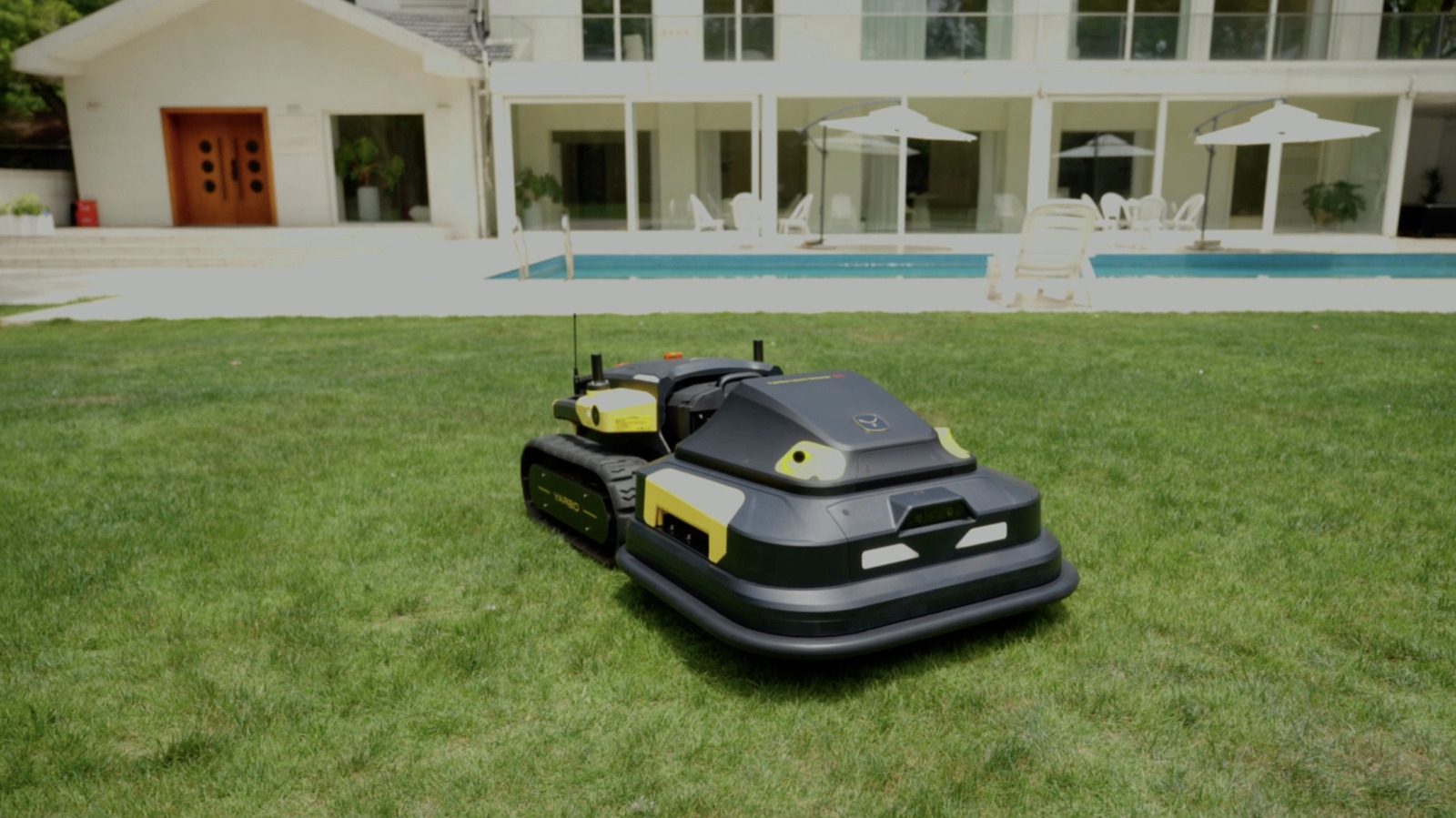
For most American homeowners, a residential robot mower can mow about 0.15 to 1 acre, depending on the model, lawn shape, mowing schedule, terrain, and navigation system. Smaller models may handle only a quarter acre, while large residential or commercial units can cover 1 acre or more.
The number printed on the box is usually the mower’s maximum rated lawn area. It is not always the same as the amount of usable grass on a complex property. A lawn with steep slopes, many trees, narrow gates, or divided sections may need a mower rated for more acreage than the lawn’s actual size.
One acre equals 43,560 square feet. A half-acre lawn contains about 21,780 square feet, while a quarter-acre lawn contains about 10,890 square feet.

Quick Answer: What Acreage Can a Robot Mower Handle?
A typical residential robot mower can cover the following approximate lawn areas:
| Robot mower size | Common rated capacity | Best fit |
|---|---|---|
| Small | 0.15–0.25 acre | Small suburban lawns |
| Medium | 0.25–0.5 acre | Average American yards |
| Large residential | 0.5–1 acre | Large lawns and estates |
| Commercial or heavy-duty | 1 acre or more | Large open properties |
These are planning ranges, not universal product limits. Each manufacturer rates its mower under specific conditions. Some ratings assume long daily operating periods, simple lawn layouts, and few obstacles.
For example, a mower rated for 0.5 acre may technically cover 21,780 square feet. However, a property with several separate zones may require more setup time and less efficient travel than one large, open lawn.
The safest approach is to choose a model whose rated capacity is at least 20% to 30% higher than your actual grass area. A larger margin may be wise for steep, complex, or heavily landscaped yards.
What Does a Robot Mower’s Acreage Rating Mean?
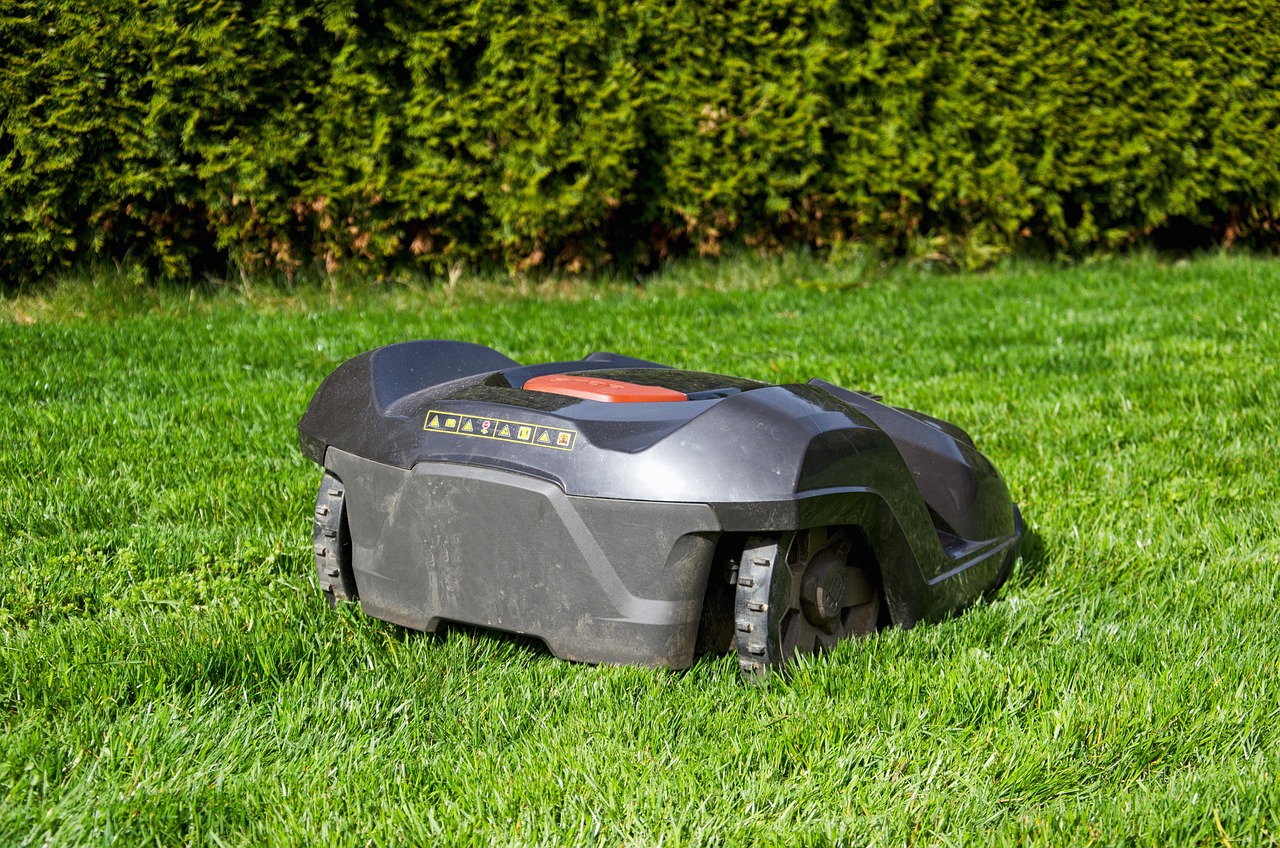
A robot mower’s acreage rating is the maximum lawn area the manufacturer expects the machine to maintain during its normal operating schedule. It is not the amount of grass the mower cuts in one trip.
Robot mowers usually work by making repeated, short mowing runs. The mower returns to its charging station when its battery is low, recharges, and then resumes mowing. Over several hours or days, it keeps the grass short rather than cutting the entire lawn at once.
Manufacturers use different rating methods. Some list a maximum cutting area in square feet or square meters. Others describe the mower as suitable for a certain lawn size. The rating may depend on:
- Daily operating hours
- Battery capacity
- Cutting width
- Travel speed
- Charging time
- Lawn complexity
- Slope limits
- Required rest periods
- Whether the mower can work at night
The product manual is more useful than a general advertising claim. Check the exact United States model and its manual before buying. Product lines from Husqvarna, Worx Landroid, Segway Navimow, and Mammotion include models with different area limits.
How to Calculate the Lawn Area a Robot Mower Must Cover
Measure the grass area, not the total size of the property. Do not include the house, driveway, patio, pool deck, wooded areas, or planting beds.
Use this basic conversion:
- Square feet ÷ 43,560 = acres
- Acres × 43,560 = square feet
Example: A quarter-acre lawn
A quarter acre equals:
43,560 × 0.25 = 10,890 square feet
A mower rated for 0.25 acre may be able to maintain that lawn. Still, a model rated for 0.33 or 0.4 acre gives more room for obstacles, edge work, and weather delays.
Example: A half-acre lawn
A half acre equals:
43,560 × 0.5 = 21,780 square feet
For this property, look for a mower rated for at least 0.6 to 0.75 acre if the yard has slopes, trees, tight passages, or multiple lawn zones.
For several lawn sections
Add the grass areas together:
- Front lawn: 6,000 square feet
- Back lawn: 12,000 square feet
- Side lawn: 3,000 square feet
Total:
21,000 square feet ÷ 43,560 = 0.48 acre
This yard is just under half an acre. A mower rated for 0.5 acre may work, but a higher-rated model would provide a better operating margin.

How Much Lawn Can a Robot Mower Cut Per Day?
A robot mower’s daily coverage depends on how long it can work and how often it must recharge. A mower with a shorter run time may still maintain a large lawn if its schedule allows it to operate for many hours each day.
A simple planning formula is:
Daily coverage = effective cutting rate × mowing hours
The effective cutting rate includes travel speed, cutting width, turning, overlap, and time spent avoiding obstacles. The published acreage rating already combines many of these factors, so homeowners usually do not need to calculate the exact cutting rate.
Instead, compare these specifications:
| Specification | Why it matters |
|---|---|
| Rated lawn area | Shows the manufacturer’s intended maximum coverage |
| Battery run time | Determines how long the mower can work before charging |
| Charging time | Affects how many work cycles fit into a day |
| Cutting width | A wider deck can cover more ground per pass |
| Schedule limits | Determines whether the mower can run long enough |
| Multi-zone support | Helps manage separate lawn sections |
| Navigation type | Affects travel efficiency and boundary control |
A mower may have enough battery power for a large area but still struggle if it spends much of the day navigating narrow paths or avoiding obstacles.

Real-World Factors That Reduce Coverage
The most important acreage limit is often the lawn itself. Two properties with the same square footage can place very different demands on a robot mower.
Lawn shape
A simple rectangle is easier to mow than a lawn with many corners. Curved borders, small pockets of grass, and narrow strips force the mower to turn more often.
Slopes
Many robot mowers have a maximum slope rating. Manufacturers may state this rating in degrees or as a percentage. These measurements are not interchangeable.
A steep slope can also reduce traction, increase wheel slip, and make the mower less efficient. Always compare the exact slope rating with the steepest part of the lawn.
Obstacles
Trees, play sets, garden beds, fire pits, bird baths, and decorative stones can slow the mower. Objects that are not clearly marked may also create collision or blade hazards.
Separate zones
Some properties have a front yard and back yard with no connecting grass path. A robot mower may support multiple zones, but the owner may need to move the mower between areas manually unless the system has a suitable route.
Narrow passages
A passage can be wide enough for the mower but still difficult if it includes a sharp turn, slope, loose soil, or a raised edge. Check the mower’s minimum passage width in the manual.
Weather and grass growth
Rain can make slopes slippery and may cause some models to return to the dock. Wet grass can also collect under the deck and increase cleaning needs. During fast spring growth, the mower may need more frequent operation to keep up.

Does Cutting Width Affect Acreage Capacity?
Cutting width affects coverage, but it is only one part of the answer. A wider cutting deck can cut more grass per pass, while a narrower mower may fit through tighter areas.
For example:
- A narrow deck may suit a small, complex yard.
- A wider deck may suit a large, open lawn.
- A wider deck does not guarantee better performance on steep or crowded properties.
- A mower with strong navigation may cover a complex lawn more efficiently than a faster but less precise model.
Most residential robot mowers use a relatively small cutting deck compared with riding mowers. They make up for this by mowing frequently. The goal is not to remove several inches of grass in one session. The goal is to remove small amounts often.
This frequent-cut method works best when the mower follows the manufacturer’s recommended mowing schedule and the grass is already at a manageable height.

How to Choose a Robot Mower by Acreage
Choose the mower by matching its rated lawn area to the measured grass area, then adjust for the property’s difficulty.
For lawns under 0.25 acre
A small residential mower may be enough if the lawn is mostly flat and open. Focus on:
- Reliable boundary control
- Narrow passage performance
- Edge-cutting ability
- Security features
- Low-noise operation
- Simple app controls
For lawns from 0.25 to 0.5 acre
A medium-capacity model is often a practical fit. Consider a higher rating if the lawn has several trees, slopes, or separate areas.
Look for:
- Multi-zone support
- Rain handling
- Strong traction
- A charging station with a clear approach
- Adjustable schedules
- Theft alerts or GPS features where available
For lawns from 0.5 to 1 acre
Choose a mower rated above the measured lawn size. A model with a 0.75- to 1-acre rating may be more suitable than one rated exactly for 0.5 acre.
Prioritize:
- Long daily operating capacity
- Efficient navigation
- Reliable boundary mapping
- Good slope performance
- Large-area service support
- Easy blade and wheel maintenance
For more than 1 acre
Large properties may need a commercial-grade robot mower, multiple units, or a traditional mowing system. Before buying, confirm:
- The actual maximum area
- Whether the mower supports multiple zones
- How the mower handles disconnected areas
- Cellular, Wi-Fi, GPS, or radio coverage
- Charging-station placement
- Local dealer and repair support
- Replacement battery and blade costs
A large lawn is not automatically a good fit for one robot mower. The layout may matter more than the acreage.

Boundary Wire or Wireless Navigation: Which Is Better for Large Lawns?
Both systems can maintain large lawns, but they solve different problems.
Boundary-wire systems
A boundary-wire mower uses a low-voltage wire around the mowing area. The wire defines the work zone and can also mark flower beds, ponds, trees, and other areas.
Advantages include:
- Clear and predictable boundaries
- No dependence on satellite signals
- Good control around beds and edges
- Proven operation on many lawn shapes
Limitations include:
- Installation takes time
- Wires can break or become exposed
- Underground obstacles may complicate installation
- Changes to the lawn require boundary adjustments
Wireless or satellite-guided systems
Wireless models may use GPS, RTK positioning, cameras, radio signals, or combinations of sensors. They can reduce the need for physical boundary wire, but performance depends on the technology and property conditions.
Potential limits include:
- Weak satellite visibility under dense trees
- Signal blockage near tall buildings
- Setup requirements for antennas or reference stations
- Need for good map calibration
- Possible loss of precision in narrow or enclosed areas
For a large, open American lawn, wireless navigation may simplify setup. For a yard with mature trees, narrow side passages, or many landscape borders, a well-installed boundary-wire system may be easier to control.

Can a Robot Mower Handle One Acre?
Yes, some robot mowers can handle one acre, but the exact model must be rated for that area. A one-acre property contains 43,560 square feet of land, and the mower must cover only the grass portion.
A mower rated for one acre may work well on a broad, open lawn. It may be a poor fit for a one-acre property divided into several small sections.
Before choosing a one-acre mower, confirm:
- The mower’s maximum area for the United States model.
- Whether the rating assumes a specific daily schedule.
- The maximum slope.
- The minimum passage width.
- The number of supported zones.
- The required boundary or reference equipment.
- Whether the charging station has reliable power and signal access.
- Whether local service support is available.
The best choice is usually a model with more capacity than the exact lawn measurement. This gives the mower time to rest, recharge, and recover from missed mowing caused by rain or obstacles.

Can a Robot Mower Cut Two or More Acres?
Some commercial and high-capacity robotic systems can maintain more than one acre. However, acreage alone does not prove that one mower will suit the property.
A two-acre property may contain only one large lawn, or it may include a home, driveway, woods, horse areas, gardens, and several disconnected grass sections. The actual mowing area could be much smaller—or much harder to navigate.
For properties above one acre, evaluate the entire mowing system:
- Total grass area
- Number of zones
- Travel paths between zones
- Slope and soil conditions
- Cellular or satellite coverage
- Security and theft risk
- Battery replacement cost
- Dealer installation
- Seasonal storage
- Repair response time
For very large or complex properties, a professional site assessment can prevent an expensive mismatch. A dealer should measure the lawn and explain how the mower will reach each zone before installation.

Common Mistakes When Sizing a Robot Mower
Buying for total property size
The mower needs to maintain grass, not the full lot. Measure usable lawn area instead of relying on the acreage shown in a property record.
Choosing a model at the exact limit
A mower rated for exactly 0.5 acre may work on a simple half-acre lawn. It has less margin on a yard with slopes, obstacles, and separate zones.
Ignoring the slope rating
A mower can have enough acreage capacity but still fail on a steep section. Check the manufacturer’s slope limit for both the main lawn and the approach to the charging station.
Assuming all zones are automatic
Some systems support multiple mapped areas but require the owner to move the mower between disconnected lawns. Confirm this before purchase.
Forgetting edge work
Many robot mowers do not cut perfectly against walls, curbs, fences, and raised beds. You may still need a string trimmer for the edges.
Treating “up to” as a promise
“Up to 1 acre” describes a maximum under stated conditions. It does not guarantee the same result on every property.
Failing to plan the charging station
The station needs power, a stable surface, and a clear route. Poor placement can cause failed docking, signal issues, or repeated trips through a narrow area.
Leaving hazards in the mowing area
Remove toys, hoses, wire, loose stones, and pet waste before mowing. Keep children and pets away during setup and maintenance. Follow the owner’s manual before reaching under the deck or handling blades.

How Much Maintenance Does a Large-Area Robot Mower Need?
A robot mower still needs regular care, even though it reduces manual mowing.
Typical tasks include:
- Cleaning grass from the deck and wheels
- Inspecting and replacing blades
- Checking the boundary wire or positioning equipment
- Cleaning charging contacts
- Inspecting tires and drive parts
- Updating firmware when required
- Checking the battery and charging behavior
- Clearing leaves and debris from the lawn
- Storing the mower during severe winter conditions if the manual requires it
Large lawns create more operating hours. That can increase blade wear, wheel wear, and battery cycles compared with a mower used on a small yard.
Do not spray water into openings unless the manufacturer permits it. Disconnect power and follow the manual before cleaning beneath the mower or replacing blades.

Frequently Asked Questions
Can a robot mower mow a quarter acre?
Yes. Many residential robot mowers are designed for lawns around a quarter acre or less. Select a model with a higher rating if the property has slopes, many obstacles, or multiple zones.
How long does it take a robot mower to mow an acre?
There is no single time for every mower. A robot mower may work for many hours each day, return to charge, and continue later. Battery capacity, cutting width, navigation, grass layout, and the manufacturer’s schedule all affect the result.
Does a robot mower mow the entire lawn every day?
Usually, no. It cuts small amounts on a regular schedule. Frequent mowing keeps the grass short and reduces the need for a long, heavy cutting session.
Can a robot mower work on a sloped lawn?
Many models can handle slopes, but each has a stated limit. Compare the manufacturer’s rating with the steepest part of the lawn. Wet slopes may be harder to navigate than dry slopes.
Is a robot mower worth it for one acre?
It can be worthwhile when the lawn is continuous, accessible, and within the mower’s rated capacity. A traditional mower may remain more practical when the property has steep terrain, rough ground, disconnected zones, or large areas of tall grass.
Key Takeaways
- Most residential robot mowers handle about 0.15 to 1 acre.
- One acre equals 43,560 square feet.
- Measure grass area, not total property size.
- Choose a mower rated above the actual lawn area.
- Slopes, obstacles, narrow paths, and separate zones reduce real-world capacity.
- Check the exact U.S. model’s manual for acreage, slope, zone, and passage limits.
- For properties larger than one acre, consider commercial equipment or a professional site assessment.
Conclusion
A robot mower can mow anywhere from a small suburban lawn to more than an acre, depending on its design and the property. The most reliable choice is not the mower with the biggest acreage claim. It is the mower whose rated capacity, navigation system, slope rating, and zone support match the actual lawn.
Measure the grass in square feet, convert it to acres, and then choose a model with a useful capacity margin. That simple process helps prevent poor coverage, excessive run time, and installation problems.


