What Type Of Gas Does A Lawn Mower Take Fuel: Guide
A typical gas lawn mower takes regular unleaded gasoline. Most four-stroke push, self-propelled, riding, and zero-turn mowers use fresh gasoline with an octane rating of 87 or higher. Many engines can use fuel with up to 10% ethanol, often labeled E10, but you should always check the owner’s manual first.
The key detail is the engine type. A four-stroke mower takes gasoline in the fuel tank and engine oil in a separate crankcase. A two-stroke mower needs gasoline mixed with the correct amount of two-cycle oil. Putting the wrong fuel or oil mixture in a mower can cause hard starting, smoke, poor performance, or costly engine damage.
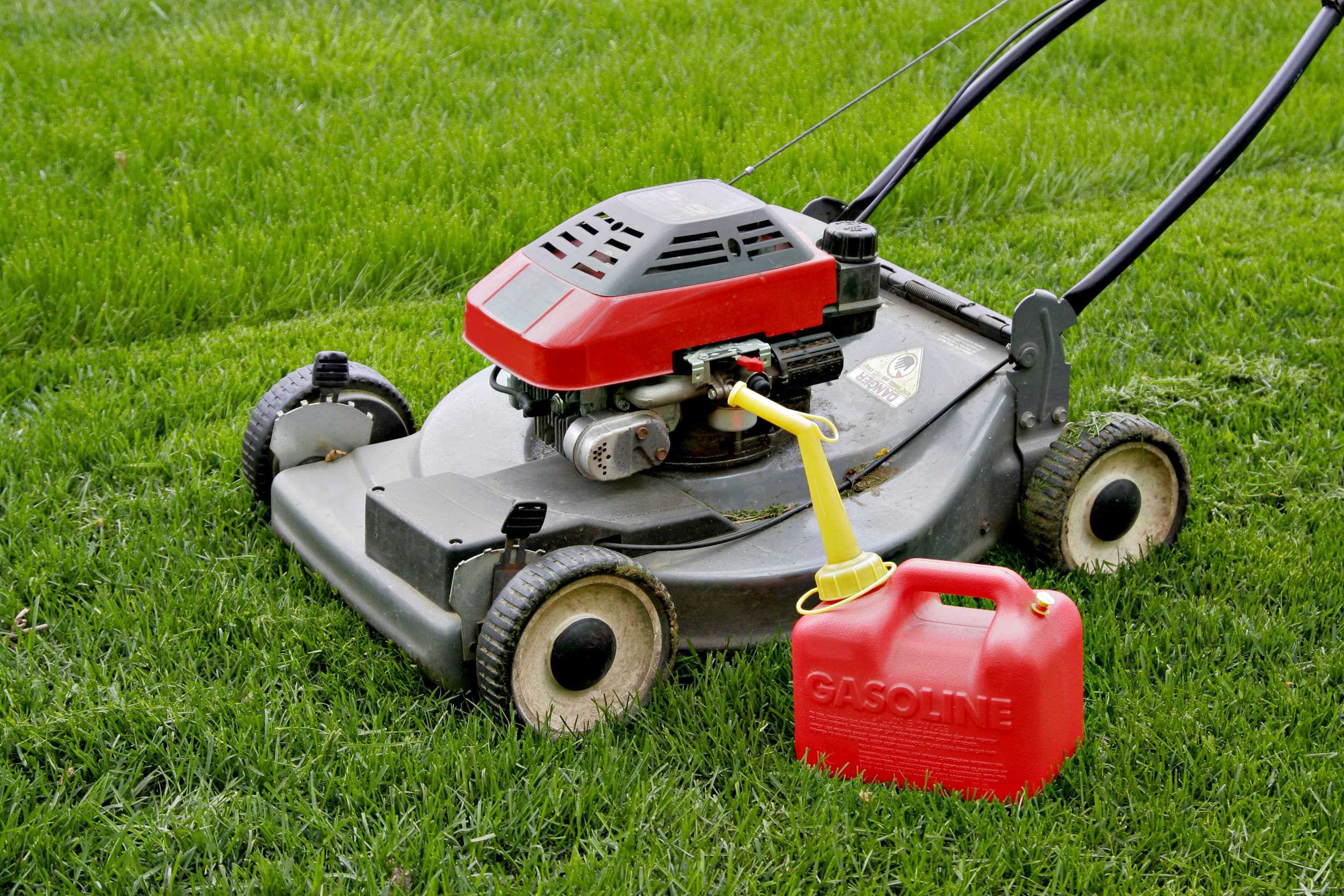
The short answer: use fresh regular unleaded gasoline
Most gas lawn mowers work best with fresh regular unleaded gasoline. Use the fuel grade listed in the owner’s manual, and do not assume that premium fuel is better simply because it costs more.

For many four-stroke mower engines, 87-octane regular gas is enough. Some manufacturers allow fuel with up to 10% ethanol, called E10. Fuel with more ethanol, such as E15 or E85, may damage parts that were not designed for it.
The table below gives a quick guide to common fuel choices.
| Fuel type | Usually suitable for a lawn mower? |
|---|---|
| Regular unleaded, 87 octane | Usually yes for four-stroke engines |
| Premium unleaded, 91–93 octane | Usually safe, but often unnecessary |
| E10 gasoline | Often approved; check the manual |
| E15 gasoline | Avoid unless the manufacturer clearly approves it |
| E85 flex fuel | Do not use unless the mower is made for it |
| Diesel fuel | Never use in a gasoline lawn mower |
| Gasoline mixed with two-cycle oil | Use only in a two-stroke engine that requires it |
The safest choice is simple: read the fuel label on the mower, find the engine manual, and use the fuel grade and ethanol limit it lists.
How to identify the type of mower engine
The best way to choose fuel is to identify whether the mower has a four-stroke or two-stroke engine. Most modern walk-behind mowers have four-stroke engines, while two-stroke engines are less common and often found on older equipment or specialized tools.

Four-stroke mower engines
A four-stroke engine has separate places for gasoline and engine oil. You pour gasoline into the fuel tank and add motor oil through a separate oil-fill tube.
This is the engine type used by most:
- Push mowers
- Self-propelled mowers
- Riding mowers
- Zero-turn mowers
- Some commercial walk-behind mowers
A four-stroke mower usually uses regular unleaded gasoline. Never add oil to the gas tank unless the owner’s manual specifically says to do so.
Two-stroke mower engines
A two-stroke, or two-cycle, engine burns gasoline mixed with two-cycle oil. The oil lubricates the internal engine parts as the fuel burns.
Two-stroke engines were once more common in outdoor power equipment. Today, you are more likely to see them in some string trimmers, chainsaws, brush cutters, and older lawn mowers than in a standard walk-behind mower.
The fuel mixture must be exact. A ratio such as 50:1 means 50 parts gasoline to one part two-cycle oil. Some engines require 40:1 or another ratio. Use the ratio printed in the manual or on the fuel cap.
Where to look for the answer
Check these areas before filling the tank:
- The owner’s manual
- A label near the fuel cap
- The engine identification label
- The manufacturer’s website
- The oil-fill cap and dipstick
- The fuel instructions on the mower deck or frame
If the mower has an oil dipstick and a separate oil-fill cap, it is likely a four-stroke model. That clue helps, but the manual is the final authority.
Gasoline types explained in plain language
Gasoline labels can seem confusing. The main points are octane, ethanol content, freshness, and additives. These factors matter more than choosing the most expensive pump fuel.
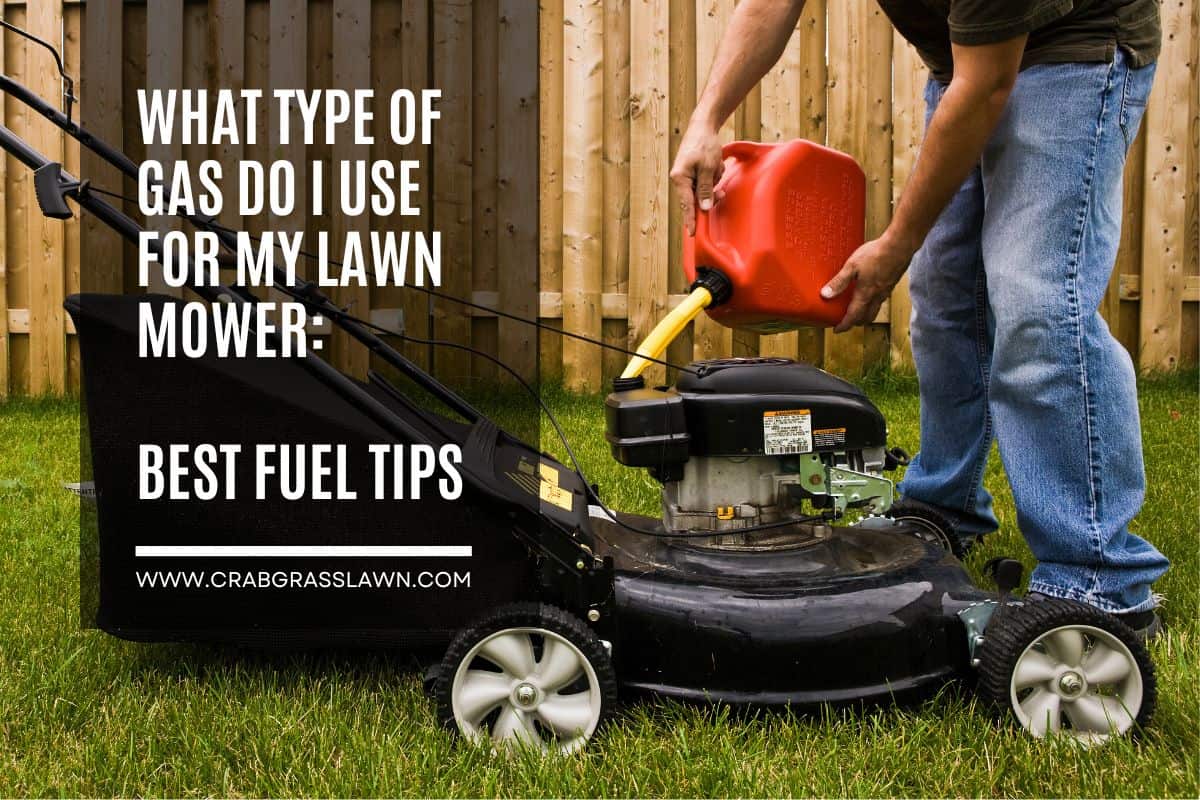
What octane means
Octane measures a fuel’s resistance to premature burning, also called engine knock. It does not directly measure how powerful the fuel is.
Most small gasoline engines run well on regular 87-octane fuel. Using 91- or 93-octane fuel usually does not add useful power unless the manufacturer requires it.
A mower engine that calls for regular gas does not need premium gas. Premium may be useful only when the manual recommends it or when local fuel choices have a specific quality issue.
What ethanol means
Ethanol is an alcohol blended into gasoline. It helps reduce the use of petroleum, but it can create problems in small engines when fuel sits for a long time.
Ethanol can:
- Attract moisture
- Damage some rubber and plastic parts
- Separate from gasoline after long storage
- Make stale fuel more likely
- Cause corrosion in parts of the fuel system
E10 contains up to 10% ethanol and is widely sold. Many lawn mower engines are designed to use it. E15 contains up to 15% ethanol and should not be used unless the manufacturer approves it.
What non-ethanol gas means
Non-ethanol gasoline contains no ethanol. It can be a useful choice for a mower that sits for long periods, such as a seasonal mower used only every week or two.
It may also help reduce fuel-system problems during storage. However, non-ethanol gas can cost more and may not be available in every area.
Non-ethanol fuel is not required for every mower. Fresh fuel, proper storage, and regular use matter just as much.
Can you use premium gas?
Premium gasoline is usually safe in a mower that accepts regular unleaded fuel. It is not usually needed.
The main difference between regular and premium gas is octane. A higher octane rating does not automatically clean the engine, improve cutting quality, or make the mower last longer.
Use the least expensive fuel that meets the manual’s requirements. Spend the savings on fresh oil, a clean air filter, or a sharp mower blade instead.
Fuel choices by mower type
Different mower types use similar gasoline, but their fuel tanks, storage needs, and engine sizes vary. A small push mower may have an engine near 125–190 cubic centimeters, while a riding mower or zero-turn mower may use a much larger engine.

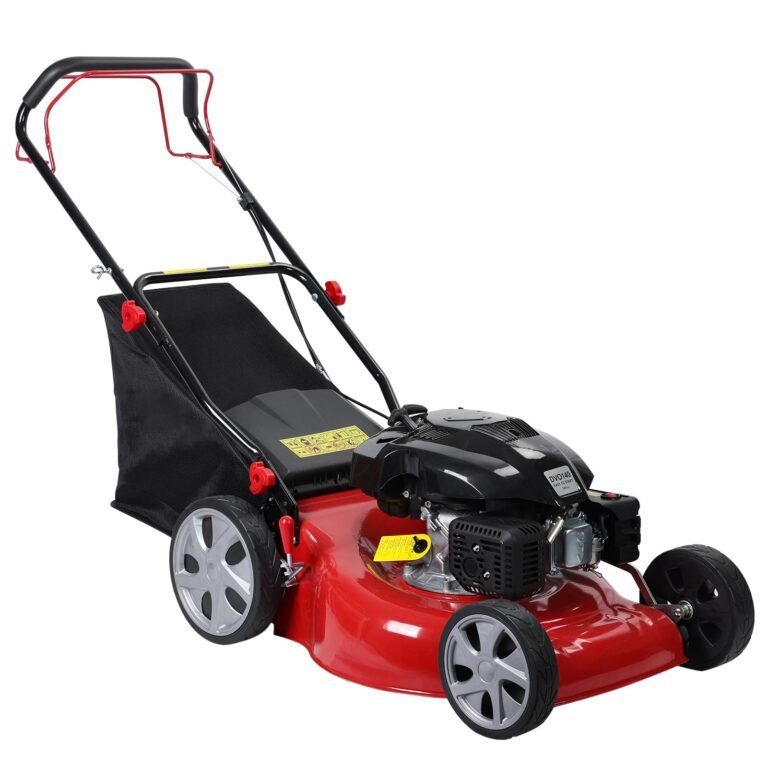
Push mowers
A gas push mower usually has a four-stroke engine. It normally takes regular unleaded gasoline and separate four-stroke engine oil.
Push mowers suit small to medium yards where the operator can walk behind the machine. They are often a good fit for a flat yard with a cutting area under about one-half acre, although actual mowing time depends on width, grass growth, obstacles, and walking speed.
Self-propelled mowers
A self-propelled mower also usually uses regular unleaded gasoline. Its drive system adds belts, gears, and controls, but the fuel type is usually the same as a standard push mower.
This mower suits a medium yard, a hilly lawn, or a user who does not want to push the mower’s full weight. It can be a helpful choice for seniors, people with limited strength, and homeowners who mow slopes. It still requires safe handling, especially on wet grass or steep terrain.
Riding mowers
Riding mowers use gasoline engines that are often four-stroke designs. Many take regular unleaded fuel, but the fuel tank can be much larger than a walk-behind mower’s tank.
A riding mower may suit a large lawn, often around one-half acre or more, where walking would take too long. Measure gates, storage doors, and shed space first. A riding mower needs room for fuel storage, battery access, oil changes, and safe parking.
Zero-turn mowers
Zero-turn mowers are riding mowers that can turn within their own footprint. They are designed for large, open lawns and fast maneuvering around trees, beds, and landscape features.
Most use regular unleaded gasoline, but commercial models may have special fuel requirements. They are not a good choice for every hill. Their rear-wheel drive layout can be difficult on steep slopes, so follow the slope limits in the manual.
| Mower type | Typical fuel guidance | Suited yard and user |
|---|---|---|
| Push mower | Regular unleaded in most four-stroke models | Small, flat yards and budget buyers |
| Self-propelled mower | Regular unleaded in most models | Medium yards, slopes, and users who want less pushing |
| Riding mower | Regular unleaded in many models | Larger lawns with enough storage space |
| Zero-turn mower | Regular unleaded in many models | Large, open yards and experienced operators |
| Two-stroke mower | Gasoline mixed with two-cycle oil | Older or specialized equipment only |
The fuel type does not decide whether a mower suits your yard. Lot size, slope, storage, gate width, grass type, and your comfort with maintenance matter just as much.
How much gasoline does a lawn mower take?
A small walk-behind mower may hold about 0.3 to 1 gallon of fuel. Riding mowers and zero-turn mowers often hold several gallons. The exact capacity depends on the model.

Do not fill by guesswork. Look for a fuel-cap label or check the specifications in the manual. Fill only to the level the manufacturer recommends, and leave room for fuel expansion.
The table below shows common capacity ranges. These are general ranges, not a replacement for the mower’s published specifications.
| Mower category | Common fuel capacity range |
|---|---|
| Small push mower | About 0.3–0.6 gallon |
| Larger push or self-propelled mower | About 0.5–1 gallon |
| Riding mower | About 1.5–3 gallons |
| Residential zero-turn mower | About 2–5 gallons |
| Commercial zero-turn mower | Often more than 5 gallons |
A larger fuel tank can reduce refueling stops. It also means more fuel can sit unused. If you mow a small yard, a smaller tank may be more practical.
Fresh fuel matters more than expensive fuel
Fresh gasoline can help a mower start and run more smoothly. Old fuel can lose quality, form gum, and clog the carburetor or fuel passages.
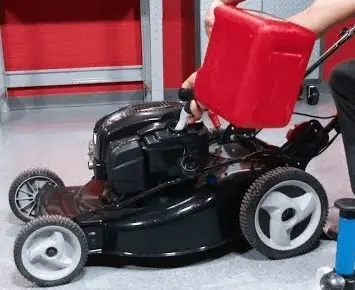
Fuel may become troublesome after sitting for weeks or months, especially in a vented container or a hot shed. Moisture and temperature changes can make the problem worse.
Buy only what you can use soon
For a small push mower, buying a small amount of fuel is often the best plan. A one- or two-gallon approved container may be enough for several mowing sessions.
Do not fill a large can just because the pump price looks attractive. Unused fuel can become a repair bill if it sits through a full season.
Use an approved fuel container
Store gasoline only in a container made for gasoline. Use a labeled, portable fuel container with a secure cap.
Never use:
- A milk jug
- A glass jar
- A thin household bottle
- An unmarked container
- A container that leaks or bulges
Keep the container upright in a cool, well-ventilated place away from flames, pilot lights, heaters, and electrical sparks.
Add fuel stabilizer when needed
Fuel stabilizer is a chemical additive that can slow fuel breakdown during storage. It may help when fuel must sit for more than a few weeks.
Follow the stabilizer label. Measure the correct amount and mix it into fresh fuel. Stabilizer cannot restore gasoline that is already badly stale or contaminated.
💡 Pro Tip: Write the purchase date on the fuel container with a marker. This small habit helps you use older fuel first and avoid guessing how long it has been stored.
Should you use ethanol-free gasoline?
Ethanol-free fuel can be useful for seasonal equipment, but it is not required for every lawn mower. The best choice depends on how often you mow and how well you store fuel.

Ethanol-free fuel may suit
- A mower used only a few times each month
- Equipment stored for a long winter
- Older engines with sensitive fuel-system parts
- A mower that has had repeated fuel-related problems
- Owners who can easily buy fresh non-ethanol fuel
E10 may suit
- A mower used every week
- A newer mower approved for E10
- Owners who buy small amounts of fresh gas
- Households that do not store fuel for long periods
Always confirm the ethanol limit in the owner’s manual. A manufacturer may approve E10 but warn against higher ethanol blends.
What fuel should you avoid?
Avoid diesel, E85, stale gas, contaminated gas, and fuel with the wrong oil mixture. These mistakes are common because the mower fuel tank can look similar to the tank on other outdoor equipment.

Diesel fuel
A gasoline mower cannot run correctly on diesel. Diesel is heavier and does not ignite in the same way as gasoline. If you accidentally add diesel, do not start the mower.
Drain the tank and fuel system according to the manual, or call a small-engine repair shop. Starting the engine can move the wrong fuel into the carburetor and fuel line.
E85 fuel
E85 is made for flex-fuel vehicle systems. It contains a much higher percentage of ethanol than E10.
Most lawn mower engines are not designed for E85. It can damage fuel-system components and cause poor operation. Never use it unless the mower manufacturer clearly says it is approved.
Old or contaminated fuel
Do not use fuel that smells sour, looks cloudy, contains water, or has visible debris. Do not pour questionable fuel into a mower to “use it up.”
Take old gasoline to a household hazardous-waste collection site. Rules vary by city and county.
Incorrect two-cycle mixture
A two-stroke engine needs the correct oil-to-gas ratio. Too little oil can cause severe wear. Too much oil can create smoke, carbon buildup, fouled spark plugs, and poor running.
Measure the oil. Do not estimate with a random splash from a bottle.
| Fuel problem | Possible result | Best response |
|---|---|---|
| Diesel in a gasoline mower | No start or severe running trouble | Do not start; drain or call a shop |
| E85 in an unapproved mower | Fuel-system damage or poor operation | Drain it and follow the manual |
| Stale gasoline | Hard starting and clogged carburetor | Drain safely and use fresh fuel |
| Water in fuel | Surging, stalling, or no start | Drain contaminated fuel |
| Wrong two-cycle ratio | Smoke, wear, or engine damage | Prepare a correct mixture |
| Gasoline in the oil-fill tube | Lubrication failure | Stop using the mower and service it |
If you are unsure what went into the tank, stop and identify the problem before pulling the starter cord or turning the ignition key.
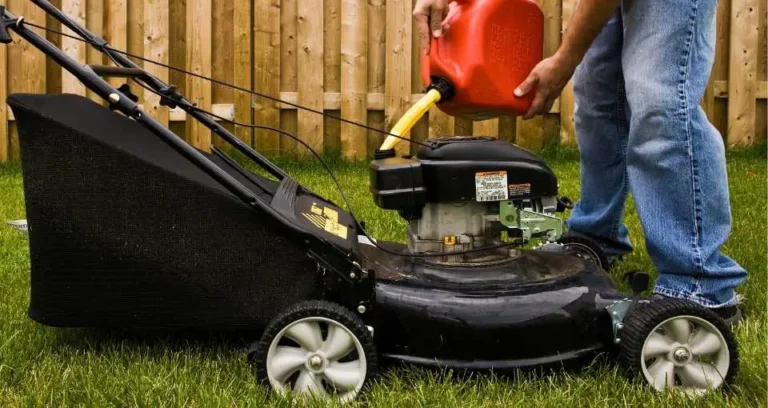
How to refuel a lawn mower safely
Refueling is a simple task, but gasoline vapors can ignite. The engine must be off and cool before you open the fuel cap.
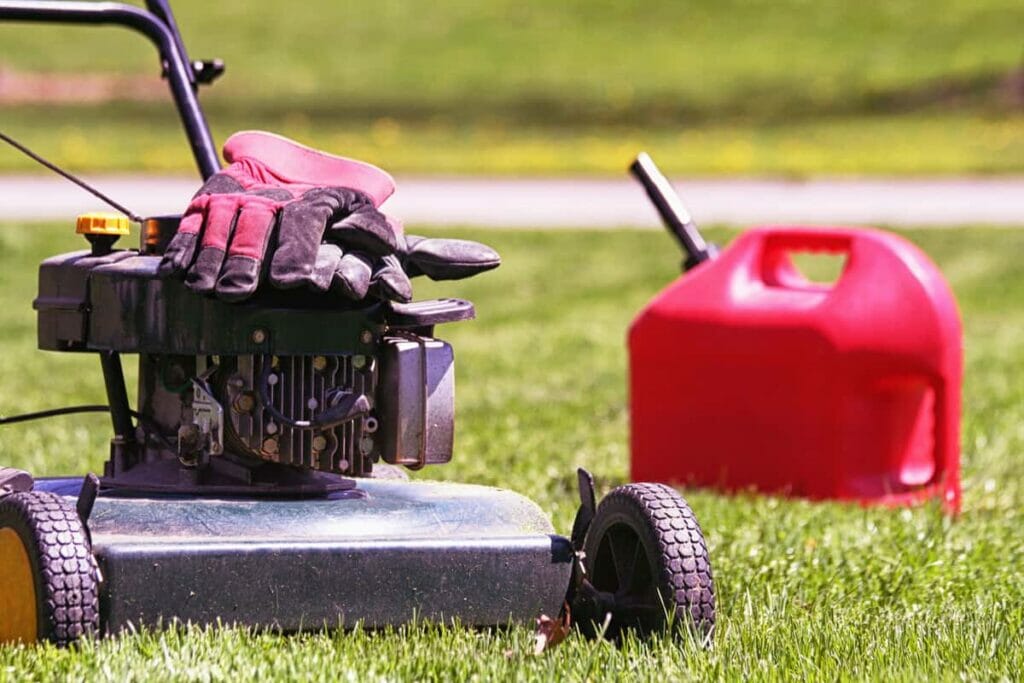
Follow these steps:
- Move the mower outdoors to a flat, open area.
- Turn off the engine and remove the ignition key if it has one.
- Let the engine cool fully.
- Keep cigarettes, flames, heaters, and sparks away.
- Wipe dirt from around the fuel cap.
- Open the cap slowly.
- Add the correct gasoline without overfilling.
- Tighten the cap securely.
- Wipe up spills before starting.
- Store the fuel container in a safe location.
Never refuel a hot engine. Gasoline can spill onto hot engine parts and ignite. Do not refuel inside a garage, shed, trailer, or enclosed porch.
⚠️ Safety Warning: Wear eye protection and closed-toe shoes when working around a mower. Keep children and pets away, clear debris before mowing, and follow the owner’s manual. Disconnect the spark plug wire or remove the battery before servicing blades or other moving parts.
Gas mowers versus electric and battery mowers
If you are tired of storing gasoline, a battery mower may be worth considering. Electric mowers use either a cord or a rechargeable battery, so they do not take gasoline at all.

Battery mowers
Battery mowers use a rechargeable battery measured in volts and amp-hours, or Ah. Voltage relates to the system’s electrical power, while amp-hours describe battery capacity.
A battery mower may suit a small or medium yard, especially where noise, fumes, and fuel storage are concerns. Check the listed runtime, battery cost, charge time, deck width, and whether the battery works with your other tools.
Cold weather can reduce battery performance. Tall, wet grass can also use more energy. A second battery may be useful for a larger yard, but it raises the total cost.
Corded electric mowers
A corded mower plugs into an outdoor-rated extension cord. It can suit a small, flat yard close to a safe outdoor outlet.
The cord can limit movement around trees and garden beds. It also needs careful handling to prevent cutting the cord. It is usually a poor fit for large yards or lots with many obstacles.
Gas mowers
Gas mowers can run for as long as fuel is available. They are useful for larger yards, thick growth, and areas where charging space is limited.
They need more routine service. Common wear items include mower blades, spark plugs, air filters, belts, fuel lines, and carburetor parts. Gas engines also make more noise and produce exhaust.
| Power type | Main advantage | Main tradeoff |
|---|---|---|
| Gas | Long work sessions and strong performance in heavy growth | Fuel, noise, exhaust, and engine maintenance |
| Battery | Lower routine maintenance and no fuel storage | Battery cost, charge time, and limited runtime |
| Corded electric | Light operation and no gasoline | Cord limits movement and yard size |
| Reel mower | Quiet, simple, and no engine fuel | Needs frequent mowing and suitable grass conditions |
The best choice depends on the yard and the user. A senior with a small flat lawn may prefer a light battery mower. A homeowner with a large rural lot may value a gas riding mower. A gift buyer should ask about storage, strength, slope, and existing battery tools before choosing.
Fuel and lawn mower maintenance
Correct gasoline helps, but it is only one part of mower care. A mower can still run poorly with fresh fuel if the blade is dull, the air filter is blocked, or the spark plug is worn.

Change engine oil
Four-stroke engines need separate engine oil. Check the oil level before each use or according to the manual. Change the oil at the interval listed by the manufacturer.
Never confuse engine oil with two-cycle oil. They serve different purposes.
Replace the spark plug
A spark plug creates the spark that ignites the fuel. Signs of a worn or fouled spark plug include hard starting, rough running, misfiring, and repeated stalling.
Use the exact replacement part number listed in the manual. The wrong plug can have an incorrect reach, heat range, or gap.
Clean or replace the air filter
An air filter keeps dust and grass particles out of the engine. A dirty filter can reduce airflow and make the engine run poorly.
Foam and paper filters need different care. Some foam filters can be washed and oiled. Paper filters are usually replaced. Follow the engine instructions.
Keep the blade sharp
A dull blade can tear grass instead of making a clean cut. It can also make the engine work harder.
Disconnect the spark plug wire on a gas mower before working near the blade. On a battery mower, remove the battery. Wear work gloves, but do not rely on gloves alone to prevent cuts.
Clean the mower deck
Grass clippings can stick under the deck, especially when mowing damp turfgrass. A packed deck can reduce airflow and affect mulching or bagging.
Never tip a mower in a way that allows fuel or oil to run into the air filter or muffler. Check the manual for the correct cleaning position.
Common fuel mistakes to avoid
Most fuel problems come from a few simple errors. Avoiding them can save time and a repair-shop visit.

Mistake 1: using old gas from last season
Fuel left in a tank over winter can form deposits. Drain or stabilize fuel as directed before long storage.
Mistake 2: topping off a hot engine
Hot fuel can expand and spill. It can also reach hot surfaces. Wait until the engine is cool.
Mistake 3: adding oil to a four-stroke mower’s gas
This may create smoke and poor running. Check whether the mower has a separate oil-fill tube.
Mistake 4: using automotive fuel additives at random
Some additives are not made for small engines. Use only products that list lawn mowers or small gasoline engines on the label.
Mistake 5: storing gasoline in the mower all winter
Long storage can lead to varnish and corrosion. Follow the manual’s winter storage steps.
Mistake 6: ignoring local storage rules
Gasoline storage laws can limit the amount you may keep at home. Your city, fire department, landlord, or insurance provider may have additional rules.
Fuel storage during winter or long breaks
A mower that sits for several months needs more care than one used every week. The right storage method depends on the owner’s manual and the engine design.

Before storage, many manufacturers recommend some combination of these steps:
- Clean grass and dirt from the mower
- Change the engine oil
- Clean or replace the air filter
- Add stabilizer to fresh fuel
- Run the engine long enough to move treated fuel through the system
- Drain the fuel if the manual recommends it
- Remove or disconnect the battery
- Store the mower in a dry, covered place
Do not store gasoline beside a furnace, water heater, wood stove, or other ignition source. A garage may be suitable in some homes, but it must have proper ventilation and safe fuel storage.
For a battery mower, store lithium-ion batteries indoors in a dry place. Avoid extreme heat and freezing conditions unless the manufacturer permits them.
🌿 Eco or Disposal Note: Never pour gasoline, oil, or fuel mixture onto soil, into a drain, or into a trash bin. Take old fuel and oil to a household hazardous-waste site. Recycle lithium-ion batteries through a designated battery drop-off. Usable mowers can often be donated or recycled.
What to do if the mower will not start after fueling
Fresh fuel does not always solve a starting problem. A mower may fail to start because of a closed fuel shutoff, a flooded engine, a dirty air filter, or a weak spark.

Check the simple items first:
- Confirm that the fuel valve is open, if the mower has one.
- Make sure the tank contains the correct fuel.
- Check the oil level if the mower has a low-oil safety switch.
- Confirm that the spark plug wire is connected.
- Check that the blade-control bar is held correctly.
- Inspect the air filter.
- Look for a clogged fuel line or filter.
- Avoid repeated starting attempts if the engine smells strongly of fuel.
If you poured the wrong fuel into the mower, do not keep trying to start it. If the engine still will not run after basic checks, a repair shop can test the fuel system, ignition, compression, and carburetor.
Is a gas mower worth it?
A gas mower can be worth the money for a large lawn, heavy grass, rural property, or user who wants to mow without waiting for a battery to charge. It can also be a practical choice when a household already owns gas-powered string trimmers, edgers, or leaf blowers.
A battery mower may be a better value for a small yard near a home. It avoids gasoline storage and may be quieter, though battery replacement can be expensive. A corded mower can work for a small yard with a clear path to an outlet.
Gas equipment has a wider service network in many areas. It also has more parts that wear out. Consider both the purchase price and the cost of fuel, oil, spark plugs, air filters, belts, batteries, and repairs.
| Yard condition or user | Often worth considering | Why |
|---|---|---|
| Small flat yard | Battery or corded mower | Less fuel storage and simple operation |
| Medium yard with slopes | Self-propelled gas or battery mower | Less pushing and useful traction |
| Large open lawn | Riding or zero-turn gas mower | Faster coverage and longer work sessions |
| Infrequent mowing | Gas with careful fuel storage | No battery charging, but stale fuel is a risk |
| Noise-sensitive neighborhood | Battery or corded mower | Usually quieter than gas equipment |
| Older homeowner | Light self-propelled or battery mower | Less physical strain and easier starting |
Always measure the yard and check gate width, slope, storage space, and local rules before buying. A mower that fits the budget but cannot pass through the gate is not a useful bargain.
Local rules and neighborhood concerns
Gasoline equipment may be restricted by local laws, homeowner association rules, or rental agreements. Some communities limit operating hours or restrict gas-powered equipment because of noise and emissions.
Check:
- HOA rules
- City and county noise ordinances
- Local gas-equipment restrictions
- Fuel storage laws
- Apartment or rental-property rules
- Fire-safety requirements
- Disposal rules for gasoline and oil
Gas mower noise can travel farther in quiet neighborhoods. Mow during permitted daytime hours, keep the muffler in good repair, and avoid running the engine near open windows.
📜 Check Local Rules: Rules differ by location and can change. Confirm current requirements with your city, county, HOA, landlord, or fire department before storing fuel or operating gas equipment.
How we judge the right fuel choice
The right fuel advice should match the mower, yard, climate, and user. A first-time homeowner needs a clear octane and ethanol answer. An experienced DIYer may also care about long-term storage, carburetor service, and parts compatibility.
For a gift buyer, ease of use matters. A senior may prefer equipment that starts with a push button and does not require fuel cans. Another person may already own a gas string trimmer and prefer a gas mower for shared fuel and service habits.
Climate matters as well. Wet grass can clog a deck and increase engine load. Cold weather can make gasoline engines harder to start and can reduce battery performance. Drought may slow grass growth, but dry leaves and dust can increase air-filter wear.
Check the product page and manual for:
- Fuel type
- Octane requirement
- Maximum ethanol percentage
- Fuel-tank capacity
- Engine displacement in cc
- Oil type and capacity
- Spark plug part number
- Air-filter part number
- Blade type and size
- Storage instructions
- Slope limits
- Warranty terms
Never rely only on a product photo or a general store description. Specifications can vary between model years and engine versions.
Frequently asked questions
Q: What gas does a regular lawn mower take?
A: Most regular four-stroke lawn mowers take fresh regular unleaded gasoline, often 87 octane. Many allow E10 fuel with up to 10% ethanol. Check the owner’s manual before using any fuel blend.
Q: Can I use premium gas in my lawn mower?
A: Premium gas is usually safe if the mower accepts regular unleaded fuel, but it is often unnecessary. Use the octane rating listed in the manual. Higher octane does not automatically improve cutting or engine life.
Q: Can I use E10 gasoline in a lawn mower?
A: Many modern lawn mowers are approved for E10 gasoline. E10 contains up to 10% ethanol. Confirm the limit in the manual, and avoid leaving ethanol-blended fuel in the tank for long storage.
Q: Can a lawn mower use E15 gasoline?
A: Do not use E15 unless the mower manufacturer clearly approves it. Many small engines are designed for regular gasoline with no more than 10% ethanol.
Q: Can I put diesel in a gas lawn mower?
A: No. Diesel fuel is not suitable for a gasoline lawn mower. Do not start the engine. Have the tank and fuel system drained safely, or contact a small-engine repair shop.
Q: Does a lawn mower need mixed gas and oil?
A: Only a two-stroke mower needs gasoline mixed with two-cycle oil. Most modern push, self-propelled, riding, and zero-turn mowers use four-stroke engines with separate gasoline and engine oil.
Q: How can I tell if my mower is two-stroke or four-stroke?
A: A four-stroke mower usually has a separate oil-fill tube and dipstick. A two-stroke mower uses a gasoline-and-oil mixture. Check the manual because visual clues are not always conclusive.
Q: Is ethanol-free gas better for a lawn mower?
A: Ethanol-free gas can be helpful for equipment that sits for long periods. It is not required for every mower. Fresh fuel, correct storage, and the manufacturer’s fuel instructions matter most.
Q: How long does gasoline last in a lawn mower?
A: Fuel life depends on freshness, storage temperature, container condition, ethanol content, and stabilizer. Gasoline can become troublesome after sitting for weeks or months. Use fresh fuel and follow the stabilizer label.
Q: Can I leave gas in my mower over winter?
A: The answer depends on the manual. Some manufacturers recommend treating fuel with stabilizer, while others recommend draining the tank and carburetor. Do not guess when preparing the mower for long storage.
Q: What happens if I use the wrong gas?
A: The mower may smoke, stall, run poorly, fail to start, or suffer fuel-system or engine damage. Stop using it if you suspect diesel, E85, contaminated fuel, or an incorrect two-cycle mixture.
Q: Should I use fuel stabilizer every time?
A: Stabilizer is most useful when fuel will sit for an extended period. Use only the correct product and amount. Stabilizer does not fix fuel that is already badly degraded.
Q: Can I store gasoline in my garage?
A: Local rules and fire-safety conditions apply. Use an approved, labeled container, keep it upright, and store it away from ignition sources in a properly ventilated location. Check local requirements first.
Q: Is a gas mower better than a battery mower?
A: Neither is better for every yard. Gas often suits large lawns and heavy growth. Battery models may suit small and medium yards where low noise, easy storage, and less routine maintenance matter more.
Q: What fuel does a riding mower take?
A: Many riding mowers use regular unleaded gasoline in a four-stroke engine. Some may have specific fuel limits or requirements, so check the model manual before filling the tank.
Final advice
For most gas lawn mowers, the right fuel is fresh regular unleaded gasoline that meets the manual’s octane and ethanol requirements. Use separate engine oil in a four-stroke mower, and mix two-cycle oil only when the engine is designed for that fuel.
Buy small amounts, store them in an approved container, and avoid fuel that is old, cloudy, contaminated, or too high in ethanol. Refuel only when the engine is cool, keep children and pets away, and disconnect the spark plug or remove the battery before servicing.
Choose the mower and fuel routine that fit the yard and the person using it. A small flat lawn may favor a battery mower. A large property may justify a riding or gas zero-turn mower. The safest and most useful choice is the one that matches the manual, the terrain, the storage space, and your comfort with maintenance.
Affiliate disclosure: This article may contain affiliate links. If you purchase through a link, we may earn a commission at no extra cost to you. Product features, fuel requirements, prices, and compatibility can change, so confirm current details on the manufacturer’s product page and in the owner’s manual before buying.