Lawn Mower Blade Not Engaging: Easy Fixes
A lawn mower blade not engaging can turn a simple mowing job into a frustrating repair. You may hear the engine run, but the blade stays still. On some mowers, the blade starts and then stops. On others, the mower moves normally but leaves tall grass behind.
The good news is that many blade engagement problems have simple causes. A loose belt, weak battery, damaged switch, clogged deck, or safety interlock can stop the blade from turning. The key is to test the mower in a safe order instead of replacing parts at random.
This guide explains why mower blades fail to engage, what each symptom means, and which fixes suit push mowers, riding mowers, zero-turn mowers, and battery models. It also covers when a DIY repair makes sense, when to call a repair shop, and how to prevent the issue from returning.

Affiliate disclosure: This article may contain affiliate links. If you buy through one, we may earn a commission at no extra cost to you. Always confirm the mower model, deck size, voltage, blade type, and replacement part number before ordering.
Why a Lawn Mower Blade Will Not Engage
The main reason a mower blade will not engage is a failure in the blade-drive system or its safety controls. Riding and zero-turn mowers often use an electric clutch, belt, pulleys, and an engagement switch. Battery mowers may use a control button, motor controller, and brushless motor. Push mowers usually have a blade-control bail, cable, or engine brake system.
A blade may also fail because the mower thinks an unsafe condition exists. The seat switch, parking brake switch, control bar, or reverse switch can stop the blades. These parts are called safety interlocks. They are designed to prevent the blade from running when the operator is not in the correct position.

The blade system in simple terms
When you engage a riding mower blade, the switch sends power to an electric clutch. The clutch locks the engine pulley to the blade pulley. A belt then transfers power to the blade spindle, which turns the mower blade.
On some older riding mowers, a manual lever moves an idler pulley to tighten the belt. A cable or spring may control that movement. If the lever, cable, spring, belt, or pulley fails, the blades may not move.
A battery mower works in a different way. Its battery sends power through a safety circuit and motor controller to the blade motor. A low battery, overheated motor, blocked blade, or faulty control can stop engagement.
Why the problem may happen suddenly
A belt can break while you mow over a hidden branch. A blade can strike a stone and bend the spindle. A switch can wear out after years of use. Grass and thatch can also build under the deck until the blade cannot spin freely.
Wet grass makes these issues more likely. It clumps under the deck and adds load to the blade. Drought-hardened soil, hidden roots, and debris can also cause impact damage. In cold weather, old fuel may cause engine trouble, but that usually affects engine speed rather than the blade clutch itself.
Quick Answer: What to Check first
if your lawn mower blade is not engaging, shut off the engine, remove the key, disconnect the spark plug wire, or remove the battery. Then check for a packed deck, broken belt, loose belt, damaged pulley, weak battery, and failed blade switch. On a riding mower, also check the seat and parking brake interlocks. Never reach under the deck while any power source is connected.

The safest test order is:
- Park on level ground and turn the mower off.
- Remove the key and disconnect the spark plug or battery.
- Inspect the deck, blade, belt, and pulleys.
- Confirm the battery is charged or the engine runs at full speed.
- Test the engagement switch and safety interlocks.
- Replace damaged parts with the exact parts listed in the manual.
⚠️ Safety Warning: Wear safety glasses, work gloves, and closed-toe shoes. Clear children and pets from the area. Never mow wet grass on a slope. Disconnect the spark plug or remove the battery before servicing, and follow the owner’s manual.
Symptoms That Help Find the Fault
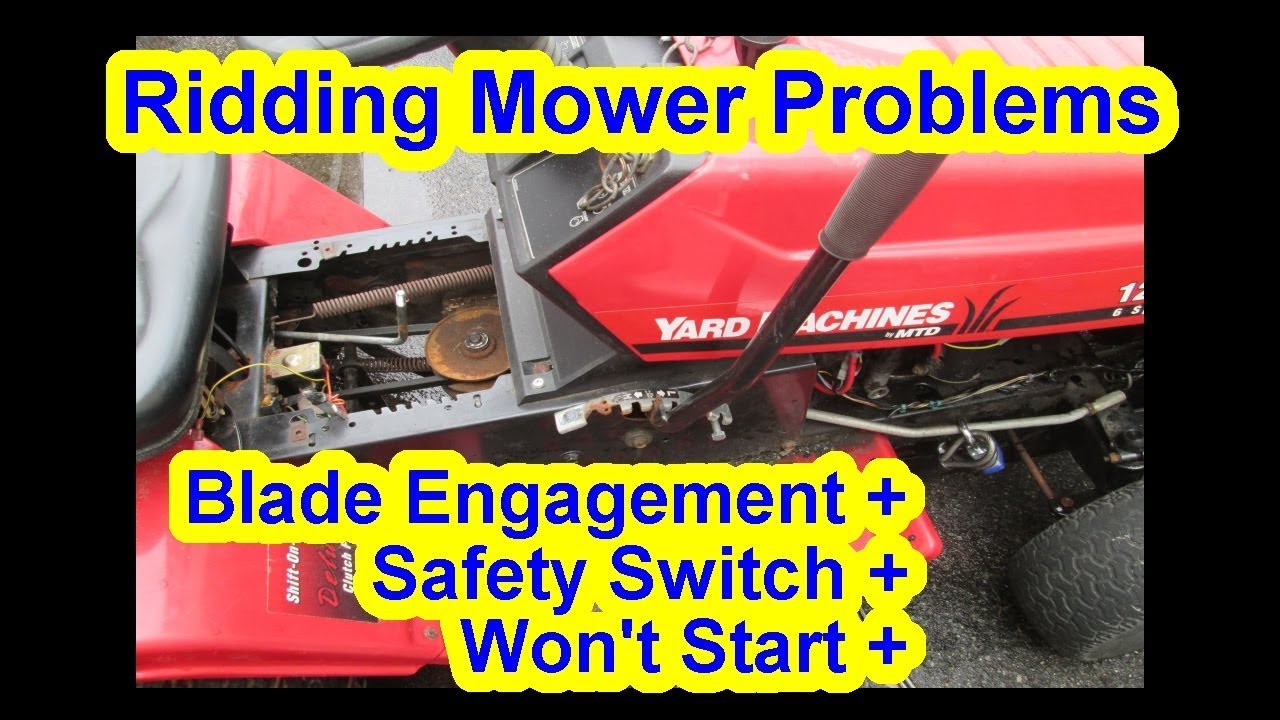
The sound and behavior of the mower often point to the failed part. A silent switch, a loud squeal, and a blade that spins by hand but not under power each suggest a different path.
| Symptom | Likely cause |
|---|---|
| No sound when the switch is turned on | Dead battery, blown fuse, bad switch, or safety interlock |
| A click but no blade movement | Electric clutch, belt, pulley, or clutch wiring |
| Blade engages, then stops | Weak battery, overheating, loose belt, or blocked deck |
| Loud squeal under the deck | Slipping belt, seized pulley, or damaged spindle bearing |
| Blade spins but grass remains uncut | Dull, bent, loose, or upside-down blade |
| Engine stalls when blades engage | Heavy deck blockage, bad spindle, wrong belt, or low engine power |
Use the symptom as a clue, not as proof. A broken belt and a failed electric clutch can feel similar from the seat. A hands-on inspection is still needed.
When the mower makes no sound
If you move the blade switch and hear nothing, start with power and safety controls. A low battery may still crank the engine but lack enough power for the clutch. On battery mowers, the pack may show a low charge or a fault light.
Check that the parking brake is set and that the operator is seated. Some machines will not engage the blades unless the transmission is in neutral or the brake pedal is fully depressed. Do not bypass these switches. They protect you from an unexpected blade start.
When the mower clicks
A click often means the switch is sending power to the electric clutch. The clutch may click but fail to lock. The belt may also be broken or too loose to turn the blade spindle.
With the power disconnected, inspect the clutch and belt. Look for a missing belt, black rubber dust, shiny belt sides, and a pulley that wobbles. If the clutch face is damaged or the clutch bearing feels rough, a replacement may be needed.
When the blade engages and then stops
This symptom often points to heat, overload, or a weak electrical connection. A battery mower may stop because its motor controller detects high current. A riding mower may stop because the belt slips when the deck meets thick grass.
Let the mower cool. Check the underside of the deck and clean out wet clumps. If the issue returns in short grass, inspect the belt tension, spindle bearings, wiring, and battery condition.
Common Causes of a Mower Blade Not Engaging
A mower blade system has several wear points. The parts that fail first are often the belt, blade-control cable, switch, battery, blade spindle, or electric clutch. The table below can help you rank the likely causes.

| Cause | What to inspect | Typical remedy |
|---|---|---|
| Low or weak battery | Battery charge, terminals, age, and voltage | Charge, clean, or replace the battery |
| Broken drive belt | Belt routing, cracks, missing sections | Install the correct belt |
| Loose belt | Slack, glazing, weak tension spring | Adjust or replace the belt |
| Clogged mower deck | Wet grass, leaves, thatch, and debris | Clean the deck with power disconnected |
| Bad blade switch | Loose terminals, no continuity, worn button | Replace the switch |
| Failed safety switch | Seat, brake, reverse, or control switch | Test and replace the faulty switch |
| Damaged electric clutch | Burn smell, poor engagement, rough bearing | Test or replace the clutch |
| Seized spindle | Rough or locked pulley movement | Repair or replace the spindle |
| Bent blade or spindle | Vibration, uneven cut, impact marks | Replace damaged parts |
| Weak engine power | Dirty air filter, stale fuel, bad spark plug | Service the engine |
The most common low-cost fixes are deck cleaning, belt replacement, battery charging, and control-cable adjustment. Electric clutch and spindle repairs often cost more because they require more labor and special tools.
Battery and electrical faults
A riding mower battery may start the engine but still fail to power the blade clutch. Check the battery terminals for white or green corrosion. Make sure the ground cable is tight. If the battery is old or repeatedly loses charge, replacement may be more practical than repeated charging.
Battery mower users should check the pack, charger, and contact points. Use only the battery voltage and amp-hour rating approved by the mower maker. An amp-hour, or Ah, rating describes stored battery capacity. It does not make an incompatible battery safe to use.
Belt and pulley faults
The blade belt transfers engine power to the deck spindles. It can stretch, crack, glaze, or snap. A belt that looks intact may still slip under load if it has lost tension.
Inspect every pulley. A pulley should turn smoothly without grinding or side play. A seized spindle can burn through a new belt in minutes. Replace the cause, not just the belt.
Deck blockage and blade resistance
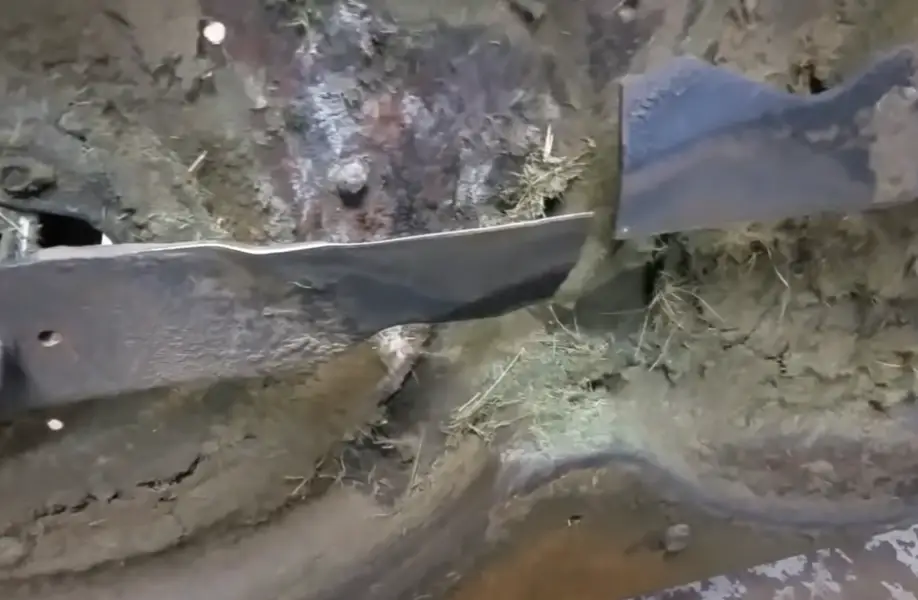
Grass clippings can form a hard mat under the deck. This is more common when mowing wet turf or cutting grass that is too tall. Thatch, which is a layer of dead stems and roots near the soil surface, does not usually block a blade directly, but loose thatch and debris can collect under the deck.
With the power removed, turn the blade by hand. It should move with steady resistance, not lock in place or grind. Keep your hands away from sharp edges. Use a scraper or stiff brush instead.
Step-by-Step Fixes for a Blade That Will Not Engage
The best repair path starts with safe inspection and moves from simple checks to electrical testing. Allow more time if you have a riding mower with a tight deck or limited access.

1. Park and secure the mower
Move the mower to a flat surface. Set the parking brake on a riding mower. Turn off the engine, remove the key, and wait for all moving parts to stop.
Disconnect the spark plug wire on a gas mower. For a battery mower, remove the battery pack. Keep the plug wire away from the spark plug so it cannot reconnect by accident.
2. Read the owner’s manual
Find the sections for blade engagement, deck removal, belt routing, fuses, and safety switches. The manual may show a special blade-clutch test or a required belt path.
Confirm the exact model number. Similar mower models can use different belts, blades, clutches, and switches. Ordering by appearance alone can create a poor fit.
3. Inspect and clean the deck
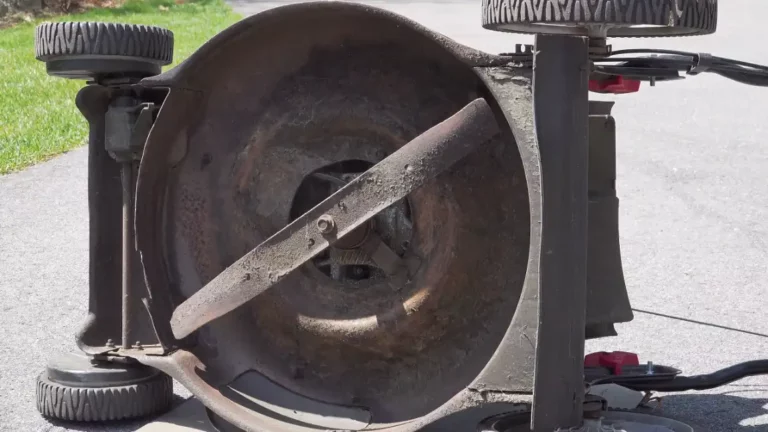
Use a flashlight to inspect the top and bottom of the deck. Look for packed grass, sticks, wire, stones, and bent metal. Check for a blade that sits at an odd angle.
Do not tip a riding mower in a way that lets fuel or oil enter the air filter. If the manual gives a lifting method, follow it. A mower lift or service ramp is safer for large riding mowers.
4. Check the blade and spindle
Hold the blade only at its center or use a block of wood to prevent movement. Look for bends, cracks, missing metal, and a loose center bolt. A blade that wobbles points to a loose blade bolt, bent spindle, or damaged adapter.
Spin the pulley by hand. It should not grind, wobble, or stop suddenly. Replace a damaged blade. Do not try to straighten a bent mower blade with a hammer.
5. Inspect the drive belt
Find the belt under the deck or behind the belt guard. Check for cracks, fraying, glazing, stretching, and missing chunks. Black dust near a pulley suggests slipping.
Compare the belt path with the diagram in the manual. A belt can look correct while sitting on the wrong side of a guide. Use the exact belt width, length, and profile specified for the mower.
6. Test the blade-control cable or lever
Push mower control bars can stretch or break. Riding mower levers may fail to move the idler pulley far enough. Watch the cable while moving the control. It should pull the linkage through its full range.
A loose cable may need adjustment. Do not set it so tight that the blade stays engaged when the control is released. The blade must stop within the time stated in the manual.
7. Check safety interlocks
Inspect the seat switch, parking brake switch, reverse switch, and control-bar switch. Look for loose plugs, crushed wires, or corrosion. Use a multimeter only if the manual provides test points and expected readings.
Never permanently jumper a safety switch. The mower may start or keep the blade running when the operator falls off. That creates a severe injury risk.
8. Test the electric clutch
An electric clutch is common on riding mowers and zero-turn mowers. When powered, it should make a clear click and lock the engine pulley to the blade pulley. No click can indicate a switch, fuse, wiring, or clutch coil problem.
A click with no blade movement can indicate a worn clutch face, bad bearing, broken belt, or damaged pulley. Electrical testing should match the manufacturer’s procedure. If you do not have a multimeter or wiring experience, use a repair shop.
9. Check engine speed and battery condition
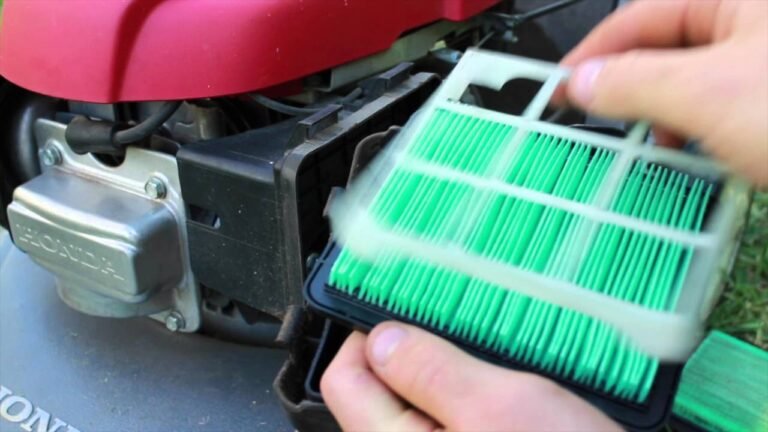
A gas mower needs clean fuel, a suitable spark plug, and a clean air filter to make power. A dirty air filter or old fuel can cause the engine to bog when the blade engages. Fuel stabilizer helps during storage, but it cannot restore badly degraded fuel.
For battery mowers, charge the pack fully with the approved charger. Let a hot battery cool before use. If the battery quickly loses power in light grass, it may be near the end of its service life.
10. Reassemble and perform a controlled test
Install all guards and covers before testing. Keep the deck clear of people, pets, tools, and loose objects. Start the mower outdoors, engage the blade for only a short test, and listen for abnormal noise.
If the blade engages but vibration appears, shut it down at once. Vibration can damage the deck and may signal a bent blade, loose bolt, bad spindle, or pulley problem.
🔧 Quick Fix: If the deck is packed with wet grass and the blade will not start, cleaning the deck may solve the problem. Disconnect the battery or spark plug first. Never use your hand to pull out grass near a blade.
Tools and Parts You May Need
Basic inspection needs few tools. More advanced repairs depend on the mower type and the part that failed.

| Tool or part | Why it helps |
|---|---|
| Safety glasses and gloves | Protect eyes and hands from debris and sharp blades |
| Socket set and wrench | Remove blade bolts, guards, and pulleys |
| Flashlight | Inspect tight spaces under the deck |
| Scraper or stiff brush | Remove packed grass and debris |
| Multimeter | Test switches, fuses, wiring, and clutch circuits |
| Torque wrench | Tighten blade bolts to the manual’s specification |
| Correct replacement belt | Restores power transfer to the blade |
| Replacement blade or spindle | Repairs impact and bearing damage |
Do not buy a belt based only on length. Confirm the mower model and belt part number. The same deck size can use different belt profiles.
A torque wrench is useful for blade work, but the manual is the final source for torque values. Over-tightening can damage threads. Under-tightening can let the blade come loose.
How Mower Type Changes the Diagnosis
The best repair path depends on the mower design. A push mower, riding mower, zero-turn mower, and battery mower do not use the same engagement system.

| Mower type | Most likely trouble spots |
|---|---|
| Push mower | Control bar, cable, engine brake, blade adapter, or blade bolt |
| Riding mower | Belt, electric clutch, safety switches, battery, or spindle |
| Zero-turn mower | Electric clutch, deck belt, idler pulley, wiring, or safety circuit |
| Battery mower | Battery, controller, switch, motor, blocked blade, or heat protection |
| Robotic mower | Blade motor, lift sensor, charging fault, or packed cutting deck |
A small push mower suits a small, fairly level yard and a user who can walk behind it. A self-propelled mower can help on a larger or sloped lawn, but its drive system adds cables and gears to maintain. A riding mower suits a larger open yard where turning space and storage are available.
Push mowers
A gas push mower often uses a blade-control bail. You must hold the bail against the handle for the blade to run. A broken cable or weak engine-brake mechanism can prevent engagement.
Electric push mowers may use a safety button and control bail. Check the battery contacts and control sequence. Some models need the safety button pressed before the bail is pulled.
Riding and zero-turn mowers
These machines often use a 42-inch, 46-inch, 48-inch, or larger deck, but the exact size varies. A larger deck does not always suit a small yard with narrow gates or tight trees. Measure gate width, turning space, and storage space before buying or repairing a replacement deck part.
Zero-turn mowers turn sharply and suit open lawns. They can be less comfortable on steep slopes and may require careful control near drop-offs. If the blade issue occurs only on one side, inspect that side’s spindle and belt path.
Battery and electric mowers
Battery mowers are often quieter than gas models, which can help in neighborhoods with noise limits. They still need blade inspection, deck cleaning, and safe battery storage. Cold temperatures can reduce available battery power, while high heat can trigger protection shutoff.
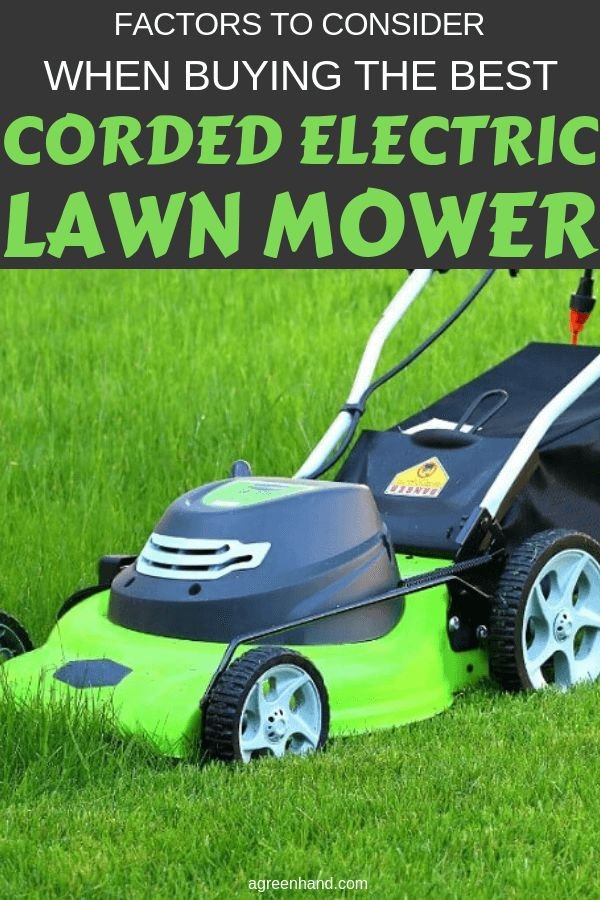
Corded mowers can avoid battery charging, but the cord creates a trip and cutting hazard. They suit small yards with a safe outdoor-rated extension cord and nearby power. Follow local rules for outdoor electrical equipment.
📜 Check Local Rules: Confirm HOA rules, local noise ordinances, gas-equipment restrictions, and fuel-storage laws before buying or using a mower. Rules can differ by city and neighborhood.
Repair Cost, Skill Level, and When It Is Worth It
A deck cleaning or cable adjustment is often a beginner task. Belt, blade, and battery replacement may suit a careful DIYer. Electric clutch, spindle, wiring, and engine repairs need more skill.
| Repair | Skill level | Cost factor |
|---|---|---|
| Deck cleaning | Beginner | Low |
| Blade replacement | Beginner to moderate | Low |
| Belt replacement | Moderate | Low to medium |
| Battery replacement | Beginner | Medium |
| Switch or cable repair | Moderate | Low to medium |
| Spindle replacement | Moderate to advanced | Medium |
| Electric clutch repair | Advanced | Medium to high |
| Wiring diagnosis | Advanced | Depends on fault |
A repair is often worth considering when the mower has a sound deck, good tires, a healthy engine or battery platform, and available parts. Replacement may make more sense when the deck is rusted through, the transmission is failing, and several major parts need work.
For a senior user, a mower that repeatedly loses blade engagement may not be a good fit even after repair. Controls should be easy to reach, the mower should suit the user’s strength, and a self-propelled or battery model may reduce starting effort. A gift buyer should ask about yard slope, gate width, storage, and comfort before choosing equipment.
Prevention and a Practical Maintenance Schedule
Regular care reduces blade engagement problems. The most useful habits are cleaning the deck, checking the belt, sharpening or replacing the blade, and storing the mower in a dry place.

| Interval | Maintenance task |
|---|---|
| Every use | Clear debris, check blade behavior, and inspect for vibration |
| Every 25 hours | Inspect belt, pulleys, cables, and deck buildup |
| Every 50 hours | Sharpen or replace the blade and inspect spindle play |
| Before storage | Clean the deck, stabilize or drain fuel, and charge batteries as directed |
| Start of season | Check battery, spark plug, air filter, tire pressure, and safety switches |
Mow dry grass when possible. Set the correct mowing height for your turfgrass and climate. Cutting too low stresses the grass and increases the load on the mower.
Use a mulching kit only when the mower and grass conditions support it. Mulching returns fine clippings to the lawn. Side discharge helps with tall grass. A grass catcher collects clippings but adds weight and needs frequent emptying.
Belt and blade care
Keep oil, fuel, and grease off the belt. These fluids can make rubber swell or slip. Replace a belt when it is cracked, glazed, stretched, or frayed.
A sharp blade gives a cleaner cut and places less load on the motor. Sharpen both ends evenly. Replace a blade with cracks or severe wear. Confirm blade length, center-hole design, lift shape, and rotation direction before installation.
Storage in a garage or shed
Store a gas mower in a dry, ventilated area away from flames and ignition sources. Follow local rules for gasoline and oil storage. Do not refuel a hot engine. Let it cool first.
Store lithium-ion batteries in the temperature range listed by the maker. Keep them dry and away from metal objects that could bridge the contacts. Recycle old lithium-ion batteries at a designated drop-off. Take old gas and oil to a household hazardous-waste site.
🌿 Eco or Disposal Note: Donate or recycle a usable mower instead of sending it to a landfill. Recycle batteries through an approved program, and never pour fuel or oil into soil, drains, or trash.
Mistakes That Can Make the Problem Worse
A few shortcuts can turn a small fault into a costly repair. Avoid these common errors.
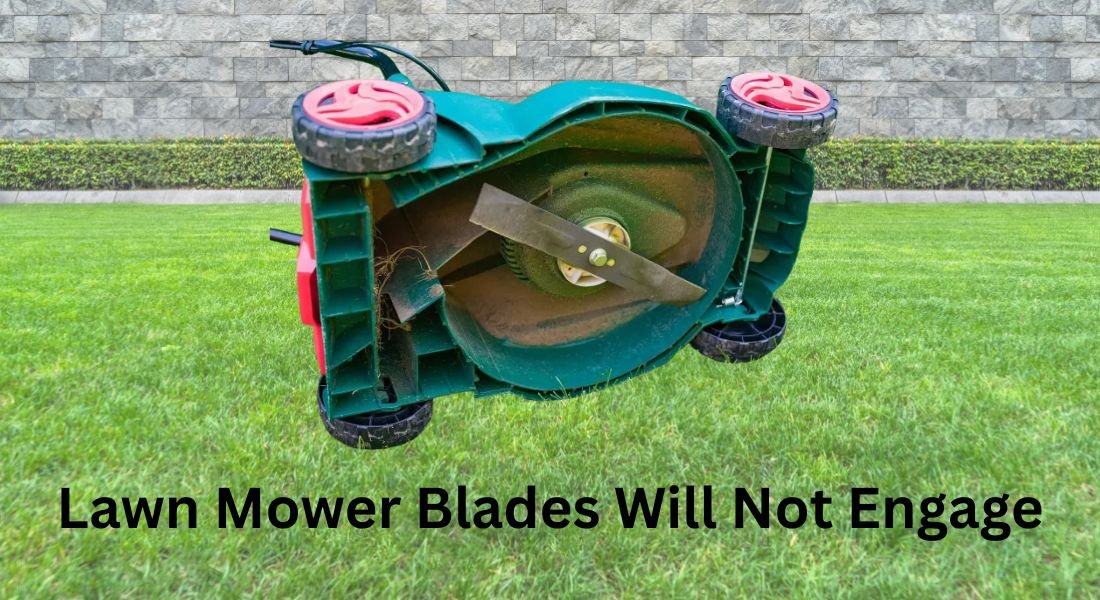
- Reaching under the deck with the battery connected.
- Testing the blade with the mower lifted in an unstable way.
- Installing a belt with the wrong length or profile.
- Bypassing the seat or parking brake switch.
- Using a blade that is too long, too heavy, or made for another model.
- Tightening the blade bolt without checking the manual.
- Ignoring vibration after an impact.
- Spraying water into switches, wiring, bearings, or a battery compartment.
- Mowing wet grass on a slope.
- Running a gas mower indoors or in a closed garage.
One especially risky mistake is assuming that no engine sound means no danger. A charged electric mower can start when a control is pressed. Treat every blade as live until the battery is removed or the spark plug is disconnected.
When to Call a Repair Shop
Professional help is the safest choice when the mower has major vibration, damaged wiring, a failed electric clutch, or a seized spindle. It is also wise when you need to lift a heavy riding mower and do not have the correct equipment.
Call a technician if:
- The blade spindle is bent or the deck is cracked.
- The mower has burned wiring or a fuel smell.
- The electric clutch needs electrical testing.
- The mower starts but will not stop the blade.
- A zero-turn mower loses one side of the deck.
- The engine stalls with a loud bang or strong vibration.
- You cannot identify the correct belt or blade.
- The repair cost is unclear or approaches the value of the mower.
A repair shop can test voltage, clutch resistance, safety circuits, and spindle condition. Ask for a written estimate. Confirm whether the shop uses original or compatible parts and whether the repair includes a blade-balance check.
For a first-time homeowner, paying for diagnosis may prevent a wrong part purchase. For an experienced DIYer, the shop may still be useful for clutch bearing work or deck alignment. For a gift buyer, professional service can be safer than asking a senior to work under a riding mower.
FAQs About a Mower Blade Not Engaging
Q: Why does my riding mower run but the blades do not engage?
A: The most common causes are a weak battery, failed electric clutch, broken deck belt, blown fuse, bad blade switch, or active safety interlock. Set the parking brake, sit fully on the seat, and check the belt and battery with the mower powered off.
Q: Why does my mower blade engage and then stop?
A: A blocked deck, slipping belt, weak battery, overheating motor, or failing electric clutch can cause this. Clean the deck, allow the mower to cool, and inspect the belt and pulleys. If the issue returns in light grass, arrange a deeper inspection.
Q: Can a bad battery stop the mower blades?
A: Yes. A battery may have enough power to start the engine but not enough to hold an electric clutch closed. Corroded terminals and a weak ground cable can cause the same symptom.
Q: How do I know if my mower deck belt is broken?
A: With the engine off and spark plug disconnected, look for a missing belt or loose rubber around the deck. A belt can also be cracked, glazed, or stretched while still in place. Compare its routing with the diagram in the manual.
Q: Why does my electric mower not spin the blade?
A: Check the battery charge, battery contacts, safety button, control bar, blade blockage, and overheating warning. Remove the battery before clearing debris. Use only the approved battery and charger.
Q: Can wet grass stop mower blades from turning?
A: Yes. Wet grass can pack under the deck and overload the motor or belt. Let the grass dry, remove the battery or disconnect the spark plug, and clean the deck before testing again.
Q: Is it safe to bypass a mower safety switch?
A: No. A bypassed switch can allow the blade to run when the operator is off the seat or the mower is in an unsafe position. Replace the failed switch instead.
Q: How often should mower blades be replaced?
A: Replace them when they are cracked, bent, badly worn, or unable to balance after sharpening. The time varies with rocks, sand, mowing frequency, and yard size. Inspect the blade often rather than relying on a fixed calendar.
Q: Why does the mower stall when I engage the blades?
A: A dirty air filter, stale fuel, weak spark plug, blocked deck, seized spindle, or wrong belt can overload the engine. Check the deck first, then service the engine if the problem remains.
Q: Is a mower with a bad electric clutch worth repairing?
A: It can be worth repairing if the deck, engine, transmission, and frame are in good condition. Replacement may be wiser when the mower also has major rust, worn steering, bad tires, and an aging transmission.
Q: What mower suits a small yard and a beginner?
A: A light push mower or compact battery mower often suits a small, level yard with limited storage. A self-propelled mower may help on a slope or for a user who wants less pushing, but it adds cost and drive parts.
Q: What mower suits a hilly lawn?
A: A self-propelled walk-behind mower may suit moderate slopes when used across the slope as the manual allows. Riding and zero-turn mowers need careful slope limits. Never choose by marketing alone; check the manual and terrain.
Q: How long can a mower last?
A: Service life depends on maintenance, storage, workload, climate, and parts availability. A mower with clean oil or fuel care, a dry storage area, sharp blades, and regular belt checks can serve for many seasons, but no fixed life span applies to every model.
Q: Do robotic mowers have blade engagement problems?
A: They can. A robotic mower may stop its blade motor because of a lift sensor, blocked cutting deck, low battery, charging fault, or motor error. Follow the app and manual instructions before opening the mower.
Final Thoughts
A lawn mower blade that will not engage usually gives you a useful clue. No sound points toward power, switches, or safety controls. A click points toward the clutch or belt. Grinding, vibration, or a locked pulley points toward a spindle, blade, or deck problem.
Start with safety. Disconnect the spark plug or remove the battery, clear the deck, and inspect the belt, blade, pulleys, and controls. Simple issues can be handled by many homeowners. Electrical clutch faults, severe vibration, and damaged decks deserve professional attention.
Use the repair as a chance to match the mower to the yard. A compact battery mower may suit a small, quiet neighborhood yard. A self-propelled mower can help on moderate slopes. A riding mower or zero-turn mower needs open space, safe storage, and a user who can manage its size and controls. The right choice depends on the lawn, the person using it, and the care the machine will receive.