


The best raised garden bed soil mix drains well, holds moisture, feeds plants, and stays light through the season.
Starting a raised bed is exciting until plants wilt, water pools, or roots hit hard soil. I have found that the right mix solves most of these problems before they begin. A good blend should feel loose, smell earthy, and support steady root growth without becoming muddy. The products below cover quick container projects, large vegetable beds, organic gardens, seed starting, and budget-friendly raised bed repairs.
Miracle-Gro Organic Outdoor Potting Mix

Miracle-Gro Organic Outdoor Potting Mix is a handy choice for small raised beds, patio boxes, and large containers. Its loose texture gives roots room to spread instead of forcing them through dense soil. I especially like this type of mix for gardeners who want a clean starting point with little prep. The 16-quart bag is easy to lift, open, and spread.
This mix works well for herbs, leafy greens, flowers, and compact vegetables. It can also improve a tired bed when mixed with garden soil and mature compost. Like any bagged mix, it will settle after watering, so I leave a little space below the bed rim. For a small garden, this is a simple way to get the best raised garden bed soil mix without buying several bulky bags.
Pros:
- Light texture makes planting easy
- Useful for raised beds and containers
- Good fit for herbs, greens, and flowers
- Easy-to-handle 16-quart bag
- Organic option for outdoor growing
- Helps reduce compaction around young roots
Cons:
- One bag covers only a small area
- May need extra compost for heavy-feeding crops
- Fine material can settle after repeated watering
My Recommendation
I recommend this mix for balcony gardeners, new growers, and anyone filling a small raised bed one bag at a time. It is especially useful when you want a light, ready-to-use medium rather than raw topsoil. Add compost for tomatoes, squash, or other hungry plants. As a practical best raised garden bed soil mix for small spaces, it offers easy handling and broad plant use, and its common bag size is convenient to keep available.
FoxFarm Raised Bed Planting Mix

FoxFarm Raised Bed Planting Mix is made for gardeners who want a ready-to-use blend for vegetables, fruit, flowers, and herbs. The inclusion of earthworm castings gives the mix a rich, natural feel. Oyster shell is also included, which can add mineral material and support a balanced growing environment. I would use it when I want to fill a bed without building a mix from several separate ingredients.
The 1.5-cubic-foot bag is a useful middle ground between small potting bags and large bulk orders. It suits one medium bed or several smaller planters, depending on depth. I still check the bed after watering because every loose mix settles a little. For gardeners focused on food crops, this is one of the more complete options in this best raised garden bed soil mix review.
Pros:
- Ready to use straight from the bag
- Contains earthworm castings
- Includes oyster shell as a mineral ingredient
- Works for vegetables, fruits, herbs, and flowers
- 1.5-cubic-foot size fits many medium projects
- Reduces the need to mix several amendments
Cons:
- Large beds may require several bags
- Higher upfront cost than a homemade blend
- Natural ingredients can vary slightly between batches
My Recommendation
I recommend FoxFarm to food gardeners who want a rich, all-purpose bed mix with useful organic ingredients already included. It is a strong pick for raised beds filled with salad greens, peppers, herbs, and flowers. Gardeners with very large beds may save money by using a bulk base and adding compost themselves. Still, for a ready-to-use best raised garden bed soil mix, this bag offers a convenient balance of texture and organic matter.
Miracle-Gro Organic Outdoor Potting Mix 2-Pack

This two-pack gives gardeners more working room than a single small bag. The organic outdoor potting mix is suited to raised planters, containers, and patio growing areas. I like a multipack when I need to fill several boxes and want the texture to stay consistent. It also saves the trouble of placing a second order midway through a planting job.
Each bag remains easy to carry, so this option works well for gardeners who cannot move a heavy bulk load. The mix can support greens, herbs, flowers, and many compact vegetables. For tomatoes or other large crops, I would blend in extra compost and use a deeper bed. This is a practical best raised garden bed soil mix for several small projects rather than one huge garden.
Pros:
- Two bags provide more coverage than a single bag
- Useful for multiple raised beds and containers
- Organic outdoor formulation
- Easy to carry and pour
- Consistent texture across small projects
- Good choice for herbs, flowers, and greens
Cons:
- Still may not cover a full-size raised bed
- Requires added nutrients for demanding crops
- Two separate bags create more packaging
My Recommendation
This two-pack is best for patio gardeners, renters, and families planting more than one small box. It also suits anyone who wants to keep a spare bag for topping off beds after the soil settles. I would choose it over a single bag when the project needs moderate volume but easy lifting still matters. As a best raised garden bed soil mix for small-space expansion, it offers useful coverage without bulk handling.
Burpee Organic Potting Soil Mix

Burpee Organic Potting Soil Mix comes in a 9-quart bag, so it targets small containers and limited planting spaces. Its compact size is useful when you only need to refresh a planter or fill a few herb pots. I find small bags helpful for replacing soil around a plant without disturbing the whole bed. The mix is intended for vegetables, flowers, and herbs indoors or outdoors.
This product is not the most economical answer for filling a large raised bed from the bottom up. Instead, it works as a top-up blend, transplant medium, or small-bed base. Mix it with existing raised bed soil when the surface has become hard or depleted. For a balcony box or kitchen garden, it can be a sensible best raised garden bed soil mix with little waste.
Pros:
- Small bag limits leftover material
- Suitable for vegetables, flowers, and herbs
- Useful indoors and outdoors
- Easy to use for transplanting
- Organic option for home food gardens
- Good for refreshing small planters
Cons:
- 9-quart volume is too small for large beds
- May need added compost for long-season crops
- Small bags can cost more per quart
My Recommendation
I recommend Burpee for apartment gardeners, seedling transfers, herb boxes, and small raised planters. It is also a smart choice when you need just enough soil to repair a bare corner or add a layer around new plants. Choose a larger product for a full-size vegetable bed. For small jobs, this best raised garden bed soil mix is tidy, manageable, and easy to put to work.
Miracle-Gro Organic Raised Bed Garden Soil

This Miracle-Gro raised bed and garden soil is designed specifically for outdoor beds and garden use. The peat-free formula may appeal to gardeners who want to avoid peat-based materials. It also includes quick-release natural fertilizer and is described as feeding plants for up to two months. That built-in feed can make the first part of the growing season easier.
The one-cubic-foot bag fits many standard bed projects and is simple to measure. I would still plan for later feeding because two months passes quickly during a long tomato or pepper season. Use it in a raised bed rather than relying on it as a universal potting mix for every container. For new beds that need a ready soil-and-feed combination, it is a strong best raised garden bed soil mix candidate.
Pros:
- Made for raised beds and garden soil use
- Peat-free formulation
- Includes quick-release natural fertilizer
- Designed to feed plants for up to two months
- One-cubic-foot bag is easy to plan around
- OMRI Listed according to the product description
Cons:
- Additional feeding may be needed later
- One bag may not fill a deep bed
- Not every plant needs the same fertilizer level
My Recommendation
This product is best for gardeners building a new raised bed who want soil and early nutrition in one bag. It suits vegetables, flowers, and general garden planting, especially when a peat-free option matters. I would use it as the main fill and monitor plant color and growth before adding more fertilizer. It is a convenient best raised garden bed soil mix for a fast start, with a clear need for seasonal follow-up care.
E.B. Stone Organics Raised Bed Mix
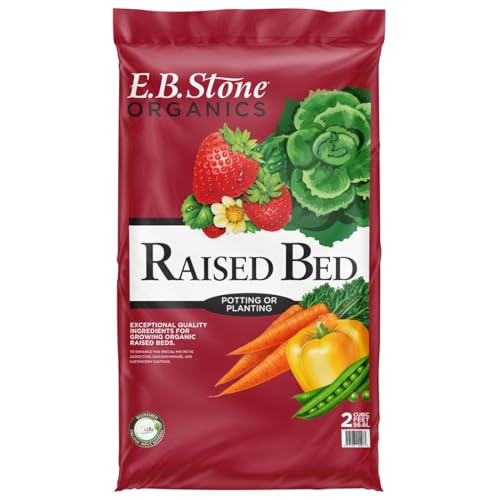
E.B. Stone Organics Raised Bed and Potting Mix comes in a generous two-cubic-foot package. That volume makes it more suitable for a wide bed, several planters, or a serious soil refresh. The blend includes compost and earthworm castings, which can help add organic matter to the root zone. I like this type of mix when I want a rich base without measuring each ingredient myself.
The ready-to-use format saves time during planting season. It can support vegetables, flowers, and raised garden beds, so one bag can serve several parts of the yard. I would spread it evenly, water it, and allow it to settle before placing delicate seedlings. For gardeners who need more coverage, this is among the best raised garden bed soil mix choices in the group.
Pros:
- Large two-cubic-foot volume
- Includes compost and earthworm castings
- Ready to use in raised beds
- Useful for vegetables and flowers
- Can refresh several smaller planters
- Reduces the need to buy separate organic amendments
Cons:
- Large bag can be heavy to move
- May be more soil than a small gardener needs
- Organic texture may settle after watering
My Recommendation
I recommend E.B. Stone Organics for gardeners filling medium or large beds and anyone who wants compost and castings in the base mix. It is a good match for productive vegetable gardens where volume matters. Plan the delivery and move the bag close to the bed before opening it. If coverage and organic matter are your main goals, this best raised garden bed soil mix gives you a strong starting layer.
Back to the Roots Organic Seed Starting Block

Back to the Roots Organic Seed Starting is different from a standard raised bed soil. It arrives as a compressed block that expands to about 12 quarts after water is added. The small package takes little storage space, which is useful before spring planting begins. It is made for herbs, vegetables, and flowers during the delicate seed-starting stage.
I would not use this compressed block as the only fill for a deep raised bed because seed-starting media serves a different job. Its fine, light texture is better for trays, small cells, and young roots. After seedlings grow strong, move them into a fuller raised bed mix with more structure and organic matter. As a companion to the best raised garden bed soil mix, this product helps create a smooth start from seed.
Pros:
- Compact before expansion
- Expands to approximately 12 quarts
- Useful for starting herbs and vegetables
- Made for flowers and young plants too
- Easy to store before planting season
- Reduces the need to carry a large soil bag
Cons:
- Not intended to fill a full raised bed
- Requires water and expansion before use
- Seedlings need transplanting into richer bed soil
My Recommendation
This compressed block is best for gardeners who grow plants from seed and want a neat, space-saving medium. It is a useful add-on for a raised bed project, not a replacement for a full bed blend. I would pair it with a nutrient-rich mix once seedlings are ready to move outdoors. For seed work, it supports the early step that leads to the best raised garden bed soil mix performing well later.
Coast of Maine Castine Raised Bed Mix

Coast of Maine Castine Blend comes as a four-pack of one-cubic-foot bags. That makes it a practical choice for gardeners who need a larger amount but still want manageable bags. The mix is labeled organic and natural and is ready to use for vegetables, herbs, and flowers. I value this format because I can move one bag at a time instead of wrestling with one oversized load.
Four cubic feet can make a meaningful difference in a new raised bed or a broad seasonal refresh. I would calculate the bed volume first so I know whether the pack will fill it fully. Watering before planting helps the loose material settle and reveals any low spots. For larger organic projects, this is a reliable best raised garden bed soil mix option with useful package flexibility.
Pros:
- Four one-cubic-foot bags provide strong coverage
- Each bag is easier to move than one bulk load
- Organic and natural raised bed blend
- Ready for vegetables, herbs, and flowers
- Useful for new beds and soil refreshes
- Good option for gardeners planning larger projects
Cons:
- Four-bag pack may be too much for a tiny bed
- Shipping or storage can require extra planning
- Large projects may still need more material
My Recommendation
I recommend Coast of Maine Castine Blend for gardeners filling a large bed or refreshing several smaller beds at once. The four-bag format gives you useful volume without making every bag impossible to lift. It is especially suited to organic vegetable and herb gardens. If your measurements match the pack size, this best raised garden bed soil mix offers a convenient blend of coverage, handling, and broad crop use.
How to Choose the Best Raised Garden Bed Soil Mix
Choosing soil is not just a matter of picking the biggest bag. The right product must match the bed size, crop type, climate, and watering habits. A shallow herb box needs a different amount of soil than a deep bed for carrots or tomatoes. I start by measuring the inside length, width, and depth of the bed.
Multiply length by width by depth to find cubic inches. Divide that number by 1,728 to convert it to cubic feet. This simple step prevents a common mistake: ordering too little soil and ending up with a half-filled bed. It also prevents waste when a small planter needs only one or two bags.
Look for a Balanced Texture
The best raised garden bed soil mix should feel loose but not fluffy like dry dust. Roots need air, yet they also need steady contact with moisture. A good blend drains excess water while holding enough moisture for warm days. If water sits on top for a long time, the mix may be too dense or the bed may lack drainage.
Very fine soil can compact under rain and foot pressure. Very coarse material can dry out too fast and leave roots thirsty. I prefer a blend that crumbles in my hand and does not form a hard ball when wet. Texture is often more important than a long list of ingredients because roots live in the spaces between soil particles.
Check the Organic Matter
Compost, aged plant matter, and worm castings can improve soil structure. They help feed soil life and make the bed more pleasant to work. However, more compost is not always better. Fresh or unfinished compost may heat up, smell sour, or harm young roots.
Look for a mature, earthy smell. Avoid bags that smell strongly of ammonia or rot. Organic material also breaks down over time, so expect the bed level to drop. I top off beds with finished compost or a suitable raised bed blend each season rather than piling on a thick layer at once.
Match Soil to Your Crops
Leafy greens and herbs often do well in a light mix with steady moisture. Tomatoes, peppers, cucumbers, and squash need more root room and more food during the season. Root crops need loose soil without large chunks that can bend or split the roots.
Seed-starting media should be fine and gentle. It does not need to be the same as the main bed mix. A seed-starting block can help small roots begin, while a richer raised bed blend supports the plant after transplanting. Matching the medium to the growth stage is one of the easiest ways to improve results.
Understand Potting Mix Versus Garden Soil
Potting mix is usually light and made for containers. Garden soil is heavier and designed to blend with outdoor ground soil. Raised bed soil often sits between the two. It should provide enough body for a bed while still allowing air and water to move through the root zone.
Do not fill a raised bed with plain topsoil alone. It may become hard, drain poorly, or contain weed seeds. A better approach is to use a made-for-bed blend or combine quality topsoil with compost and a light organic material. Bag labels can help, but I still inspect the texture and smell before planting.
Consider Peat-Free Choices
Some gardeners prefer peat-free materials because they want to reduce reliance on peat moss. Peat-free mixes may use materials such as coconut fiber, composted wood, bark, or other renewable inputs. These materials can work well, but their water needs may differ from a peat-based mix.
Watch the bed during the first few weeks. A new mix may need slower, deeper watering until it absorbs moisture evenly. Mulch can reduce surface drying and protect the top layer from wind. A peat-free best raised garden bed soil mix can perform very well when watering matches the material.
Think About Fertilizer
Some mixes contain natural fertilizer, while others are mostly a growing medium. Neither choice is automatically better. A fertilized product can give new plants a useful start, but heavy feeders may need more food later. A plain mix gives you more control, especially if you already use compost or organic fertilizer.
I avoid adding fertilizer by guesswork. First, I read the bag and observe the plants. Pale leaves, slow growth, or poor fruit set can have many causes, including low light, cold weather, or uneven water. Soil testing is a better guide than repeatedly adding more plant food.
Use the Right Bed Depth
A raised bed does not need to be extremely deep for every crop. Lettuce, radishes, and many herbs can grow in a shallower bed. Carrots, tomatoes, and larger root systems need more depth. A deeper bed can also help when the native ground soil drains poorly or contains many roots and stones.
Fill the bed nearly to the top, but leave an inch or two below the rim. This keeps water and mulch from washing out during storms. Do not pack the mix down with your body weight. Let water settle it, then add more material if the level drops too far.
Do Raised Beds Need a Liner?
Most raised beds do not need a solid plastic liner on the bottom. A solid liner can block drainage and trap excess water. If the bed sits on a clean surface, open contact with the ground often allows useful drainage and access for soil organisms.
A liner may help in special cases, such as a bed placed on contaminated soil, concrete, or a surface where roots must be blocked. Use a material designed for the job and keep drainage in mind. Landscape fabric can separate soil from weeds, but it does not fix poor drainage by itself.
How I Prepare a New Raised Bed
First, I remove large weeds, stones, and debris from the bed area. Next, I check that the frame is stable and that water can leave the bed. I open the bags near the bed so I do not carry loose mix across the yard. Then I spread the material in layers instead of dumping it in one tall pile.
I lightly blend the layers with a garden fork. I do not turn the soil deeply because that can disturb the bed structure. After filling, I water slowly and check for low spots. I let the bed rest for a short time before planting, especially if the mix contains a large amount of compost.
Watering New Raised Bed Soil
New soil can repel water if it becomes very dry inside the bag. A quick spray may run off the surface while the center stays dry. I use a gentle shower and water in two or three passes. This gives the mix time to absorb water instead of sending it over the bed edge.
Raised beds often drain faster than ground soil. That is a benefit during rain, but it means the bed can dry sooner in hot weather. A two- to three-inch layer of suitable mulch can slow evaporation. Keep mulch away from plant stems to reduce rot and pest problems.
Common Soil Mistakes to Avoid
The first mistake is buying by bag count instead of cubic feet. A small bag may look affordable, but many bags can cost more than a larger pack. The second mistake is using fresh manure or unfinished compost around food crops. These materials need time to mature.
Another mistake is adding sand to heavy soil without knowing the type. A small amount may not improve drainage and can sometimes create a dense texture. I would rather use a proven raised bed blend, compost, and a proper drainage plan. The best raised garden bed soil mix cannot repair a bed that holds water because its base is sealed.
Organic Certification and Product Labels
Organic wording can mean different things, so I read the complete label. Look for clear statements about intended use, ingredients, and certification when that matters to your garden. An organic mix can still need careful storage and safe handling. Keep bags dry and follow all label directions.
For edible gardens, I also wash produce well and avoid applying unapproved treatments. Soil is only one part of safe food growing. Clean water, healthy compost, good sunlight, and sensible pest control matter too. A thoughtful process is more reliable than choosing a bag based on one word on the front.
Best For Comparison
| Best for | Why |
|---|---|
| Small beds and patio planters | Light, manageable bags are easy to carry and spread. |
| Large organic vegetable beds | Large packs and blends with compost or castings provide useful coverage. |
| Seed starting and transplanting | Fine compressed media gives young roots a gentle place to begin. |
FAQs Of best raised garden bed soil mix
What is the best soil mix for a raised garden bed?
The best raised garden bed soil mix is loose, well-drained, and rich in mature organic matter. A ready-to-use raised bed blend is the easiest option. For a custom mix, combine quality topsoil with compost and a light, moisture-holding material.
Can I use potting soil in a raised garden bed?
Yes, potting soil can work in a small raised bed or container. It may cost too much for a large bed because it is sold in smaller bags. Check that the product is intended for outdoor use and add compost or plant food when needed.
How deep should raised bed soil be?
Many herbs and greens can grow in about 6 to 12 inches of soil. Larger crops and deep-rooted plants often need 12 to 24 inches. Choose depth based on the crop, drainage, and condition of the ground below.
Should I add fertilizer to raised bed soil?
Read the product label first. Some mixes already contain natural fertilizer, while others do not. Add fertilizer only when the crop needs it, and use a soil test when possible to avoid overfeeding.
Does raised bed soil need to be replaced every year?
No. Most raised bed soil can be reused for many seasons. Add fresh compost or a quality mix as the level drops, and rotate crops to support soil health. Remove diseased plants and avoid adding contaminated material.
Final Verdict: Which Should You Buy?
For most gardeners, FoxFarm Raised Bed Planting Mix is the strongest all-purpose pick. E.B. Stone is better for larger beds, while Miracle-Gro’s raised bed soil suits a quick, peat-free start. Choose Burpee or Back to the Roots for small jobs and seed starting.
The best raised garden bed soil mix should match your space, crops, and budget. Measure first, water slowly, and feed plants as the season progresses for a healthier, more productive garden.
