


Mowing wet grass can damage soil, stress turf, spread disease, and harm your mower.
A damp lawn may look ready for a trim, but mowing wet grass damage often starts beneath the surface. The mower can tear blades instead of cutting them, leave deep ruts, and create compacted soil that weakens the lawn over time. This guide explains the risks, the best waiting time, and safer ways to care for your grass after rain.
What Is Mowing Wet Grass Damage?
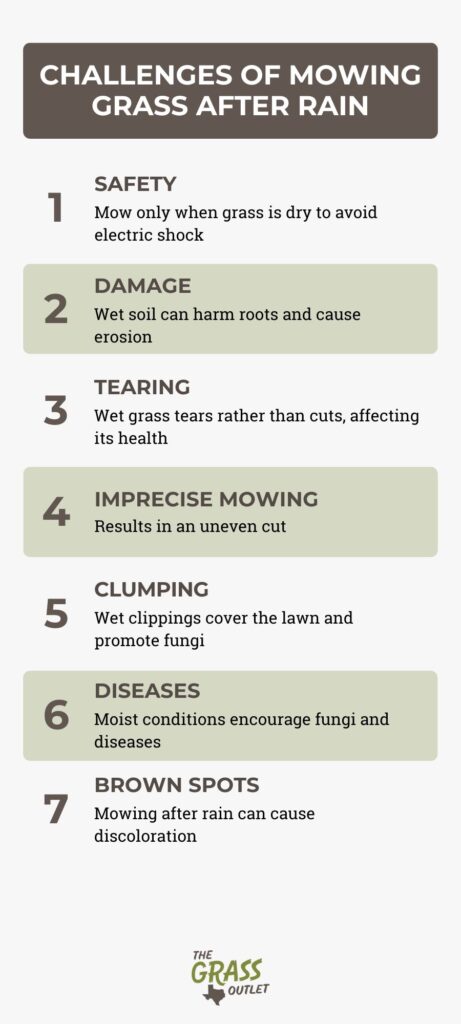
Mowing wet grass damage is the harm caused when a lawn is cut while grass blades, soil, or both are wet. The damage can affect the grass, soil, mower, and even the lawn’s long-term appearance.
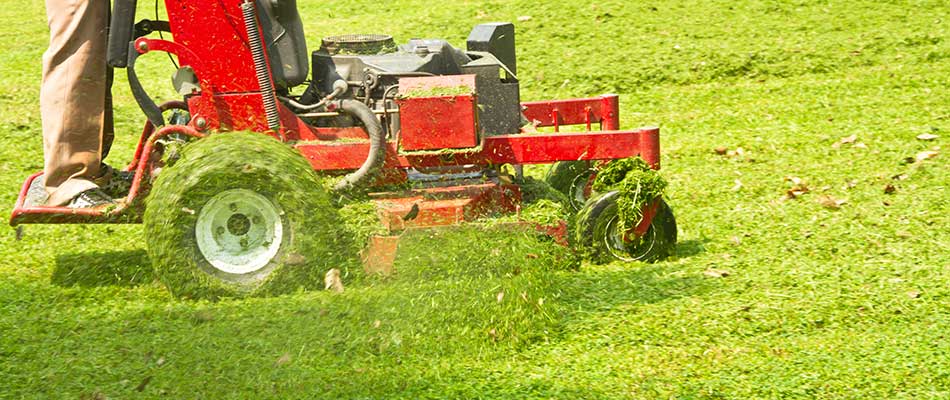
Wet grass does not stand upright as well as dry grass. It bends under the mower deck and sticks to the blades. Instead of making a clean cut, the mower may rip or crush the grass tips.
Wet soil creates another problem. It acts like soft clay under the mower’s tires. Heavy equipment can press down on the soil, leave tracks, and damage the roots below the surface.
The main forms of mowing wet grass damage include:
- Torn or shredded grass blades
- Brown or yellow leaf tips
- Soil compaction
- Tire ruts and wheel marks
- Uneven mowing
- Clumped grass clippings
- Greater risk of lawn disease
- Clogged mower decks
- Slipping and other safety risks
A light morning dew is not always a major concern. The real danger comes when the grass is soaked from rain, irrigation, or poor drainage.

Why Mowing Wet Grass Causes Problems
Wet conditions change how both the grass and mower behave. A mower that works well on a dry lawn can perform poorly when the lawn is saturated.
Wet grass tears instead of cutting cleanly
Sharp mower blades slice through dry grass with little effort. Wet blades bend and cling together. The mower must work harder to pull them into the cutting path.
If the blade is dull, the problem becomes worse. The mower may leave ragged ends that lose moisture faster. These damaged tips can turn brown and make the whole lawn look burned, even when the roots remain healthy.
Clean cuts help grass recover. Ragged cuts create more open tissue where disease organisms may enter, especially during warm, humid weather.
Wet soil compacts under mower tires
Soil has small spaces that hold air, water, and nutrients. When a mower travels over saturated ground, its weight can squeeze those spaces shut.
Compacted soil makes it harder for:
- Grass roots to breathe
- Water to drain
- Nutrients to move
- New roots to grow
- Earthworms and soil life to remain active
Compaction is one of the most lasting types of mowing wet grass damage. A torn blade may recover in days, but compacted soil can affect a lawn for months.
Wet clippings form heavy clumps
Moist clippings stick together under the mower deck. They may fall in thick piles rather than spreading across the lawn.
These clumps can block sunlight and air from reaching the grass below. If they remain in place, they may create pale spots or encourage fungal growth.
Grass clippings are useful when they are short and spread evenly. Thick, wet piles are a different story.
Mowing can spread lawn disease
Mowers can carry moisture, soil, and plant material from one area to another. If one part of the lawn has a fungal disease, mowing while wet may spread spores across healthy areas.
This risk is higher when the lawn has:
- Long periods of leaf wetness
- Poor air movement
- Dense growth
- Excess nitrogen
- Heavy shade
- Existing fungal patches
Mowing wet grass does not automatically cause disease. However, it can create conditions that make disease spread easier.

How Wet Grass Affects Different Lawn Types
The level of mowing wet grass damage depends partly on the grass species, soil type, and weather.
Cool-season grasses
Kentucky bluegrass, tall fescue, perennial ryegrass, and fine fescue are common cool-season grasses. They often grow quickly in spring and fall, when wet weather is also common.
These lawns may tolerate a brief delay, but mowing them when the soil is soft can still cause ruts and compaction. Tall fescue has deeper roots than some other grasses, yet its soil can still be damaged by heavy traffic.
Warm-season grasses
Bermudagrass, zoysiagrass, centipedegrass, and St. Augustinegrass grow most actively during warm weather. Rainstorms and summer irrigation can leave their leaves wet and their soil soft.
Bermudagrass often recovers well from light surface damage when it is actively growing. Even so, repeated mowing on wet soil can create ruts and thin areas.
Zoysiagrass and St. Augustinegrass may show slow recovery after severe traffic, especially when temperatures are low or the lawn is under stress.
Clay soil
Clay soil holds water for a long time. It can feel firm on top while remaining soft below the surface.
Mowing wet grass on clay is especially likely to cause:
- Deep tire tracks
- Compaction
- Mud buildup
- Poor drainage
- Uneven recovery
Sandy soil
Sandy soil drains faster and may support mowing sooner after rain. However, sandy soil is not damage-proof. Heavy equipment can still disturb roots, create ruts, or spread wet clippings.
The best test is not the soil label. Press a shoe into the lawn. If the soil sticks to the sole or leaves a deep mark, it is probably too wet for mowing.

How Much Damage Can Mowing Wet Grass Cause?
The answer depends on several conditions. One short mowing session on lightly damp grass may cause little lasting harm. Repeated mowing on saturated ground can create major problems.
Damage is more likely when:
- The soil is soft enough to hold tire tracks
- The mower is heavy
- The grass is tall and thick
- The mower blade is dull
- The lawn has poor drainage
- The mower turns sharply
- The same tire path is used again and again
- Rain continues after mowing
- The lawn is already stressed
The most visible damage may appear right away. You may see clumps, uneven lines, or bent grass. Other problems, such as compaction and root stress, may appear weeks later.
In practical lawn care, the soil test is often more useful than the calendar. A lawn may be safe to mow one day after a light shower but unsafe three days after a heavy storm if the ground remains saturated.
Signs of Mowing Wet Grass Damage
Early signs help you respond before the problem grows.
Look for these changes after mowing:
Ragged grass tips
Healthy cuts look smooth when viewed closely. Ragged, torn, or pale tips suggest that wet grass or a dull blade interfered with the cut.
Brown or yellow patches
A few brown tips may be cosmetic. Larger patches can point to repeated tearing, thick clippings, disease, or root stress.
Tire ruts
Ruts show that the mower pressed into soft soil. They can hold water and make future mowing less even.
Clumped clippings
Clumps can smother grass and hold moisture against the leaf surface. Spread them with a rake if they are thick.
Mud on the mower deck
Mud and grass paste under the deck can reduce airflow. It may also cause uneven cutting and increase corrosion if left in place.
Flattened grass
Grass may remain pressed down after the mower passes. Some blades will stand up later, but repeated traffic can thin the lawn.
One lesson from hands-on lawn care is that the lawn often tells you when to stop. If the mower begins sliding, leaving tracks, or pushing clumps, continuing usually makes the finish worse.

When Is It Safe to Mow After Rain?
There is no single waiting time for every lawn. The safest time is when the grass is mostly dry and the soil is firm enough to support the mower without visible tracks.
Use this simple test:
- Walk across the lawn.
- Check whether your shoes collect mud.
- Press your heel into the soil.
- Look for standing water or shiny, saturated areas.
- Drive one mower wheel across a small edge area.
- Stop if the wheel leaves a clear rut.
Light dew may dry within an hour or two after sunrise. After heavy rain, a lawn may need one to three days or more, depending on temperature, sunlight, wind, drainage, and soil type.
Avoid mowing if:
- Water is standing on the lawn
- The soil feels soft under your feet
- The mower leaves tracks
- Grass clippings form wet mats
- Rain is still falling
- Thunder or lightning is nearby
Waiting can feel frustrating when the grass is growing fast. Still, one extra day is usually better than repairing a damaged lawn.

How to Mow Safely When Grass Is Slightly Damp
Sometimes you must mow before the lawn is perfectly dry. For example, a short weather window may be your only chance before more rain. These steps can reduce, but not eliminate, mowing wet grass damage.
Use a sharp mower blade
A sharp blade makes a cleaner cut and reduces pulling. Check the blade at least once each mowing season, and more often if you mow frequently or hit hard objects.
Replace or sharpen the blade when:
- Grass tips look torn
- The mower leaves uneven heights
- The blade has dents
- The mower vibrates
- You need several passes over one area
Always disconnect the spark plug wire on a gas mower or remove the battery on an electric mower before working near the blade.
Raise the mowing height
Never remove more than one-third of the grass blade at one time. Cutting too low adds stress, especially when the lawn is wet or the roots are already weak.
A slightly higher cut can help the grass keep more leaf area for photosynthesis. It can also reduce the number of passes needed.
Mow slowly
Fast mowing can force wet grass into clumps and place more stress on the mower. Move at a steady pace and allow the deck time to handle the grass.
Change direction
Do not follow the same wheel tracks every time. Vary your mowing pattern to reduce repeated compaction.
Avoid tight turns. Gentle, wide turns cause less tearing and soil disturbance.
Keep the mower deck clean
A clean deck improves airflow and helps clippings move through the discharge opening. Clean the deck after the mower is off, cool, and safely disconnected.
Use side discharge when needed
Bagging wet grass can make the mower heavy and clog the chute. Mulching wet grass can also create clumps if conditions are poor.
Side discharge may spread clippings more evenly. If they still land in piles, rake and distribute them after mowing.
What to Do After Mowing Wet Grass
If you already mowed a wet lawn, do not panic. Many lawns recover from one poor timing decision.
Take these steps:
- Remove thick clumps of grass with a rake.
- Let the soil dry before using the mower again.
- Avoid walking or driving across visible ruts.
- Clean the mower deck and wheels.
- Inspect the blade for bending or damage.
- Watch for brown spots, disease, and standing water.
- Delay fertilizer until the grass shows active recovery.
- Repair deep ruts only after the soil is workable.
For shallow tracks, gently rake the grass upright after the ground firms up. For deep ruts, lift the damaged sod, add suitable soil, level the area, and replace or reseed the grass as appropriate for the season.
Do not try to fix deep ruts while the soil is muddy. Working wet soil can increase compaction and make the repair harder.

How to Prevent Mowing Wet Grass Damage
Prevention is easier than lawn repair. A simple mowing plan can help you avoid most wet-weather problems.
Watch the forecast
Check the next few days before mowing. If heavy rain is expected, mow slightly earlier only if the soil is dry enough. Do not cut extremely low to “buy time,” because scalping can stress the lawn.
Improve drainage
Persistent wet areas may need more than better mowing habits. Possible solutions include:
- Clearing blocked downspouts
- Redirecting roof runoff
- Filling shallow depressions
- Reducing irrigation
- Aerating compacted soil when conditions are right
- Adding suitable organic matter
- Installing a drainage system in severe cases
Aeration should be done when the grass is actively growing and the soil has the right moisture level. Aerating saturated soil can smear the soil instead of opening useful channels.
Maintain the mower
Good mower care improves results in all weather. Keep the blade sharp, tires properly inflated, and the deck clear of buildup.
For battery mowers, keep the battery and electrical parts away from standing water. For gas mowers, never refuel a hot engine or operate equipment in unsafe storm conditions.
Keep grass at the right height
Healthy grass handles minor stress better. Follow the recommended height for your grass type and avoid removing too much leaf tissue at once.
A properly maintained lawn is like a well-rested athlete. It still needs good conditions, but it can recover more easily from small stresses.
Mowing Wet Grass Damage and Lawn Disease
Wet mowing is only one part of the disease picture. Fungal disease also depends on temperature, humidity, shade, soil moisture, mowing height, and grass health.
Common warning signs include:
- Small circular brown spots
- Gray or white growth on leaf surfaces
- Thin patches that keep spreading
- Orange or yellow dust on leaves
- Grass that rots near thick clippings
Do not assume every brown patch is a fungus. Drought, insects, pet urine, poor soil, and mower injury can look similar.
Before using a fungicide, identify the likely cause. Fungicides do not correct compacted soil, poor drainage, dull blades, or excessive watering. Local university extension services and turf professionals can help confirm a disease when the symptoms are unclear.
Good cultural care is often the first defense:
- Water deeply but only when needed
- Improve air movement in shaded areas
- Avoid heavy nitrogen applications
- Mow with a sharp blade
- Remove wet clumps
- Keep traffic off stressed areas
Mowing Wet Grass Damage to the Mower
The lawn is not the only thing at risk. Wet grass can create mechanical problems.
Moist clippings may pack under the deck and block discharge passages. Mud can stick to wheels and belts. Over time, trapped moisture may contribute to rust on steel components.
Wet mowing can also make the mower work harder. The engine may bog down, the battery may drain faster, and the blade may stop spinning smoothly.
After mowing damp grass:
- Turn off and disconnect the mower safely.
- Remove grass from the deck.
- Clean the wheels and discharge chute.
- Dry metal surfaces.
- Check the blade and fasteners.
- Store the mower in a dry, covered place.
Never put your hands under a mower deck while the machine is connected or running. Use a brush, stick, or suitable tool after following the manufacturer’s safety instructions.
Is Mowing Wet Grass Ever Acceptable?
Mowing slightly damp grass can be acceptable when the soil is firm, the grass is not saturated, and the mower can make a clean cut without leaving tracks.
This is different from mowing a waterlogged lawn. Light dew on a well-drained lawn is usually less risky than several inches of rain on heavy clay soil.
A useful rule is simple: protect the soil first. If the mower can travel without sinking, sliding, or leaving marks, the risk is lower. If the ground is soft, wait.
The goal is not perfect dryness. The goal is a clean cut without creating lasting stress.
Frequently Asked Questions About Mowing Wet Grass Damage
Does mowing wet grass kill the lawn?
One session usually does not kill a healthy lawn. However, repeated mowing on saturated soil can cause compaction, ruts, torn blades, and disease problems that thin the grass over time.
How long should I wait to mow after heavy rain?
Wait until the grass is mostly dry and the soil feels firm under your feet. Heavy rain may require one to three days or longer, especially on clay soil or in shaded areas.
Is it worse to mow wet grass with a dull blade?
Yes. A dull blade pulls and shreds wet grass instead of making a clean cut. Sharpening the blade reduces tearing, but it does not make saturated soil safe to mow.
Can mowing wet grass spread fungus?
It can spread infected plant material and create wet, clumped conditions that favor some lawn diseases. Clean the mower after use and avoid mowing areas with visible disease when the grass is wet.
Should I bag wet grass clippings?
Bagging wet clippings can clog the mower and make the equipment heavy. If you must mow, side discharge may work better, but remove any thick clumps that remain on the lawn.
Can I repair tire ruts right away?
Wait until the soil is firm enough to work without smearing. Shallow marks may disappear as the grass stands up, while deep ruts may need leveling, reseeding, or sod repair.
What is the biggest sign that I should stop mowing?
Stop when the mower leaves clear tracks, slips, clogs often, or drops wet clumps. These signs show that continuing may increase mowing wet grass damage.
Conclusion
Mowing wet grass damage can affect more than the lawn’s appearance. Wet conditions may tear grass blades, compact soil, spread disease, create clumps, and strain the mower.
The safest approach is to wait until the grass is mostly dry and the soil can support the mower without leaving tracks. Use a sharp blade, follow the one-third rule, mow slowly, vary your pattern, and clean the mower after every damp cut.
A little patience can protect months of lawn growth. Check your soil before the next mowing session, and share your own wet-weather lawn care lessons in the comments.
