
Cub Cadet Lawn Mower Will Not Go Forward Or Backward: Fix
A Cub Cadet lawn mower that will not go forward or backward can turn a simple mowing job into a frustrating afternoon. The good news is that the cause is often easy to find. A loose drive belt, low transmission fluid, a stuck parking brake, or a control linkage problem can stop a riding mower or zero-turn mower from moving even when the engine runs well.
Start with safety. Park the mower on a flat surface, turn off the engine, remove the key, and keep children and pets away. Wear eye protection, closed-toe shoes, and work gloves. Before you reach near the deck, belt, or transmission, disconnect the spark plug wire on a gas mower or remove the battery on an electric model. Always follow the Cub Cadet owner’s manual for your exact model.
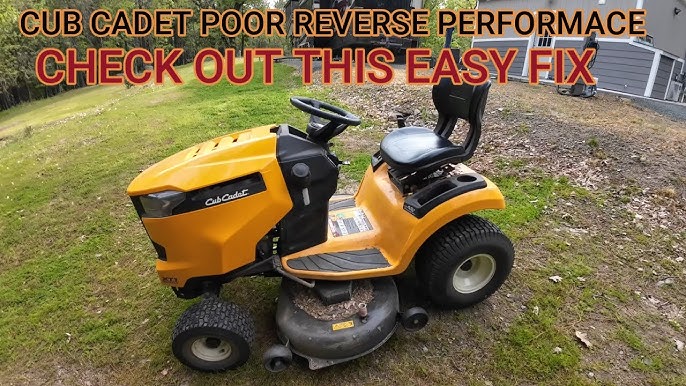
Why a Cub Cadet mower may not move
The most common reason a Cub Cadet mower will not go forward or backward is a problem in the drive system. The engine may start and the blades may spin, but power is not reaching the wheels.
A riding mower usually sends engine power through a drive belt to a transmission. A zero-turn mower uses two hydrostatic drive units, one for each side. Hydrostatic means the mower uses pressurized oil to transfer power. These systems feel smooth when they work, but they need correct oil levels, good belts, and free control levers.
The issue may also be simple. The parking brake may still be on. The gear selector may not be fully in position. A safety switch may be stopping movement. On some models, the transmission bypass or freewheel rod may be left in the release position after the mower was pushed.
The first checks to make
Before removing any parts, check these items:
- Is the parking brake fully released?
- Is the gear selector in forward, reverse, or neutral as intended?
- Are the motion-control levers centered or moved out correctly?
- Is the transmission bypass lever in the drive position?
- Does the drive belt remain on the pulleys?
- Are the rear wheels turning freely?
- Is there fresh fuel and enough engine power?
- Does the mower move when the engine is off and the transmission is released?
A mower that will not move in either direction often has a shared problem, such as a belt, bypass lever, brake, or hydrostatic system. A mower that moves in one direction but not the other may have a damaged linkage, a control adjustment issue, or a failing drive unit.

Quick answer: What should you check first?
If your Cub Cadet lawn mower will not go forward or backward, release the parking brake, confirm the transmission bypass lever is in the drive position, and inspect the drive belt. Then check the motion-control levers, linkage, and hydrostatic fluid if your model allows it. Stop if you see leaking oil, a broken belt, damaged pulleys, or a locked wheel. Those faults may need a qualified repair shop.

Symptoms that help identify the fault
The mower’s exact behavior gives useful clues. Listen to the sound, watch the belt, and note whether both rear wheels act the same.
A sudden loss of movement often points to a belt that broke or jumped off. A slow loss of power may point to low hydrostatic fluid, a worn drive unit, or a belt that slips under load.
A grinding sound is more serious. It may come from a damaged pulley, axle, transmission, or wheel bearing. Do not keep driving the mower to “see if it gets better.” A small fault can become an expensive transmission repair.
Common movement symptoms
| What you notice | Likely area to inspect | First safe action |
|---|---|---|
| No forward or reverse movement | Bypass lever, belt, brake, transmission | Shut down and inspect the drive system |
| Moves forward but not backward | Reverse linkage or control adjustment | Check the manual and linkage |
| Moves backward but not forward | Forward linkage or drive control | Check the control arm and belt |
| One side moves on a zero-turn | One hydrostatic unit or linkage | Stop using it and compare both sides |
| Engine revs but mower stays still | Belt, pulley, or transmission | Inspect the drive belt |
| Mower creeps while controls are neutral | Linkage, neutral adjustment, or control arm | Do not mow until adjusted |
The key takeaway is simple: movement problems are not all the same. A belt fault is often visible, while a hydrostatic problem may need pressure testing and model-specific service tools.

Why the mower may stop only on hills
A Cub Cadet that works on level ground but stops on a slope may have a weak drive system, a slipping belt, low hydrostatic fluid, or a traction problem. Hills place much more load on the transmission than flat turf.
Wet grass can also make the rear tires spin. This is not always a transmission failure. Look for fresh grass marks, tire spin, or packed mud near the tread. Never mow wet grass on a slope. The mower can slide, tip, or lose braking control.

Main causes and likely solutions
The table below lists common causes from simple checks to more serious faults. Your model may use different parts, so confirm the layout and part numbers in the owner’s manual.
| Possible cause | What it looks like | Usual solution |
|---|---|---|
| Parking brake still engaged | Engine runs, mower stays still | Release brake fully |
| Transmission bypass lever open | Mower can be pushed by hand | Return lever to drive position |
| Drive belt off or broken | Engine runs, rear wheels do not turn | Reinstall or replace the correct belt |
| Worn belt or pulley | Mower moves slowly or slips | Replace worn parts |
| Low hydrostatic fluid | Weak drive, noise, slow response | Check manual and fill only as specified |
| Stuck brake linkage | Mower may drag or move poorly | Clean, free, and adjust linkage |
| Damaged control linkage | One direction does not work | Repair or adjust linkage |
| Failed hydrostatic unit | Whine, heat, no drive | Seek professional diagnosis |
| Faulty safety switch | Movement cuts out or will not engage | Test and replace the switch |
| Damaged axle or wheel key | Engine and belt seem normal | Inspect wheel and axle assembly |
The most common owner-level fixes are releasing the bypass, replacing a drive belt, freeing a brake linkage, and correcting a control adjustment. Hydrostatic transmission repairs are less suitable for a first-time homeowner unless the manual gives clear service steps.
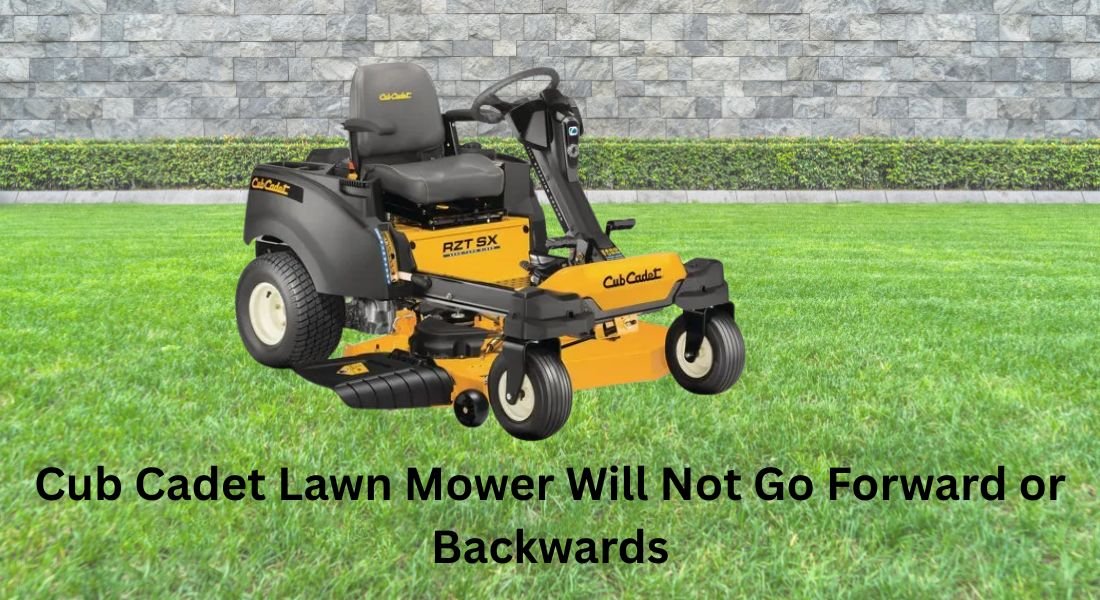
Fix 1: Check the parking brake and safety controls
A parking brake that is partly engaged can stop the mower from moving. The lever may look released while the brake arm remains tight against the pulley or brake disc.
Turn off the engine and set the mower on level ground. Move the brake lever through its full range. Watch the brake linkage if it is visible. It should move smoothly and return to the released position.
Some Cub Cadet models use seat, brake, clutch, and control safety switches. These switches prevent movement or engine operation under unsafe conditions. Never bypass a safety switch with a wire or tape. That can let the mower move when the operator is not seated or when the controls are in an unsafe position.
How to inspect the brake linkage
- Remove the key and disconnect the spark plug wire or battery.
- Find the brake arm near the rear axle or transmission.
- Look for grass, dirt, rust, or a bent rod.
- Move the brake lever by hand without forcing it.
- Apply a small amount of approved lubricant to pivot points if the manual allows it.
- Confirm the brake releases before starting the mower.
Do not spray lubricant on a belt, pulley, brake pad, or disc. Oil on these surfaces can cause slipping and poor stopping power.
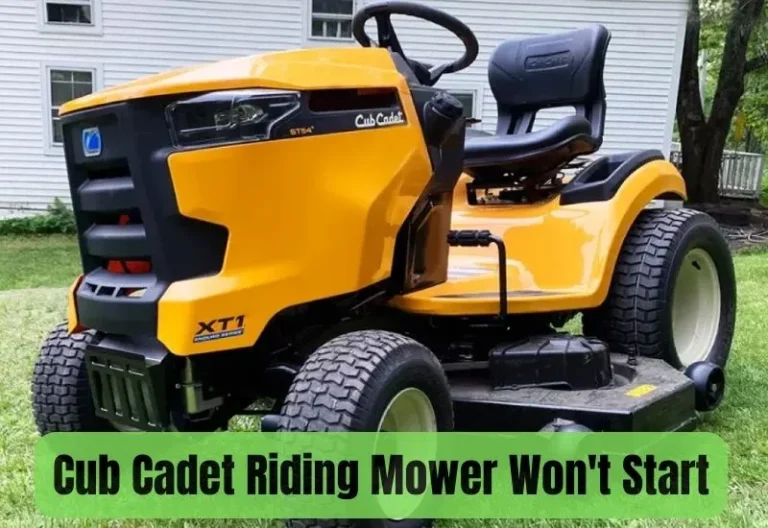
Fix 2: Put the transmission bypass in drive mode
The transmission bypass is a release mechanism that lets you push a riding mower when the engine is off. It may be a rod, lever, or knob near the rear of the frame.
If the bypass remains open, the mower may roll freely but will not drive under engine power. This is one of the most common reasons a Cub Cadet mower will not go forward or backward after it has been stored, moved into a shed, or unloaded from a trailer.
Find the bypass instructions in the manual. Push or pull the lever to the normal operating position. Do not guess if the control is hard to identify. Some models use different positions and labels.
A quick bypass test
With the engine off and the brake released, try to move the mower by hand. If it rolls easily, check the bypass lever first. If it will not roll at all, the brake may be stuck or the wheels may be blocked.
Never crawl under a mower supported only by a jack. If you must raise it, use a rated lift and jack stands on a solid surface. Keep hands away from pinch points.

💡 Pro Tip: Take a photo of the bypass lever before moving it. This helps you return it to the correct position and gives you a reference if the label is hard to read.
Fix 3: Inspect the drive belt and pulleys
A drive belt transfers engine power to the transmission. On many riding mowers, it runs around engine, idler, and transmission pulleys under the frame. A belt can fall off after a branch hits the underside, an idler spring breaks, or a pulley bearing starts to seize.
A broken belt is easy to spot. A stretched or glazed belt may look intact but slip under load. Look for shiny sides, frayed edges, cracks, missing chunks, or black rubber dust.
Do not rely on belt length alone. Cub Cadet uses different belts for different deck sizes and drive systems. Confirm the model number, belt routing, width, length, and part number before buying a replacement.
Safe belt inspection
- Park on level ground.
- Turn off the engine and remove the key.
- Disconnect the spark plug wire or remove the battery.
- Lower the deck if the manual says to do so.
- Photograph the belt routing.
- Check every pulley for wobble or rough movement.
- Replace a damaged belt with the exact approved type.
- Reinstall guards before testing the mower.
A drive belt is not the same as a mower deck belt. The deck belt spins the blades. The drive belt powers the transmission. Using the wrong belt can create poor tension, slipping, or damage.

What to inspect on a belt pulley
The pulley should spin smoothly without grinding. It should not wobble from side to side. An idler pulley should move against spring tension and return to its normal position.
If the belt keeps coming off, do not simply install another belt. Find the cause. A bent pulley, weak spring, misaligned bracket, worn transmission pulley, or damaged belt guard may be at fault.

Fix 4: Check the motion-control levers and linkage
Zero-turn mowers use two motion-control levers. Each lever controls one hydrostatic drive unit. If one lever is out of adjustment, bent, or stuck, the mower may not move or may move only on one side.
For safe startup, many zero-turn models require the levers to be in the correct neutral-lock position. Move them slowly and evenly. Watch for a loose rod, missing bolt, bent arm, or damaged bushings.
A zero-turn mower that spins in one direction may have unequal control adjustment. A mower that creeps with both levers in neutral may need neutral adjustment. These adjustments vary by model, so use the manual rather than copying a generic online procedure.
Signs of a linkage problem
- One lever feels loose.
- One lever travels farther than the other.
- The mower moves when the levers look neutral.
- One rear wheel turns while the other stays still.
- The lever does not return to the neutral position.
- A control rod touches the frame or tire.
Do not force a lever. A bent control arm can damage the hydrostatic pump. If the mower is under warranty, contact Cub Cadet or an authorized dealer before changing factory adjustments.
Fix 5: Check hydrostatic fluid and cooling
A hydrostatic transmission needs clean oil at the correct level. Some Cub Cadet transmissions are sealed and do not have a routine fill point. Others include a reservoir or service procedure.
Read the manual before adding fluid. The wrong oil can harm seals and reduce drive performance. Do not mix fluids just because the color looks similar.
A hot hydrostatic unit may lose power. Grass clippings can block cooling fins and airflow around the transmission. Clean the area with the engine off and the battery removed or spark plug disconnected. Use compressed air carefully. Avoid forcing dirt deeper into electrical parts.
Hydrostatic warning signs
| Warning sign | What it may mean | Recommended response |
|---|---|---|
| High-pitched whine | Low fluid, air, or worn drive unit | Stop and check the manual |
| Weak drive after warming up | Heat or internal wear | Let it cool and seek service |
| Oil around the transmission | Leak or seal failure | Do not continue mowing |
| Slow movement both ways | Belt, fluid, or worn unit | Inspect belt and service system |
| One side is weak | One drive unit or linkage fault | Compare controls and call for help |
Hydrostatic systems can sometimes need purging after service. Purging removes trapped air from the oil circuit. The correct steps differ by transmission model. Use the manufacturer’s method, not a random video for another mower.
Fix 6: Look for a wheel, axle, or key problem
If the belt and controls look normal, inspect the rear wheels. A damaged wheel key or loose hub can let the axle turn without properly driving the wheel.
A wheel may also bind because of a bad bearing, packed debris, bent axle, or brake problem. Lift the mower only with approved equipment. Support it securely before checking wheel movement.
Compare both sides. If one wheel turns and the other does not, the fault is more likely in that wheel, axle, or drive unit. If both rear wheels remain still, look at the shared belt, bypass, brake, or transmission.
Fix 7: Test the engine and clutch system
The engine must produce enough power to drive the mower. A clogged air filter, old fuel, fouled spark plug, or fuel problem can make the engine run but fail under load.
The electric clutch engages the cutting blades. It does not usually drive the wheels, but wiring faults can affect safety interlocks on some models. If the engine stalls when you move the control, check the seat switch, brake switch, and clutch controls.
Gas mowers can suffer from cold-start problems in low temperatures or stale fuel after long storage. Use fresh fuel and fuel stabilizer as directed. Never refuel a hot engine. Store gasoline only in approved containers and follow local fuel-storage rules.
Battery mowers have a different set of checks. Confirm the battery is fully seated, charged, and compatible with the mower. A low battery can reduce drive power or stop a self-propelled system. Do not use a damaged lithium-ion battery.
⚠️ Safety Warning: Never test a moving mower with your hands near the belt, pulley, wheel, or transmission. Keep the seat switch and other safety devices in working order. If the mower starts moving unexpectedly, turn off the engine and remove the key.
A practical troubleshooting sequence
The best way to save time is to work from simple, visible faults to complex internal faults. Do not remove the transmission before checking the bypass lever and belt.
Step-by-step diagnosis
- Park on a flat surface away from traffic.
- Turn off the engine and remove the key.
- Disconnect the spark plug wire or remove the battery.
- Confirm the parking brake moves and releases.
- Put the transmission bypass in drive mode.
- Check the gear selector or zero-turn control levers.
- Inspect the drive belt and all pulleys.
- Check for damaged wheels, axles, or packed debris.
- Look for hydrostatic oil leaks.
- Read the manual for fluid, purge, and adjustment steps.
- Replace only damaged parts that you can identify.
- Test the mower at low speed on flat ground.
Do not test a suspected drive fault on a hill. A mower that suddenly starts moving can roll into a fence, vehicle, pond, or person.
Tools that may help
| Tool or item | Use | Skill level |
|---|---|---|
| Owner’s manual | Model-specific checks and belt routing | Beginner |
| Flashlight | View belts, pulleys, and leaks | Beginner |
| Work gloves | Protect hands from sharp edges | Beginner |
| Socket set | Remove guards and covers | Basic DIY |
| Tire-pressure gauge | Compare rear-wheel pressure | Beginner |
| Jack and jack stands | Lift mower safely when required | Advanced safety |
| Multimeter | Test some switches and wiring | Intermediate |
Use the smallest tool set that solves the problem. More tools do not make an unsafe lift safe. If you lack a rated jack stand, do not work beneath the mower.
What not to do
Several quick fixes can create more trouble. Do not bypass a safety switch, run the mower without belt guards, or spray lubricant on a slipping belt.
Do not add transmission fluid without confirming the type. Do not use automotive transmission fluid as a substitute unless Cub Cadet or the transmission maker specifies it.
Do not keep mowing after hearing grinding, smelling burning rubber, or seeing oil spray. Stop, shut down, and inspect the mower when it is cool.
Common owner mistakes
- Installing a deck belt as a drive belt.
- Guessing the belt route.
- Forgetting to return the bypass lever to drive mode.
- Testing on a slope.
- Using a jack without stands.
- Mixing hydrostatic fluids.
- Ignoring a loose pulley.
- Replacing a belt without fixing the cause.
- Washing water into electrical connectors.
- Cutting wet grass and blaming the transmission for wheel slip.
These mistakes are easy to avoid with a photo, the owner’s manual, and a slow inspection.
Prevention and regular maintenance
Good maintenance can reduce drive problems, though it cannot prevent every failure. Keep the underside free of heavy grass and mud. Inspect belts and pulleys at the start of the mowing season and after striking an object.
Check tire pressure based on the manual. Unequal pressure can make a zero-turn mower feel like one side is weak. It can also affect traction, lawn striping, and steering control.
Grease fittings, if included, need the correct grease and service interval. Do not grease sealed bearings unless the manual says to do so.
Simple maintenance schedule
| Interval | Check or service | Why it matters |
|---|---|---|
| Before each use | Brake, controls, tires, debris | Finds safety problems early |
| Every 10 hours | Belt area and pulleys | Finds wear and grass buildup |
| Monthly in season | Tire pressure and linkage | Supports even movement |
| Each oil service | Air filter, spark plug, engine oil | Maintains engine power |
| End of season | Clean, fuel care, covered storage | Reduces storage damage |
| After impact | Belt, spindle, axle, deck, controls | Finds hidden damage |
The exact schedule depends on the Cub Cadet model and engine. Commercial users, large yards, dusty sites, and hilly terrain may need more frequent checks.
Storage tips for sheds and garages
Store the mower under cover on a dry, level surface. Keep the battery in the temperature range stated by the battery maker. A very cold or hot shed can shorten battery life.
For gas equipment, use fresh fuel and fuel stabilizer as directed. Local rules may limit the amount of fuel you can store. Old gas and oil belong at a household hazardous-waste site, not in a drain or on soil.
Keep the mower away from space heaters, sparks, and children. A small garage can still work if there is room to inspect the mower without blocking exits.
🌿 Eco or Disposal Note: Recycle lithium-ion batteries through a designated battery drop-off. Take old gas and oil to a hazardous-waste site. A usable mower can often be donated, repaired, or recycled through a local program.
When a repair shop is the better choice
A repair shop is usually the right choice when the mower has a hydrostatic failure, an internal axle problem, a major oil leak, or repeated belt failure.
Professional service is also wise when the mower is large, heavy, under warranty, or used on steep terrain. A technician can check hydraulic pressure and neutral adjustment with tools most homeowners do not own.
Bring the model number and a clear description of the symptom. Tell the technician whether the mower stopped suddenly, makes noise, moves on one side, or loses power when hot.
Stop and seek service if you see:
- A cracked transmission housing.
- A large oil leak.
- Smoke from the belt or transmission.
- A grinding or knocking sound.
- A bent axle or wheel hub.
- A damaged safety switch.
- A mower that moves while controls are neutral.
- A fault that returns after a new belt.
A repair estimate should include parts, labor, pickup fees, and diagnosis. Compare that total with the mower’s age and condition. On an older mower with worn deck spindles, tires, belts, and engine parts, replacement may make more sense than a major hydrostatic repair.
Repair cost and replacement questions
Repair prices vary by region, model, labor rate, and part availability. A belt or linkage fix is usually far less costly than a hydrostatic transmission replacement. Ask for an estimate before authorizing major work.
A first-time homeowner with a small, flat yard may not need another riding mower. A quality push mower, self-propelled mower, or battery mower may fit better if the gate is narrow and storage is limited.
For a large yard, rough ground, or frequent mowing, a repaired riding mower may still be worthwhile. Zero-turn mowers suit open yards where fast turning matters, but they are not always the right choice for steep slopes, tight garden beds, or many obstacles.
Repair or replace?
| Situation | Usually worth considering |
|---|---|
| Newer mower with a broken belt | Repair |
| Older mower with several worn systems | Compare repair cost with replacement |
| Small flat yard and narrow gate | Push or battery mower |
| Large open yard | Riding or zero-turn mower |
| Steep or uneven lawn | Model designed for the terrain; seek expert advice |
| Tight budget and simple repairs | DIY inspection, then local service |
The main difference between repairing and replacing is the total cost of ownership. Include future belts, batteries, tires, blades, spark plugs, and service—not only today’s repair bill.
🎁 Gift-Buyer Note: If you are helping a senior or new homeowner, do not buy a mower based only on engine size. Check yard slope, gate width, storage space, control strength, seat comfort, noise limits, and who will handle maintenance.
Choosing an alternative mower
A Cub Cadet riding mower is not the only answer to a movement problem. The right replacement depends on lot size, terrain, grass type, climate, and storage.
A push mower fits many small yards. A self-propelled mower can help on moderate slopes, but it still needs operator control and safe footing. Battery mowers are quieter and avoid fuel storage, while gas mowers can suit larger areas where long runtime and quick refueling matter.
Corded mowers cost less to run but require a safe outdoor-rated cord and nearby power. Reel mowers suit small, level lawns with frequent mowing and fine grass, but they struggle with tall weeds and rough ground. Robotic mowers can suit enclosed lawns with simple layouts, though installation, boundary setup, and local rules matter.
Mower choices by yard type
| Yard and user | Mower type to consider | Main limitation |
|---|---|---|
| Small, flat yard; first-time owner | Push or battery mower | Requires walking |
| Small to medium yard; mild slope | Self-propelled mower | Battery or fuel needs care |
| Large open yard; experienced user | Riding or zero-turn mower | Needs storage and service |
| Narrow gate; limited garage space | Compact push mower | Less comfort on big lots |
| Quiet neighborhood; early morning limits | Battery mower | Runtime depends on battery system |
| Fine, short lawn; hands-on user | Reel mower | Poor fit for tall or rough grass |
Measure the yard, gate, and storage space before buying. Confirm deck size, battery voltage, amp-hours, blade type, and replacement part numbers on the product page and in the manual.
📜 Check Local Rules: Some HOAs and cities limit lawn equipment noise, mowing hours, gas equipment, or fuel storage. Confirm local rules before repairing, replacing, or operating a mower.
Frequently asked questions
Q: Why will my Cub Cadet start but not move?
A: Check the parking brake, transmission bypass lever, drive belt, and control levers. The engine can run normally even when the belt is broken or the hydrostatic drive is disconnected.
Q: Why will my Cub Cadet not go forward or reverse after being pushed?
A: The transmission bypass may still be in the release position. Return it to drive mode according to the owner’s manual. Also check that the parking brake is released.
Q: Why does my zero-turn mower move on one side only?
A: One hydrostatic unit, control linkage, tire, or wheel may have a fault. Check tire pressure and look for a loose or bent linkage. Do not adjust the neutral controls unless the manual gives the correct procedure.
Q: Can a bad battery stop a riding mower from moving?
A: Yes, on some electric or battery-powered models. A weak or poorly seated battery can limit drive power. On a gas mower, the battery may affect starting and safety circuits, but the drive fault is more often mechanical or hydraulic.
Q: How do I know if the Cub Cadet drive belt is bad?
A: Look for a broken, frayed, cracked, glazed, loose, or repeatedly slipping belt. A belt that keeps coming off may be a symptom of a bad pulley, spring, bracket, or alignment problem.
Q: Can low tire pressure make the mower seem broken?
A: Yes. Low or uneven rear-tire pressure can reduce traction and make one side move differently. It will not usually explain a complete loss of forward and reverse movement, so inspect the drive system too.
Q: Should I add hydraulic fluid to my Cub Cadet?
A: Only if your exact model allows it and the manual lists the correct fluid and procedure. Some hydrostatic systems are sealed. The wrong fluid or an incorrect fill level can cause damage.
Q: Is it safe to tow a Cub Cadet that will not move?
A: Use the towing method in the manual. Place the transmission in the correct bypass position and move slowly on level ground. Never tow a heavy mower down a slope or with a person riding on it.
Q: How long does a Cub Cadet mower last?
A: Service life depends on use, storage, terrain, maintenance, and repair quality. A mower used on hills, wet ground, or large properties may wear faster than one used on a small, flat lawn. Belts, blades, tires, batteries, spark plugs, and filters are normal wear parts.
Q: Is a zero-turn mower good for hills?
A: It depends on the slope, model, surface, and operator. Zero-turn mowers are designed for open areas, but many are not suitable for steep or wet slopes. Check the manual’s slope guidance and never mow across a dangerous incline.
Q: Can I fix a hydrostatic transmission at home?
A: Basic checks may be suitable for a careful DIY user. Internal repairs, pressure testing, and fluid purging are more complex. Use a repair shop when the unit leaks, grinds, overheats, or still will not move after simple checks.
Q: Why does the mower move only when cold?
A: Heat can reveal low fluid, air, belt slip, or internal hydrostatic wear. Clean cooling areas and check the manual first. If the problem returns after the mower warms up, professional diagnosis is sensible.
Q: What should I tell a repair shop?
A: Give the model number, engine type, mower hours if known, and exact symptom. Say whether it moves forward, reverse, both, or one side. Mention sounds, leaks, recent belt work, impacts, and storage history.
Final thoughts
When a Cub Cadet lawn mower will not go forward or backward, begin with the simple checks: parking brake, bypass lever, drive belt, controls, and visible damage. Those checks solve many problems without major repair.
Work slowly and keep safety devices intact. A first-time homeowner may need only a manual and a flashlight. An experienced DIYer may handle a belt or linkage repair. A gift buyer should focus on safe controls, suitable terrain, storage, and service support rather than engine size alone.
If the mower has a leaking or noisy hydrostatic transmission, a bent axle, or a fault that returns after repair, call a qualified technician. The right fix is the one that restores safe control and fits the mower’s age, the yard, and the owner’s skill.
Affiliate disclosure: This article may contain affiliate links. If you buy a product through one of those links, we may earn a commission at no extra cost to you. Always confirm compatibility, specifications, safety instructions, and current pricing with the manufacturer or retailer before buying.


2 Comments