
How To Buy A Lawn Mower: Smart Buying Guide
Buying a lawn mower starts with your yard, not a brand name. For most U.S. homeowners, the right choice depends on lawn size, terrain, grass type, storage, noise limits, budget, and how much physical effort you want to use.
A push mower often fits a small, flat lawn. A self-propelled mower helps on slopes or larger yards. Battery models suit many suburban homes, while gas mowers can make sense for large lawns, tall grass, or long mowing sessions. Riding mowers become useful when walking would take too long.
This guide explains how to compare mower types, choose the right size, check power and features, estimate running costs, and avoid common buying mistakes.
Start With Your Lawn
The best mower is the smallest type that can safely and efficiently handle your yard. Measure or estimate the grass area, then check slope, obstacles, gates, and storage space before comparing models.
Measure lawn size
You do not need a perfect survey. A rough estimate is enough to narrow the field.
For a rectangular lawn:
Length × width = lawn area
For example, a lawn that is 100 feet long and 60 feet wide covers about 6,000 square feet. Subtract areas such as patios, driveways, garden beds, and buildings.
Use these broad planning ranges:
| Lawn size | Mower types to consider |
|---|---|
| Under 5,000 sq. ft. | Cordless push, corded electric, or gas push mower |
| 5,000 to 10,000 sq. ft. | Cordless push, self-propelled, or gas mower |
| 10,000 to 20,000 sq. ft. | Self-propelled, high-capacity battery, or gas mower |
| About 0.5 acre or more | Riding mower, lawn tractor, or zero-turn mower |
| Several acres | Larger riding mower or zero-turn mower |
These are starting points, not strict rules. A small but steep lawn may need a self-propelled mower. A large, flat lawn with many trees may be easier to mow with a walk-behind model than with a riding mower.
Check the terrain
Walk the area and look for:
- Slopes and uneven ground
- Roots, rocks, and low spots
- Narrow gates
- Trees, fence posts, and garden borders
- Wet areas
- Areas where clippings must be collected
- Places where a riding mower cannot turn safely
A mower that looks powerful in a store may be awkward on a tight lawn. Turning space often matters more than engine power.
Consider your grass and mowing schedule
Warm-season grasses such as bermudagrass, zoysiagrass, and St. Augustine grass are common in the southern United States. Cool-season grasses such as Kentucky bluegrass, tall fescue, and perennial ryegrass are common in much of the North and Midwest.
Grass type affects mowing height and frequency. It does not always determine the mower type, but thick or fast-growing grass places more demand on the blade, motor, and battery.
Mowing wet grass can clog the deck and leave an uneven cut. If your schedule often forces you to mow after rain, look for a mower with a deck that is easy to clean and enough power to avoid bogging down.

Choose the Right Type of Lawn Mower
Choose a walk-behind mower for most small and medium lawns. Choose a riding mower when the lawn is large enough that walking adds too much time or effort.
Push mowers
a push mower moves only when you push it. It is usually lighter, simpler, and less expensive than a self-propelled mower.
A push mower works well when:
- The lawn is small or medium-sized
- The ground is mostly flat
- You want fewer parts to maintain
- You do not mind providing the effort
- You need to move the mower through narrow spaces
A push model may also be easier to control around flower beds and trees.
Self-propelled mowers
A self-propelled mower drives the wheels while you guide it. This can reduce effort on hills, thick grass, and larger lawns.
Look for:
- Variable speed control
- Rear-wheel drive for better traction on slopes
- Front-wheel drive if you frequently pull the mower backward
- All-wheel drive for difficult or uneven terrain
- A handle control that feels easy to hold
Self-propelled drive uses extra battery power or fuel. It also adds weight, cost, and mechanical parts. Do not pay for it if your lawn is small and flat.
Battery-powered electric mowers
Battery mowers use rechargeable lithium-ion battery packs. They start with a button or control, produce no direct exhaust while operating, and are often quieter than gas models.
They are a strong choice when you want:
- Low routine maintenance
- Less noise
- Easy starting
- No gasoline storage
- A mower that can share batteries with other outdoor tools
The limits are run time, recharge time, battery replacement cost, and reduced performance in very heavy grass. A battery mower’s stated coverage is often measured under ideal conditions. Tall, wet, dense grass can reduce the area cut per charge.
Check whether the listed battery size includes one battery or several. Also check whether the charger comes with the mower.
Gas-powered mowers
Gas mowers remain useful for large lawns, demanding grass, and long or irregular mowing sessions. You can refuel quickly, and fuel energy is not limited by a battery charge.
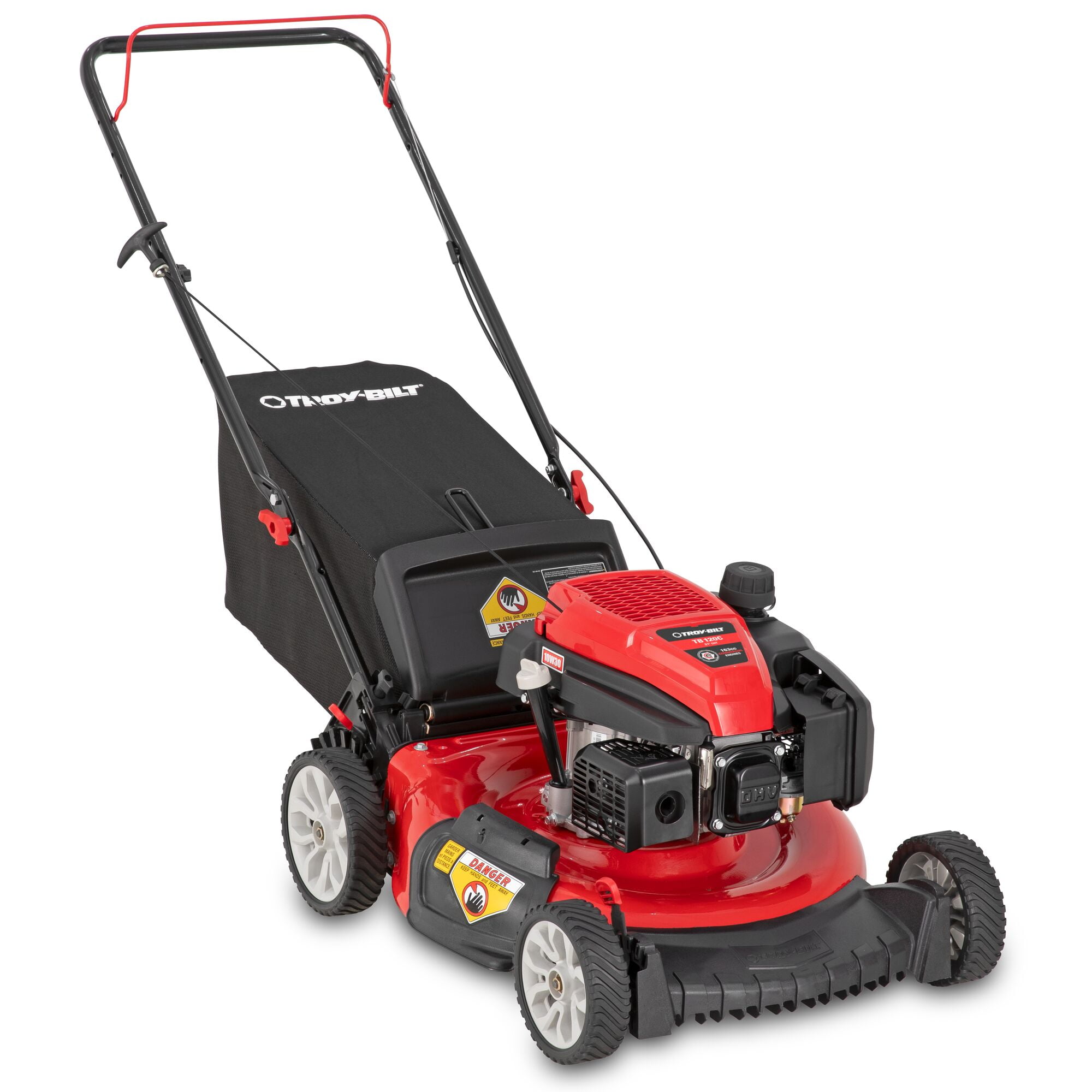
Gas models require more care, including:
- Fresh fuel
- Oil checks and oil changes
- Air-filter service
- Spark-plug service
- Winter storage steps
- Safe fuel storage
The U.S. Environmental Protection Agency regulates emissions from small off-road engines, including many lawn mower engines. Local rules may also affect gasoline storage or equipment use. Follow the owner’s manual and local requirements.
Riding mowers and zero-turn mowers
A riding lawn mower can reduce mowing time on large, open lawns. A lawn tractor usually has a steering wheel and can handle mowing plus some light yard tasks, depending on the model.
A zero-turn mower uses two drive levers and can turn within a small space. It is fast and useful around many obstacles, but it has a learning curve and may be less suitable for slopes than a conventional lawn tractor.
Before buying a riding mower, confirm:
- The mower fits through every gate
- You have a dry, secure storage area
- The slope is within the manufacturer’s limits
- You can reach service and repair support
- The deck width fits the yard
- The mower has the attachments you truly need
Never assume a zero-turn mower is safe on every hill. Read the manual for slope limits and operating instructions.

Select the Right Cutting Width
A wider deck can reduce mowing time, but it is not always the best choice. Match deck width to lawn size, obstacles, and storage.
Common walk-behind deck widths include about 20 to 22 inches. Riding mower decks often range from about 30 to more than 60 inches.
A wider deck can help when:
- The lawn is open
- You have few trees or beds
- You want fewer passes
- The mower has enough power to maintain blade speed
A narrower deck can help when:
- Gates and paths are tight
- The lawn has many obstacles
- You need to reach small strips of grass
- Storage space is limited
A simple time estimate
A mower does not cut its full theoretical width on every pass. Turns, overlap, slopes, and obstacles reduce real productivity.
For a rough estimate:
Mowing time = lawn area ÷ practical cutting rate
As a simple example, a 10,000-square-foot lawn may take much longer with a narrow push mower than with a wider self-propelled model. The real difference depends on walking speed, turning, grass height, and how much overlap you use.
Do not choose a deck so wide that it becomes hard to steer. A mower that requires many awkward corrections can erase the time saved by its wider blade.
Check the cutting range
Most walk-behind mowers offer several height settings. The correct height depends on grass type, season, shade, and local growing conditions.
Avoid cutting more than about one-third of the grass blade at one time. Cutting far too low can stress turf and expose soil. Cutting very tall grass in one pass can overload the mower and leave clumps.
Use the mower manual for height adjustment and follow local turf guidance when available.

Compare Power, Battery Capacity, and Fuel Needs
Power claims are useful only when you compare them within the same mower type. A larger number does not automatically mean a better cut.
Battery mower specifications
Battery capacity is commonly shown in watt-hours:
Watt-hours = volts × amp-hours
For example, a 40-volt battery rated at 5 amp-hours stores about 200 watt-hours under the stated rating. Actual mowing time varies with grass, blade load, drive use, temperature, battery age, and mower design.
Ask these questions:
- Is the battery included?
- How many batteries are required?
- What area does the manufacturer estimate per charge?
- Is that estimate based on one battery or a pair?
- How long does charging take?
- Can the charger remain outdoors?
- What does a replacement battery cost?
- Does the battery work with other tools in the same system?
Battery voltage systems are not automatically interchangeable. Use only batteries and chargers approved for that mower system.
Gas mower specifications
Gas mower power may be listed by engine displacement, torque, or horsepower, depending on the manufacturer. These figures do not provide a perfect comparison across brands.
Focus on practical details:
- Does the mower restart easily?
- Does it have enough power for your grass?
- Is the oil-change process clear?
- Does the model require a specific fuel type?
- Is a fuel stabilizer recommended for storage?
- Is service available near you?
Never add oil to the fuel tank or fuel to the oil opening. Check the manual before fueling, changing oil, or servicing the mower.
Corded electric mowers
A corded mower avoids battery charging, but the power cord limits range and creates a cut hazard. It may work for a small yard with a suitable outdoor-rated extension cord and a properly protected outlet.
Use the cord size and length specified by the manual. Keep the cord behind you and away from the cutting path. Do not use a corded mower if the layout makes safe cord control difficult.

Check the Features That Affect Daily Use
The best lawn mower features reduce effort, improve control, or simplify maintenance. Avoid paying for features that do not fit your yard.
Useful features to consider
Single-point height adjustment: One lever changes all wheels at once. This is faster than adjusting each wheel.
Foldable storage design: A folding handle can help in a garage or shed. Check the folded height and weight before buying.
Washout port: Some models include a deck-cleaning connection. Follow the manual closely. Do not spray water near electrical parts unless the manufacturer allows it.
Mulching capability: A mulching mower cuts clippings into smaller pieces and returns them to the lawn. This can reduce bagging, but the mower may struggle if grass is too tall or wet.
Side discharge: Side discharge is useful when you do not want to collect clippings. Keep people, pets, windows, and vehicles away from the discharge path.
Bagging system: A bagger helps when you need a clean lawn or must collect leaves. Check bag capacity and how easily it attaches.
Blade-brake clutch: On some gas mowers, the blade can stop while the engine keeps running. This may help when crossing paths or emptying a bag, if used as directed.
Headlights: Lights can help with visibility, but they do not make it safe or legal to mow in poor light.
Features that need extra scrutiny
Smartphone controls, app connections, automatic mowing, and electronic displays may be useful. They also add setup steps, software requirements, and possible repair costs.
For a robotic mower, check:
- Boundary-wire or boundary-free requirements
- Cellular or Wi-Fi dependence
- Theft protection
- Weather limits
- Slope rating
- Blade replacement
- Charging-station placement
- Local rules and yard access
Buy these features only when they solve a real problem in your yard.

Compare Total Cost, Not Just the Store Price
The purchase price is only one part of lawn mower cost. Include fuel, electricity, batteries, blades, maintenance, storage, and repairs.
Battery mower costs
A battery mower may have lower routine maintenance than a gas mower. However, a replacement battery can be expensive, and battery capacity declines with age and use.
Before buying, price:
- A second battery
- A replacement battery
- A replacement charger
- Replacement blades
- Any required accessories
A second battery may be more useful than a higher trim level if your lawn is near the mower’s maximum stated coverage.
Gas mower costs
Gas models require fuel and regular maintenance. Calculate the cost of oil, filters, spark plugs, fuel containers, and possible service.
Gasoline can degrade during storage. Follow the engine maker’s instructions for fuel type and storage. Never store fuel in an unapproved container or near heat, sparks, or open flames.
Riding mower costs
A riding mower can save time, but it usually brings higher costs for:
- Fuel or electricity
- Maintenance
- Tires
- Belts
- Blades
- Batteries
- Storage
- Repairs
If your lawn is small, a riding mower may cost more to own than it saves in labor.

Inspect the Mower Before You Buy
Read the owner’s manual before purchase when possible. The manual often reveals limits that a product page does not explain well.
Check the following:
- Mower weight: Can you lift, load, or move it safely?
- Handle comfort: Can you reach the controls without twisting your wrists?
- Wheel design: Are the wheels large enough for uneven ground?
- Deck access: Can you remove or inspect the blade safely?
- Battery access: Is the battery easy to remove and store indoors?
- Bag attachment: Can you install and empty the bag without frustration?
- Service support: Are parts and repair centers available?
- Warranty terms: What parts are covered, and for how long?
- Noise: Does the manufacturer provide a sound rating or operating guidance?
- Recall history: Search the U.S. Consumer Product Safety Commission’s recall database before buying and again after purchase.
Do not rely only on star ratings. Reviews can reveal comfort or durability problems, but they may describe a different model year, yard, climate, or maintenance routine.

Use This Lawn Mower Buying Process
Follow this order to avoid buying more mower than you need.
1. Set your limits
Write down your lawn size, slope, gate width, storage space, budget, and preferred power source.
2. Choose the mower category
Select push, self-propelled, battery, gas, riding, or zero-turn based on the yard’s demands.
3. Choose a suitable deck width
Pick the widest deck that still fits your gates, storage area, and tight turns.
4. Check power and coverage
For a battery mower, compare battery watt-hours, included batteries, charge time, and stated area. For a gas mower, check fuel and maintenance needs.
5. Confirm cutting and bagging options
Make sure the mower reaches your desired cutting height and supports mulching, side discharge, or bagging as needed.
6. Read the manual and warranty
Look for slope limits, cleaning instructions, battery rules, maintenance schedules, and excluded damage.
7. Price ownership
Add likely costs for blades, fuel, batteries, oil, chargers, and repairs.
8. Confirm fit before delivery
Measure gates, doors, ramps, and storage spaces. A mower that cannot reach the lawn is the wrong mower.
9. Learn the safety controls
Before the first cut, identify the blade-control bar, drive control, shutoff method, height levers, and battery or fuel system.
You have likely made a sound choice when the mower fits the yard without operating at its limits, can be stored safely, and has parts and support you can access.

Avoid These Common Buying Mistakes
Many mower problems begin before the first use.
Buying based on yard size alone
A half-acre lawn with steep slopes and many trees is not the same as a flat, open half-acre lawn. Terrain and obstacles may matter more than total area.
Choosing maximum power by default
Extra power can increase price, weight, noise, and energy use. Choose enough power for your grass and mowing habits.
Ignoring battery replacement cost
A low-priced cordless mower may become costly if the battery is small, proprietary, or difficult to replace.
Buying a riding mower without measuring
Measure every gate, narrow path, and storage door. Include the mower’s actual width with the discharge chute or attachments installed.
Mowing steep slopes with the wrong machine
Walk-behind and riding mowers have different slope risks. Follow the exact manual. If the slope feels unstable, do not mow it with that machine. Consider professional lawn service or a safer method.
Skipping protective equipment
Wear sturdy, closed-toe shoes and eye protection. Keep children and pets away from the mowing area. Stop the mower before clearing a clog, and disconnect the spark-plug wire or remove the battery as directed by the manual.
Never place hands near the blade while it can move. A mower can retain stored energy or restart if handled incorrectly.

Frequently Asked Questions
What is the best lawn mower for a small yard?
A push battery mower is often a practical choice for a small, flat yard. It starts easily, needs little routine service, and avoids gasoline storage. A gas push mower can also work well if you prefer long run time and do not mind maintenance.
Is a battery lawn mower better than a gas mower?
Neither is best for every yard. Battery mowers are often quieter and easier to maintain. Gas mowers can be useful for large lawns, tall grass, and long sessions without charging. Compare the full ownership cost and the mower’s stated limits.
What size lawn mower deck should I buy?
Choose a deck that fits your lawn and storage space. A narrow deck is easier around obstacles and gates. A wider deck can reduce mowing time on open lawns, but only if the mower remains easy to control.
How many batteries do I need for a cordless mower?
One battery may be enough when the lawn is small and the mower’s stated coverage exceeds your grass area. A second battery helps when the lawn is large, grass is thick, or you want to finish without waiting for a charge. Check whether the mower requires one or two batteries at a time.
Should I buy a self-propelled mower?
Buy one when slopes, thick grass, or lawn size make pushing tiring. For a small, level lawn, a push mower may cost less and weigh less. Test the drive speed if possible because a mower that moves too fast can be hard to control.
Can I mow wet grass?
It is better to wait until the grass is dry. Wet grass can clog the deck, reduce traction, create uneven cuts, and increase slipping risk. If conditions are unsafe, postpone mowing.

Final Recommendation
To buy the right lawn mower, match the mower to your yard’s size, slope, obstacles, grass, storage, and maintenance needs. Choose a push mower for a small, flat lawn; a self-propelled model for added effort reduction; a battery mower for quieter, simpler operation; a gas mower for demanding or long sessions; and a riding mower for large, open areas.
Before paying, confirm the mower’s deck width, coverage, battery or fuel needs, slope limits, warranty, replacement parts, and storage fit. The right mower should make routine lawn care easier without forcing you to pay for power or features your yard does not need.
For the next step, measure your lawn and narrow your search to two mower types. Then compare three models using the same checklist: size, power source, cutting width, coverage, maintenance, safety limits, and total cost.


