
How Often To Change Lawn Mower Oil: Easy Guide
Change lawn mower oil every 50 hours, or at least once each mowing season, for most gas mowers.
Knowing how often to change lawn mower oil helps your engine run cooler, start easier, and last longer. The right schedule depends on your mower type, engine design, mowing hours, dust, heat, and oil condition. This guide explains the timing, warning signs, correct oil, and simple steps to do the job safely.
How often to change lawn mower oil
For most gas-powered push mowers, change the oil after the first 5 hours of use. After that, change it every 50 hours or once per mowing season, whichever comes first.
Many homeowners mow fewer than 50 hours each year. For them, an annual oil change is the safest and simplest rule. Fresh oil also matters at the end of the season because old oil can hold moisture, fuel residue, and dirt during storage.
Use this schedule as a practical starting point:
- New engine: Change the oil after the first 5 operating hours.
- Regular home use: Change the oil once per season or every 50 hours.
- Heavy use: Change the oil every 25 hours.
- Very dusty, hot, or wet work: Check the oil often and change it sooner.
- Commercial mowing: Follow the engine maker’s hour-based schedule.
The owner’s manual always takes priority. Some engines call for a different interval, oil grade, or filter change. When the manual and a general rule differ, follow the manual.

Why lawn mower oil needs regular changes
Engine oil does more than reduce friction. It also helps carry heat away from moving parts, hold small particles in suspension, and protect metal surfaces from wear.
Over time, heat breaks down the oil. Dust and tiny metal particles also collect in it. On some mowers, a small amount of unburned fuel can enter the crankcase and thin the oil.
Old oil may still look dark but fail to protect the engine well. Dark oil is not always a problem by itself. Oil becomes dirty as it cleans the engine. However, a gritty feel, strong fuel smell, very low level, or thick sludge signals trouble.
Changing oil is like replacing the blood in the engine’s support system. It cannot fix every problem, but it gives the engine a clean supply of protection.

What changes the oil change interval?
The 50-hour rule works well for many homeowners, but mowing conditions can shorten it. A mower that cuts dry grass once a week has an easier life than one that clears tall, wet weeds in summer heat.
Consider these factors when deciding how often to change lawn mower oil:
Mowing frequency
If you mow for one hour each week during a 25-week season, the engine may run about 25 hours. An annual oil change still makes sense because time and storage affect oil quality.
If you mow several lawns or use the mower for long sessions, you may reach 50 hours quickly. Track operating time with a small notebook or phone reminder.
Dust and dry grass
Dust can enter through a dirty or damaged air filter. Fine dirt acts like liquid sand inside the engine. It increases wear and can make the oil dirty faster.
Clean or replace the air filter as the manual directs. Good air filtration supports clean oil and longer engine life.
Heat and heavy loads
Tall grass, steep slopes, wet turf, and clogged decks make the engine work harder. High engine load creates more heat and can age the oil faster.
In these conditions, a 25-hour oil change interval is often a wise choice. Check the oil level before every mowing session.
Engine age and condition
Older engines may burn or leak oil. A low oil level can cause serious damage even when the oil itself is fairly new.
Look around the crankcase, drain plug, and underside of the mower for leaks. If the oil level drops often, have the mower checked instead of simply adding oil again and again.

First oil change for a new lawn mower
A new mower needs an early oil change because the engine wears in during its first few hours. Tiny break-in particles can enter the oil during this period.
Many small-engine makers recommend changing the oil after the first 5 hours. Some modern engines use a different break-in plan, so check your manual before starting.
To make the first change useful:
- Run the engine for a few minutes so the oil becomes warm.
- Shut it off and disconnect the spark plug wire.
- Drain the old oil into a suitable container.
- Refill with the exact amount and type listed in the manual.
- Check the level on a flat surface before use.
Do not overfill the crankcase. Too much oil can cause foaming, smoke, leaks, and poor engine operation.

How to tell if lawn mower oil needs changing
Time and operating hours are the best guides, but the oil can also show warning signs. Check the oil before each use, especially when the mower has been stored for a long time.
Change the oil promptly if you notice:
- A strong gasoline smell
- A milky or creamy appearance
- Metal flakes or a gritty texture
- Thick sludge around the dipstick or fill tube
- An oil level above the full mark
- An oil level below the safe mark
- New engine noise or excessive tapping
- Smoke that continues after a short warm-up
Milky oil may point to water contamination or another engine issue. A fuel smell may suggest a carburetor or fuel system problem. In both cases, changing the oil is helpful, but it may not solve the root cause.
Never run an engine with little or no oil. Small mower engines can suffer major damage within minutes when lubrication fails.

Choosing the right lawn mower oil
The correct oil depends on the engine and outdoor temperature. Many four-stroke lawn mower engines use SAE 30 in warm weather or SAE 10W-30 for a wider temperature range.
Some newer engines allow synthetic oil. Synthetic oil can flow well across a broader temperature range, but it does not remove the need for regular changes.
Check the manual for three key details:
- Oil viscosity, such as SAE 30 or 10W-30
- Required oil amount
- Whether the engine needs an oil filter
Do not use two-stroke fuel mix in a four-stroke engine. Two-stroke engines use oil mixed with gasoline or a separate oil system. Four-stroke engines usually have a crankcase that must be filled with engine oil.
Motor oil for cars may work in some mower engines, but only if its grade meets the engine maker’s requirements. The label and manual matter more than the product’s general marketing.

How to change lawn mower oil safely
Changing mower oil is a simple task, but safety comes first. Work outdoors or in a well-ventilated area. Keep fuel, oil, and hot engine parts away from flames and children.
You will usually need:
- The correct replacement oil
- A drain pan or old container
- A funnel
- A socket or wrench, if the mower has a drain plug
- Shop towels or rags
- Gloves
- A new oil filter, if required
Follow these steps:
- Run the mower for 2 to 3 minutes. Warm oil drains more easily, but do not work on a dangerously hot engine.
- Turn off the engine and let it cool briefly.
- Disconnect the spark plug wire to prevent an accidental start.
- Place the mower on a level surface.
- Find the drain plug, oil fill tube, or oil extraction port.
- Position the drain pan under the opening.
- Remove the plug or use an approved extractor.
- Let the old oil drain fully.
- Replace the drain plug and washer if the manual calls for it.
- Add the recommended oil slowly.
- Wait a minute, then check the dipstick or level mark.
- Start the engine briefly and check for leaks.
- Stop the engine, wait a few minutes, and check the level again.
Some walk-behind mowers are designed to be tilted for draining. If your manual allows this, follow its exact instructions. Keep the air filter and carburetor higher than the oil side to prevent oil from entering them.

Common mistakes to avoid
Most oil-related mower damage comes from a few simple errors. Avoiding them can save the cost of a new engine.
Overfilling the engine
Too much oil can cause foaming and pressure problems. It may also enter the muffler or air filter area and create smoke.
Add oil in small amounts. The correct level is usually between the lower and upper marks on the dipstick, not above the top line.
Using the wrong measurement
Engine oil capacity may be listed in ounces, cups, or milliliters. Do not guess based on the size of the bottle.
Add part of the stated amount first, then check the dipstick. Small engines often need less than a quart.
Checking on uneven ground
A slope can make the oil level look higher or lower than it really is. Always check the oil on a level surface.
Forgetting the oil filter
Some riding mowers and larger engines have replaceable oil filters. A new oil change with an old, clogged filter gives limited protection.
Replace the filter at the interval listed in the manual. Lightly coat the new filter gasket with clean oil before installation.
Leaving the old oil on the ground
Used oil can harm soil and water. Pour it into a sealed container and take it to an auto parts store, recycling center, or local household hazardous waste site that accepts used oil.
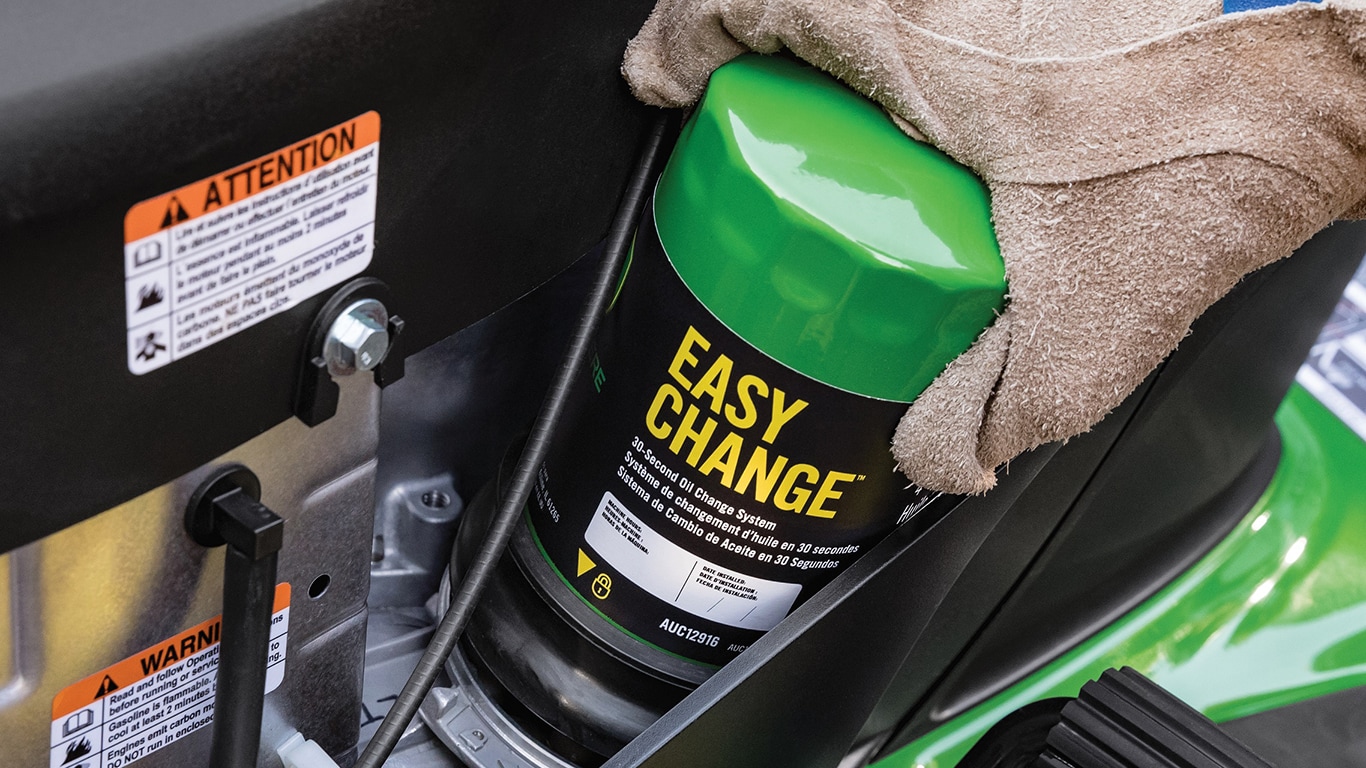
Oil change needs for riding mowers
Riding mower engines often hold more oil and may include an oil filter. Still, the same basic rule applies: use the manufacturer’s hours and season schedule.
Many riding mower engines need an initial change after a short break-in period, followed by changes every 50 hours or once yearly. Heavy lawn care may require more frequent service.
Before changing riding mower oil:
- Park on a flat surface.
- Engage the parking brake.
- Remove the key.
- Let the engine cool enough to handle safely.
- Disconnect the spark plug wire if the manual recommends it.
- Use ramps or a drain system only as directed.
Riding mower service can involve more oil and a larger filter, so prepare a stable drain pan. Never crawl under a mower supported only by a jack.
Oil maintenance for electric and battery mowers
Battery and corded electric mowers do not use engine oil. They have electric motors, so an oil change is not part of normal maintenance.
You still need to maintain the mower deck, blade, wheels, battery, and cooling vents. Remove the battery before cleaning or servicing a battery mower.
If a mower uses a small gas engine to charge a battery or power another system, follow that engine’s service schedule. The motor type determines whether lawn mower oil is required.
How to store a mower after an oil change
End-of-season storage is a good time to change lawn mower oil. Fresh oil reduces the amount of old residue sitting inside the engine for months.
A basic storage routine includes:
- Change the oil if it is due.
- Clean grass from the deck and cooling fins.
- Inspect the air filter.
- Sharpen or replace the blade as needed.
- Stabilize or drain fuel according to the manual.
- Store the mower in a dry, protected space.
- Keep the mower level unless the manual says otherwise.
Fuel storage rules differ by engine and fuel type. Some manufacturers recommend draining the tank, while others recommend fresh fuel with stabilizer. Follow the engine manual rather than using one rule for every mower.
A practical maintenance schedule
A simple calendar can make mower care much easier. Use operating hours when possible, and use the season as a backup reminder.
Before every mowing session
- Check the oil level.
- Inspect for leaks.
- Look for loose parts.
- Remove grass from cooling areas.
- Check the blade and safety controls.
Every 25 hours
- Change oil sooner if the mower works in dust, heat, tall grass, or wet conditions.
- Clean or replace the air filter as needed.
- Inspect the spark plug and control cables.
Every 50 hours or once per season
- Change lawn mower oil.
- Replace the oil filter if equipped.
- Inspect belts, wheels, and blade hardware.
- Clean the underside of the deck.
At the end of the season
- Perform the oil change if it is due.
- Prepare the fuel system for storage.
- Clean and dry the mower.
- Store it safely indoors when possible.
These intervals are general. Your owner’s manual may specify shorter or longer periods.
What I learned from hands-on mower maintenance
One mistake I often see is waiting for smoke or loud engine noise before checking the oil. Those signs mean the mower has already been asking for help. A quick dipstick check takes less than a minute and can prevent a costly repair.
Another useful lesson is to measure old oil before disposal. If much less comes out than the engine should hold, look for a leak or oil burning problem. Simply filling it again may hide a condition that is getting worse.
I also recommend writing the date and operating hours on a small label near the oil fill cap. This simple habit removes the guesswork from how often to change lawn mower oil, especially when several people use the same mower.
Finally, do not rush the refill. Pouring too much oil at once is one of the easiest ways to overfill a small engine. Add a little, check the level, and repeat until it is right.
Frequently Asked Questions About How Often to Change Lawn Mower Oil
How often should you change lawn mower oil?
Change lawn mower oil after the first 5 hours on a new engine, then every 50 hours or once each mowing season. Use a 25-hour interval for heavy, dusty, hot, or commercial work.
Can I change lawn mower oil once a year?
Yes, once a year is suitable for many household mowers that run fewer than 50 hours per season. Change it sooner if the oil looks contaminated, the level is low, or the mower works under heavy loads.
What happens if I never change lawn mower oil?
Old oil loses some of its protective ability and can collect dirt, fuel, and wear particles. Continued use may increase heat, friction, wear, smoke, and the risk of engine failure.
Should I change lawn mower oil before or after winter storage?
Changing it before storage is usually best. Fresh oil leaves fewer acidic or contaminated residues inside the engine while it sits.
Can I use synthetic oil in a lawn mower?
You can use synthetic oil only when the engine maker allows it and the viscosity matches the manual. Synthetic oil may perform well across temperature changes, but it still needs regular replacement.
How much oil does a lawn mower take?
Many small push mower engines take roughly 15 to 20 ounces, but capacity varies widely. Always check the manual and use the dipstick rather than guessing.
Why is my lawn mower oil black?
Oil often turns dark because it collects combustion byproducts and dirt. Black oil is not automatically dangerous, but it should be changed when it reaches the recommended hours or season interval.
Conclusion
Regular oil care keeps a gas mower cooler, cleaner, and more reliable. Change the oil after the first 5 hours on a new engine, then follow the 50-hour or once-a-season rule for normal use. Use shorter intervals for dusty work, heavy loads, extreme heat, or commercial mowing.
Check the oil before each use, choose the grade listed in the manual, avoid overfilling, and recycle used oil responsibly. Write down each service date so you never have to guess how often to change lawn mower oil again. Start with your next oil check, and explore your mower manual for the exact schedule and capacity.