
How To Become A Lawn Mower Dealer: Start Your Business
To become a lawn mower dealer in the United States, you usually need to form a legal business, secure a sales location, meet state and local requirements, build a service operation, and apply directly to one or more lawn equipment manufacturers. Most brands review your market, financial strength, repair capacity, parts support, sales plan, and customer service setup before approving a dealer account.
This is not just a retail business. A successful lawn mower dealer sells equipment, assembles and prepares it, explains safe operation, handles warranty work, stocks common parts, and supports customers after the sale.

What Does a Lawn Mower Dealer Do?
A lawn mower dealer sells and supports outdoor power equipment for homeowners, landscapers, municipalities, farms, and other commercial users. Depending on the agreement, the dealer may sell walk-behind mowers, zero-turn mowers, riding mowers, robotic mowers, trimmers, blowers, snow equipment, utility vehicles, parts, and accessories.
A dealer may perform several different roles:
- Sell new equipment from an authorized manufacturer
- Assemble and prepare machines before delivery
- Provide product demonstrations
- Offer financing or connect customers with lenders
- Perform scheduled maintenance and repairs
- Process manufacturer warranties
- Stock parts and consumables
- Sell used or trade-in equipment
- Arrange delivery and pickup
- Train commercial customers and operators
An authorized dealer has a formal relationship with a manufacturer. The agreement may grant access to branded products, training, warranty systems, parts, marketing materials, and dealer pricing.
A reseller buys equipment through an approved wholesale channel and sells it without necessarily having full authorized service rights. This model may have lower entry requirements, but it can also provide less support from the manufacturer.
A franchise is different again. A franchise may require a franchise agreement, initial fees, ongoing payments, brand rules, and operating standards. Not every lawn mower dealership is a franchise.
Choose the Right Lawn Mower Dealership Model
Your first major decision is whether to operate as a full-service dealership, a sales-focused store, a commercial equipment specialist, or an online and warehouse-based business. The best model depends on your market, skills, capital, and access to technicians.
Full-service dealership
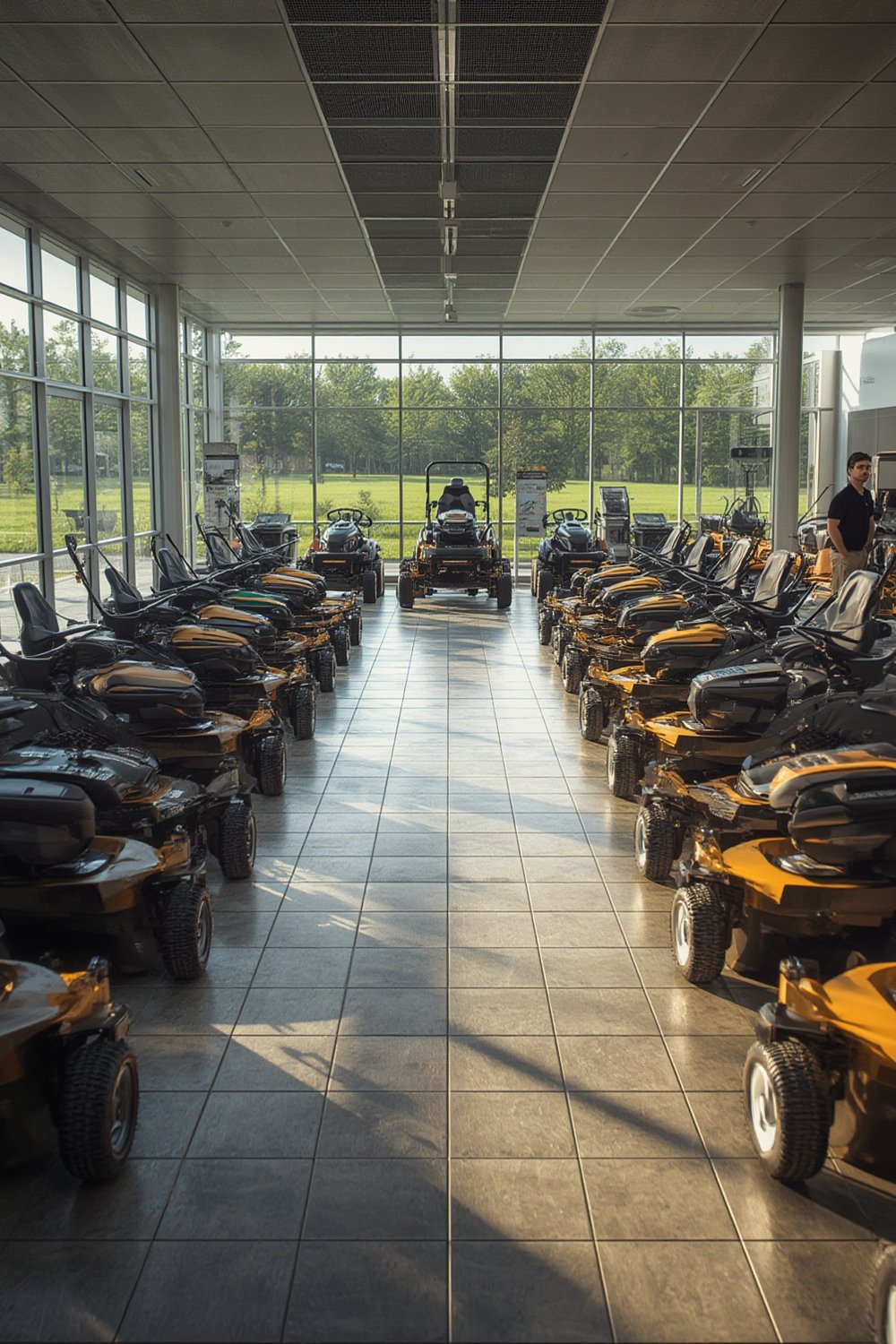
A full-service dealership sells equipment and operates a repair shop. This model often gives customers a strong reason to buy from you instead of a large online retailer.
You may need:
- A showroom
- A service shop
- Trained technicians
- Parts storage
- Delivery equipment
- Manufacturer-approved tools
- Customer intake and repair software
- Secure outdoor storage
This model has higher startup costs but may create more income from repairs, parts, maintenance, and warranty work.
Sales-focused dealership
A sales-focused dealer concentrates on equipment sales and may outsource repairs. This can reduce labor and facility costs, but it may weaken customer retention.
Before choosing this model, ask manufacturers whether they require an authorized dealer to provide in-house service. Some brands may not approve a dealer that lacks repair capacity.
Commercial equipment dealership
Commercial landscapers often need durable machines, fast repairs, parts access, and fleet support. A commercial-focused dealership may sell fewer units but generate larger orders and repeat purchases.
Commercial customers may expect:
- Extended service hours
- Pickup and delivery
- Fleet pricing
- Replacement equipment
- Preventive maintenance plans
- Rapid parts sourcing
– Written service records
Online or warehouse-based dealership
An online model may reduce showroom costs. However, lawn mowers are large, heavy machines that often need assembly, setup, delivery, and service.
You should confirm whether each manufacturer allows online sales, direct shipping, marketplace sales, or sales outside an assigned territory. A brand may require products to pass through an authorized dealer for setup and warranty registration.
Research Your Local Lawn Equipment Market
A manufacturer is more likely to approve a dealer who can show a clear market opportunity. Start by studying your service area before signing a lease or buying inventory.
Review:
- Population and household growth
- Number of homes with lawns
- Local landscaping companies
- Golf courses and sports fields
- Farms and rural properties
- Municipal grounds departments
- Existing lawn equipment dealers
- Competitor brands and price ranges
- Local repair wait times
- Seasonal demand
- Commercial mowing activity
Visit competing stores as a customer. Compare their brands, service hours, inventory, delivery terms, repair times, financing options, and online presence. Do not copy their materials. Use the information to identify an underserved customer need.
For example, a market may already have several residential mower stores but no dealer that supports commercial landscapers on weekends. Another market may have strong demand for battery equipment but limited local repair support.
Estimate local demand
Use a simple planning estimate rather than assuming every household is a potential buyer.
Hypothetical example:
- 20,000 homes in the target area
- 40% have equipment that may need replacement within a five-year period
- 10% of those households buy through your business during the period
Calculation:
20,000 × 40% × 10% = 800 possible household sales over five years
That equals about 160 household sales per year before considering commercial customers, used equipment, accessories, and service work. This is only a planning model. Local income, lot size, competition, weather, product price, and brand loyalty can change the result.
Use conservative assumptions in your business plan. A manufacturer will usually value a realistic plan more than an inflated sales forecast.

Create a Legal Business in Your State
You need a legal business structure before most manufacturers, lenders, and commercial customers will take your application seriously. Common structures include a sole proprietorship, partnership, limited liability company, and corporation.
An LLC is common among small businesses because it can provide a formal business structure and may separate business activities from the owner personally. However, liability protection is not automatic or unlimited. Business owners should discuss the choice with a qualified attorney and tax professional.
Typical formation steps include:
- Choose a business name.
- Check name availability in your state.
- Register the business with the appropriate state agency.
- Obtain an Employer Identification Number from the IRS when required.
- Open a business bank account.
- Set up accounting and sales records.
- Apply for state and local licenses.
- Obtain insurance before opening.
The U.S. Small Business Administration provides state and local business guidance through SBA.gov.
Obtain an EIN
An Employer Identification Number, or EIN, identifies a business for federal tax purposes. The IRS issues EINs through its official website at IRS.gov.
You may need an EIN to:
- Hire employees
- Open some business bank accounts
- File certain tax returns
- Apply for credit
- Work with manufacturers
- Process payroll
An EIN does not replace state registration, a sales tax permit, or a local business license.
Register for sales tax
Most lawn mower dealers must collect and remit sales tax on taxable sales in the states and local jurisdictions where they have the required connection, often called nexus. Rules vary by state and can also apply to online sales.
Contact your state tax agency before selling. Confirm:
- Whether you need a seller’s permit
- Which products are taxable
- How delivery charges are treated
- Whether repairs and labor are taxable
- How online sales are handled
- How often returns and payments are due
Do not rely on a manufacturer’s instructions for tax compliance. The obligation belongs to your business.
Check local zoning and permits
A lawn mower dealership may need more than a standard retail permit. Mowers require outdoor storage, loading space, fuel handling, repair work, and sometimes test areas.
Ask your city or county about:
- Commercial zoning
- Outdoor equipment display
- Sign permits
- Building permits
- Fire-code requirements
- Fuel storage
- Waste oil storage
- Noise restrictions
- Stormwater rules
- Vehicle access and loading
- Used equipment sales
Local rules can prevent you from using a property for repairs or outdoor inventory even when the property appears suitable for retail.
Buy suitable insurance
Insurance needs vary by location and business activity. A dealer should usually discuss at least these areas with a licensed insurance professional:
- General liability
- Commercial property
- Product liability
- Workers’ compensation
- Commercial auto
- Business interruption
- Customer equipment in your care
- Cyber coverage for payment systems
Product liability is especially relevant because lawn mowers contain blades, moving parts, fuel systems, batteries, and engines. Insurance does not replace safe setup, inspection, training, or compliance.
Build a Business Plan for the Dealership
A business plan helps you test whether the dealership can support inventory, staff, rent, repairs, and seasonal cash needs. Manufacturers may also request a business plan during the application process.
Include:
- Target customer groups
- Service territory
- Preferred product categories
- Competitor analysis
- Facility plan
- Staffing plan
- Startup budget
- Inventory plan
- Marketing plan
- Service strategy
- Sales forecast
- Break-even estimate
- Working-capital plan
Estimate startup costs
Your costs may include:
| Cost category | What it may include |
|---|---|
| Business formation | Registration, licenses, permits, professional fees |
| Facility | Lease deposit, rent, improvements, utilities |
| Showroom | Displays, signs, counters, lighting, security |
| Service shop | Lifts, benches, tools, ventilation, compressors |
| Inventory | Mowers, handheld equipment, parts, accessories |
| Delivery | Trailer, truck, ramps, tie-downs, fuel |
| Technology | Point-of-sale, accounting, repair, and inventory systems |
| Staffing | Wages, payroll taxes, training, uniforms |
| Insurance | Liability, property, workers’ compensation, auto |
| Marketing | Website, local ads, events, signs, printed material |
| Working capital | Cash for payroll, rent, parts, and slow seasons |
Do not treat inventory as the only major cost. A dealer can have profitable products and still fail because cash is locked in machines while rent, payroll, and supplier invoices continue.
Calculate a basic break-even point
A break-even calculation estimates how much gross profit you need to cover fixed costs.
Hypothetical example:
- Monthly fixed costs: $30,000
- Average gross profit per mower: $1,200
- Required mower sales to cover fixed costs: $30,000 ÷ $1,200 = 25 mowers per month
This example excludes service revenue, parts sales, financing income, taxes, inventory interest, warranty labor, and unexpected costs. If service work produces $8,000 in monthly contribution, the required mower sales would be lower.
Ask an accountant to help separate:
- Revenue
- Cost of goods sold
- Gross profit
- Variable selling costs
- Fixed operating costs
- Owner compensation
- Debt payments
- Taxes
A sales target based only on units can be misleading. A low-priced mower and a commercial zero-turn mower may produce very different gross profit and service demands.
Contact Lawn Mower Manufacturers and Apply for Dealer Status
After researching your market, contact the manufacturers whose products fit your customers and service capabilities. Use the official dealer, contact, or business-development page on each manufacturer’s website.
Examples of product categories include:
- Walk-behind mowers
- Riding mowers
- Zero-turn mowers
- Stand-on mowers
- Battery-powered equipment
- Robotic lawn mowers
- Commercial landscaping equipment
- Trimmers, blowers, and chainsaws
- Utility vehicles and attachments
Do not assume that a brand is accepting new dealers in your area. Many manufacturers limit dealer density by territory or already have local coverage.
Information manufacturers may request
Prepare a dealership packet with:
- Legal business name
- Ownership information
- Business address
- Proposed sales territory
- Years of retail or service experience
- Financial statements or proof of capital
- Business plan
- Facility photographs or floor plan
- Service-shop details
- Technician qualifications
- Estimated sales volume
- Current brands carried
- References
- Insurance information
- Website and marketing plan
The exact requirements differ by manufacturer, product line, and territory.
Questions to ask each manufacturer
Before signing an agreement, ask:
- Is the company accepting dealers in my territory?
- Is the relationship an authorized dealership, distributorship, franchise, or reseller account?
- What minimum inventory is required?
- Are annual sales targets required?
- Are demo units required?
- What tools and training must I provide?
- Must warranty work be performed in-house?
- How are warranty labor rates set?
- How quickly are parts shipped?
- Are there territory restrictions?
- Can I sell online?
- Are marketplace sales allowed?
- What happens to unsold or discontinued inventory?
- Are there floor-plan financing options?
- What are the termination and buyback terms?
- Are there advertising or signage rules?
- What customer data and software systems are required?
Have an attorney review the agreement before signing. A dealer contract can affect territory, pricing, inventory, warranty work, sales channels, termination, and post-termination obligations.

Decide Whether You Need a Franchise Attorney
Some dealerships are ordinary supplier relationships. Others may include franchise-like obligations or a formal franchise structure. The legal label depends on the agreement and applicable law, not just the word used by a salesperson.
The Federal Trade Commission’s Franchise Rule addresses franchise disclosure requirements in covered transactions. State franchise laws may also apply.
Seek legal advice if the agreement includes:
- Required fees for the right to operate under a brand
- Detailed brand-control rules
- Mandatory operating systems
- Restricted suppliers
- Required territory terms
- Required advertising payments
- Performance standards
- Renewal conditions
- Transfer restrictions
- Termination penalties
- Required purchases unrelated to ordinary wholesale supply
Do not assume that an authorized dealer agreement has the same legal protections as a franchise agreement. The contract must be reviewed on its own terms.
Choose a Facility That Supports Sales and Service
A good dealership location must work for customers, deliveries, inventory, repairs, and safety. A low-rent site may be expensive if trucks cannot enter, outdoor equipment cannot be secured, or local zoning blocks repair work.
Look for:
- Clear road visibility
- Easy customer access
- Adequate parking
- Safe loading areas
- Truck and trailer access
- Secure outdoor storage
- Room for product demonstrations
- Separate parts storage
- Proper electrical service
- Good lighting
- Internet and phone service
- Space for service intake
- Room to expand
A dealership does not need a large showroom if its customers mainly want fast service and commercial support. The right facility depends on the sales model.
Plan the service department
Service is often the part of the dealership that brings customers back. Design the shop around safe workflow rather than appearance.
A practical workflow may include:
- Customer intake and written complaint
- Safety inspection
- Diagnostic estimate
- Customer approval
- Repair and parts tracking
- Quality check
- Customer notification
- Final payment and pickup instructions
Keep customer machines separate from ready-to-sell inventory. Label keys, chargers, batteries, parts, and work orders clearly.
Handle fuel, batteries, and waste carefully
Gasoline, oil, lithium-ion batteries, and cleaning chemicals require controlled storage and handling. Requirements vary by local fire code, building code, environmental rules, and manufacturer instructions.
Use the product manual and applicable local requirements for:
- Fuel storage
- Battery charging
- Ventilation
- Spill response
- Fire extinguishers
- Waste oil
- Damaged batteries
- Used filters and containers
- Transport and disposal
The Occupational Safety and Health Administration provides workplace guidance through OSHA.gov. A qualified fire-safety or environmental professional can help assess a facility before opening.

Hire and Train the Right Staff
A dealership needs people who can sell equipment accurately and repair it safely. A salesperson does not need to be a master technician, but they must understand the machine’s intended use, limits, controls, maintenance needs, and safety features.
Key roles may include:
- Store manager
- Equipment salesperson
- Service manager
- Small-engine technician
- Battery-equipment technician
- Parts specialist
- Delivery and setup worker
- Bookkeeper or office manager
Training should cover:
- Product specifications
- Safe operation
- Pre-delivery inspection
- Assembly procedures
- Warranty documentation
- Parts lookup
- Diagnostic methods
- Fuel and battery safety
- Customer data protection
- Workplace safety
- Return and complaint handling
Do not allow an untrained worker to operate a mower for demonstration or repair. Establish rules for blade engagement, protective equipment, test areas, keys, charging, and machine transport.
Set Up Inventory, Parts, and Warranty Systems
A dealer needs more than finished mowers. Customers also need blades, belts, filters, spark plugs, batteries, chargers, tires, cables, lubricants, and other maintenance items.
Stocking decisions should reflect:
- Local brands
- Seasonal demand
- Common service jobs
- Equipment age
- Commercial fleet needs
- Manufacturer lead times
- Product compatibility
- Shelf life
- Storage space
Track each machine by model, serial number, date received, assembly status, sale date, and warranty registration status.
Use a pre-delivery inspection
Before handing over a mower, check the items required by the manufacturer. A typical inspection may include:
- Correct assembly
- Fasteners and guards
- Tire pressure
- Engine oil or approved fluid
- Battery installation
- Fuel system condition
- Blade and deck setup
- Safety interlocks
- Controls
- Brakes
- Steering
- Charger operation
- Start and stop functions
- Owner’s manual
- Customer delivery instructions
The exact inspection depends on the machine. Follow the manufacturer’s service documentation.
Explain warranty limits clearly
A manufacturer warranty may cover defects in materials or workmanship for a defined period. It may not cover normal wear, misuse, improper maintenance, altered equipment, or damage from unsuitable fuel or storage.
Tell customers:
- What the warranty covers
- Who performs warranty work
- How to start a claim
- What records they should keep
- Which maintenance tasks are their responsibility
- Whether transportation is included
- What parts or labor may be excluded
Do not promise coverage before confirming the written warranty terms.

Create a Sales and Marketing Plan
Local trust is a major advantage for a lawn mower dealer. Customers often want to see the machine, ask questions, arrange delivery, and know where to go when something breaks.
Useful marketing channels may include:
- A clear local website
- Google Business Profile
- Search pages for product categories
- Email reminders for seasonal maintenance
- Commercial account outreach
- Demonstration days
- Local trade events
- Partnerships with landscapers
- Service-package promotions
- Customer referral programs
- Delivery and setup information
Avoid advertising claims such as “lowest price,” “best mower,” or “guaranteed repair” unless you can support them and honor the terms.
Build separate offers for different buyers
A homeowner may care about ease of use, noise, storage, and price. A commercial landscaper may care more about uptime, cutting speed, parts access, and repair turnaround.
Your sales process should ask:
- What area will the customer mow?
- How often will the machine be used?
- What terrain and slopes are present?
- Who will operate it?
- Is noise a concern?
- Is storage space limited?
- Is battery charging available?
- Does the customer need delivery?
- What service support is required?
A short needs assessment reduces unsuitable sales and future complaints.
Understand Product, Safety, and Environmental Rules
Lawn mower dealers must follow federal, state, and local requirements that may apply to product sales, employees, fuel, batteries, advertising, and repairs.
Relevant areas may include:
- State business licensing
- Sales and use tax
- Consumer protection
- Product safety
- Workplace safety
- Fuel and chemical storage
- Waste disposal
- Noise restrictions
- Environmental emissions rules
- Accessibility requirements
- Data and payment security
The U.S. Consumer Product Safety Commission publishes product safety information at CPSC.gov. The Environmental Protection Agency provides emissions and environmental information at EPA.gov.
Rules can depend on the equipment type, engine, fuel, battery system, state, and business activity. Confirm requirements with the relevant agency or a qualified professional instead of treating this article as legal advice.
Never remove guards, disable safety switches, modify emissions equipment, or sell a machine in a condition that conflicts with the manufacturer’s instructions.

Finance the Dealership Carefully
A dealership may need substantial cash before it produces stable revenue. Inventory, rent, payroll, insurance, parts, and marketing can begin before sales reach normal levels.
Possible funding sources include:
- Owner capital
- Bank loans
- SBA-backed lending
- Equipment loans
- Manufacturer floor-plan financing
- Business lines of credit
- Investor capital
- Supplier terms
The SBA explains several funding options at SBA.gov/funding-programs.
Understand floor-plan financing
Floor-plan financing is a credit facility used to purchase inventory. The lender pays or finances stock, and the dealer repays the balance when units sell. Interest, fees, curtailments, audits, insurance rules, and aging charges may apply.
Ask:
- When does interest begin?
- Is there a grace period?
- Are older units subject to curtailment?
- Who pays for transportation?
- What happens to discontinued models?
- Is a personal guarantee required?
- What collateral secures the facility?
- How are manufacturer incentives treated?
Do not assume floor-plan financing makes inventory affordable. Slow-moving machines can create interest expense and cash pressure.
Keep seasonal cash reserves
Lawn equipment sales may rise during spring and early summer, while repair demand may continue through other seasons. Weather can also shift demand.
Maintain cash for:
- Off-season payroll
- Rent and utilities
- Parts purchases
- Warranty delays
- Warranty labor
- Insurance renewals
- Tax payments
- Equipment breakdowns
- Slow-moving inventory
A lender and accountant can help create monthly cash-flow projections rather than relying on annual sales totals.
Common Mistakes New Lawn Mower Dealers Make
New dealers often focus on obtaining a brand and overlook the operating system needed to support it.
Choosing a brand before studying the market
A famous brand may not fit your territory, price range, customer base, or repair capacity. Start with customer needs and manufacturer requirements.
Underestimating service costs
A service department needs tools, training, software, parts, waste handling, insurance, and qualified labor. Warranty work may also pay differently from customer-pay repairs.
Buying too much inventory
Large inventory can make a showroom look full, but it can also tie up cash. Start with products that match proven demand and manufacturer requirements.
Ignoring online sales restrictions
Some dealer agreements limit marketplace sales, shipping areas, advertised pricing, or direct-to-consumer delivery. Read the agreement before listing products online.
Promising repair times you cannot meet
A missed promise damages trust quickly. Base turnaround estimates on technician capacity, parts availability, season, and job complexity.
Treating every customer as the same
Homeowners, landscapers, farms, and public agencies have different needs. Use separate sales and service processes where appropriate.
Failing to document handoffs
Record the machine’s serial number, condition, customer complaint, work performed, parts used, and customer approval. Good records protect both the business and the customer.
Mixing fuel and battery safety practices
Gasoline equipment and battery equipment have different storage, charging, transport, and service risks. Train staff by equipment type.
A Practical Launch Checklist
Use this checklist before opening:
Business setup
- Choose and register the business structure
- Obtain an EIN if required
- Register for state and local taxes
- Confirm zoning and permits
- Open business banking and accounting systems
- Purchase suitable insurance
Market and brand research
- Define the service territory
- Identify customer groups
- Review competing dealers
- Contact selected manufacturers
- Compare dealer agreements
- Confirm territory and online sales rules
- Build a realistic sales forecast
Facility and operations
- Secure an appropriate location
- Plan showroom and service areas
- Install security and inventory controls
- Set up fuel and battery procedures
- Purchase service tools
- Set up parts storage
- Choose business and repair software
Staffing and sales
- Hire or identify qualified technicians
- Train sales staff
- Create a pre-delivery inspection process
- Create warranty procedures
- Establish customer intake forms
- Build a local marketing plan
- Arrange delivery and setup
Opening review
- Confirm required inventory
- Register products correctly
- Test point-of-sale systems
- Review safety procedures
- Verify signage and advertising
- Perform a mock repair and warranty claim
- Confirm emergency contacts and insurance records
Frequently Asked Questions
How much money do I need to become a lawn mower dealer?
There is no single required amount. Costs depend on the brand, territory, facility, inventory level, service department, delivery needs, and financing terms. Prepare a budget for startup costs plus working capital for payroll, rent, parts, insurance, and slow sales periods.
Can I become a lawn mower dealer from my home?
Some sales or reseller activities may be possible from a home-based business, but a full authorized dealership may require commercial zoning, secure inventory, customer access, repair space, and manufacturer approval. Check local zoning and the manufacturer’s dealer requirements before investing.
Do lawn mower dealers make money from repairs?
Many dealers earn revenue from customer-pay repairs, maintenance, parts, accessories, setup, delivery, and warranty work. Profitability depends on labor rates, technician productivity, parts margins, warranty reimbursement, overhead, and seasonal demand.
Can I sell lawn mowers online?
Some manufacturers allow online sales, while others limit direct shipping, marketplace listings, advertised pricing, or sales outside a dealer territory. Review each dealer agreement and confirm how products must be assembled, delivered, registered, and supported.
Do I need to be a mechanic to open a lawn mower dealership?
You do not always need to be a technician, but a full-service dealership needs qualified technical staff or a reliable service partner. Manufacturers may require trained technicians, approved tools, warranty capacity, or documented repair capability.
Is an authorized dealership better than buying wholesale?
An authorized dealership may provide stronger product access, training, parts systems, warranty support, and brand credibility. Wholesale buying may offer more flexibility but may provide less service support and fewer rights. Compare the contract, costs, territory, and customer obligations before choosing.
Conclusion: Start With Service Capacity, Not Just Inventory
The strongest lawn mower dealerships are built around local customer needs and dependable support. Before applying to a manufacturer, define your market, choose a workable business model, confirm local requirements, plan your service department, and calculate realistic cash needs.
Your next step is to create a one-page dealership plan with your target territory, customer groups, facility concept, expected sales, service capacity, startup budget, and three preferred manufacturers. Then contact each manufacturer through its official dealer channel and compare the requirements in writing.


