Mowing Pattern To Avoid Ruts: Best Lawn Tips
Mowing in the same direction every time can press tire tracks into the soil. Over time, those tracks may turn into ruts. Ruts are shallow grooves made worse by heavy mower wheels, wet soil, repeated turns, and poor mowing habits. They can hold water, stress turfgrass, and make the lawn look uneven.
The best mowing pattern to avoid ruts is a changing pattern that moves across the lawn in different directions each time. Alternate north-to-south, east-to-west, and diagonal passes. Keep turns wide, avoid mowing when the ground is soft, and use the right mower for the yard.
This guide explains how to plan a mowing pattern, when to use stripes, how to mow hills safely, and how to repair ruts that already formed. It also covers push mowers, self-propelled mowers, riding mowers, zero-turn mowers, electric mowers, and robotic mowers.

Quick answer: change direction and protect the soil
The best way to avoid mower ruts is to change your mowing direction every time you cut. Mow north to south one week, east to west the next, and use diagonal passes after that. Mow only when the soil is firm, keep the deck at the right height, make wide turns, and avoid driving the same wheel path around trees, beds, and fences.

A good pattern spreads tire pressure across more of the lawn. It also helps grass blades stand in different directions instead of leaning the same way each week.
For most home lawns, this simple rotation works well:
- Week one: mow north to south.
- Week two: mow east to west.
- Week three: mow northeast to southwest.
- Week four: mow northwest to southeast.
- Repeat the cycle.
The pattern does not need to be exact. The main goal is to avoid using the same wheel tracks and turning points each time.
Why repeated mower paths create ruts
Repeated mower paths create ruts because the wheels compress the same soil again and again. Wet soil has more space between its particles, so it can collapse under a mower. Heavy riding mowers and zero-turn mowers place even more pressure on the soil than a light push mower.

Soil compaction is the main cause
Soil compaction happens when air pockets in the soil are squeezed out. Grass roots then have less room for air, water, and growth. Compacted soil also drains slowly, which can create a cycle of soft soil, deeper tire tracks, and more compaction.
Clay soil is especially prone to ruts. It holds water and can stay soft long after rain. Sandy soil drains faster, but repeated traffic can still wear paths into the turf.
Wet grass makes the problem worse
Never mow wet grass on a slope. Even on level ground, wet mowing can cause damage. Moisture reduces traction and allows mower tires to press into the soil.
Wet grass also sticks under the mower deck. This can lead to clumps, poor mulching, and a rough cut. A grass catcher may fill faster, and a battery mower may use more energy when the deck is clogged.
Wait until the grass and soil are firm. A light morning dew may dry quickly, but do not rely on the surface alone. Press a shoe into the lawn. If your footprint stays deep or the soil feels soft, wait.
Turning causes concentrated damage
Turns are harder on turf than straight passes. A sharp turn can twist the tires against the soil. Zero-turn mowers are especially likely to scuff grass if the operator spins or pivots in place.
Riding mowers can also leave crescent-shaped ruts at the ends of rows. Push mowers create less pressure, but tight turns can still damage damp turf.
Use broad, gradual turns. On a riding mower, make a loop or a three-point turn. On a zero-turn mower, slow down before the turn and avoid holding one wheel still while the other moves.
A rotating mowing pattern works better than lawn stripes
A rotating mowing pattern works best because it spreads traffic across the lawn. Classic stripes are created when grass blades bend in one direction. They look neat, but mowing the same stripes every week can place tires in the same locations.

North-to-south passes
Start at one edge of the lawn and mow in straight lines toward the opposite side. At the end of each row, move over by about one-half to three-quarters of the mower deck width.
This pattern is easy for beginners. It also works well for rectangular yards and small lawns. Mark a safe turning area near a driveway or sidewalk.
East-to-west passes
Change to east-to-west mowing the next time. This crosses the old wheel tracks. It also lifts grass that was leaning from the first cut.
For lawns with a clear rectangle, this may be the easiest rotation to remember. Use the fence, house, or sidewalk as a visual guide.
Diagonal passes
Diagonal mowing adds another direction without creating complex turns. Use a northeast-to-southwest line one week, then a northwest-to-southeast line later.
Diagonal passes work well in open yards. They are less useful in narrow side yards, where the mower may need too many turns. Do not force a diagonal line near steps, ponds, drop-offs, or garden edges.
Perimeter passes
Mow one or two passes around the edge before working across the center. This gives you room to turn without running into a fence or flower bed.
Do not make the perimeter your only pattern. If you always drive around the same edge, you can create a ring-shaped rut. Change the starting side and direction when possible.
The table below gives a simple rotation for common yard shapes.
| Yard layout | Useful pattern rotation | Main caution |
|---|---|---|
| Small rectangle | North-south, then east-west | Avoid repeating the same end turns |
| Open square lawn | Add diagonal passes | Watch for hidden objects |
| Narrow side yard | Alternate lengthwise lines | Do not force crosswise passes |
| Yard with many beds | Mow open areas in changing directions | Use a string trimmer near edges |
| Sloped lawn | Follow safe contour rules from the manual | Never mow wet slopes |
The key takeaway is simple: change the direction of the straight passes and vary where you turn. A neat pattern matters less than protecting the soil.
Tools and mower settings that help prevent ruts
The right mower setup can reduce soil stress, but no mower can prevent ruts on soft ground. Check tire pressure, deck height, blade condition, and mower weight before each mowing session.
| Tool or setting | What it does | Who benefits most |
|---|---|---|
| Tire pressure gauge | Helps keep tire pressure even | Riding mower owners |
| Sharp mower blade | Makes a clean cut with less repeat travel | Every lawn owner |
| Higher deck setting | Reduces scalping and stress | Dry lawns and warm-season grass |
| Grass catcher | Removes clumps when mulching is poor | Wet or tall grass |
| String trimmer | Cuts around beds without mower traffic | Small or complex yards |
| Lawn roller | Creates stripes but can add pressure | Flat lawns with firm soil |
Use the mower manual for the correct tire pressure. Uneven tire pressure can make one side sink more than the other. It can also make the deck sit at an angle, which causes uneven mowing and repeated passes.
Set the mowing height based on the grass type and season. Never remove more than about one-third of the grass blade in one cut. If the lawn is very tall, raise the deck and mow again later rather than forcing one low pass.
Push mowers
A push mower is often a good choice for a small, mostly level yard. Its lower weight places less pressure on soil than a riding mower. Battery push mowers are quieter and do not need fuel, spark plugs, or oil changes.
A corded mower can suit a small yard with outdoor power available nearby. The cord is a limit near trees, beds, and fences. Keep it behind you and follow the manual.
Light push mowers still create ruts if used on wet ground. Avoid carrying a full grass catcher through soft areas when possible. Empty it before the mower becomes difficult to control.
Self-propelled mowers
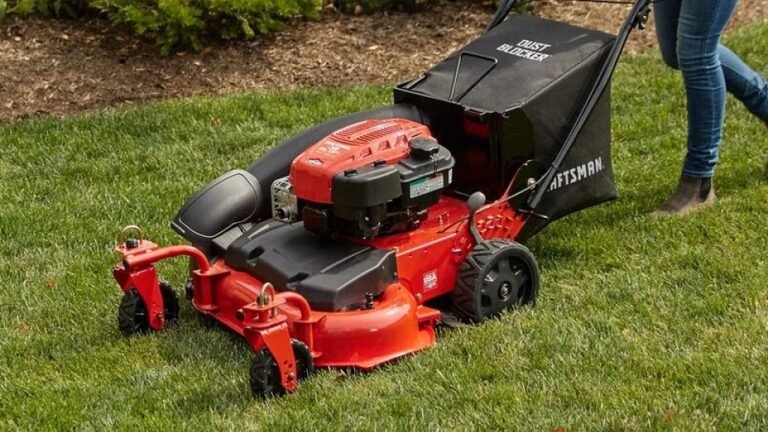
A self-propelled mower uses a drive system to move the mower forward. It can help on hills and larger yards, but it may weigh more than a basic push mower.
Use a steady speed. Do not let the mower surge, stop, or spin its drive wheels. On a slope, follow the owner’s manual. Many walk-behind mowers should be used across a slope rather than straight up and down, but the correct method depends on the mower and terrain.
Self-propelled models suit homeowners who need help on moderate slopes but do not want a riding mower. They may not suit narrow paths, very soft soil, or users who have trouble controlling a heavier machine.
Riding and zero-turn mowers
Riding mowers save time on larger lawns. They suit open yards where there is room to turn. A zero-turn mower can turn tightly around trees and beds, but its fast steering response requires practice.
Avoid pivot turns. Use a three-point turn or a wide arc. If the rear tires tear the grass, slow down, check tire pressure, and change the turning method.
A riding mower may be too heavy for a small yard or a lawn with poor drainage. Measure gate width and storage space before buying. Check the mower’s deck width, turning radius, fuel needs, and slope limits.
Robotic mowers
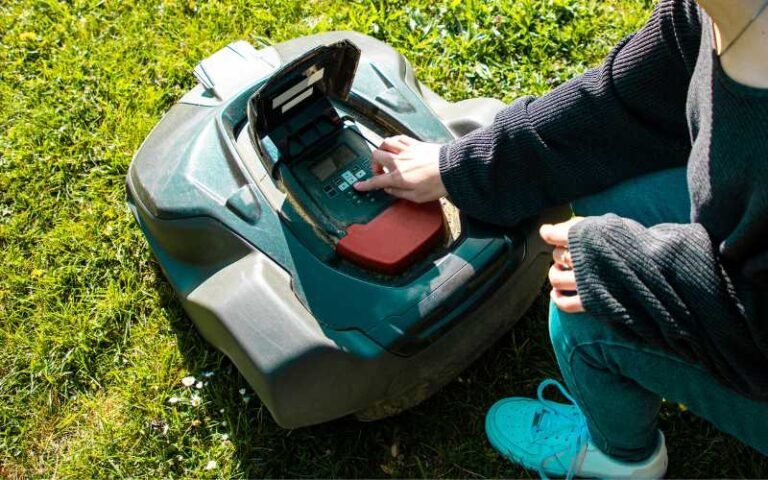
Robotic mowers use a programmed route and cut small amounts of grass often. Many models follow random or planned paths. This can reduce visible repeated tire tracks, but it does not remove the risk of soil compaction.
A robotic mower suits a mostly flat, contained yard with a suitable boundary setup. It may not suit a lawn with steep slopes, loose soil, many separate sections, or frequent obstacles.
Read the current product listing and manual for slope limits, boundary wire needs, charging space, and rain behavior. Some models can operate in light rain, while others should return to the dock.
Reel mowers
A reel mower uses a spinning cylinder of blades instead of a powered rotary blade. It is light and quiet. It can suit a small, flat lawn that is cut often.
Reel mowers are not a good fit for tall grass, rough ground, sticks, thick weeds, or large lawns. They also need correct blade adjustment. A dull or poorly adjusted reel can make mowing harder and lead to repeated passes.
Step-by-step: how to mow without making ruts
The best mowing routine starts before the mower moves. Check the soil, plan the route, and avoid forcing the machine through soft spots.
1. Check the lawn and soil
Walk the yard before mowing. Look for wet areas, animal holes, loose stones, sticks, toys, hoses, and sprinkler heads. Note any places where water gathers.
Press your shoe into questionable areas. If the surface gives way, mark the area and wait. If you must maintain a narrow wet area, use a trimmer instead of driving a mower through it.
2. Clear the lawn
Remove branches, rocks, toys, pet waste, and other debris. Mower blades can throw objects at high speed. Clearing the lawn also prevents sudden stops that can make tire marks.
Keep children and pets indoors or well away from the work area. Do not assume a child or pet can hear a quiet battery mower.
3. Check the mower
Inspect the blade, deck, wheels, handle, battery, cord, or fuel system. Make sure the blade is secure. Look for loose parts and damaged guards.
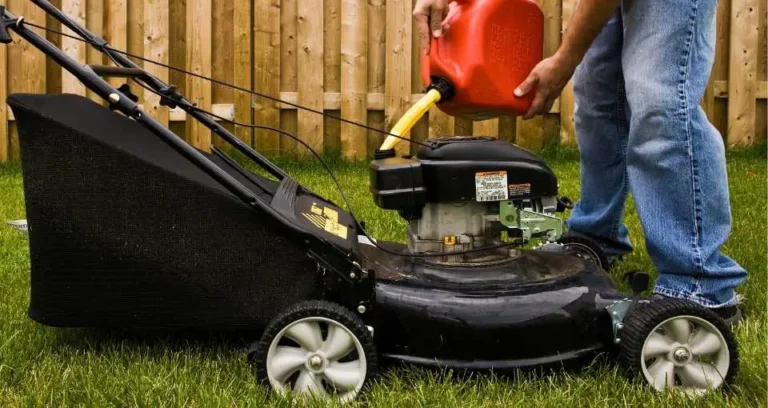
For gas mowers, check the oil level and fuel condition. Old fuel can cause hard starting and poor engine operation. A fuel stabilizer may help during storage, but follow the product label and mower manual.
For battery mowers, check that the battery fits the mower and that its voltage and amp-hour rating match the manual. Amp-hours, or Ah, describe battery capacity. They do not always equal a fixed mowing time because grass height, speed, blade condition, and terrain change power use.
4. Set the mowing height
Choose a height that suits your turfgrass and local climate. Cool-season grasses often need a different height from warm-season grasses. During drought or heat, a slightly higher cut may help shade the soil, but confirm the right range for your grass.
Raise the deck if the lawn is tall. Make a partial cut first. A low deck can scalp high spots and expose soil, while a high deck can leave long grass that may require a second pass.
5. Mow one clean border
Make one pass around the outer edge. Keep the mower wheels away from flower beds, retaining walls, and steep drop-offs.
Change the direction of this border from time to time. If you always travel clockwise around the same edge, the outside tires may create a rut.
6. Choose a new direction
Use a direction that crosses the last mowing pattern. If the last cut ran north to south, mow east to west this time.
Start on the side that lets you finish near the exit, driveway, or shed. This reduces the need to cross freshly cut areas with the mower.
7. Keep straight lines and steady speed
Follow a visual line such as a fence, sidewalk, or distant tree. Keep both wheels moving at a steady pace.
Do not overlap too much. A small overlap helps prevent missed strips, but large overlaps increase traffic. If you miss a narrow strip, make one short correction instead of recutting the whole lawn.
8. Make wide turns
At the end of each pass, slow down and make a broad turn. Push mowers can use a gentle U-turn. Riding mowers can use a loop. Zero-turn mowers should avoid spinning in place.
If the lawn ends near a bed, leave a safe turning zone during the first pass. Use a string trimmer for the final edge rather than forcing sharp tire turns.
9. Change the pattern next time
Record the mowing direction on a phone or calendar. This small habit helps busy homeowners and family members remember the rotation.
If a rainstorm interrupts the schedule, do not use a wet lawn just to keep the pattern. Soil condition matters more than the planned direction.
Mowing patterns for hills, slopes, and uneven ground
The safest mowing pattern on a slope depends on the mower type, slope angle, surface condition, and owner’s manual. Never mow a wet slope. Loss of traction can cause a mower to slide or tip.
Walk-behind mower patterns
Many walk-behind mowers are used across a slope rather than straight up and down. This can reduce the chance of the mower moving downhill toward the operator. Yet terrain varies, so follow the specific manual.
Move slowly. Keep both hands on the handle. Do not pull a mower backward unless the manual allows it and you can keep your feet clear.
Riding mower patterns
A riding mower may have strict slope limits. Do not guess the safe angle. A slope that feels mild on foot may be risky on a riding machine.
Avoid sudden turns, wet grass, ditches, and drop-offs. Keep the deck low if the manual permits, and use a route that avoids repeated wheel tracks.
When to use a string trimmer
A string trimmer can be safer for short, steep, or irregular sections. It also protects soft areas from mower traffic.
Use eye protection, hearing protection, closed-toe shoes, and work gloves. Keep the trimmer head away from people, windows, vehicles, and fragile plants.
Common mistakes that lead to lawn ruts
Most ruts come from a few repeat habits. Fixing those habits often prevents more damage than buying a new mower.
| Common mistake | Why it causes ruts | Better choice |
|---|---|---|
| Mowing right after rain | Soft soil collapses under tires | Wait for firm soil |
| Using the same pattern | Pressure stays in one track | Rotate directions |
| Pivoting a zero-turn mower | Tires scuff and twist turf | Use wide turns |
| Cutting grass too short | Exposes soil and weakens turf | Follow a proper height |
| Overlapping every pass | Adds extra traffic | Use a small overlap |
| Carrying a full catcher | Adds weight and drag | Empty it often |
| Ignoring tire pressure | Uneven pressure creates deeper tracks | Check the manual setting |
Another mistake is mowing faster than the turf can handle. High speed may save a few minutes, but it can reduce control and cause missed strips. Slow down near turns, slopes, and obstacles.
Do not use a heavy riding mower on a small lawn simply because it is faster. A light push mower may be a better match for a compact yard. The best mower for a small yard is often the one that fits through the gate, stores easily, and creates less traffic.
Cutting too much grass at once
Tall grass bends under the deck and may not stand back up. The mower may leave clumps, especially when the blade is dull. A second cut may be needed.
Use a higher setting first. Wait a few days if needed, then lower the deck within the proper range. This reduces engine strain and limits repeat passes.
Ignoring grass type and climate
A lawn in a dry climate may become hard and brittle. A lawn in a wet climate may stay soft for days. Cold weather can slow growth, while warm weather can increase growth or drought stress.
Adjust the mowing schedule to the lawn, not the calendar. Mow when the grass needs it and the soil is firm.
Making decorative stripes every week
Lawn striping can look attractive, but it should not control your route. Alternate the direction and use a simple crosshatch or diagonal pattern.
A lawn roller can deepen stripes, but it also adds weight. Use one only on a flat, firm lawn and avoid it on wet soil.
Repairing ruts that already formed
Small ruts can often be repaired by loosening the soil and adding a thin layer of topsoil. Deep ruts may need more work, especially if they hold water or expose roots.
Shallow tire marks
For a shallow mark, water the area lightly if the soil is dry. Use a garden fork to loosen the compacted surface. Lift the turf gently without tearing the roots, then add soil beneath it.
Press the grass back into place. Keep it moist while roots recover, but do not create muddy conditions.
Deep ruts
For a deep rut, cut along the edges with a shovel. Lift the turf and set it aside. Add screened topsoil in thin layers, pressing each layer lightly.
Replace the turf at its original level. If the grass does not recover, reseed with a variety suited to your region. Keep seed moist until it sprouts.
Poor drainage and recurring ruts
If the same area stays wet, filling the rut may not solve the cause. Check downspouts, irrigation leaks, soil grade, and compacted layers.
Core aeration can remove small plugs of soil and improve air and water movement. It works best when the soil is moist but not saturated. Do not aerate every lawn on the same schedule. Some turf and soil types need different treatment.
Thatch is a tight layer of dead stems and roots between the grass blades and soil. A thin layer can be normal. A thick layer can block water and encourage shallow roots. Excess thatch may need removal, but aggressive dethatching can stress the lawn.
Cost, storage, and mower choice
Avoiding ruts is partly a mowing skill and partly a mower-fit decision. A lightweight mower may suit a small, level yard. A self-propelled mower can help a user who struggles with hills. A riding mower may save time on a large, open lot but can cause more soil pressure.
| Yard and user | Mower type to consider | Main limitation |
|---|---|---|
| Small, flat yard and beginner | Push battery or reel mower | Limited width and power |
| Small yard with mild hills | Self-propelled battery mower | More weight and service parts |
| Large, open, mostly flat yard | Riding mower | Needs storage and wider turns |
| Large yard with many obstacles | Zero-turn mower | Requires careful turn control |
| Quiet neighborhood or small lot | Electric or battery mower | Battery or cord limits |
| Senior user needing less pushing | Self-propelled mower | Must still be easy to control |
| Simple contained lawn | Robotic mower | Setup and slope limits |
Battery mowers need charging space and a compatible battery system. Store lithium-ion batteries in a dry place away from extreme heat. Do not use a swollen, cracked, or damaged battery.
Gas mowers need fuel storage, oil, spark plugs, air filters, and seasonal care. Never refuel a hot engine. Store fuel only as allowed by local rules and the product label.
Measure the shed or garage before buying. Check the mower’s folded height, deck width, handle position, and door clearance. A mower that cannot be stored safely may be left outdoors, which shortens its useful life.
How long does a mower last?
Mower life depends on use, care, climate, storage, and parts. Blades, belts, spark plugs, air filters, wheels, and batteries may wear before the mower frame does.
A homeowner who cleans the deck, sharpens the blade, changes oil when required, and stores the mower dry may get more useful service than someone who leaves it exposed. Check replacement part numbers before buying any part.
Is a larger mower worth it?
A wider deck can reduce mowing time on a large, open lawn. It may not help in a small yard with gates, trees, beds, or tight corners.
A larger mower also weighs more and may press harder into wet soil. Choose by lot size, terrain, storage, user strength, and local noise rules—not just cutting width.
A simple maintenance plan for rut-free mowing
A maintained mower rolls more evenly and cuts cleanly. Maintenance does not replace good soil conditions, but it helps prevent rough passes and repeated travel.
| Maintenance task | When to do it | Why it matters |
|---|---|---|
| Clear and inspect the deck | Before each mow | Helps prevent clumps and drag |
| Check blade condition | Every few cuts | Supports a clean, even cut |
| Check tire pressure | Before riding mower use | Helps keep wheel load even |
| Clean battery contacts | As needed | Supports a secure connection |
| Check oil and air filter | Per manual | Supports gas engine operation |
| Inspect belts and wheels | Monthly during use | Finds wear before failure |
| Sharpen or replace blade | When dull or damaged | Reduces repeat passes |
Disconnect the spark plug wire before servicing a gas mower. Remove the battery before working on a battery mower. Never place hands under the deck while the blade can move.
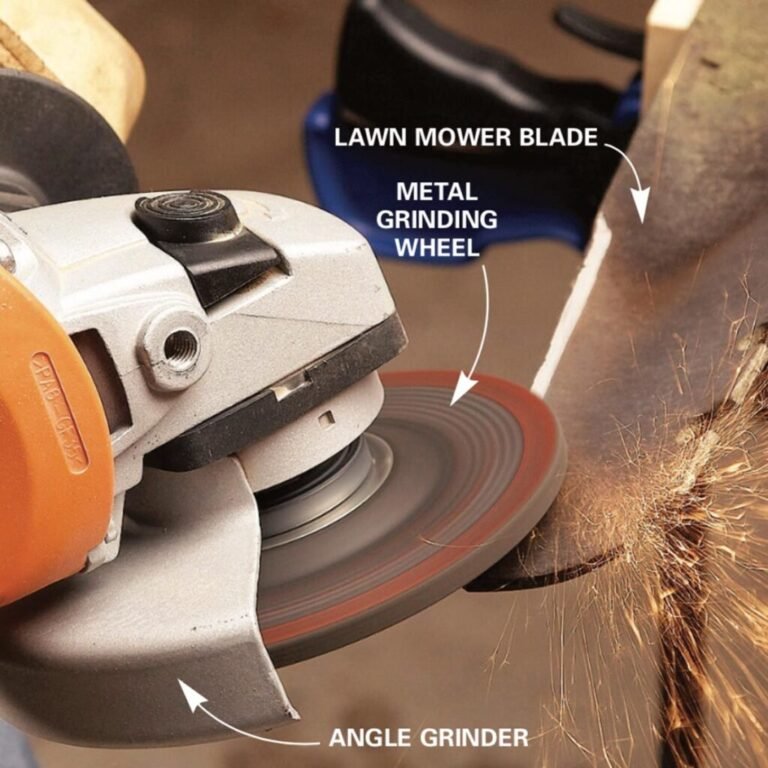
A mower blade should be balanced after sharpening. A bent blade should be replaced, not forced straight. Confirm the blade type, length, center-hole style, and part number before ordering.
Use a leaf blower only after mowing if it is allowed in your area. Battery leaf blowers are often quieter than gas models, but all blowers can move dust and debris. Wear eye protection and keep debris away from roads, windows, and people.
⚠️ Safety Warning: Wear safety glasses, hearing protection, closed-toe shoes, and work gloves when appropriate. Clear debris first, keep children and pets away, never mow wet grass on slopes, disconnect the spark plug or remove the battery before servicing, never refuel a hot engine, and follow the owner’s manual.
Local rules and environmental care
Mowing equipment may be limited by HOA rules, local noise ordinances, or gas-equipment restrictions. Some cities limit the hours for loud outdoor work. Confirm rules with your city, county, landlord, or HOA before operating a gas mower, leaf blower, or string trimmer.
📜 Check Local Rules: Rules can change by location. Confirm allowed mowing hours, fuel storage limits, battery disposal sites, and any restrictions on gas-powered outdoor equipment.
Dispose of old gasoline and oil at a household hazardous-waste site. Do not pour fuel or oil on soil, into a storm drain, or into household trash.
Recycle lithium-ion mower batteries at a designated battery drop-off. Tape exposed battery terminals if the collection site requires it. Do not place rechargeable mower batteries in a curbside recycling bin unless your local program specifically accepts them.
Usable old mowers may be donated, sold, or accepted by a recycling program. Remove fuel as directed before transport. A mower that is unsafe to operate should not be given to another person without clearly stating its condition.
🌿 Eco or Disposal Note: Keeping a mower longer through proper care can reduce waste. When replacement is needed, recycle the battery, fuel, oil, and metal parts through approved local programs.
When to hire a lawn or mower professional
Hire a professional when ruts are deep, drainage is poor, or the lawn sits on a steep slope. A turf specialist can identify compaction, grading problems, irrigation leaks, and thatch issues.
A repair shop can help when the mower vibrates, pulls to one side, loses drive power, smokes, or repeatedly damages turf despite correct use. These symptoms may point to a bent blade, bad wheel, worn belt, uneven tire pressure, or deck problem.
Ask for a written estimate before approving work. For a large lawn, compare the cost of repair, aeration, topdressing, reseeding, and continued mowing service.
Frequently asked questions
Q: What is the best mowing pattern to avoid ruts?
A: Change direction each time you mow. Rotate between north-south, east-west, and diagonal passes. Use wide turns, avoid wet soil, and do not repeat the same perimeter route every week.
Q: Should I mow the same direction every time for better stripes?
A: No. Repeated stripes can place mower wheels in the same tracks. Change direction to spread pressure. You can still create temporary stripes by using a new direction for one mowing session.
Q: Is it better to mow in circles or straight lines?
A: Straight lines usually make it easier to track wheel paths and change direction. Circles can work around large open areas, but repeated circular routes may create ring-shaped wear. Vary the route and avoid tight turns.
Q: How dry should the lawn be before mowing?
A: The grass should be dry enough that the mower does not leave deep footprints or tire marks. The soil should feel firm under your shoes. If the lawn is soft, wait longer.
Q: Can a zero-turn mower cause ruts?
A: Yes. A zero-turn mower can scuff turf during pivot turns, especially when the soil is wet. Slow down, make wide turns, and keep both drive tires moving through the turn.
Q: What mower is best for a small yard?
A: A lightweight push battery mower, corded mower, or reel mower may suit a small, level yard. Choose based on grass height, storage, noise limits, and the user’s strength. A heavy riding mower may add needless soil pressure.
Q: What is the best mower for hills?
A: There is no single choice for every hill. A self-propelled walk-behind mower may suit a moderate slope if the manual allows it. A string trimmer may be safer for steep or uneven sections. Never mow a wet slope.
Q: Does raising the mowing height prevent ruts?
A: Raising the deck does not stop tire ruts by itself. It can reduce scalping and grass stress. The main controls are firm soil, changing patterns, correct tire pressure, and wide turns.
Q: Should I aerate a lawn with ruts?
A: Aeration may help compacted soil, but it will not fill deep ruts or fix drainage by itself. Repair deep grooves first and confirm that aeration suits your soil and grass.
Q: Can I fix ruts without replacing the grass?
A: Shallow ruts may recover after the soil is loosened and the turf is lifted and reset. Deep ruts often need topsoil and reseeding or replacement sod.
Q: How do I prevent ruts around trees?
A: Use a changing perimeter route and make wide turns. Keep mower wheels away from exposed roots. Use a string trimmer or hand tool near trunks instead of forcing the mower into tight circles.
Q: Are battery mowers less likely to create ruts?
A: Not always. Many battery mowers are lighter than riding mowers, but weight varies by model. A heavy battery mower can still create ruts on soft soil. Check the listed weight and match it to your yard.
Q: Is a lawn roller useful for avoiding ruts?
A: A roller can create stripes but adds pressure to the lawn. Use it only on a flat, firm lawn. Avoid it when soil is wet or compacted.
Q: What should I do if my mower always leaves one deep track?
A: Check tire pressure, wheel height, deck level, and the route. One tire may be damaged or carrying more load. If the mower pulls, vibrates, or cuts unevenly, stop using it until it is inspected.
Q: Can a robotic mower prevent tire paths?
A: A robotic mower may spread traffic through frequent, varied movement, but it can still create wear in narrow routes or soft areas. Check its route settings, boundary layout, slope rating, and rain limits.
Q: What should a gift buyer check before buying a mower?
A: Ask about yard size, slope, gate width, storage, grass type, noise concerns, and the recipient’s comfort with maintenance. For a senior user, simple controls, manageable weight, and safe handling may matter more than cutting width. Confirm battery compatibility and replacement part support before purchase.
Final advice for a healthier mowing route
The best mowing pattern to avoid ruts is not a fancy design. It is a repeatable habit: change direction, wait for firm soil, keep turns wide, and limit unnecessary passes.
Use a lightweight push mower for a small, level yard when practical. Choose a self-propelled mower for a user who needs help on moderate terrain. Choose a riding or zero-turn mower only when the lot, storage space, gate width, and soil can handle it.
If ruts already exist, repair the soil before repeating the same route. A little planning each mowing day can protect turfgrass, reduce compaction, and make the lawn easier to care for over time.
Affiliate disclosure: This article may contain affiliate links. If you buy through a link, the publisher may earn a commission at no extra cost to you. Product features, prices, compatibility, slope limits, and availability can change, so confirm current details on the manufacturer’s product page and in the owner’s manual before buying.