How Powerful Are Electric Lawn Mowers: The Real Power
Electric lawn mowers are powerful enough for many small and medium yards, but their strength depends on the model, battery size, blade speed, deck width, grass height, and terrain. A modern battery mower can handle regular turf, thick spring growth, and some slopes without gas, oil, or a pull cord. It may struggle, however, with very tall wet grass, rough ground, large fields, or long mowing sessions without a spare battery.
For most homeowners, the real question is not whether an electric mower has power. It is whether the mower has enough power for the size and condition of the lawn. A compact 18-inch push mower suits a small, flat yard. A 21-inch 56-volt self-propelled mower may suit a larger yard or mild hills. A riding mower or zero-turn mower still makes more sense for several acres.
Affiliate disclosure: This article may contain affiliate links. If you buy through a link, we may earn a commission at no extra cost to you. Always confirm current specifications, prices, battery compatibility, and warranty terms on the manufacturer’s product page and in the owner’s manual.
Quick answer: How powerful are electric lawn mowers?
Electric lawn mowers can be very powerful for normal residential mowing. Battery models often provide enough cutting force for small and medium yards, while higher-voltage models can handle thicker grass and mild slopes. Their main limits are battery runtime, wet or overgrown grass, steep terrain, and the need to recharge. For a flat yard under about one-half acre, a quality battery mower is often a practical choice.

Power is not measured by voltage alone. A mower with a large battery may run longer, while a mower with a strong brushless motor may keep its blade speed more steady in thick grass. Deck design, blade sharpness, mowing height, and how often you mow also make a major difference.
What determines electric mower power?
An electric mower turns battery or household electricity into motor speed and blade force. Unlike a gas mower, it does not use engine displacement or cubic centimeters, known as cc, to describe power. Instead, you will usually see voltage, amp-hours, motor type, deck size, and sometimes a claimed cutting area.
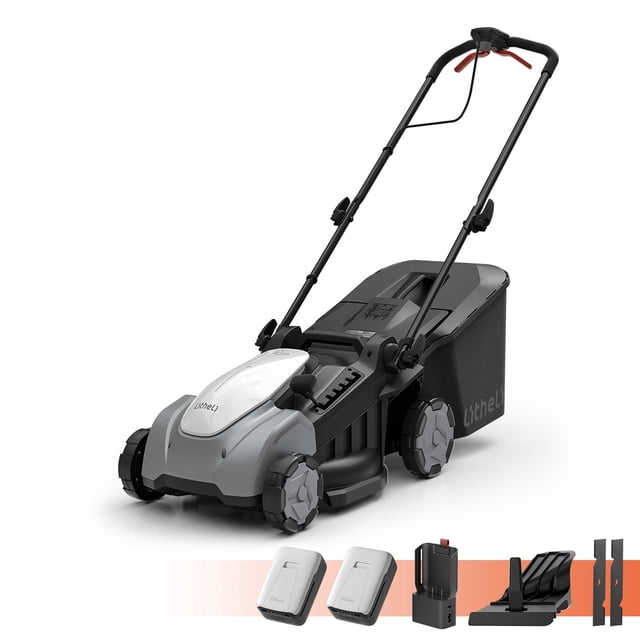
The mower’s power is the result of several parts working together. A high-voltage battery can supply strong electrical output, but a poor blade, narrow airflow path, or weak deck design can still limit performance.
Voltage and amp-hours
Voltage shows the electrical pressure supplied by the battery. Common battery mower platforms include 18, 20, 40, 48, 56, and 80 volts. Higher voltage can support stronger output, but it does not always mean longer runtime.
Amp-hours, written as Ah, describe how much charge a battery can hold. A 5.0 Ah battery may last longer than a 2.0 Ah battery on the same platform, but actual runtime changes with grass height, blade load, slope, mowing speed, and temperature.
A simple way to think about it is this:
- Voltage affects available power.
- Amp-hours affect stored energy and possible runtime.
- Watt-hours combine both and offer a better battery comparison.
Watt-hours are calculated by multiplying volts by amp-hours. For example, a 40-volt, 5.0 Ah battery stores about 200 watt-hours under that basic calculation. Real mowing time will be lower or higher depending on the lawn and mower.

Motor design
Many current battery mowers use a brushless motor. A brushless motor has electronic controls instead of traditional motor brushes. It can run with less brush wear and may deliver efficient, steady power.
A brushed motor can still work well in a small yard. It may cost less, but it often has more parts that wear over time. For frequent mowing, thick grass, or long-term use, a brushless model is usually worth considering.
The motor may also include automatic load sensing. This feature raises blade speed when the mower meets thick grass and lowers speed in light grass. It can improve cutting power, but it may also use more battery energy during hard work.
Blade speed and cutting width
A mower with a fast blade can create a clean cut and pull grass into the deck for mulching or bagging. Mulching means the blade cuts clippings into small pieces and returns them to the lawn. Bagging collects clippings in a grass catcher.
A wider deck cuts more grass in each pass. A 21-inch deck can reduce walking time compared with a 17-inch deck. Yet a wider deck also needs more power to keep the blade moving, especially in tall grass.
A wider mower is not always better. Measure gates, paths, sheds, and garage doors before buying. A 21-inch mower may not fit through a narrow side gate, while a 16- or 18-inch mower may be easier to store and turn.
Deck and airflow
The deck is the housing around the blade. Steel decks can feel solid and resist some abuse, but they may be heavier and can rust if neglected. Plastic or composite decks are often lighter and do not rust, but they can crack if hit hard by rocks or stored carelessly.
Deck shape affects how well the mower lifts, cuts, and moves grass. Good airflow helps with bagging and even mulching. A clogged deck can make a powerful mower seem weak.
Keep the underside clean. Always remove the battery before cleaning a battery mower, and follow the manual for safe blade access.
Electric mower power compared with gas mowers
The main difference between electric and gas mower power is how each mower delivers force. A gas mower can keep running as long as you add fuel. A battery mower can respond quickly and run quietly, but its work time is limited by battery charge.

Gas engines are often described by cc. A residential gas mower may use an engine in the rough range of 140 to 200 cc, but engine size alone does not predict cutting quality. Electric mower output is also hard to compare directly with gas cc because the motor and blade system work in different ways.
Cutting power in normal grass
In dry, regularly mowed grass, a good electric mower can cut as well as many gas push mowers. It may keep a steady blade speed and avoid the small delays caused by a carburetor, fuel mix, or cold start.
Battery mowers often perform best when you mow on a regular schedule. Cutting only the top third of the grass blade reduces load. If the lawn grows very tall, the mower must remove more plant material in one pass, which can drain the battery and slow the blade.
Performance in tall or wet grass
Wet grass is harder for every mower. It clumps under the deck, adds weight, blocks airflow, and makes the turf harder to cut. Battery models may slow or shut down their overload protection sooner than a larger gas mower.
Do not use a mower on wet slopes. The ground can become slippery, and both traction and stopping control may suffer. Even on flat ground, wait until the grass is dry when possible.
For tall grass, raise the deck first. Make a high pass, then lower the deck for the next cut. This method reduces strain on the motor and can improve the finish.
⚠️ Safety Warning: Wear safety glasses, hearing protection, closed-toe shoes, and work gloves when appropriate. Clear sticks, stones, wire, and toys before mowing. Keep children and pets away, and remove the battery before servicing or reaching under the deck.
Power for hills
A self-propelled mower has a drive system that moves the mower without you pushing it. It can help on mild slopes, but self-propelled drive does not make a mower safe on every hill.
Battery power may be enough for a sloped lawn, but traction matters just as much as motor output. Look for large rear wheels, a good tread pattern, variable speed control, and a handle that feels secure.
Never mow across a steep slope if the manual warns against it. Many safety guides advise mowing up and down slopes with walk-behind mowers, not sideways. Follow the mower’s instructions and your local safety guidance.
How much yard can an electric mower handle?
A battery mower’s usable yard size depends on battery capacity, cut width, grass condition, terrain, and mowing habits. Manufacturer area claims are usually based on controlled conditions. Thick grass, hills, high mowing settings, and frequent bagging can reduce the area covered per charge.
The table below gives practical planning ranges, not promises. Check the current product listing for the mower you are considering.
| Yard condition | Practical mower type | Planning note |
|---|---|---|
| Small, flat yard under 2,500 square feet | 16- to 18-inch push mower | A compact battery may be enough |
| Flat yard from 2,500 to 7,500 square feet | 18- to 21-inch battery mower | Consider a larger battery or spare |
| Yard from 7,500 to 15,000 square feet | 21-inch high-voltage mower | Self-propelled drive may help |
| Yard over 15,000 square feet | Large battery system or riding mower | Compare charge time and total cost |
| Hilly or thick turf | High-output self-propelled mower | Traction and spare batteries matter |
A small yard does not need a huge mower. A compact unit is easier to carry, store, and turn. A larger yard may justify a wider deck, but the mower should still fit through gates and into your storage space.
Electric mower types and their power
Electric lawn mowers come in several forms. The best type depends on your yard, storage, budget, and comfort with equipment.

Corded electric mowers
A corded mower plugs into a household outlet. It can run as long as power is available, so runtime is not limited by a battery. It is often light and affordable.
The cord is also the main drawback. You must manage it around trees, beds, fences, and the mower itself. A corded mower suits a small, open yard close to a suitable outdoor outlet. It is a poor choice for large, divided, or distant lawns.
Use only an outdoor-rated extension cord of the correct gauge and length. Follow the mower manual and local electrical safety rules.
Battery push mowers
A battery push mower relies on your effort to move it. It often weighs less than a self-propelled model and uses less energy because the motor is not driving the wheels.
This type suits flat yards, smaller lawns, and users who want a simple mower. It can also suit renters who need easy storage. Seniors may prefer a lighter push mower for a small level yard, but a self-propelled model can reduce physical strain on larger or sloped lawns.
Battery self-propelled mowers
A self-propelled battery mower uses motor power to turn the wheels. It can make long passes and mild slopes easier, but the drive system adds weight, cost, and energy use.
Choose one when the lawn is large, hilly, or tiring to push. Skip it for a tiny, flat yard if you value low weight and simple maintenance. Test the handle and speed control if buying in a store. Some drive controls feel easier for one user than another.
Electric riding and zero-turn mowers
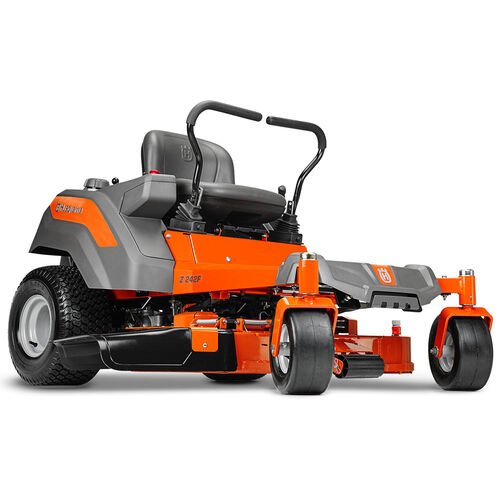
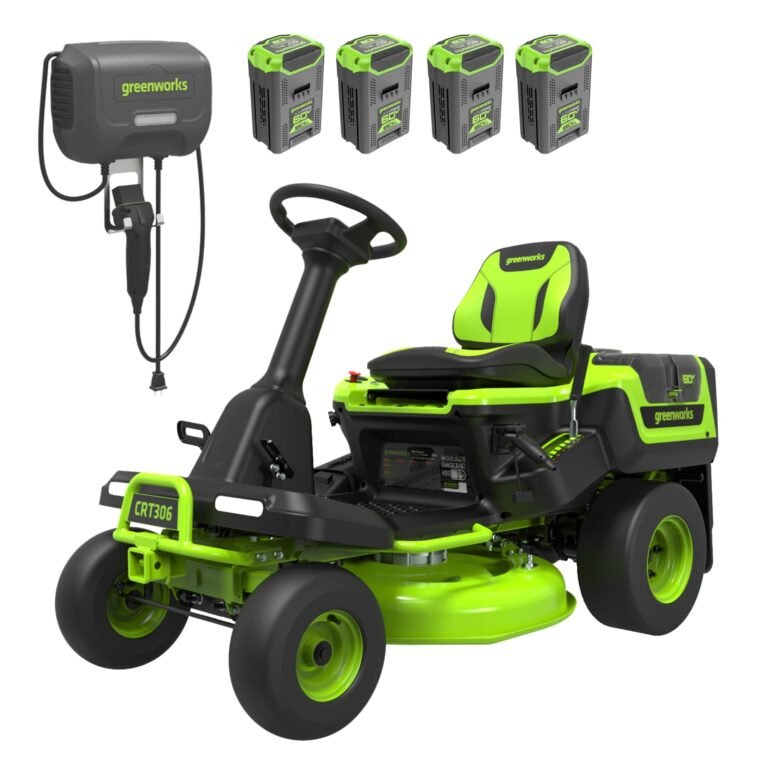
Electric riding mowers suit larger properties. Zero-turn mowers use two independent drive systems to turn within a small space. They can cut large open areas quickly, but they cost more and need more storage.
They are not automatically right for a small residential yard. Gates, slopes, charging time, local rules, and garage space all matter. A zero-turn mower may also be too large for narrow lawn sections, tree beds, and tight corners.
Robotic electric mowers
A robotic mower runs on a schedule and trims small amounts of grass often. It usually uses boundary wire or another navigation system. It can reduce mowing labor, but setup may take time and the unit still needs cleaning and blade changes.
A robotic mower suits a relatively simple lawn with clear boundaries. It may not suit yards with steep slopes, loose gravel, many separate sections, thick debris, or frequent pet traffic. Confirm slope limits and boundary requirements before buying.
| Mower type | Power advantage | Main limit |
|---|---|---|
| Corded mower | Continuous power while plugged in | Cord management and outlet range |
| Battery push mower | Light, quiet, and efficient | User must provide all pushing force |
| Battery self-propelled mower | Easier movement on larger or mild hilly lawns | More weight, cost, and battery use |
| Electric riding mower | Covers large lawns with less walking | High cost and larger storage needs |
| Robotic mower | Automates frequent light cuts | Setup, boundary limits, and debris concerns |
The main choice is simple: match motor power and mower size to the work, not to a large number on the box. A heavy riding mower is wasted on a tiny lawn, while a small push mower can become tiring on a large hill.
Electric mower power by yard type
The best mower for a small yard is not the same as the best mower for a hilly lawn. Turfgrass type, climate, gate width, and storage can change the answer.
Small, flat yards
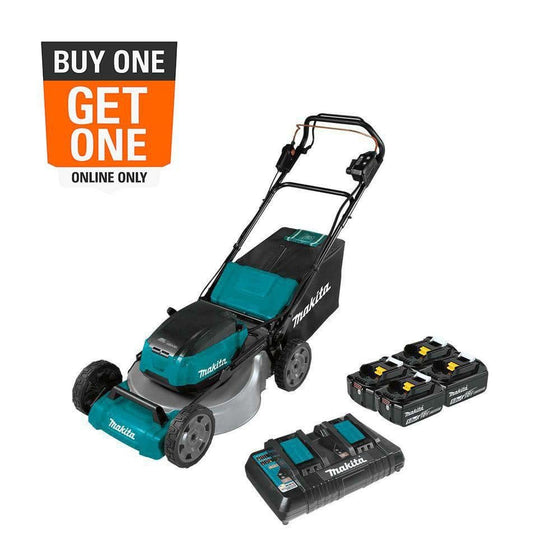
A 16- to 18-inch battery push mower is often enough for a small, flat yard. Look for a simple height adjustment, a foldable handle, and a battery that also works with your string trimmer or leaf blower.
This setup can suit first-time homeowners, renters, and gift buyers. A lighter mower is easier to carry up steps and store in a closet or small shed, if the manual permits that storage method.
Medium suburban yards
A 20- or 21-inch battery mower may save time on a medium lawn. A 40- to 60-volt platform can offer a useful balance of cutting force and runtime, but exact results depend on the model and battery.
A second battery can be more useful than a larger deck if you do not want to wait for charging. Check whether the charger is included. Some tools are sold as bare tools without a battery or charger.
Hilly lawns
Choose a self-propelled mower with controlled speed, strong wheel traction, and a handle that you can hold without bending. A higher-voltage battery platform may help in thick grass, but no battery can replace safe slope control.
Avoid mowing wet slopes. If the hill is steep, uneven, or hard to walk, consider a professional lawn service or a mower designed for that terrain.
Warm-season and thick turf
Bermudagrass, zoysia, St. Augustinegrass, and other warm-season grasses can form dense turf. They may require more frequent blade attention and careful mowing height.
A sharp blade reduces resistance. Do not remove too much leaf tissue at once. If the grass has become very tall, use several cuts over time rather than forcing the mower through a thick mat.
Drought-stressed lawns
Dry grass may be easier to mow, but drought-stressed turf can suffer if cut too low. Raise mowing height according to your grass type and local extension advice. A mower with several height settings helps you adapt.
Avoid mowing dusty, bare areas when stones or debris are exposed. Inspect the lawn first. A single hidden rock can damage a blade or deck.
| Yard need | Recommended electric setup | Who should skip it |
|---|---|---|
| Small and flat | Lightweight push mower, 16–18 inches | Users who need powered drive |
| Medium and mostly flat | 20–21-inch battery mower | Buyers with no battery storage |
| Mild hills | Self-propelled battery mower | Anyone mowing unsafe wet slopes |
| Large open lawn | Electric riding or zero-turn mower | Homes without charging and storage space |
| Simple lawn with frequent trims | Robotic mower | Yards with complex edges or debris |
Measure the lawn, not just the lot. A large property may contain a small turf area, while a narrow lot may require many turns. Also measure your gate width and storage area before purchase.
What electric mowers can and cannot do
Electric mowers have clear strengths. They also have limits that matter in daily use.

Benefits
- They start with a button or control instead of a pull cord.
- They produce no exhaust at the point of use.
- They usually make less noise than gas mowers.
- They do not need spark plugs, engine oil, air filters, or fuel stabilizer.
- They often fold for garage or shed storage.
- Many batteries work with string trimmers, edgers, and leaf blowers from the same platform.
- They can be easier for new homeowners who do not want engine maintenance.
Drawbacks
- Battery runtime changes with grass and terrain.
- Replacement batteries can be costly.
- Charging takes time.
- Cold temperatures can reduce lithium-ion battery performance.
- Wet grass can clog the deck and increase load.
- Some models have lighter decks or smaller wheels.
- A low-cost mower may use a weaker battery, motor, or drive system.
- Battery recycling requires a proper drop-off location.
| Pros | Cons |
|---|---|
| Quiet operation and no fuel storage | Limited runtime on battery models |
| Easy starting and less engine service | Batteries age and cost money to replace |
| Useful shared battery platforms | Compatibility can be confusing |
| Good fit for many small and medium yards | Tough wet or tall grass may reduce performance |
| Often lighter than gas equipment | Some models lack the weight or traction for steep lawns |
The best value depends on your use. A low-cost mower can be sensible for a small flat yard. A more expensive model may be worthwhile for frequent mowing, mild hills, or a family that will share several outdoor tools.
Electric mower maintenance and expected life
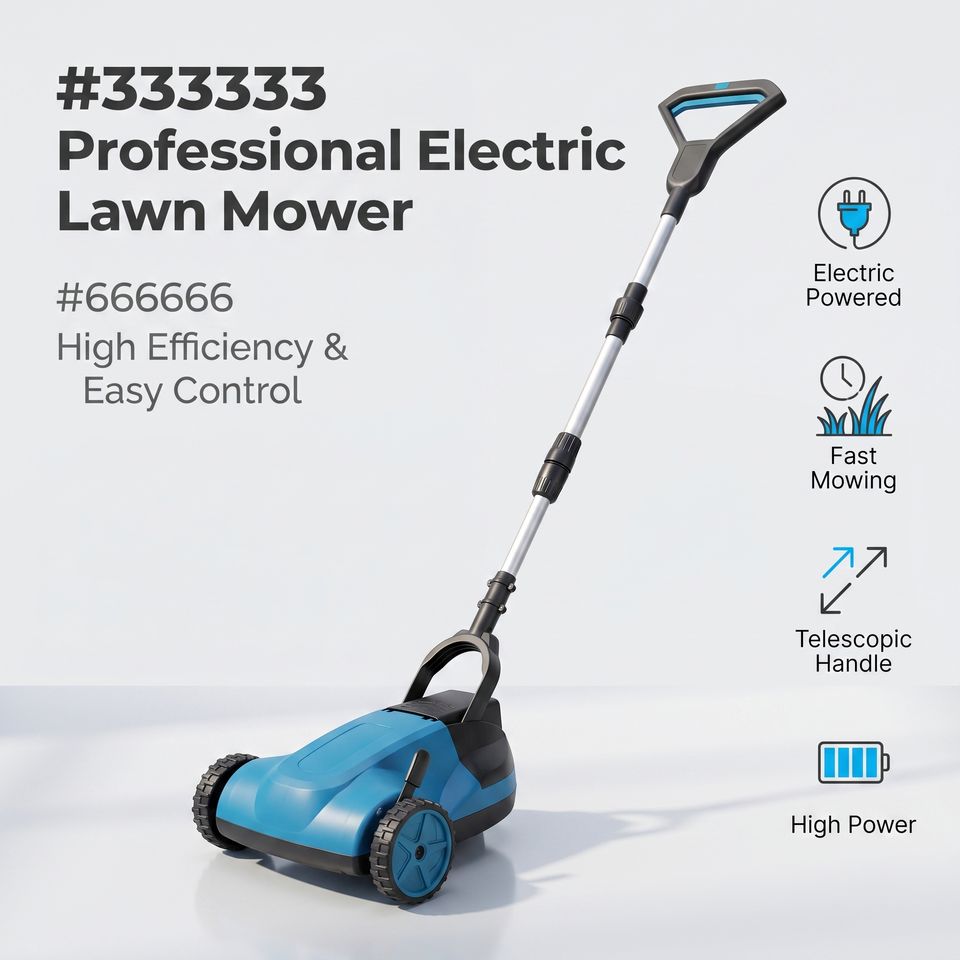
An electric mower still needs care. It has fewer engine parts, but blades, wheels, cables, handles, switches, belts, and batteries can wear out.
Parts that wear first
The blade often needs attention first. A dull blade tears grass instead of making a clean cut. It can also make the motor work harder.
Wheels and height-adjustment parts may wear on rough ground. Self-propelled models can have drive belts, gears, or control cables that need service. Batteries slowly lose capacity through use, age, heat, and poor storage.
A mower may last for many seasons when stored dry and serviced as directed. There is no single life span for every model. Build quality, use, climate, and repair support all matter.
Battery care
Store batteries in a cool, dry place away from direct sun. Avoid leaving a battery in a hot vehicle or damp shed. Follow the charging instructions, and use only the correct charger.
Cold weather can reduce available power. If you live in a cold climate, bring the battery indoors for winter storage if the manual allows it. Do not use a damaged, swollen, cracked, or wet battery.
Blade and deck care
Remove the battery before cleaning or blade work. Wear gloves, but do not rely on gloves to protect you from a moving blade. Secure the mower as directed by the manual.
Clean packed grass from the deck. Inspect the blade for bends, chips, and cracks. Use the correct replacement blade part number. An incorrect blade can create vibration or damage the mower.
Gas mower comparison
Gas mowers need oil checks, spark plug service, air filter care, fuel management, and sometimes carburetor repair. You must never refuel a hot engine, and gasoline must be stored under local rules.
Electric mowers avoid those tasks, but their batteries and electronic parts may be less familiar to a home repairer. If a motor controller or battery system fails, a qualified service center may be needed.
| Maintenance task | Battery electric mower | Gas mower |
|---|---|---|
| Blade inspection | Required | Required |
| Oil change | Not needed | Required |
| Spark plug service | Not needed | Required |
| Fuel storage | Not needed | Must follow local rules |
| Battery care | Required | Not applicable |
| Deck cleaning | Required | Required |
Fewer maintenance tasks do not mean no maintenance. Keep the blade sharp, clean the deck, protect the battery, and follow the service schedule.
🔧 Quick Fix: If an electric mower seems weak, stop and inspect the blade, deck, battery charge, and cutting height. A packed deck or dull blade can mimic a motor problem. Never reach under the deck until the battery is removed and the blade has stopped completely.
Noise, climate, storage, and local rules
Electric mowers are often quieter than gas mowers, but they are not silent. Blade noise, wheel noise, and self-propelled gears still affect neighbors. A quieter mower may make early or late mowing less disruptive, but local rules still apply.

Noise and neighbors
Check city noise ordinances and HOA rules before changing your mowing schedule. Some neighborhoods restrict lawn equipment during early morning or evening hours. Gas-equipment restrictions may also apply in some communities.
Wet weather and humidity
Keep the mower and battery dry unless the manual states that a specific part is water resistant. Do not charge a wet battery. Wet grass increases clogging and can create slipping hazards.
Humidity and rain also affect storage. A shed with condensation may be a poor place for batteries and chargers. A dry indoor storage area is often safer when allowed by the manufacturer.
Cold temperatures
Cold weather can reduce battery output and charging performance. Let a cold battery warm to the recommended range before charging. Do not place a battery near a heater or use an improvised heat source.
Gas mowers can have cold-start problems. Electric mowers avoid that engine issue, but their batteries still need proper temperature care.
Garage and shed storage
Before buying, measure the mower when folded and unfolded. Check handle height, shelf space, charger location, and access to an outlet. Store the mower upright only if the manual approves that position.
Keep children away from batteries, blades, chargers, and keys. Do not block an exit with equipment. Charge in the location and manner stated in the owner’s manual.
📜 Check Local Rules: Confirm HOA restrictions, city noise limits, gas-equipment rules, battery charging guidance, and fuel storage laws. Rules vary by location and can change.
Electric mower price and value
Electric mower prices vary by deck material, voltage platform, battery size, drive system, and included accessories. Avoid judging value by the mower body alone. A package without a battery and charger may cost less at first but more after you add them.

| Price tier | What you may get | Best fit |
|---|---|---|
| Budget | Smaller push mower, basic deck, smaller battery | Small flat yards and light use |
| Mid-range | Wider deck, better battery, stronger motor, possible self-propelled drive | Medium yards and regular mowing |
| Premium | High-output system, steel or reinforced deck, advanced controls | Larger yards, hills, and frequent use |
A budget mower can be a good gift for a new homeowner with a small yard. An experienced DIYer may prefer a tool-only model if they already own compatible batteries. A family buying for a senior should consider weight, handle control, storage, and self-propelled operation before focusing on price.
The cost of ownership also includes replacement blades, batteries, chargers, and repairs. Check replacement part availability before buying. A mower is harder to keep for years if the battery or blade is no longer supported.
Features that matter most
The right features depend on your yard. Some features improve comfort and control, while others add cost without helping your specific use.

Features worth paying for
- Brushless motor: Useful for frequent use and efficient power delivery.
- Battery gauge: Helps you plan the last part of the mowing job.
- Single-point height adjustment: Changes all wheels at once.
- Variable self-propel speed: Helps users with different walking speeds.
- Foldable handle: Useful in small garages and sheds.
- Large rear wheels: Can help on uneven ground.
- Mulching and side-discharge options: Give flexibility for different grass conditions.
- Compatible battery platform: Lets one battery power a trimmer, edger, or blower.
Features you may not need
A very wide deck may not help a small yard with many trees and beds. A premium display may not matter if you only need a battery gauge. A high-voltage platform may be unnecessary for a small, flat lawn.
Lawn striping kits can create lines in turf, but striping is mostly a visual effect. It does not replace correct mowing height, sharp blades, watering, or soil care.
Common buyer mistakes
Many mower problems begin before the purchase. A few simple checks can prevent an expensive mismatch.
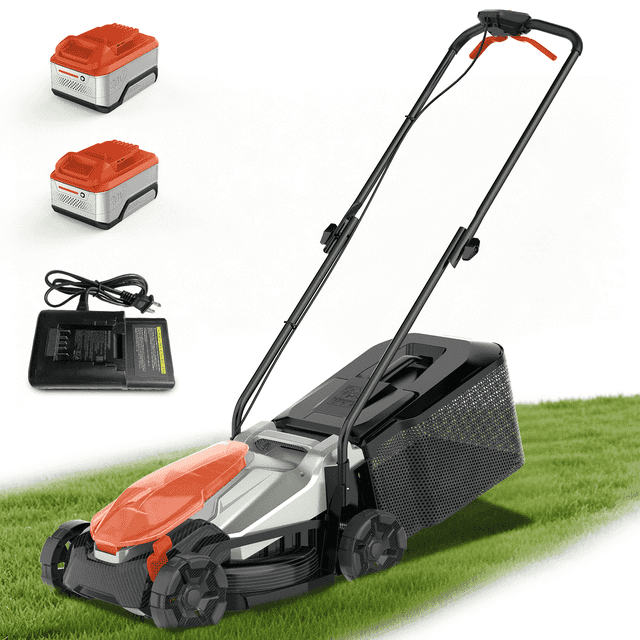
- Buying by voltage alone: Voltage does not show the full cutting system or runtime.
- Ignoring battery size: A small battery may not finish a larger lawn.
- Skipping gate measurements: A wide mower may not reach the backyard.
- Choosing self-propelled for a tiny lawn: The extra weight may make turning harder.
- Assuming all batteries fit: Batteries often work only within a brand platform or voltage family.
- Mowing too low: Removing too much leaf tissue can stress turfgrass.
- Leaving grass packed under the deck: Blocked airflow reduces cutting and bagging performance.
- Storing batteries in heat: High heat can shorten battery life.
- Ignoring slope limits: A mower suited to a flat lawn may be unsafe on a hill.
- Forgetting the charger: Some listings sell the mower without a battery or charger.
Measure yard area, slope, gate width, mower storage space, and outlet access. Then compare the complete package, including battery and charger.
How to choose the right power level
Use the least power that comfortably matches the work. More power can help, but it can also bring more weight, cost, noise, and battery expense.

For a flat lawn under about 5,000 square feet, a compact push mower can be enough. For a medium lawn with thick grass, look at a larger battery and a 20- or 21-inch deck. For hills, consider self-propelled drive and wheel traction before choosing a larger motor.
If you are buying a gift, ask these questions:
- How large is the actual grass area?
- Is the yard flat or sloped?
- How wide is the narrowest gate?
- Does the recipient already own batteries from a tool brand?
- Can they safely lift and store the mower?
- Do they prefer pushing or powered drive?
- Is there room to charge and store the equipment?
A senior with a small flat yard may value low weight more than maximum power. A new homeowner with a half-acre lawn may need a higher-output mower and a spare battery. An experienced DIYer may value a shared battery system and repairable parts.
Alternatives to electric lawn mowers
Electric mowers are not the only answer. Each alternative has a place.
- Gas push mowers: Good for long work periods and remote lawns, but they need fuel and engine care.
- Riding mowers: Useful for large lawns where walking would take too long.
- Zero-turn mowers: Helpful for large open areas and fast turning, but costly and bulky.
- Reel mowers: Quiet and simple for very small, flat lawns with short grass.
- Robotic mowers: Useful for frequent automated trimming on suitable lawns.
- Professional lawn service: Practical when terrain, time, health, or equipment storage is a concern.
A reel mower does not have the raw power of an electric rotary mower. It works by using spinning cylinders and suits short, well-kept grass. It is not a good choice for tall weeds or neglected turf.
A string trimmer and edger still help finish fence lines, beds, and corners. A leaf blower can clear paths, but use it with care around soil, mulch, and neighbors.
Safety essentials for electric and gas mowers
Safe mowing matters more than speed or power. Read the owner’s manual before the first cut.
Follow these basic rules:
- Wear eye protection, hearing protection, closed-toe shoes, and suitable work gloves.
- Clear rocks, sticks, wire, toys, and pet waste before mowing.
- Keep children and pets away from the mowing area.
- Never mow wet grass on slopes.
- Watch for hidden objects near fences, shrubs, and drains.
- Stop the mower before crossing gravel, sidewalks, or driveways when the manual requires it.
- Remove the battery before cleaning, unclogging, or servicing a battery mower.
- Disconnect the spark plug wire before servicing a gas mower.
- Never refuel a hot gas engine.
- Do not bypass safety switches or guards.
- Follow the manual for slope direction and operating limits.
Electric mowers remove fuel and exhaust risks, but the blade remains dangerous. Battery power does not make a mower harmless.
Frequently asked questions
Q: Are electric lawn mowers powerful enough for thick grass?
A: Many are powerful enough for regularly mowed thick grass. Raise the deck for tall growth, keep the blade sharp, and mow when the grass is dry. Dense wet grass, weeds, and long neglected turf may require several passes or a larger high-output model.
Q: Is a 40-volt electric mower powerful enough?
A: A 40-volt mower can suit many small and medium residential lawns. Its actual performance depends on battery amp-hours, motor design, blade system, deck width, and grass conditions. Check the manufacturer’s area guidance and confirm whether the battery and charger are included.
Q: Are 80-volt electric mowers better?
A: An 80-volt mower can offer more available electrical power, but “better” depends on the yard. It may be useful for thick grass, larger lawns, or hills. It can also cost more and use heavier batteries. A small flat yard may not need that level of output.
Q: Can an electric mower cut wet grass?
A: It may cut damp grass, but wet mowing is harder on the mower and lawn. Wet clippings can clog the deck, and slippery ground increases fall risk. Never mow wet grass on slopes, and follow the manual’s weather guidance.
Q: How long does an electric lawn mower last?
A: Service life varies by build quality, use, climate, storage, and repair support. Blades, wheels, switches, drive parts, and batteries may need replacement before the mower body. Proper cleaning, dry storage, and correct battery care can support a longer service life.
Q: Is an electric mower good for seniors?
A: It can be a good fit for a senior with a small flat yard, especially if the mower is light and easy to start. For a larger or sloped yard, self-propelled drive may reduce effort. The user should be able to control the mower, stop it quickly, lift it safely, and store it without strain.
Q: Can I use one battery for a mower and trimmer?
A: Often, yes, when the tools use the same battery platform and voltage family. Compatibility is not universal. Confirm the battery part number, voltage, charger, and tool listing before buying.
Q: Are electric mowers cheaper than gas mowers?
A: The purchase price varies. Electric mowers may cost more at first when the battery and charger are included, but they can reduce fuel, oil, spark plug, and air filter costs. Battery replacement is a future expense, so compare total ownership cost.
Q: Do electric mowers need oil?
A: Battery and corded electric mowers do not use engine oil. They still need blade, deck, wheel, and battery care. Riding electric mowers may have other service needs, so follow the specific manual.
Q: Can an electric mower mulch leaves?
A: Some models can mulch light, dry leaves with the correct blade and deck setup. Too many leaves can block airflow and overload the motor. Use the approved mulching kit, mow slowly, and remove the battery before changing attachments.
Q: Should I buy a push or self-propelled electric mower?
A: Buy a push mower for a small, flat lawn and lower weight. Choose self-propelled drive for a larger lawn, mild slopes, or users who find pushing tiring. Self-propelled models cost more and use additional battery power.
Q: Are electric mowers safe in the rain?
A: Do not assume they are safe in rain. Keep the mower, battery, and charger within the conditions stated in the manual. Never charge a wet battery, and avoid mowing when the ground is slippery.
Q: What should I do with an old mower battery?
A: Take lithium-ion batteries to a designated battery recycling or hazardous-waste drop-off. Do not place loose lithium batteries in household trash or curbside recycling unless your local program specifically allows it. Donate or recycle a usable mower through an approved program.
Final advice
Electric lawn mowers are powerful enough for most small and medium residential lawns when the mower matches the yard. A compact push model suits a small, flat lawn. A self-propelled, higher-output mower suits a larger or mildly hilly yard. Riding and zero-turn electric mowers make more sense when the grass area is large enough to justify their size, price, and charging needs.
The smartest purchase starts with measurements. Check the actual grass area, slope, gate width, deck size, storage space, battery voltage, amp-hours, charger, blade type, and replacement part numbers. Think about grass type, wet weather, cold storage, local noise rules, and who will use the mower.
Power helps, but control and fit matter more. A mower that you can safely start, steer, clean, charge, and store is more useful than a stronger model that sits unused in the garage.



One Comment