
How To Clean Lawn Mower Carburetor: Easy Step Guide
Cleaning a lawn mower carburetor can restore smooth starting, steady engine speed, and better fuel flow. A dirty carburetor is a common cause of hard starts, stalling, surging, black smoke, and an engine that runs only with the choke on. The job is often manageable for a careful homeowner, even if you have never repaired a small engine before.
The carburetor mixes fuel and air before the engine burns it. Old gasoline, dust, grass clippings, and fuel varnish can block its small passages. A basic cleaning may solve the problem, but severe corrosion, damaged gaskets, or a worn needle valve may call for a rebuild or repair shop.

Quick Answer: The Best Way to Clean a Lawn Mower Carburetor
The best way to clean a lawn mower carburetor is to disconnect the spark plug, shut off the fuel, remove the air filter and carburetor bowl, spray the parts with carburetor cleaner, clear the jets with compressed air, and reassemble everything in its original order. Use the owner’s manual for part locations and torque details. Never spray cleaner into a running engine or work near flames.
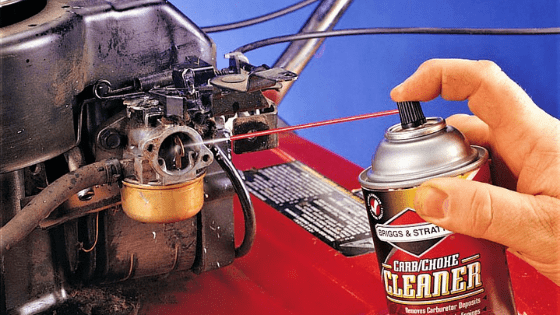
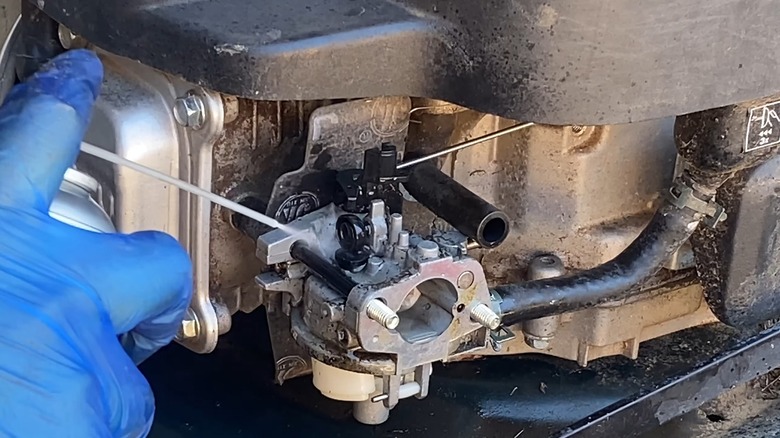
For a light blockage, you may clean the carburetor without removing the whole unit. If fuel leaks, the gasket is cracked, or the jet remains blocked, remove the carburetor for a deeper clean. A riding mower or zero-turn mower may use a larger engine and a more complex fuel system, so check the service manual before you begin.
Tools and Materials You Need
You need a few basic tools and safe cleaning products. The exact list varies by mower brand, engine size, and carburetor design. A push mower with a small four-stroke engine may need only hand tools, while a riding mower can require sockets, hose clamps, and more room to work.
| Tool or material | Why you need it | Good substitute or note |
|---|---|---|
| Carburetor cleaner | Dissolves fuel varnish and dirt | Use a product labeled for small engines |
| Socket set or nut drivers | Removes the air box and carburetor bolts | Match the fastener size before starting |
| Screwdrivers | Removes bowl screws and clamps | Use the correct tip to avoid damage |
| Compressed air | Clears jets and small passages | Use short bursts at low to medium pressure |
| Fuel-safe container | Catches old gasoline | A clean, approved fuel container is best |
| Safety glasses and gloves | Protects eyes and skin | Wear closed-toe shoes, too |
You may also need a small wire brush, clean shop towels, needle-nose pliers, a flashlight, a phone camera, and replacement gaskets. Do not use a steel wire that can enlarge a jet. A soft nylon bristle or a proper jet-cleaning tool is safer.
Before buying parts, write down the engine model and carburetor number. Confirm the gasket, bowl seal, air filter, fuel line, and needle valve part numbers in the owner’s manual or on the manufacturer’s product page.
Safety and Preparation Come First
Safe preparation prevents most mower repair injuries. Move the mower to a flat, open area with strong airflow. Let the engine cool fully, remove dry grass from the deck, and keep children and pets away from the work area.
Follow these steps before touching the carburetor:
- Turn the mower off and let the engine cool.
- Remove the spark plug wire from the spark plug.
- For a battery mower, remove the battery and keep it away from the work area.
- Close the fuel shutoff valve if the mower has one.
- Work outdoors or in a well-ventilated space.
- Keep cigarettes, heaters, pilot lights, and sparks away from gasoline.
- Wear safety glasses, chemical-resistant gloves, and closed-toe shoes.
- Take photos of the fuel lines, springs, and linkage before removal.
⚠️ Safety Warning: Never refuel a hot engine. Disconnect the spark plug wire or remove the battery before servicing. Do not mow wet grass on a slope, and do not start a mower indoors because carbon monoxide can build up quickly.
Gasoline can irritate skin and create harmful vapors. Store fresh fuel in an approved container. Dispose of old gas and oily rags through a local hazardous-waste program, not a storm drain or household trash bin.
How a Lawn Mower Carburetor Works
A carburetor controls the mix of fuel and air that enters the engine. Air moves through a narrow passage, and fuel enters through a tiny opening called a jet. The engine needs the right mix to start, idle, and run under load.

Here are the main parts you may see:
- Fuel bowl: Holds a small amount of gasoline below the carburetor.
- Float: Rises with the fuel level.
- Needle valve: Opens and closes fuel flow.
- Main jet: Sends fuel into the engine at higher speed.
- Pilot or idle jet: Helps the engine run at low speed.
- Choke plate: Restricts air during a cold start.
- Throttle plate: Controls engine speed.
- Gasket or O-ring: Seals the bowl and other joints.
The carburetor may look small, but its openings are tiny. A small amount of varnish can act like a pebble in a drinking straw. This is why an engine can have a full tank and still starve for fuel.
Why Old Gas Causes Trouble
Gasoline changes as it sits. Light compounds evaporate, leaving a sticky residue called varnish. Ethanol-blended fuel can also attract moisture, especially when stored in a damp shed or garage.

Moisture can lead to corrosion inside the bowl and jet. Dirt can enter through a loose fuel cap, cracked fuel line, or neglected air filter. A mower that sits through winter often shows these problems during the first spring start.
Fuel stabilizer can slow fuel breakdown, but it cannot repair fuel that has already turned stale. For seasonal storage, use fresh fuel, add the correct amount of stabilizer, run the engine as directed by the manual, and keep the tank and fuel system in the condition the manufacturer recommends.
Check the Symptoms Before You Clean
A carburetor cleaning makes sense when the symptoms match a fuel or air problem. Do not assume every hard-start issue comes from the carburetor. A worn spark plug, blocked air filter, bad ignition coil, sheared flywheel key, or damaged fuel line can create similar signs.
| Symptom | Likely cause | First check |
|---|---|---|
| Engine starts, then dies | Blocked jet or stale fuel | Fuel age, bowl, and main jet |
| Engine runs only with choke | Lean fuel mix or air leak | Carburetor passage and gasket |
| Gas leaks from the bowl | Dirty needle or bad float | Float, needle, and bowl seal |
| Engine surges at idle | Restricted pilot circuit | Pilot jet and air filter |
| Black smoke | Too much fuel or poor air flow | Choke, air filter, and float |
| Engine will not start | Fuel, spark, or compression issue | Spark plug, fresh fuel, and test |
A clean carburetor will not fix low compression or a damaged ignition system. If the mower has no spark, inspect the plug and ignition system first. If fuel flows freely but the engine still will not run, a repair shop may need to test compression and timing.
A Simple Fuel and Spark Check
With the spark plug removed and the plug wire safely positioned as the manual describes, check the plug for fuel fouling, heavy carbon, or damage. Do not hold the plug by hand while cranking the engine. Use the correct test method from the service manual.

If the plug is dry after several start attempts, fuel may not be reaching the cylinder. If it is soaked, the engine may be flooded. Let it sit with the fuel shut off, then correct the cause before trying again.
Do not pour gasoline into the carburetor throat. That creates a fire risk and can wash oil from the cylinder walls. If a technician recommends a starting test, use only a small amount of approved starting fluid and follow the manual or professional guidance.
Step-by-Step: How to Clean a Lawn Mower Carburetor
The steps below fit many common gas push mowers and small engines. The layout can differ by brand. Keep the owner’s manual nearby, and take photos before removing springs, rods, and hoses.

1. Clean the Outside of the Engine
Brush loose grass and dust away from the air cleaner and carburetor. Use a dry brush or shop vacuum first. This keeps debris from falling into the engine when you remove the parts.

Do not blast packed dirt into the carburetor with high-pressure air. Cover nearby openings with a clean cloth while brushing. Never use a pressure washer on the engine.
2. Disconnect the Spark Plug and Fuel Supply
Pull the spark plug wire from the plug. If the wire has a rubber boot, pull the boot, not the wire itself. Close the fuel valve or pinch the fuel line with a proper fuel-line clamp.

If there is no shutoff valve, place an approved container beneath the fuel line. Remove the line carefully and drain the fuel. Do not use ordinary pliers that can cut or crush the hose.
3. Remove the Air Filter and Air Box
Remove the air filter cover and set the screws in a small tray. Take out the filter. If the filter is paper, replace it when dirty; do not wash it. If it is a foam filter, clean and oil it only as the manual directs.
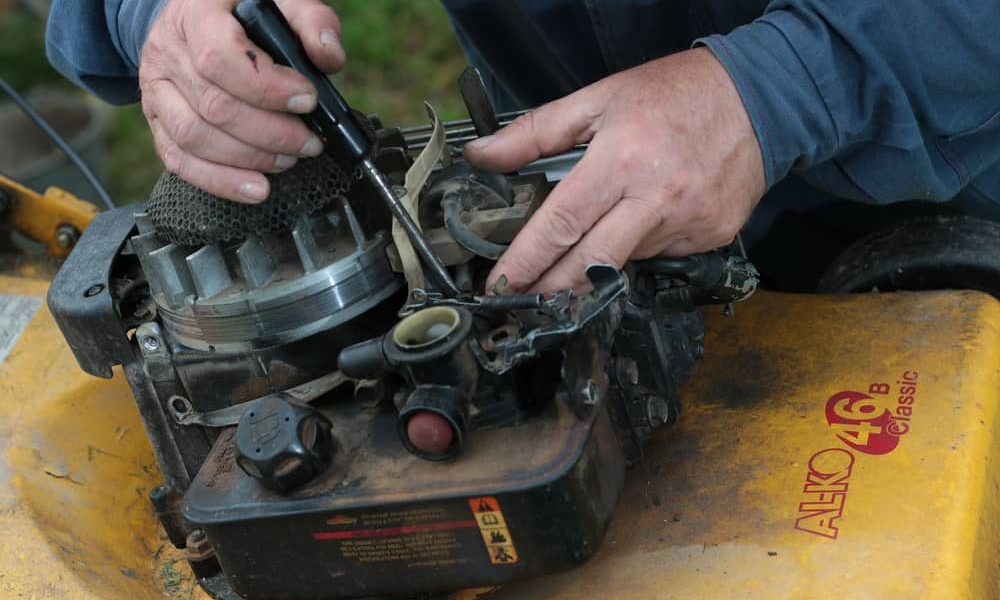
Inspect the air box for grass, oil, or a damaged seal. A clogged air filter can make the engine run rich, which means it receives too much fuel for the available air. That problem can look like a dirty carburetor.
4. Photograph the Linkage and Fuel Lines
Before removing the carburetor, take clear photos from several angles. Capture the throttle spring, governor spring, choke rod, fuel line, and any spacers. A phone photo can save a great deal of guesswork later.

Do not bend the springs or stretch them. The governor system controls engine speed. Installing a spring in the wrong hole can cause unsafe engine speed or poor control.
5. Remove the Carburetor Bowl
Place a container under the carburetor. Remove the bowl bolt or retaining screw. Some bolts have a small hole through the center or side. That opening may be part of the main fuel passage, so clean it carefully.
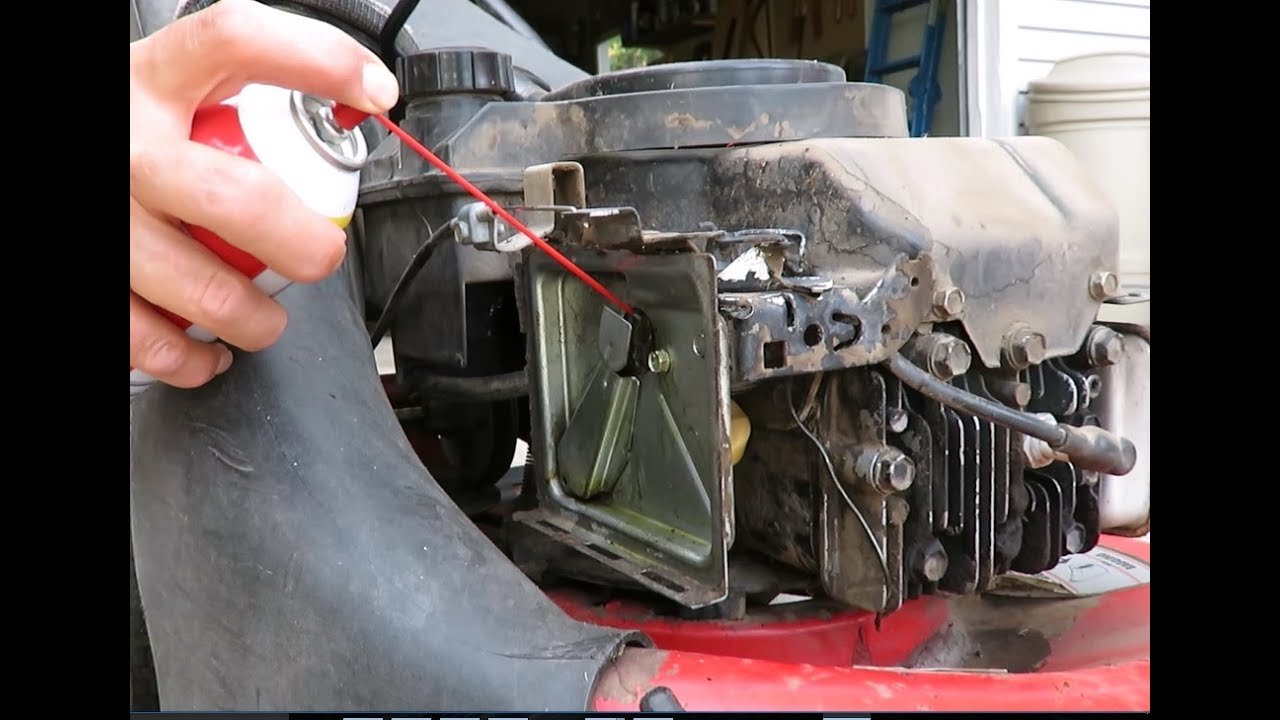
Let the fuel drain fully. Look for water, rust, dirt, or a gel-like residue in the bowl. These clues help explain why the mower stopped running.
6. Inspect the Float and Needle
The float should move freely and should not be filled with fuel. A metal float may show dents. A plastic float may have cracks. Either problem can cause the carburetor to overfill.

The needle valve should move smoothly. If it sticks, remove it only if the design allows removal. Do not force a pressed-in seat. Replace the needle, seat, or float when the manual lists them as service parts.
7. Remove and Clean the Main Jet
Use the correct screwdriver or jet tool. The slot can strip with little force. Turn the jet out slowly and place it on a clean cloth.
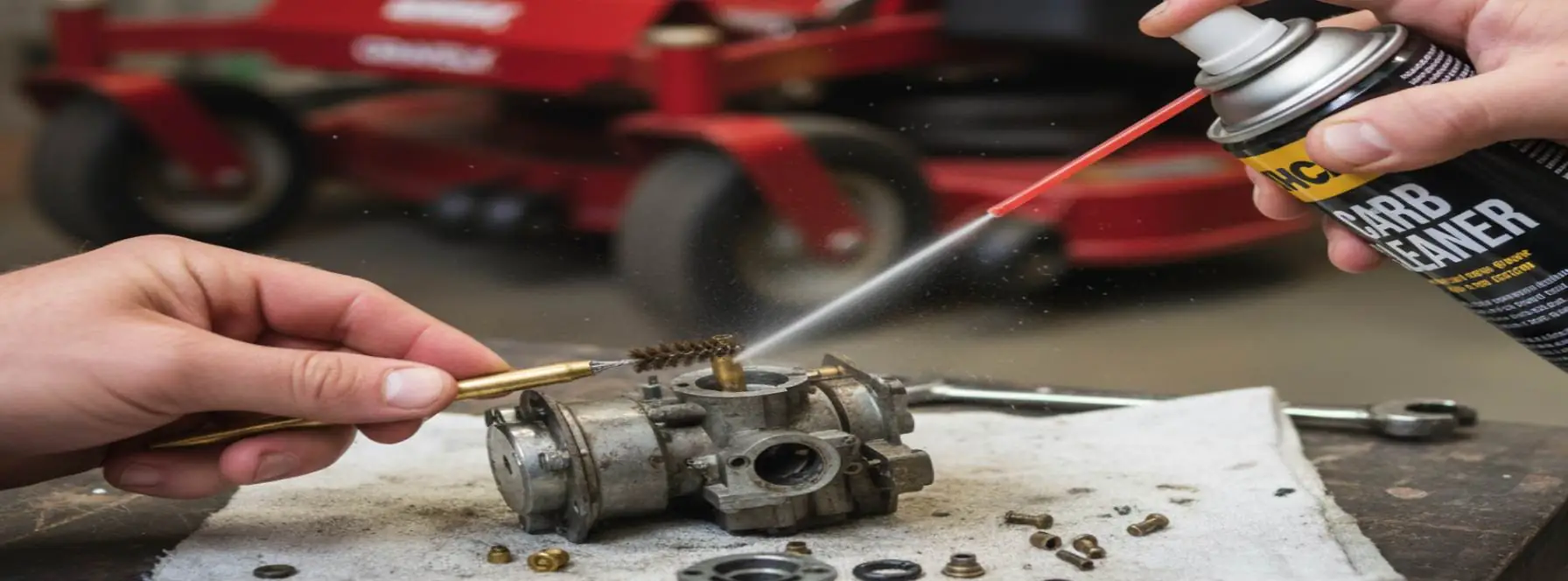
Spray carburetor cleaner through the jet and its openings. Follow with compressed air. Hold the jet away from your face and wear safety glasses. A clear jet should allow light to pass through its small opening when viewed safely.
Never drill the jet or push a large steel wire through it. A larger opening changes the fuel mix and can cause poor running, excess smoke, or engine damage.
8. Clean the Pilot Jet and Small Passages
Some mower carburetors have a pilot or idle jet. Others hide it behind a plug or use a fixed passage. Remove only parts that the manual identifies as serviceable.
Spray cleaner into the opening, let it sit for the time stated on the product label, and blow it clear with compressed air. Use short bursts. Excess air pressure can damage a diaphragm or force dirt deeper into the system.
9. Clean the Bowl and Carburetor Body
Wipe the fuel bowl with a clean cloth. Spray the inside and outside of the carburetor body. Keep solvent away from rubber parts unless the cleaner label says it is safe for them.
Do not scrape gasket surfaces with a sharp blade. A gouge can create an air leak or fuel leak. Use a plastic scraper if old gasket material remains.
10. Replace Damaged Gaskets and Seals
Inspect the bowl gasket, air box gasket, fuel line, and O-rings. Replace parts that are hard, flattened, cracked, swollen, or torn. Reusing a damaged gasket may lead to leaks after the cleaning.
A small gasket kit often costs less than a second repair attempt. Match the engine model and carburetor number, not just the mower’s brand name. Two mowers from the same brand may use different engines.
11. Reassemble the Carburetor
Install the float, needle, jet, gasket, and bowl in the reverse order. Tighten screws firmly but do not over-tighten them. Small aluminum carburetor bodies can strip or crack.
Reconnect each spring and rod to the original hole. Use your photos and the manual. Confirm that the throttle and choke plates move without binding.
12. Reconnect the Fuel and Air Systems
Attach the fuel line fully and secure it with the correct clamp. Install the air filter and cover. A missing air filter can let grit enter the engine and wear the cylinder.
Make sure the carburetor is mounted evenly. An uneven mount can create an air leak. Check that no hose is kinked and that no wire rests against a hot exhaust part.
13. Add Fresh Fuel and Test the Mower
Use fresh fuel of the grade and ethanol level listed in the owner’s manual. Add fuel stabilizer when appropriate. Open the fuel valve and check for leaks before starting.
Start the mower outdoors. It may take a few pulls while the bowl refills. Let it warm for a short time, then listen for steady running. Do not adjust the governor spring or defeat the engine’s safety controls.
If the engine still surges, stalls, leaks, or produces thick smoke, shut it down. Recheck the gasket, float, needle, jet, fuel line, and air filter. Continued operation with a fuel leak can cause a fire.
What to Do if You Do Not Want to Remove the Carburetor
A light cleaning may work without full removal. This option suits a first-time homeowner who has a mower that starts but runs unevenly. It also helps when the carburetor is hard to reach and the manual allows basic access.
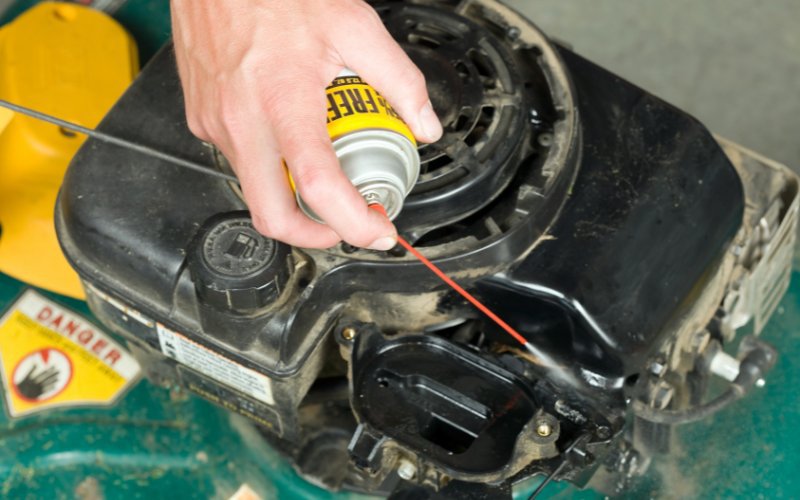
Remove the air filter and spray a small amount of approved carburetor cleaner into the intake only when the engine is off. Clean the bowl area and inspect the fuel line. If the mower starts, use the cleaner exactly as the label allows.
This method cannot clean a blocked jet, dirty float, or corroded bowl well. It is not a replacement for removing the bowl. Do not spray flammable cleaner near a hot muffler or electrical spark.
Common Mistakes That Cause More Damage
Most carburetor problems become harder after rushed disassembly. Small parts can fall into grass, springs can go in the wrong holes, and harsh tools can damage soft metal.
| Mistake | Why it causes trouble | Better approach |
|---|---|---|
| Using old fuel after cleaning | Recontaminates the clean passages | Use fresh fuel |
| Scrubbing jets with hard wire | Enlarges the calibrated opening | Use cleaner and air |
| Losing the bowl gasket | Creates a fuel leak | Install a new seal |
| Mixing up springs | Changes engine speed control | Take photos first |
| Over-tightening screws | Strips aluminum threads | Tighten evenly and gently |
| Skipping the air filter | Lets dirt enter the engine | Clean or replace it |
Never run the engine with a fuel leak. Do not test the mower beside dry grass, stored gasoline, or a building wall. Keep a fire extinguisher rated for flammable liquids nearby if your workspace and local safety guidance support it.
Cleaning Products and Parts: What Matters Most
You do not need a large repair kit for every mower. The most useful products are the ones that fit your engine and do not harm seals or plastics.
Carburetor cleaner should be labeled for small-engine use. Compressed air helps, but it cannot replace solvent cleaning when varnish has hardened. A new air filter and spark plug may be worth adding if both parts are old.
Carburetor Cleaner Versus Brake Cleaner
Carburetor cleaner is made to remove fuel residue from carburetor parts. Brake cleaner is designed for brake components and may damage rubber, plastic, paint, or seals. It can also create strong vapors.
Use the product named in the service instructions when possible. Read the label and use eye protection. Never mix cleaners or use them in a closed room.
When a Carburetor Rebuild Kit Makes Sense
A rebuild kit may include gaskets, O-rings, a needle, and a seat. It makes sense when the carburetor has a leak, the needle sticks, or the old seals are brittle.
A rebuild is less useful when the carburetor body is cracked or badly corroded. In that case, replacement may cost less time and provide a more reliable repair. Confirm the exact part number before ordering.
How Long the Job Takes and What It Costs
A basic bowl cleaning may take 30 to 60 minutes for a first-time DIYer. Removing the full carburetor, replacing seals, and correcting linkage can take one to two hours. A riding mower may take longer because its engine bay is larger and less accessible.
The cost depends on what you already own. Cleaner and a gasket may be inexpensive. A rebuild kit, air filter, spark plug, or replacement carburetor adds more. A repair shop charges for diagnosis and labor, but that cost may be sensible when the mower has a complex engine or is still under warranty.
A basic push mower can be a good learning project for a careful adult. A family member shopping for a senior may prefer to arrange a tune-up rather than give a chemical kit and loose parts. The best choice depends on hand strength, vision, storage, and comfort with fuel.
When to Hire a Small-Engine Repair Shop
Call a professional when the carburetor cleaning does not solve the problem or when the repair involves parts you cannot identify. Professional help is also wise when fuel has entered the engine oil, the mower backfires, or the engine runs at an unsafe speed.
Seek help for these signs:
- The carburetor body is cracked.
- Fuel continues to pour from the bowl.
- The engine has no spark after basic checks.
- The starter cord is unusually hard to pull.
- The mower backfires through the intake or muffler.
- The engine smokes heavily after fresh fuel and a clean air filter.
- You cannot confirm the governor linkage.
- The mower is a riding mower or zero-turn with complex controls.
Do not keep pulling the starter for an hour. Repeated attempts can flood the engine and drain your energy. A good repair shop can test fuel flow, ignition, compression, and governor operation in a logical order.
Preventing Another Dirty Carburetor
Prevention is easier than a second cleaning. Use fresh fuel, keep the air filter in place, and store the mower as the manual directs. A clean fuel system also supports more stable engine performance during hot weather and cold starts.
A Simple Maintenance Schedule
| Task | Suggested timing | Reason |
|---|---|---|
| Check fuel age | Before each mowing season | Reduces stale-fuel problems |
| Inspect the air filter | Every few uses | Prevents dust from entering the engine |
| Check the spark plug | Seasonally | Supports reliable ignition |
| Clean grass from the engine | After mowing | Helps airflow and cooling |
| Add fuel stabilizer | During storage | Slows fuel breakdown |
| Inspect fuel lines | At least yearly | Finds cracks and soft spots |
Always follow the engine maker’s schedule if it differs. Dusty yards, sandy soil, drought, and heavy mowing can shorten service intervals. Wet grass also packs under the deck and around the engine, so clean the mower after it cools.
Storage in a Shed or Garage
Store a gas mower on a level surface in a dry, well-ventilated area. Keep fuel away from heat, sparks, and living areas. Confirm local fuel-storage rules and follow the container limit in your area.
A battery mower needs different care. Remove the battery when the manual recommends it, store it in a dry place at the proper temperature, and use only the correct charger. Recycle lithium-ion batteries at a designated drop-off. Do not place them in household trash.
A corded mower avoids gasoline storage but needs safe cord handling. A robotic mower may need its charging station and battery protected from freezing weather. The right mower for a small yard is not always the right mower for a home with a steep slope, narrow gate, or limited garage space.
Gas Mower Versus Electric Mower Maintenance
Gas mowers use carburetors, fuel lines, air filters, spark plugs, and oil. Battery and electric mowers remove carburetor cleaning from the maintenance list, but they still need blade care, deck cleaning, battery care, and safe charging.
| Mower type | Carburetor service | Main maintenance concern |
|---|---|---|
| Gas push mower | Often needed after stale fuel | Fuel, oil, spark plug, and air filter |
| Battery push mower | Not needed | Battery storage and blade condition |
| Corded mower | Not needed | Cord safety and blade condition |
| Riding mower | Often more complex | Fuel system, belts, battery, and deck |
| Robotic mower | Not used | Charging system, sensors, and blades |
A battery mower can suit a small, mostly level yard and a user who wants less engine service. A gas mower can suit a larger lawn where long mowing sessions and quick refueling matter. Check local gas-equipment rules, HOA restrictions, and noise ordinances before buying or replacing equipment.
How Carburetor Cleaning Fits Into Total Lawn Care
A mower is only one part of lawn care. Sharp mower blades, correct mowing height, and a clean deck affect turfgrass more than a shiny engine. Avoid cutting more than about one-third of the grass blade at once, and adjust mowing height to the grass type and season.
A mower that runs well still needs the right setup. A mulching kit returns fine clippings to the lawn when conditions are suitable. A grass catcher helps when the lawn is overgrown or leaves are heavy. Side discharge can help manage thick growth, but it may spread clippings into beds or paths.
Use a string trimmer around posts and fences, an edger for a sharp border, and a leaf blower for cleanup. Do not use the mower to shred branches, stones, or piles of wet leaves. Clear debris first to protect the blade, deck, and people nearby.
Problems That Cleaning Will Not Fix
It is important to know the limits of this repair. A carburetor may be clean while another engine fault remains.
Worn Spark Plug
A spark plug with a worn electrode or cracked insulator may fail under load. Replace it with the exact heat range and reach listed in the manual. Do not guess based only on appearance.
Dirty or Damaged Air Filter
A blocked air filter reduces airflow and can cause black smoke or poor power. Paper filters usually need replacement. Foam filters may need cleaning and a small amount of approved filter oil.
Bad Fuel Line
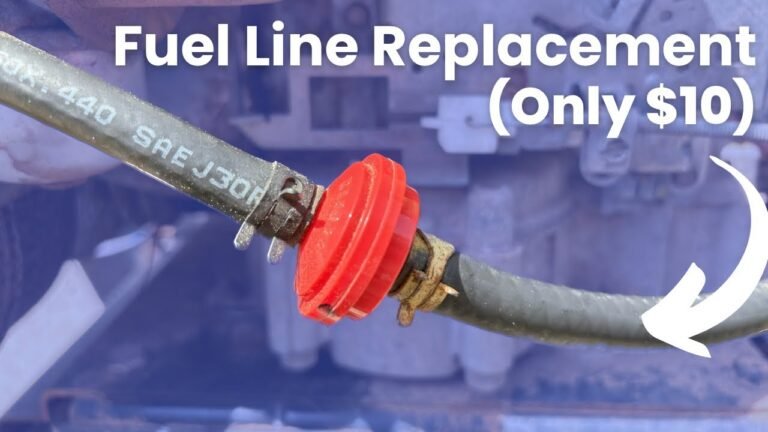
A soft, cracked, or blocked fuel line can starve the carburetor. Replace it with fuel-rated hose of the correct inside diameter. Secure it with suitable clamps.
Incorrect Mowing Conditions
Wet grass, very tall grass, and a dull blade can overload a healthy engine. Raise the mowing height, mow more often, and sharpen or replace the blade as needed. Never mow wet grass on a slope because traction and control can drop quickly.
Tips for First-Time Homeowners and Renters
If this is your first mower repair, start with photos and a clean work surface. Place each screw in a labeled cup. A simple drawing can help track the order of parts.
Do not work on a mower that belongs to a landlord, rental company, or community association without permission. Check the warranty before opening the fuel system. A repair done at home may affect warranty coverage.
For a small flat yard, a basic push mower may be easier to maintain than a riding mower. A self-propelled mower can help on a larger or gently sloped yard, but it adds a drive system with belts or gears that may need service. A zero-turn mower suits large open lawns, not narrow yards with many obstacles.
Tips for Experienced DIYers
Experienced users can save time by confirming the engine model before disassembly. Keep common wear parts on hand, such as a spark plug, air filter, bowl gasket, and fuel line. Use a service manual when checking governor speed or carburetor adjustment.
Avoid changing jet sizes unless the engine has a documented modification. A jet that is too large can cause a rich mixture, smoke, and carbon buildup. A jet that is too small can create a lean mixture and excess heat.
Do not bypass the operator-presence control, blade brake, or other safety system. These parts protect the operator and people nearby. Test the mower only after every shield and cover is back in place.
Tips for Gift Buyers and Family Members
A carburetor cleaning kit may not be the best gift for a senior or new homeowner. The gift should match the person’s comfort, strength, vision, and storage space.
A better gift for some users may be a mower tune-up, a quality pair of safety glasses, hearing protection, work gloves, or a maintenance service card. For a small flat yard, a light battery push mower may reduce fuel handling. For a larger lawn or hill, a self-propelled model may reduce pushing effort, but the user still needs to manage battery charging or fuel.
Before buying any replacement part, ask for the mower brand, engine model, deck width, fuel type, and part number. Confirm gate width, slope, garage space, and local rules. A well-matched service visit is often more useful than a box of parts that does not fit.
Safety, Environmental, and Local Rule Notes
Gasoline, oil, batteries, and cleaning chemicals need proper handling. Keep cleaners in their original containers and never pour them into soil or drains.
🌿 Eco or Disposal Note: Take old gasoline and used oil to a household hazardous-waste site or approved collection point. Recycle lithium-ion batteries at a designated battery drop-off. Donate or recycle a usable mower instead of sending it to a landfill.
📜 Check Local Rules: Some cities limit gas-powered equipment during certain hours or restrict its use in noise-sensitive areas. Some HOAs limit noise, storage, or visible equipment. Confirm current rules with your city, county, HOA, or waste agency.
Wear eye and hearing protection when mowing or using compressed air. Clear stones, sticks, and toys before mowing. Keep children and pets away until the engine stops, the blade stops, and the mower is cool.
Frequently Asked Questions
Q: Can I clean a lawn mower carburetor without removing it?
A: Sometimes. You can clean the outside, replace the air filter, inspect the fuel line, and use approved cleaner at the intake. This may help with light dirt. A blocked jet, dirty float, or damaged gasket usually requires bowl removal or a full carburetor service.
Q: How do I know if my lawn mower carburetor is dirty?
A: Common signs include hard starting, stalling, surging, black smoke, fuel leaks, and an engine that runs only with the choke on. Check the spark plug, fuel age, air filter, and fuel line too. These symptoms can have more than one cause.
Q: Can I use WD-40 to clean a carburetor?
A: WD-40 is not a substitute for carburetor cleaner. Use a cleaner labeled for carburetors and small engines. Some sprays leave residue or may harm rubber and plastic parts.
Q: Can I use brake cleaner on a lawn mower carburetor?
A: It is better to avoid brake cleaner unless the manufacturer specifically approves it. Brake cleaner can harm seals, plastic, paint, and some rubber parts. Carburetor cleaner is the safer match for this job when used as directed.
Q: Should I replace the carburetor or clean it?
A: Clean it when dirt or stale fuel is the main problem and the body is sound. Replace it when the body is cracked, badly corroded, or still leaks after a correct rebuild. Confirm the replacement part number before ordering.
Q: Why does my mower run only with the choke on?
A: The engine may have a blocked main jet, restricted pilot passage, air leak, or incorrect fuel flow. A dirty air filter can also affect the mix. Start with fresh fuel, the air filter, and a careful carburetor inspection.
Q: How often should I clean a lawn mower carburetor?
A: There is no fixed cleaning interval for every mower. Clean it when symptoms point to a fuel restriction or when stale fuel has been left in the system. Preventive fuel care is better than taking the carburetor apart every season.
Q: Is carburetor cleaner safe for plastic parts?
A: It depends on the product. Read the label before spraying plastic, rubber, painted surfaces, or diaphragms. When in doubt, spray cleaner onto a cloth and wipe the outside rather than soaking the part.
Q: Can a dirty carburetor damage a lawn mower engine?
A: It can contribute to poor combustion, overheating, flooding, or fuel dilution in the oil. A lean mixture may raise engine temperature, while excess fuel can wash oil from cylinder walls. Stop and diagnose the issue rather than continuing to run a badly operating mower.
Q: Why is gas leaking from my mower carburetor?
A: A stuck needle valve, damaged float, worn bowl gasket, or blocked fuel shutoff can cause a leak. Turn off the fuel and do not run the mower. Replace the damaged part and check for oil contamination before restarting.
Q: Should I drain the gas before cleaning the carburetor?
A: Drain or isolate the fuel supply before removing the bowl. Use an approved container and work outdoors. Do not pour fuel on the ground or into a drain.
Q: Does fuel stabilizer clean a carburetor?
A: No. Fuel stabilizer helps slow fuel breakdown in fresh gasoline. It does not remove hardened varnish or repair corrosion. Use it as part of storage care, not as a carburetor cleaner.
Q: Is cleaning a carburetor worth it on an old mower?
A: It can be worth it when the deck, engine, and safety controls are sound. Compare the repair cost with the mower’s condition, replacement part availability, and your yard needs. A rusty deck or failing engine may make replacement more sensible.
Q: Can I clean the carburetor on a riding mower myself?
A: You can if you have the manual, safe workspace, and comfort with fuel systems. Riding mowers have more parts, belts, electrical connections, and access panels. Hire a technician if you cannot identify the linkage or fuel shutoff system.
Q: How do I dispose of old gas and oil?
A: Take them to an approved household hazardous-waste site, fuel collection event, or auto-service center that accepts them. Rules differ by location. Never mix gas or oil with household trash, pour it on soil, or place it in a storm drain.
Final Advice
The best way to clean a lawn mower carburetor is to work slowly, keep parts in order, use fresh fuel, and follow the engine manual. Start with simple checks for fuel, spark, air flow, and leaks before taking the carburetor apart. A careful cleaning can help a gas mower run more steadily, but it cannot replace a damaged carburetor or solve every engine fault.
Choose the repair approach that fits your yard and your user. A careful DIYer with a small push mower may handle the job at home. A senior, renter, or new homeowner may be better served by a tune-up or simple electric mower. Whatever you choose, protect people, pets, turfgrass, and the environment at every step.
Affiliate disclosure: This article may contain affiliate links. If you buy a product through one of these links, we may earn a commission at no extra cost to you. Always confirm current specifications, compatibility, safety instructions, and local rules before purchasing or using lawn equipment.

One Comment