
Husqvarna Lawn Mower Not Starting: Quick Fixes
A Husqvarna lawn mower that will not start can turn a simple mowing job into a long afternoon. The good news is that most starting problems come from a short list of causes: old fuel, a dirty air filter, a fouled spark plug, a blocked mower deck, a weak battery, or a safety switch that is not fully engaged.
You do not need to be a small-engine expert to check many of these faults. Start with the simple items, work safely, and use the owner’s manual for your exact model. Husqvarna sells gas push mowers, self-propelled mowers, riding mowers, zero-turn mowers, and battery models, so the right fix depends on the mower type and engine system.
This guide explains why a Husqvarna lawn mower is not starting, what each symptom means, and how to fix the problem without guessing. It also covers cold starts, wet grass, battery storage, fuel care, mower safety, and the point when a repair shop makes more sense.

Affiliate Disclosure: This article may contain affiliate links. If you buy through one, we may earn a commission at no extra cost to you. Always confirm current specifications, compatibility, pricing, and safety instructions on the manufacturer’s product page and in your owner’s manual.
Quick answer: why is my Husqvarna lawn mower not starting?
A Husqvarna mower usually will not start because it lacks clean fuel, air, spark, or battery power. Check the fuel level, safety controls, spark plug, air filter, battery charge, and mower deck for blockage. For a gas mower, disconnect the spark plug wire before servicing. For a battery mower, remove the battery first.

Use this quick order:
- Move the mower outdoors.
- Set the parking brake or engage the required safety control.
- Check the fuel or battery.
- Look for a blocked blade or deck.
- Inspect the spark plug and air filter on gas models.
- Try the correct cold-start procedure.
- Stop if you smell strong fuel, see damaged wires, or hear grinding.
| Mower type | First checks | Common starting fault |
|---|---|---|
| Gas push or self-propelled | Fuel, spark plug, air filter, safety bar | Old fuel or no spark |
| Battery push mower | Battery charge, battery seating, key, safety button | Low charge or interlock fault |
| Riding or zero-turn mower | Battery, brake, seat switch, PTO control | Safety switch not engaged |
The first checks differ by mower type. A battery mower has no spark plug, while a gas riding mower may have several safety switches.
Why a Husqvarna mower fails to start
A mower engine needs three basic things: fuel, air, and ignition. A battery mower also needs a charged battery, a working control circuit, and a properly seated battery pack.

Fuel problems are common after storage
Gasoline changes as it sits. It can lose its most useful vapors, form gum, and leave deposits in the carburetor. This is more likely when the mower sits through winter with untreated fuel in the tank.
Fresh fuel should match the fuel grade listed in the manual. Do not use stale gas just because the tank is not empty. If the fuel smells sour, looks dark, or has been stored for many months, drain it according to local rules and refill with fresh fuel.
Never mix fuel types or additives unless the manual allows them. Fuel stabilizer can help during storage, but it works best when added to fresh fuel before the mower is stored.
The engine may not be getting enough air
A dirty air filter can restrict airflow. The engine may crank, sputter, or start for a few seconds before stopping. Foam and paper filters need different care, so check the manual before washing, oiling, or replacing one.
Grass dust, pollen, and dry soil can clog a filter faster than many owners expect. This is common when mowing dry lawns, neglected turf, or areas with loose soil.
The spark may be weak or missing
A spark plug ignites the fuel and air mixture. If it is wet, cracked, worn, carbon-coated, or gapped incorrectly, the engine may crank without starting.
A loose spark plug wire can cause the same symptom. So can a damaged ignition coil, a failed safety switch, or a stop-control problem. These faults need more care than a fuel check.
Safety switches can stop the mower by design
Husqvarna mowers use safety systems to help prevent accidental blade movement or movement of the machine. Depending on the model, the mower may need:
- The brake pedal fully pressed
- The parking brake set
- The blade or PTO control turned off
- The operator present in the seat
- The safety bar held against the handle
- The ignition key inserted
- The battery fully seated
A mower that cranks but does not start may have a different problem from one that does nothing. Still, checking the safety controls is a smart first step.
A blocked deck can overload the system
Wet grass, packed clippings, sticks, and vines can jam the blade. A blocked deck may prevent the engine from turning or may trigger an overload protection system on a battery model.
Never reach under the deck while the mower is connected to power. Remove the battery or disconnect the spark plug wire, then wait for all moving parts to stop. Wear work gloves when clearing debris.
Cold weather makes starting harder
Cold fuel does not vaporize as easily. Thick oil can also make the engine turn more slowly. A battery may lose useful capacity in cold storage, even when it worked well in warm weather.
Use the choke, primer, or starting procedure listed for your model. Do not pump the throttle over and over unless the manual says to do so. Too much fuel can flood a small engine.
Start with the symptom
The sound and behavior of the mower provide useful clues. Think of the mower as giving you a short message before you open a tool box.

The engine does nothing
If the starter does not turn, check the battery, key, brake, safety bar, and electrical connections. A riding mower may have a weak battery or a safety switch that is not closed.
On a gas push mower, confirm that the control bar is pulled fully against the handle. Some models will not crank if the bar is loose, bent, or held in the wrong position.
The engine clicks
One click often points to low battery voltage, a loose terminal, or a starter solenoid issue. Multiple clicks can also happen when the battery is too weak to turn the starter.
Check the battery terminals for corrosion. Do not bridge terminals with a screwdriver. That can cause sparks, burns, or damage.
The engine cranks but does not start
This usually means the starter is turning the engine, but combustion is not happening. Suspect stale fuel, a wet spark plug, a dirty air filter, or no ignition spark.
If the mower has been tipped, fuel may have entered the wrong place. Return it to the correct position and allow time for excess fuel to clear. Follow the manual before trying again.
The engine starts and then stops
A mower that starts and dies may have a restricted fuel flow, a blocked air filter, a dirty carburetor, or a safety control problem. It may also be running out of fuel even when the tank appears to contain a small amount.
A clogged fuel cap vent can create a vacuum in the tank. If the engine improves briefly when the cap is loosened, stop and inspect the cap. Do not operate the mower with fuel spilling or with a damaged cap.
The engine sputters or runs unevenly
Sputtering can point to old fuel, water in the fuel, a dirty carburetor, or a loose spark plug wire. Wet grass can also overload the engine during cutting, though it should not normally prevent a clean start.
Stop mowing if the engine surges, smokes heavily, or produces a strong fuel smell. Continued use can turn a small fault into a costly repair.
| Symptom | Likely cause | Safe first check |
|---|---|---|
| No sound at all | Battery, key, brake, or safety switch | Charge battery and engage controls |
| Clicking sound | Weak battery or loose terminal | Check charge and clean visible corrosion |
| Cranks but will not start | Fuel, spark, or air problem | Inspect fuel, plug, and air filter |
| Starts then dies | Restricted fuel or air flow | Check filter, fuel, and cap vent |
| Sputters under load | Wet grass, dull blade, or fuel issue | Stop, clear deck safely, inspect blade |
| Blade will not turn | Blocked deck or electrical interlock | Remove battery or plug wire before inspection |
Do not replace parts based on one symptom alone. A mower can have more than one issue, especially after long storage.
Common causes and the right fix
The fastest repair is the one that matches the actual cause. Use the table below as a guide, then complete the more detailed checks that follow.
| Problem | What to do | When to stop |
|---|---|---|
| Old gas | Drain it safely and add fresh fuel | Fuel leaks or the tank is damaged |
| Dirty spark plug | Inspect, clean only if allowed, or replace with the correct part | Plug is cracked or threads are damaged |
| Clogged air filter | Replace or clean according to the manual | Filter housing is broken |
| Dead battery | Charge with the approved charger | Battery is swollen, hot, or leaking |
| Blocked deck | Disconnect power and remove debris | Blade, spindle, or deck is bent |
| Flooded engine | Wait and follow the manual’s procedure | Strong fuel smell or visible fuel leak |
Check the fuel system
Begin with the fuel level and condition. A low tank can let sediment or condensation enter the fuel system. If the mower has been stored for a long time, fuel may be the main reason it will not start.
For a gas mower:
- Place the mower outdoors on level ground.
- Turn off the engine and let hot parts cool.
- Check the fuel cap and tank for damage.
- Look at the fuel color and smell.
- Use the manual’s draining procedure if the fuel is old.
- Add the correct fresh fuel.
- Try starting the mower using the listed procedure.
Do not drain gasoline into soil, a storm drain, or a household sink. Store fuel only in an approved container and follow local fuel-storage rules.
Inspect the spark plug
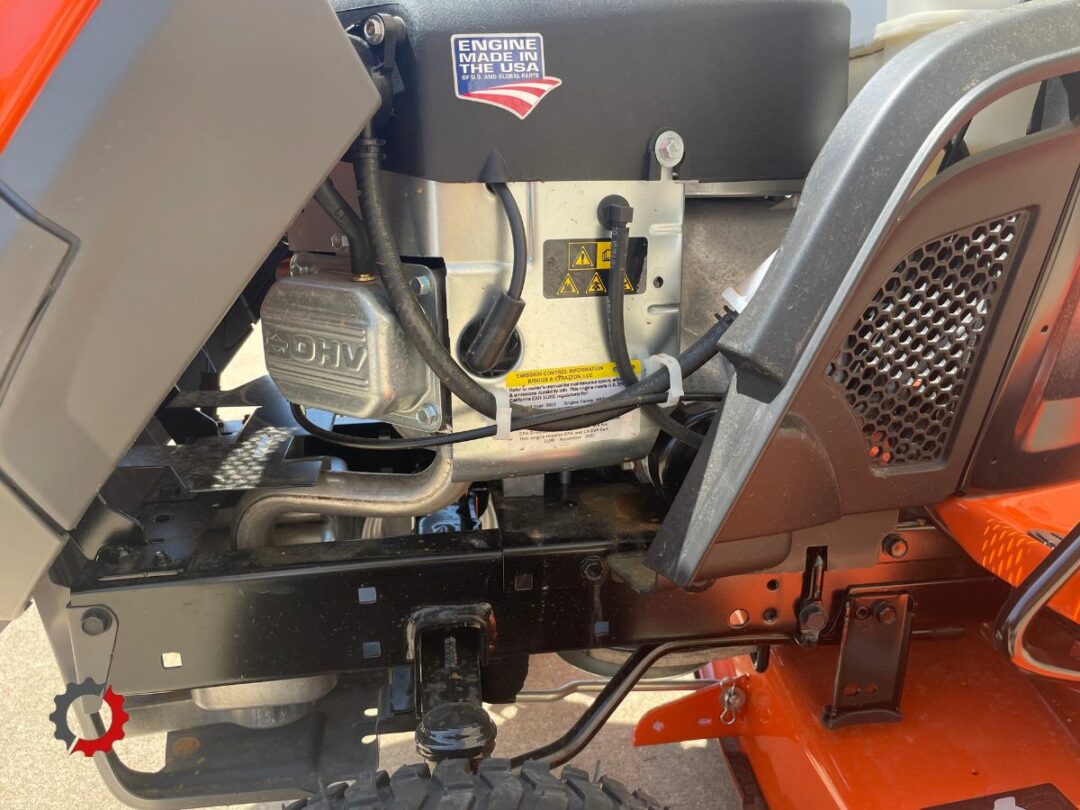
Remove the spark plug wire before touching the plug. Use the correct spark plug socket and avoid pulling on the wire itself.
A normal plug may show light wear and a small amount of tan residue. A wet plug may mean the engine is flooded. Heavy black deposits may point to a rich fuel mix, a dirty air filter, or oil-related trouble.
Replace the plug if the electrode is badly worn, the ceramic is cracked, or the part does not match the manual. Spark plug numbers are not universal. Confirm the part number and gap before installation.
Look at the air filter
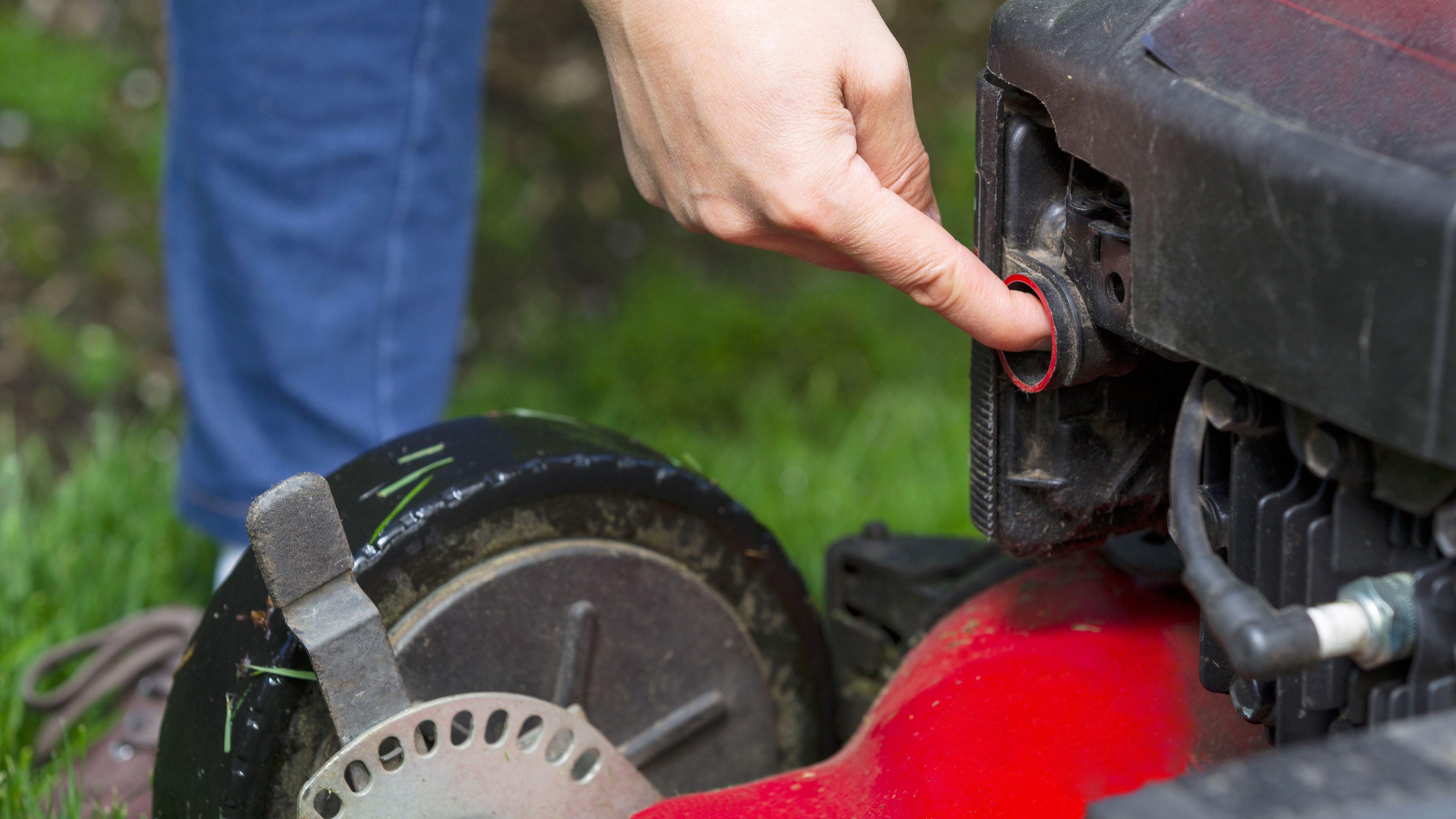
A foam filter may need cleaning and a small amount of the correct oil. A paper filter usually needs replacement rather than washing. Some models use a combination filter.
Do not run the mower for normal work without its air filter. Dust can enter the engine and speed up wear. A filter is inexpensive compared with internal engine damage.
Check the battery and terminals
A riding mower may crank slowly when its battery is weak. A battery push mower may show lights or sounds but still lack enough power to run the blade.
Use the charger listed for the battery system. Check that the pack clicks fully into place. Look for corrosion, bent contacts, swelling, cracks, or heat damage.
Lithium-ion batteries should not be opened or repaired at home. If a battery is swollen, leaking, or unusually hot, move away from it and contact the manufacturer or a qualified recycling site.
🔧 Quick Fix: If a battery mower suddenly stops, remove the battery and let the mower cool. Clear grass from the deck, confirm the battery is charged, and reinstall it firmly. Overload protection can activate when thick or wet grass slows the blade.
Clear the deck and blade area
Grass clippings can form a hard mat under the deck. This is common when mowing wet turfgrass or cutting grass that has grown too tall.
Before clearing the deck:
- Turn off the mower.
- Remove the ignition key if fitted.
- Remove the battery or disconnect the spark plug wire.
- Wait until the blade stops.
- Wear gloves and eye protection.
- Use a brush or tool instead of your bare hand.
Check the blade for bends, cracks, or a loose mounting bolt. A dull blade may not stop starting, but it can make the engine labor and leave ragged grass. Replace or sharpen it according to the manual.
Follow the correct cold-start method
Many gas mowers need a primer bulb, choke, or specific throttle position when cold. A warm engine may need a different setting. Read the starting steps on the mower or in the manual.
Press a primer bulb only as many times as listed. Repeated attempts can flood the engine. If the engine smells strongly of gas, wait and use the manual’s flooded-engine procedure.
Test for a safety-control fault
If the mower starts only when a handle is held in one position, stop using it. A bent control bar, damaged cable, or faulty switch can create a serious hazard.
Do not bypass a seat switch, blade-control switch, brake switch, or other safety device. These parts exist to reduce injury risk. A repair shop can test them with the right tools.
Fixes for gas, battery, riding, and zero-turn models
The main difference between gas and electric troubleshooting is the ignition system. Gas models depend on fuel and a spark plug, while battery models depend on power flow, controls, and electronic protection.

Gas push and self-propelled mowers
Gas push mowers suit small to medium yards where refueling is practical. Self-propelled mowers can help on slopes and larger yards because the drive system moves the mower, but they add belts, cables, and drive parts that may need service.
For a gas push mower that will not start, check these items in order:
- Safety bar and fuel.
- Spark plug wire.
- Spark plug condition.
- Air filter.
- Fuel age and fuel flow.
- Carburetor and ignition system.
A self-propelled drive problem does not always cause a starting problem. The mower may start normally but fail to move. Treat the engine and drive system as separate systems.
Battery walk-behind mowers
Battery mowers can help people who want less fuel handling and lower operating noise. They suit small and medium yards when the battery platform offers enough capacity for the property.
Battery capacity is often shown in amp-hours, or Ah. A higher Ah rating can mean more stored energy, but actual runtime depends on grass height, moisture, blade condition, terrain, mowing speed, and the mower’s design.
Check the battery, charger, key, safety button, handle position, and deck. Never use a battery or charger that the manufacturer does not approve. Voltage and battery-platform compatibility matter.
Riding mowers and zero-turn mowers
Riding mowers suit larger lawns where walking behind a mower would take too long. Zero-turn mowers can help on open yards with many obstacles, but they need space to learn and may not suit steep slopes or tight gates.
A riding mower may not start unless the brake is set, the PTO is off, and the operator is seated. Some models also require the transmission or control levers to be in a certain position.
Check the battery terminals, fuses, ignition switch, seat switch, brake switch, and PTO control. If the starter turns slowly, charge or test the battery before replacing more parts.
Robotic and corded mowers
Robotic mowers use a charging station, boundary system, battery, and safety controls. A mower may refuse to run if it is not docked correctly, has a low battery, detects a lift condition, or loses its boundary signal.
Corded mowers need a safe outdoor-rated extension cord and a working outlet. They suit small yards with nearby power, but the cord must stay away from the blade. A tripped ground-fault circuit interrupter, or GFCI, can make the mower appear dead.
A practical repair sequence
Work from the easiest and safest checks to the more complex ones. This saves time and prevents unnecessary parts replacement.
Step 1: Prepare the work area
Move the mower to a dry, level, open area. Keep children and pets away. Remove sticks, stones, toys, and other debris from the mower and nearby lawn.
Wear closed-toe shoes, safety glasses, and work gloves. Use hearing protection when the engine is running. Do not work in a closed garage with a gas engine running.
Step 2: Disconnect the starting and cutting systems
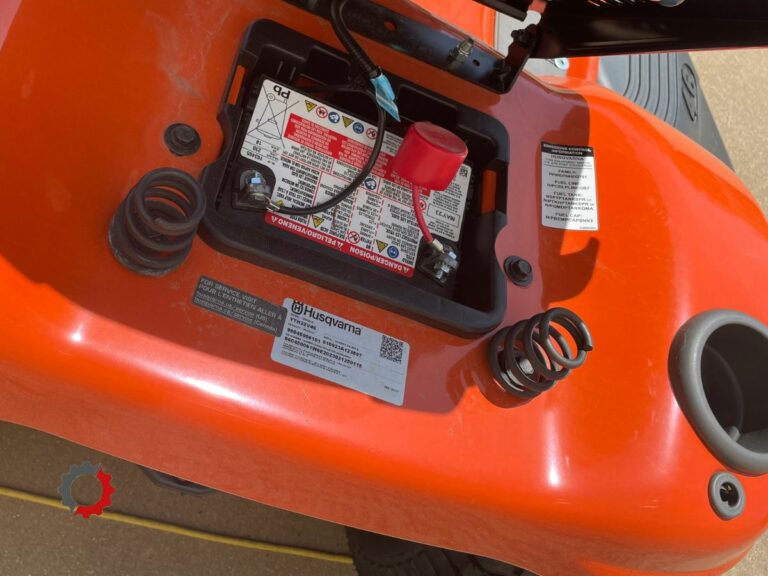
For a gas mower, remove the spark plug wire and keep it away from the plug. For a battery mower, remove the battery. For a riding mower, remove the key and disconnect power as directed in the manual.
This step prevents an accidental start while you inspect the blade or deck. Never assume a stopped mower is safe until the energy source is disconnected.
Step 3: Check the controls
Set the brake or parking brake. Turn off the PTO or blade control. Pull the safety bar fully into position if the mower uses one. Make sure a battery pack or ignition key is seated correctly.
If a control feels loose, bent, or stuck, do not force it. A damaged control can prevent starting or create an unsafe condition.
Step 4: Inspect fuel, battery, and wiring
Look for fuel leaks, cracked fuel lines, loose wires, damaged connectors, and corrosion. Do not touch bare wires while the battery is connected.
Check that the fuel cap is secure but not blocked. On battery equipment, inspect the battery contacts and charger for dirt or damage.
Step 5: Inspect the air filter and spark plug
On a gas model, remove and inspect the air filter. Then check the spark plug. Replace parts with the exact type listed for your model.
Avoid changing carburetor settings unless the manual gives a procedure. Modern engines may need special tools or emissions-related adjustments.
Step 6: Clear the deck
With the power source disconnected, remove grass, vines, and sticks from the deck. Turn the blade by hand only if the manual allows it and only while wearing gloves.
If the blade feels rough, wobbles, or stops suddenly, the spindle or blade may be damaged. Do not operate the mower until the problem is repaired.
Step 7: Try one careful start
Reconnect the spark plug wire or battery. Move to a safe position and follow the manual’s starting steps exactly.
Do not pull the starter cord until the control is in place. Do not stand over the mower. If it does not start after a reasonable number of attempts, stop and reassess rather than flooding the engine.
Step 8: Observe what happens
Note whether the engine cranks, clicks, sputters, starts briefly, or remains silent. Write down the sound and any warning light. This information helps a repair technician find the fault faster.
Problems that look like starting faults
Some mower issues happen during mowing but are mistaken for starting problems. A dull blade, clogged deck, worn belt, or overloaded motor may cause the mower to stop soon after it starts.
Wet grass
Wet grass bends instead of standing upright. It also sticks under the deck and makes the blade work harder. On slopes, wet grass reduces traction and increases the risk of slipping.
Wait for the lawn to dry. Never mow wet grass on a slope. If the mower has already clogged, disconnect power before clearing it.
Grass that is too tall
Tall grass can bog down a mower. Raise the cutting height and make a slower first pass if the manual allows it. Avoid removing more than about one-third of the grass blade at one time.
The right mowing height depends on the grass type and climate. Warm-season turf often needs a different height from cool-season turf. A local extension service can help identify your turfgrass.
A dull or damaged blade
A dull blade tears grass and increases engine load. A bent blade can create vibration and damage the spindle.
Sharpen mower blades at the interval listed in the manual, or replace them when damaged. Confirm the blade length, center-hole shape, lift design, and part number before buying.
A full grass catcher
A packed grass catcher can block discharge and strain the mower. Empty the bag before it becomes heavy. Make sure the discharge chute is open and correctly fitted.
Mulching can return small clippings to the turf, but it works best with a sharp blade and dry grass. Side discharge can help when the grass is tall, but follow local rules and avoid sending clippings toward roads or walkways.
Prevent starting problems before they begin
Regular care costs less time than repeated hard starts. A simple schedule also helps a family member, senior homeowner, or first-time renter know what to do before calling for help.

After every mowing session
Brush grass from the deck, wheels, vents, and control areas. Check for loose hardware, fuel leaks, or unusual vibration. Empty the grass catcher and store the mower in a dry place.
Do not spray water directly at electrical parts, bearings, the engine, or battery contacts. If you clean the deck, follow the manual’s wash-port or cleaning instructions.
Every 25 hours or as the manual directs
Inspect the blade, air filter, cables, wheels, and drive system. Clean or replace the air filter based on its type and condition.
Self-propelled mowers may need drive cable or belt inspection. Do not adjust a drive system while the engine or battery is connected.
At the start of the season
Charge the battery with the approved charger. Check tire pressure on riding and zero-turn models. Install a fresh spark plug if the manual’s schedule calls for one.
Inspect fuel lines and the fuel cap. Test the mower in an open area before the first full mowing session.
Before long-term storage
Use the manual’s storage procedure. Gas models may need fuel treated with stabilizer or drained. Some engines require running the mower briefly after adding stabilizer so it reaches the fuel system.
Store lithium-ion batteries in the temperature range listed by the manufacturer. Keep them dry and away from extreme heat. Do not store a battery where metal objects can touch its contacts.
| Service item | Suggested timing | Why it matters |
|---|---|---|
| Clear grass from deck | After each use | Reduces clogging and corrosion |
| Inspect blade | Often during the season | Helps limit vibration and engine load |
| Check air filter | Every 25 hours or as listed | Supports clean air flow |
| Inspect spark plug | Seasonally or as listed | Supports reliable ignition |
| Check battery and terminals | Monthly during use | Helps find weak connections |
| Treat or drain fuel | Before long storage | Reduces stale-fuel problems |
The owner’s manual takes priority over a general schedule. Dusty yards, sandy soil, heavy use, and wet grass can require more frequent care.
🌿 Eco or Disposal Note: Recycle lithium-ion batteries through a designated battery drop-off. Take old gasoline and oil to a household hazardous-waste site. A usable mower may be donated or recycled instead of sent to a landfill.
What parts wear out first?
Mower parts do not last forever, even when the engine is well cared for. Blades, spark plugs, air filters, belts, cables, tires, and batteries are normal wear items.

Mower blades
Blades contact grass, soil, sticks, and hidden stones. A blade may need sharpening during the season and replacement when bent, cracked, or too thin.
Do not straighten a badly bent blade and return it to service. The blade can break or cause dangerous vibration.
Spark plugs
Spark plugs wear through heat and repeated starts. A worn plug can make a gas mower hard to start, especially in cool weather.
Use the correct plug and gap. A plug that looks similar may still be the wrong heat range or thread size.
Air filters
Air filters clog faster in dusty areas. A clogged filter can cause hard starting, poor power, and smoky operation.
Keep a spare filter on hand if the mower works in dry soil or during long mowing seasons. The correct filter is a small cost compared with engine wear.
Belts and cables
Self-propelled and riding mowers use belts or cables to transfer power. A stretched cable can prevent the drive or blade control from engaging. A worn belt can slip, squeal, or break.
Do not confuse a drive fault with an engine-starting fault. The mower may start but fail to move or cut.
Batteries
Battery life depends on charge cycles, storage temperature, workload, and care. A battery that worked last season may now have less usable capacity.
Use the correct charger and avoid storing a battery fully exposed to heat or freezing conditions. Check replacement battery part numbers carefully.
When to call a repair shop
A repair shop is the safer choice when the problem involves fuel leaks, electrical diagnosis, internal engine damage, or repeated failure after basic checks.
Call a qualified technician if:
- The mower has a fuel leak.
- The engine makes a loud knock or grinding sound.
- The blade spindle is bent or loose.
- The starter spins but the engine does not turn.
- A battery is swollen, leaking, or very hot.
- Wiring is burned or badly damaged.
- The mower starts only when a safety switch is bypassed.
- Compression, ignition, or carburetor testing is needed.
- The repair requires flywheel, valve, or engine disassembly.
A professional may use a spark tester, compression gauge, multimeter, fuel-pressure tool, or battery tester. Those tools can save time and prevent damage from trial-and-error repairs.
Is repair worth the money?
Repair can make sense when the mower has a sound deck, straight frame, good tires, and a reliable engine or battery platform. It may not make sense when the mower has several major faults or when replacement parts cost close to a new machine.
Consider the yard before replacing it. A small, flat yard may suit a simple push mower, reel mower, or battery mower. A hilly lawn may justify a self-propelled model. A large, open yard may need a riding or zero-turn mower.
Do not buy a larger mower just because the old one failed. Measure the gate, storage area, slope, and cutting space first. Check local noise rules, HOA restrictions, gas-equipment limits, and fuel-storage laws.
📜 Check Local Rules: Some cities and HOAs restrict gas equipment, mowing hours, noise levels, or fuel storage. Confirm local rules before repairing, replacing, or upgrading your mower.
Choosing a replacement if the mower is beyond repair
If your Husqvarna mower is old or badly damaged, compare the machine to the yard rather than shopping by engine size alone.

Small, flat yards
A lightweight push mower can suit a small yard with few slopes. A battery mower may reduce fuel handling and noise. A corded mower can work when the outlet and cord route are safe.
A reel mower may suit a very small, flat lawn with fine grass and frequent mowing. It needs more effort in tall or wet turf.
Medium yards and gentle slopes
A self-propelled mower can help when the yard is larger or mildly hilly. Gas models offer quick refueling, while battery models can reduce routine maintenance.
Check the mower’s cutting width, weight, battery compatibility, bag capacity, and stated cutting-height range. A wider deck may reduce passes, but it may not fit through a narrow gate.
Large yards
A riding mower can reduce walking time on a large property. A zero-turn mower may suit open lawns with trees and beds, but it needs practice and may be less comfortable on steep slopes.
Measure the storage area and door width. Riding equipment also needs safe fuel or battery storage and regular belt, tire, battery, and blade care.
Seniors and gift buyers
For a senior homeowner, weight, control layout, starting effort, and service access matter as much as cutting width. A battery mower may be easier to start than a pull-cord gas mower, but the battery still needs charging and lifting.
Gift buyers should not guess at compatibility. Ask for the mower model, yard size, slope, gate width, and storage space. A service gift, replacement blade, approved battery, or tune-up may be more useful than a random accessory.
| Yard and user | Mower type to consider | Main limitation |
|---|---|---|
| Small, flat yard | Push, reel, corded, or battery mower | Less suited to tall grass or steep slopes |
| Medium yard with mild hills | Self-propelled gas or battery mower | More parts and added weight |
| Large open yard | Riding or zero-turn mower | Needs storage, practice, and maintenance |
| Senior user | Lightweight battery or easy-control self-propelled mower | Battery weight or drive controls may still matter |
| Very thick or wet turf | Stronger gas or suitable self-propelled mower | Wet mowing still raises safety and clogging risks |
There is no single right mower for every property. The best choice is the one that matches the terrain, grass, storage, budget, and user’s strength.
Safety rules for starting and servicing
Starting trouble is frustrating, but rushing can cause injury. Treat the blade, fuel, battery, and hot engine as real hazards.

Follow these rules every time:
- Wear eye protection, hearing protection, work gloves, and closed-toe shoes.
- Clear rocks, sticks, toys, and wire from the lawn.
- Keep children and pets away from the mower and work area.
- Never mow wet grass on a slope.
- Disconnect the spark plug wire or remove the battery before servicing.
- Never refuel a hot engine.
- Refuel outdoors and wipe up spills.
- Do not bypass safety switches.
- Keep hands and feet away from the blade and discharge chute.
- Follow the exact owner’s manual for your model.
Gas engines produce carbon monoxide. Never run a mower inside a garage, shed, trailer, or other enclosed space, even with the door open.
FAQs about a Husqvarna mower that will not start
Q: Why is my Husqvarna mower not starting after winter storage?
A: Old fuel is a common cause. Check the fuel, spark plug, air filter, battery, and safety controls. Drain stale fuel only by following the manual and local disposal rules.
Q: Why does my Husqvarna mower crank but not start?
A: The engine may lack clean fuel, air, or spark. Inspect the fuel, air filter, spark plug, and plug wire. A flooded engine can also crank without starting.
Q: Why does my Husqvarna mower start and then stop?
A: A clogged air filter, restricted fuel flow, blocked fuel-cap vent, dirty carburetor, or safety-control fault can cause this symptom. Stop if you smell strong fuel or see a leak.
Q: Can bad gas stop a lawn mower from starting?
A: Yes. Old gas can lose volatility and leave deposits in the carburetor. Replace it with the correct fresh fuel and use stabilizer for storage when the manual allows it.
Q: How do I know if my mower spark plug is bad?
A: A wet, cracked, heavily coated, or badly worn plug may fail to ignite the mixture. Confirm the correct plug type and gap before replacing it.
Q: Why will my battery Husqvarna mower not start?
A: Check the battery charge, battery seating, key, safety button, handle position, charger, and deck for blockage. Remove a hot, swollen, cracked, or leaking battery from service.
Q: Why does my riding mower only click?
A: A weak battery, corroded terminal, loose connection, or starter-solenoid issue can cause clicking. Clean and inspect connections safely, then test the battery.
Q: Can wet grass stop a Husqvarna mower from starting?
A: Wet grass usually causes clogging or heavy load after starting, but a packed deck can prevent the blade or motor from turning. Disconnect power before clearing it.
Q: Should I replace the mower or repair it?
A: Repair is often sensible when the deck, frame, engine, or battery platform is in good condition. Replacement may make more sense when several major parts have failed.
Q: How long should a Husqvarna lawn mower last?
A: Service life varies with model, use, storage, terrain, maintenance, and climate. A well-maintained mower can last for many seasons, but wear parts still need regular replacement.
Q: Is a self-propelled mower better for hills?
A: It can reduce pushing effort on mild slopes, but it does not remove the risk of slipping or losing control. Never mow wet grass on a slope, and check the manual for operating limits.
Q: What should I do if the mower has a fuel leak?
A: Stop using it, move away from flames and sparks, and do not start the engine. Have the fuel system inspected by a qualified technician and dispose of spilled fuel correctly.
Q: Can I bypass a Husqvarna safety switch?
A: No. Bypassing a safety switch can allow the blade or machine to operate in an unsafe condition. Repair the switch or have a technician diagnose it.
Q: Why does my mower smoke after I try to start it?
A: A small amount of smoke can follow an oil spill or an overfilled crankcase. Heavy smoke may point to too much oil, oil entering the combustion area, or another engine fault. Stop and check the manual.
Q: What should I check before buying a replacement Husqvarna battery or blade?
A: Confirm the model number, voltage, battery platform, blade length, center-hole shape, and part number. Check both the product page and the owner’s manual.
Final thoughts
A Husqvarna lawn mower that will not start often needs a simple fix, not a complete replacement. Check the controls, fuel or battery, air filter, spark plug, and deck in that order. Work outdoors, disconnect power before servicing, and do not bypass safety equipment.
For a first-time homeowner, the safest path is a slow inspection and a clear record of what the mower does. For an experienced DIYer, the manual and a few basic tools can help narrow the fault. For a gift buyer or family member helping a senior, a tune-up by a qualified shop may be safer than guessing at parts.
Match the repair or replacement to the yard. A small flat lawn may need a light push mower, while hills, large spaces, wet turf, and limited storage call for a different plan. Good maintenance will not prevent every failure, but it can help your mower start more reliably and work within its design limits.




One Comment