How Does A Lawn Edger Work: Complete Edging Guide
A lawn edger cuts a clean line where grass meets a sidewalk, driveway, flower bed, or garden border. It uses a spinning blade or wheel to slice through grass runners and shallow soil. The result is a sharper border and less grass creeping onto hard surfaces.
Unlike a mower, a lawn edger is not made to cut the top of a large lawn. Unlike a string trimmer, it uses a guide, blade, or edging wheel to make a straighter and more repeatable cut. This small tool can make a big visual difference, especially after mowing.
This guide explains how a lawn edger works, the main types, how to use one safely, what to look for when buying, and how to keep it in good shape. It covers small yards, large properties, sloped lawns, rental homes, and buyers choosing a useful gift for a senior or new homeowner.

Quick answer: How does a lawn edger work?
A lawn edger works by spinning a vertical blade along the edge of a lawn. The blade cuts grass roots, runners, and a narrow strip of soil to form a neat border. Most edgers have a guide wheel and an adjustable blade depth. Gas, corded electric, and battery models use the same basic cutting idea but differ in noise, power, upkeep, and operating range.

The best way to use an edger is to move it slowly while keeping its guide wheel against the hard surface or border. One pass may be enough when the edge is maintained often. Overgrown edges may need two shallow passes instead of one deep cut.
A lawn edger suits homeowners who want crisp borders around sidewalks, driveways, patios, trees, and planting beds. It may not suit someone who has no defined borders, a very rocky yard, or no safe place to store outdoor power equipment.
What a lawn edger actually does
A lawn edger separates turfgrass from another surface. Turfgrass is the grass used to cover a lawn. As it grows, its roots and stems can spread sideways across concrete, asphalt, mulch, or soil.
An edger cuts this spreading growth along a chosen line. It may also remove a thin strip of soil and dead plant matter. This creates a small trench or visible gap between the lawn and the border.

Edger versus mower
A mower cuts grass across the broad, open area of a lawn. Its horizontal blade sits under the deck, which is the housing that surrounds the cutting system. A mower is designed for mowing height, grass collection, mulching, or side discharge.
An edger works at the boundary. Its blade usually sits vertically, like a small wheel cutting into the side of the turf. It is not a replacement for a push mower, self-propelled mower, riding mower, or zero-turn mower.
Edger versus string trimmer
A string trimmer uses flexible nylon line. You can rotate the trimmer head to cut grass beside a wall or curb. This method is called edging when the trimmer is held vertically.
A dedicated edger has more control over the cut line. Its guide wheel helps maintain a steady path. The main difference between an edger and a string trimmer is control: a trimmer is more flexible, while an edger is often more precise along straight borders.
A string trimmer may be enough for a small rental yard. A dedicated edger makes more sense when you have long sidewalks, many lawn borders, or a strong preference for clean lines.
Edger versus a manual half-moon tool
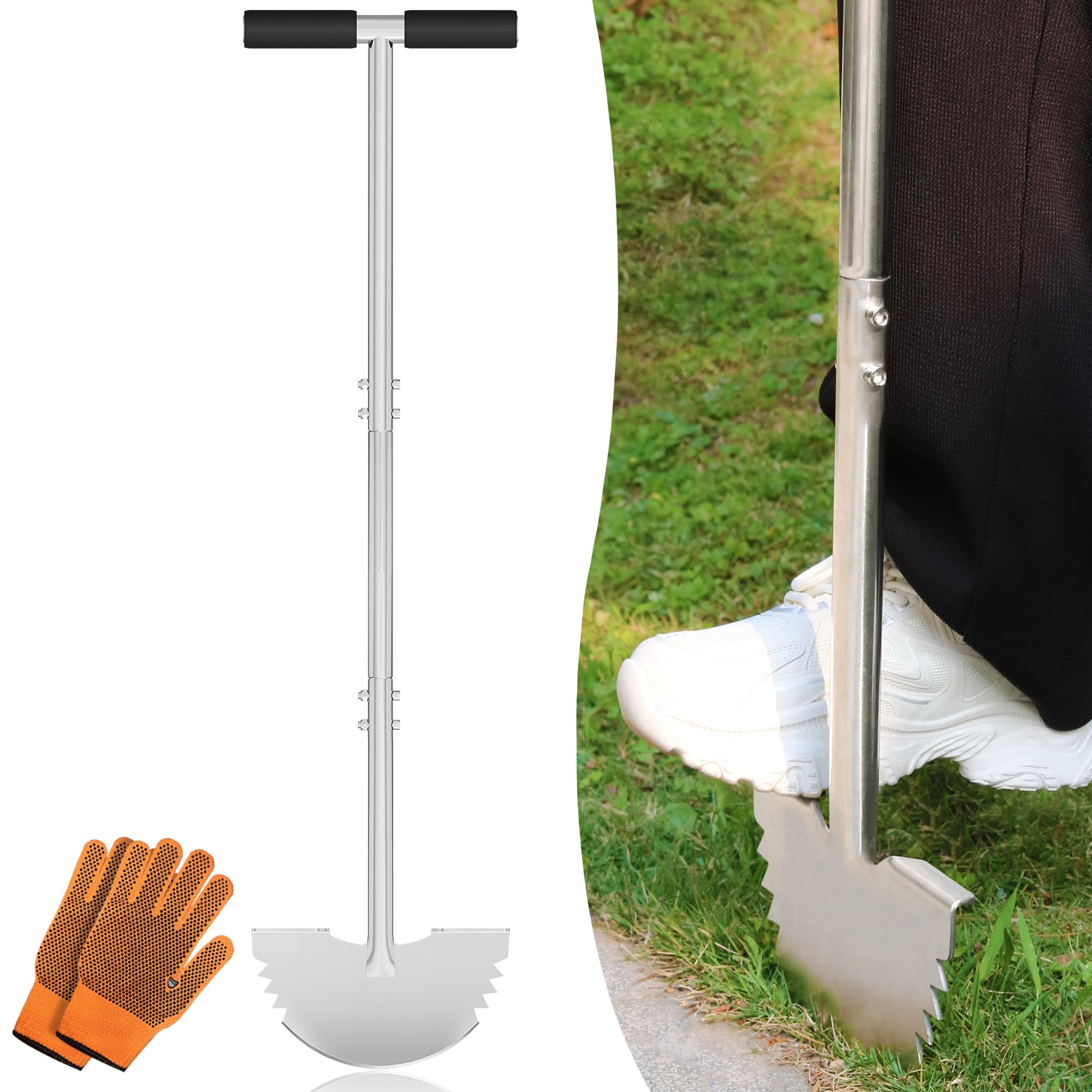
A manual step edger, often called a half-moon edger, has a sharp curved blade on a long handle. You step on the top edge to push the blade into the soil.
This simple tool makes no engine noise and needs no fuel or battery. It works well for a short walkway, a small flower bed, or a homeowner who wants light equipment. It takes more body effort than a powered lawn edger, especially in hard clay or dry soil.
How the cutting system works
A powered edger uses a motor or engine to turn a blade. The blade cuts as the user pushes the tool forward. The guide wheel controls the distance from the border, while the blade guard helps contain soil and debris.
The cutting action is simple, but each part has a job. Knowing these parts helps you compare tools and find the cause when an edger vibrates, stalls, or leaves a rough line.

Motor or engine
Battery and corded edgers use an electric motor. A battery model draws power from a removable lithium-ion battery. Battery capacity is often shown in amp-hours, or Ah. A larger Ah rating can provide more stored energy, but actual runtime depends on blade depth, grass density, soil, temperature, and the tool design.
A corded edger uses a power cord and household electricity. It can run as long as it has power, but the cord limits movement. You also need a suitable outdoor-rated extension cord and a ground-fault circuit interrupter, or GFCI, protected outlet.
Gas edgers use a small engine. Engine size is shown in cubic centimeters, or cc. A higher cc number can indicate a larger engine, but it does not alone prove that one machine will cut better. Gas models usually need more care, including fuel management, oil checks, air-filter service, and spark-plug replacement.
Blade
The blade is usually a narrow steel disk with a sharpened edge. Some models use a straight blade. Others use a serrated blade or a blade designed for a particular brand and model.
The blade wears when it cuts soil, gravel, roots, or concrete dust. A dull blade may leave torn grass and force the motor or engine to work harder. A bent blade can cause vibration and should not be used.
Always confirm the blade type and replacement part number in the owner’s manual. Blades are not interchangeable just because they look similar.
Guide wheel
The guide wheel rolls on the sidewalk, driveway, or other hard border. It helps keep the blade at a steady distance and depth.
Some wheels are fixed. Others adjust for different border heights or blade positions. A wide wheel can feel more stable, while a small wheel may fit into tighter areas. Check the wheel material and axle before buying, since wheels can wear or crack over time.
Blade guard and shield
The blade guard covers part of the spinning blade. It directs soil and small debris away from the operator. A guard does not make the tool safe to use without protective equipment.
Never remove the guard to reach a tight spot. If the guard is cracked, loose, or missing, stop using the edger until it is repaired or replaced.
Depth control
Depth adjustment controls how far the blade enters the soil. A shallow setting is suitable for routine edge care. A deeper setting can reopen a border that has become overgrown, but it also increases resistance and the chance of hitting buried objects.
Start shallow. Increase depth only when needed. Many edging problems come from trying to cut too deep in one pass.
Main types of lawn edgers
The best type of lawn edger depends on your yard size, border length, terrain, storage space, and comfort with maintenance. A light battery edger suits many small and medium yards. A gas model can suit long borders and heavy growth, while a manual tool may be the best choice for a tiny yard or quiet neighborhood.

| Edger type | Best fit |
|---|---|
| Manual half-moon | Short borders, small yards, quiet work |
| Corded electric | Small to medium yards near an outlet |
| Battery electric | Most small and medium residential yards |
| Gas-powered | Long borders, thick growth, demanding work |
The main takeaway is that power is only one factor. A heavy gas edger may be unnecessary for a short sidewalk, while a small battery model may feel slow on a large property with hard soil.
Manual lawn edgers
A manual edger has a blade, shaft, and handle. Some have a rolling wheel. Others are made to be pressed into the soil with a foot.
Manual edging is quiet, simple, and easy to store. It creates no exhaust and does not need a battery or extension cord. It can be a useful gift for a homeowner with a small, flat yard and good balance.
Its limitation is physical effort. Hard, dry soil can require repeated pressure. It may not be a good choice for seniors with knee, back, shoulder, or balance concerns.
Corded electric edgers
A corded edger plugs into an outdoor outlet. It starts with the press of a switch and usually needs little mechanical service.
It can suit a small yard with borders close to the house. It is often lighter than a gas model. The cord, however, can snag on shrubs, cross walkways, or reach the end of its range.
Use only a cord rated for outdoor use. Keep the cord behind you and away from the blade. Never use a damaged cord or operate in wet conditions.
Battery lawn edgers
A battery edger offers quiet operation and freedom from a power cord. Many use the same battery platform as a compatible string trimmer, leaf blower, or battery mower.
Battery tools vary in voltage, Ah rating, weight, and motor design. A brushless motor uses electronic controls rather than traditional brushes. It can reduce wear in the motor, but brushless does not tell you the exact runtime or cutting force.
Battery models are often a good match for first-time homeowners, renters, and gift buyers. They are also helpful where noise matters. Cold temperatures can reduce battery performance, and a spare battery may be useful for a large yard.
Gas lawn edgers
A gas edger uses a small engine and fuel tank. It can provide long operating time with quick refueling, provided the fuel is fresh and the engine is maintained.
Gas power can suit a large lot, long driveway, or heavy edging work. It is less attractive for a short border because it adds fuel handling, noise, vibration, and routine service.
Gas equipment may be restricted by a homeowners association or local ordinance. Check local rules before buying. Never refuel a hot engine, and store fuel only as local law and the owner’s manual allow.
What to look for before buying
The right edger should match your borders, not just your lawn size. Measure the total length of the edges you plan to maintain. Also check gate width, slope, storage space, outlet locations, and the distance to the nearest hard surface.

Cutting depth and width
Look for an adjustable cutting depth. A range of about 1 to 2 inches is common for residential edging, but product specifications vary. Routine edging usually needs less depth than a neglected border.
Blade diameter and cutting width affect how the tool fits into narrow spaces. A wider cut may remove more growth but can also require more power. Confirm the manufacturer’s listed dimensions rather than guessing from a product photo.
Weight and balance
A light edger can be easier to carry and turn. A heavier unit may stay planted in hard soil but can tire your arms.
Balance matters as much as listed weight. Hold the handle in a store when possible. For a senior or someone with limited strength, choose a model with an easy start, a clear safety switch, adjustable handle height, and a manageable battery.
Handle and wheel design
An adjustable handle can reduce bending. A second grip can improve control. A stable guide wheel helps beginners follow a straight line.
Look for controls that are easy to see and press while wearing work gloves. Avoid a model that requires awkward hand positions or forceful trigger pressure.
Power source and compatibility
Battery buyers should confirm voltage and battery compatibility. A battery from one product family may not fit another, even if both packs have similar Ah ratings.
Check whether the package includes the battery and charger. Some tools are sold as bare tools. A low listed price may not include the power pack.
Replacement parts
Find the blade, wheel, guard, belt, and fastener part numbers before you buy. Parts may be easy to order for a common brand but difficult to locate for an obscure model.
Ask how the blade is changed. A tool that needs special service may be less convenient than one that uses common hand tools.
| Feature | Why it matters |
|---|---|
| Adjustable depth | Helps match shallow upkeep with deeper repair |
| Guide wheel | Supports a straighter, steadier cut |
| Battery platform | May share batteries with other outdoor tools |
| Handle adjustment | Helps fit different users and reduce strain |
| Blade availability | Affects long-term repair cost |
| Guard quality | Helps contain soil and debris |
The best features depend on the user. A new homeowner may value simple starting and low upkeep. An experienced DIYer may care more about blade access, parts supply, and depth control.
Choosing an edger by yard and user
A product should fit the person using it and the ground it must cross. Think about the border length, soil type, slopes, and storage area before thinking about brand names.

| Yard or user | Suitable choice | Main limitation |
|---|---|---|
| Small, flat yard | Manual, corded, or light battery edger | Manual work can be tiring |
| Medium suburban yard | Battery edger with adjustable depth | Runtime depends on battery size |
| Large lot | Gas or high-capacity battery model | More cost and upkeep |
| Senior user | Light battery model with wheel guide | Heavy units may cause strain |
| Hilly lawn | Stable, manageable battery model | Steep slopes need extra care |
| Rental home | Manual or battery model | Storage and landlord rules may matter |
For seniors, low weight and control are more important than maximum engine size. A gift buyer should confirm whether the recipient already owns batteries in a compatible system.
For a hilly lawn, choose control over speed. Do not use an edger on a wet slope. A manual tool may be safer on a tiny slope if the user can work without overreaching, but a steep or unstable area may need professional care.
How to use a lawn edger correctly
The best way to edge a lawn is to work when the soil is slightly workable, the border is visible, and the area is free of hidden hazards. Soil that is bone dry can resist the blade. Wet soil can become muddy and unstable.

Tools and materials
| Item | Purpose |
|---|---|
| Lawn edger | Cuts the grass border |
| Safety glasses | Protects eyes from soil and debris |
| Hearing protection | Reduces exposure to motor or engine noise |
| Closed-toe shoes | Protects feet from the blade area |
| Work gloves | Improve grip and protect hands |
| Stiff broom or leaf blower | Clears loose soil after edging |
You may also need a tape measure, marking paint, a flat shovel, and a compatible extension cord for a corded model. Keep tools simple and use only parts approved by the manufacturer.
Step 1: Inspect the border
Walk the full route before starting. Remove stones, sticks, toys, wire, and other debris. Look for sprinkler heads, landscape lighting wire, irrigation tubing, drain covers, and shallow roots.
Do not assume a new garden bed is free of buried lines. If you plan to cut a new border, contact the appropriate utility-locating service first.
Step 2: Put on protective gear
Wear eye protection, hearing protection, closed-toe shoes, and work gloves. Long pants can add protection from flying debris.
Keep children and pets away from the work area. Do not let anyone stand beside the blade or near the discharge side.
⚠️ Safety Warning: Never mow or edge wet grass on a slope. Disconnect the spark plug wire or remove the battery before clearing a jam, changing a blade, or servicing the tool. Follow the owner’s manual even when a repair seems simple.
Step 3: Set the blade depth
Set the blade shallow for routine maintenance. If the edge is very overgrown, mark the line and make a shallow first pass.
A deep cut can expose roots, damage nearby plants, or strike buried objects. It can also bog down a motor or engine.
Step 4: Start on a straight section
Place the guide wheel on the hard surface. Keep the blade on the lawn side of the border. Start the tool according to the manual.
Move forward at a slow, steady pace. Let the blade do the cutting. Do not force the machine when it slows.
Step 5: Keep the guide wheel steady
Use both hands when the manual requires them. Keep your shoulders relaxed and avoid twisting your body.
If the edger wanders, slow down and check the wheel position. A shallow cut is easier to control than a deep cut.
Step 6: Handle corners with care
Curves and corners require slower movement. Do not swing the edger sharply. Make short, controlled passes instead.
For tight corners, a string trimmer or manual hand tool may be more suitable. Trying to force a powered edger into a narrow corner can damage the blade or border.
Step 7: Review the line
Stop the machine and inspect the edge. Remove loose soil with a broom or leaf blower. If small sections remain, correct them with a short pass rather than cutting the whole border deeper.
Do not use a leaf blower to send soil into a street, drain, neighbor’s yard, or open water. Local rules may restrict blowing debris onto public areas.
Common lawn edging mistakes
Most poor edging results come from rushing, cutting too deep, or using the wrong tool for the border. A clean line usually comes from steady control rather than extra power.

Cutting too deep
A deep trench may look dramatic at first, but it can expose roots and dry the soil near plants. It also creates more resistance and wears the blade faster.
Use the shallowest setting that gives you the border you need. Maintain the line often instead of waiting until grass has spread several inches.
Edging wet soil
Wet soil can stick to the blade guard and make the tool hard to control. It can also create ruts and muddy edges.
Wait until the soil is workable but not saturated. After heavy rain, give the ground time to drain.
Working without checking for debris
A hidden stone can damage a blade or cause a sudden jolt. Wire and plastic can wrap around the spindle.
Clear the area first. If you are creating a new edge, locate buried utilities and irrigation parts.
Using a string trimmer as if it were an edger
A string trimmer can edge well with practice, but it does not have the same guide wheel or blade depth control. Holding it too low can scalp grass or damage concrete.
Use a dedicated edger when you need a repeated, straight line. Use a string trimmer for flexible work around posts, shrubs, steps, and uneven surfaces.
Ignoring the border material
Concrete, brick, gravel, and timber each behave differently. A blade can strike a raised brick or metal edging.
Keep the blade clear of hard objects when possible. Adjust the wheel and depth to match the border.
| Problem | Likely cause | Practical response |
|---|---|---|
| Rough grass edge | Dull blade or fast movement | Sharpen or replace the blade; slow down |
| Heavy vibration | Bent blade or packed debris | Stop, disconnect power, inspect the blade |
| Tool stalls | Cut is too deep or soil is hard | Raise the blade and make a shallow pass |
| Uneven line | Guide wheel is leaving the border | Keep the wheel against the edge |
| Battery drains quickly | Dense growth, cold weather, or old battery | Reduce depth and check battery condition |
| Engine is hard to start | Old fuel or service issue | Follow the manual for fuel and spark-plug checks |
Takeaway: stop when the tool behaves strangely. Continued use can turn a small blade problem into a motor, engine, or spindle repair.
Maintenance and storage
A lawn edger lasts longer when the blade, guard, wheels, and power system receive basic care. The parts that usually wear first are the blade, wheel, belt on some designs, battery, spark plug, and air filter.
After each use
Disconnect the power source before cleaning. Remove grass and soil from the blade guard, wheel, and lower housing.
Use a brush or dry cloth. Avoid spraying water into the motor, battery connection, controls, or engine parts unless the manual permits it.
Check for loose fasteners. Look at the blade for chips, bends, or heavy wear. A small issue is easier to fix before the next job.
Blade care
A sharp, straight blade cuts with less strain. Some blades can be sharpened. Others should be replaced when worn.
Follow the manual for removal and installation. Use the correct washer, nut, direction, and tightening method. Never hold the blade with your bare hand.
Battery care
Store lithium-ion batteries in a dry place away from extreme heat and cold. Do not store a damaged, swollen, or wet battery.
Use the correct charger. Do not leave a battery charging in a hot vehicle or near flammable materials. Recycle old lithium-ion batteries at a designated drop-off, not in household trash.
Gas-engine care
Use the fuel type and oil grade listed in the manual. Fresh fuel helps reduce starting problems. Fuel stabilizer can help during storage, but follow the product directions.
Service the spark plug and air filter on the schedule in the manual. Drain or treat fuel as directed before long storage. Store fuel only in approved containers and according to local rules.
Seasonal storage
Clean and dry the edger before storage. Remove the battery from a battery model. Coil cords loosely on corded tools. Keep the edger upright in a dry shed or garage where children cannot reach it.
Do not store gas equipment beside a furnace, water heater, or other ignition source. Allow the engine to cool before placing a cover over it.
| Maintenance task | Battery or corded model | Gas model |
|---|---|---|
| Clean guard and blade | After each use | After each use |
| Inspect blade and wheel | Before each use | Before each use |
| Check battery or cord | Before each use | Not applicable |
| Check spark plug | Not applicable | As listed in manual |
| Check air filter | Not applicable | As listed in manual |
| Manage fuel | Not applicable | Before storage and use |
Is a lawn edger worth the money?
A lawn edger is worth the money when you have several defined borders and want to maintain them with less guesswork. It can save time compared with repeated manual cutting, especially along long sidewalks and driveways.
It may not be worth buying a dedicated machine for one short border. A manual half-moon edger or string trimmer may meet that need at a lower cost. A renter may also prefer a small battery tool that shares batteries with a leaf blower or string trimmer.

Typical cost tiers
| Price tier | What you may find | Best fit |
|---|---|---|
| Lower cost | Manual tools and basic corded models | Small, simple borders |
| Mid-range | Battery kits with guide wheels and depth control | Most residential users |
| Higher cost | Gas or advanced battery systems | Long borders and frequent work |
Prices and package contents change. Check the current listing for the battery, charger, blade, warranty, and replacement parts. A bare tool can look inexpensive until you add a battery and charger.
Operating cost
Manual edging has almost no operating cost beyond blade replacement. Corded models use household electricity and may need an extension cord.
Battery models avoid fuel and oil but eventually need battery replacement. Gas models use fuel and oil and may need spark plugs, air filters, and carburetor service.
Storage cost and effort
Storage is easy for a manual edger. Battery models need a dry place for the tool, battery, and charger. Gas models need safe fuel storage and more ventilation.
For a small garage, measure the available shelf or wall space. Also measure the tool’s assembled length. Some handles fold, but never assume they do.
What the tool can and cannot do
A lawn edger can create a visible boundary, but it does not solve every lawn-edge problem. It will not repair a broken concrete walkway, remove a large tree root, or replace proper turfgrass care.

Edging also does not prevent all future growth. Grass runners will return, especially during warm, wet weather. Regular mowing, correct mowing height, watering, and border maintenance still matter.
A deep trench is not always better. In drought, an exposed edge can dry faster. Near flower beds, roots and mulch may need a gentler approach. In cold climates, frozen soil can damage the blade or cause unsafe kickback.
Alternatives to powered edging
Use a string trimmer when the border is uneven or includes posts and shrubs. Use a manual edger for short distances or quiet work. Use a flat shovel when reshaping a garden bed or removing a thick strip of turf.
Landscape edging made from plastic, metal, brick, stone, or timber can help hold a border in place. It does not remove the need for occasional trimming, but it may reduce grass spread.
Mulch can cover soil in a garden bed, but mulch should not be piled against plant stems or tree trunks. Follow good landscape practice for depth and placement.
Safety and local rules
Safe edging starts before the motor turns on. Read the owner’s manual, inspect the tool, and plan the route. Never treat a small machine as harmless because it is light or electric.

Wear safety glasses, hearing protection, closed-toe shoes, and work gloves. Clear debris first. Keep children and pets away. Disconnect the spark plug or remove the battery before servicing. Never refuel a hot engine.
Gas equipment can create noise and exhaust. Battery equipment is quieter but still throws debris and can injure a bystander. Corded equipment adds trip and cut hazards from the extension cord.
📜 Check Local Rules: Some HOAs and cities limit lawn-equipment noise, operating hours, gasoline storage, or gas-powered equipment. Confirm local rules before purchasing or using a gas edger.
Slopes and wet ground
Do not edge on wet grass or wet slopes. The guide wheel can slip, and your footing may fail. Even a small tool can pull or twist when its blade catches hard soil.
On a slope, work across the slope only when the manual and terrain allow safe control. Avoid reaching downhill. If the area is steep, soft, or close to a drop-off, hire a qualified professional.
Noise and neighbors
Gas edgers are usually louder than corded or battery models. Early morning and evening use may disturb neighbors or violate local rules.
Choose an appropriate work time. Hearing protection is still wise, even with a quiet battery model. Keep the blade away from concrete and metal, since contact can create loud noise and dangerous sparks.
Environmental care
Do not pour fuel, oil, or dirty wash water onto soil or into a storm drain. Take old gas and oil to a local hazardous-waste site.
Recycle lithium-ion batteries at a designated battery collection point. Donate or recycle usable lawn tools and mowers instead of sending them to a landfill when possible.
🌿 Eco Note: A battery edger can reduce direct exhaust at the point of use, but the battery still requires proper charging, storage, and end-of-life recycling.
How long does a lawn edger last?
A lawn edger can last for many seasons when it is stored dry, used within its limits, and serviced as directed. Its life depends on soil conditions, edging frequency, part quality, storage, and operator care.
Blades and wheels usually wear sooner than the main housing. Gas engines may need more repairs as they age. Battery systems may eventually need a replacement battery even when the tool itself still works.
Signs it is time to replace a blade include a visible bend, deep chips, severe thinning, or vibration that remains after cleaning and tightening. Signs it is time to replace a battery include a sharp loss of runtime, swelling, heat, or physical damage.
Do not keep using a tool with a cracked guard, damaged cord, exposed wire, loose blade, or unsafe battery. The cost of a repair or replacement is usually lower than the risk of an injury.
Frequently asked questions
Q: Can a lawn edger cut through roots?
A: It can cut small grass roots and runners, but it is not designed to cut large tree roots. Stop if the blade hits a hard root. Cutting tree roots may harm the tree and can damage the edger.
Q: Should I edge before or after mowing?
A: Either order can work. Many homeowners mow first, then edge and sweep the loose clippings and soil. Edging first can help you see the border, but mowing afterward may spread debris.
Q: How often should I edge my lawn?
A: Edge when grass begins to cross the border or when the line loses its shape. Fast-growing grass may need attention every few weeks during its active season. Growth slows in cool or dry weather.
Q: Can I use an edger on gravel?
A: Use caution. Loose gravel can strike the operator or damage the blade. A string trimmer or manual tool may be safer for some gravel borders. Check the manual and keep the blade away from loose stones.
Q: Is a battery lawn edger strong enough for a large yard?
A: It may be, but the answer depends on border length, soil, grass density, battery capacity, and the model’s design. A large property may require spare batteries or a gas unit. Check manufacturer specifications and user limits.
Q: Are lawn edgers hard to use?
A: Most are simple after the depth and wheel are set. Beginners should start on a straight border, use a shallow cut, and move slowly. Curves, slopes, and buried obstacles require more skill.
Q: What is the best lawn edger for seniors?
A: A light battery edger with a guide wheel, adjustable handle, easy controls, and a manageable battery often suits a senior with a flat or gently sloped yard. Avoid choosing by power alone. Consider balance, grip strength, and storage.
Q: Can an edger replace a string trimmer?
A: No. An edger is better for defined borders. A string trimmer is more flexible around trees, fences, posts, steps, and uneven ground. Many homeowners use both tools.
Q: Why does my edger keep stopping?
A: The blade may be too deep, dull, bent, or blocked by packed soil. A battery may be low, or a gas engine may have a fuel, spark-plug, or air-filter problem. Disconnect power before inspecting it.
Q: Can I edge when the lawn is wet?
A: It is best to wait. Wet grass and soil can reduce footing, clog the guard, create ruts, and make the cut less controlled. Never edge a wet slope.
Q: Do lawn edgers damage concrete?
A: The blade should not normally damage sound concrete when the guide wheel is set correctly. Hitting raised edges, metal, or broken concrete can damage both the border and the tool.
Q: How deep should lawn edging be?
A: Start with a shallow cut. Many residential edgers offer roughly 1 to 2 inches of adjustment, but the correct depth depends on the border and tool. Follow the manual and avoid buried utilities and roots.
Q: Is gas or battery better for edging?
A: Battery is often easier for small and medium yards because it starts quickly and creates less noise. Gas can suit long borders and heavy work but needs fuel and engine care. The better choice depends on your yard and local rules.
Final thoughts
A lawn edger works by guiding a vertical blade along the edge of turfgrass. The blade cuts grass runners and shallow soil while a wheel helps control the line. That basic action makes the tool useful for sidewalks, driveways, patios, and garden beds.
Choose a manual tool for short, quiet work. Choose corded electric for a small yard near an outlet. Choose battery power for easy starts, low routine upkeep, and flexible residential use. Choose gas only when the extra range and power justify the noise, fuel, storage, and service needs.
Before buying, measure the border, check the slope, confirm gate and storage space, and verify blade and battery compatibility. Use eye and hearing protection, clear debris, keep people away, and follow the manual. A steady shallow pass and regular care usually matter more than the largest engine or highest voltage.
Affiliate disclosure: This article may contain affiliate links. If you buy a product through one of these links, we may earn a commission at no extra cost to you. Product details, prices, availability, battery compatibility, and safety requirements can change, so confirm current information on the manufacturer’s product page and in the owner’s manual.