How Many Gallons Of Gas Does A Lawn Mower Hold: Tank Size
A lawn mower’s fuel tank usually holds far less gas than many people expect. A small walk-behind gas mower often holds about 0.25 to 0.5 gallons. A riding mower may hold 1.5 to 3 gallons, while a larger zero-turn mower can hold 2 to 5 gallons or more. The exact amount depends on the mower type, engine size, tank design, and brand.
Knowing the tank size helps you plan mowing time, fuel storage, and maintenance. It also helps when you are buying a mower for a small city lot, a large rural yard, or a sloped lawn. A first-time homeowner may only need a small tank, while an experienced DIY user may value a riding mower that can cover several acres without a fuel stop.
This guide explains how many gallons of gas common lawn mowers hold, how long that fuel may last, how much gas to store, and how to check your mower safely. It also covers fuel use, tank capacity, electric alternatives, storage, local rules, and the right mower type for different yards.
Quick Answer: How Many Gallons of Gas Does a Lawn Mower Hold?
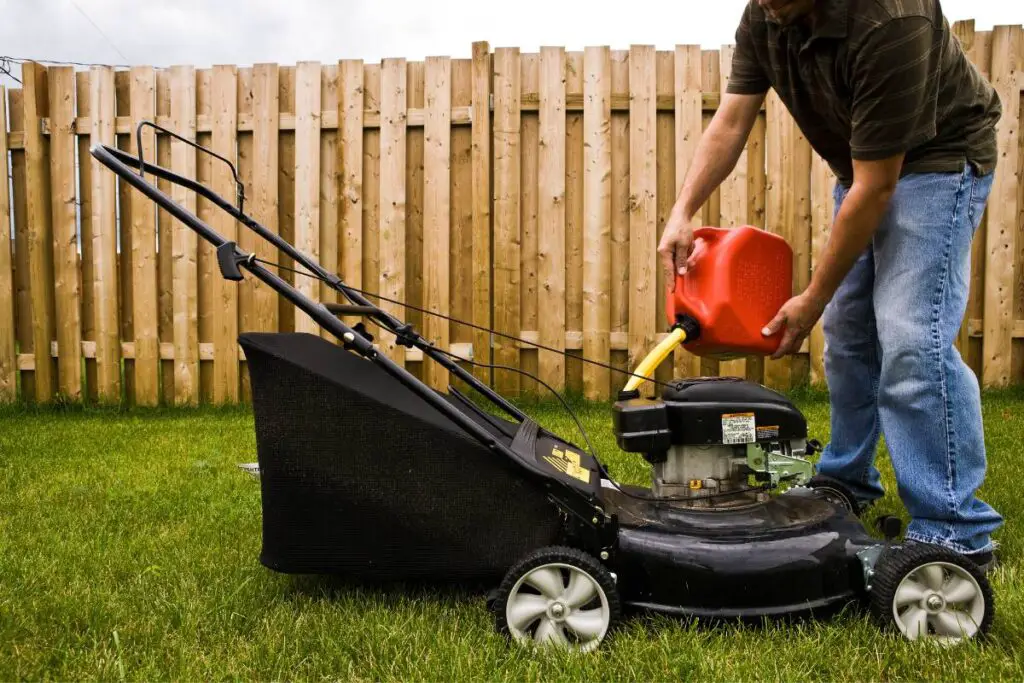
A typical gas push mower holds 0.25 to 0.5 gallons of gasoline. Self-propelled walk-behind mowers often fall in the same range. Riding mowers usually hold 1.5 to 3 gallons, and zero-turn mowers often hold 2 to 5 gallons. Commercial machines may hold more.

The tank size is not the same as fuel use. A mower with a half-gallon tank may run for about one to two hours, depending on engine size, grass height, terrain, mowing speed, and whether the self-propelled drive is engaged. A riding mower may run several hours on a full tank.
Always check the owner’s manual or the label near the fuel tank. Do not guess by pouring in a fixed amount. Fuel tanks differ even among mowers with the same cutting width or engine size.
Typical Gas Tank Sizes by Mower Type
The table below gives common ranges. These are general estimates, not exact specifications for every model.
| Mower type | Common gas tank capacity | Typical user or yard |
|---|---|---|
| Small push mower | 0.25–0.4 gallon | Small, flat yards |
| Self-propelled mower | 0.3–0.6 gallon | Medium yards or mild slopes |
| Lawn tractor | 1.5–3 gallons | Larger yards and open lots |
| Zero-turn mower | 2–5 gallons | Large lawns and wide mowing areas |
| Commercial mower | 4–8 gallons or more | Frequent, high-volume mowing |
A small tank is not a flaw if you have a small yard. It can reduce stale fuel and make the mower lighter. A large tank is useful for acreage, but it can add weight and increase the amount of gasoline you must store.
What Determines a Lawn Mower’s Gas Tank Size?
Engine size, mower design, mowing speed, and the intended yard size all affect fuel tank capacity. Manufacturers usually balance fuel range against machine weight, frame space, cost, and safety.

A compact walk-behind mower does not need a large tank. Its engine may use only a small amount of fuel during one mowing session. A riding mower needs a larger tank because it covers more ground and uses a larger engine.
Engine Size and Fuel use
engine size is often listed in cc, which means cubic centimeters. CC describes engine displacement, or the combined volume inside the engine’s cylinders. It does not give an exact fuel-use rate, but larger engines often use more fuel under heavy work.
A small push mower may have an engine around 125 to 170 cc. A riding mower may use an engine around 400 to 750 cc. A zero-turn mower can have one or two larger engines, depending on its design.
A 160 cc walk-behind mower may use less fuel than a 25-horsepower zero-turn mower. However, the larger mower also cuts a much wider path. Fuel use per hour and fuel use per acre are not the same thing.
Deck Width and Mowing Speed
The deck is the mower housing that holds the blade or blades. A wider deck covers more grass with each pass. A 21-inch push mower may suit a small yard, while a riding mower with a 42- to 54-inch deck can cover a large open lawn faster.
A wider deck often needs more engine power. That can lead to a larger fuel tank and higher hourly fuel use. Still, the mower may use less fuel per acre because it finishes the job sooner.
Terrain and Grass Conditions
Hills, thick turfgrass, wet grass, and tall weeds make an engine work harder. A self-propelled mower also uses fuel to drive its wheels. A riding mower may burn more fuel when climbing slopes or cutting dense growth.
Dry grass often takes less power to cut than wet grass. Wet mowing can also clog the deck, leave clumps, and harm soil structure. Avoid mowing wet grass on slopes, even if the fuel tank is full.
Tank Shape and Mower Frame
The fuel tank must fit within the mower’s frame. On some walk-behind models, the tank sits above or near the engine. On a riding mower, it may sit under the hood, beneath the seat, or along the side.
The tank shape may make the stated capacity look larger or smaller than expected. A narrow tank can hold the same amount as a wider tank if it is taller or longer.
Gas Tank Capacity by Common Mower Category
Different mower categories use fuel in different ways. The best match depends on yard size, slope, storage room, and the person who will operate the machine.
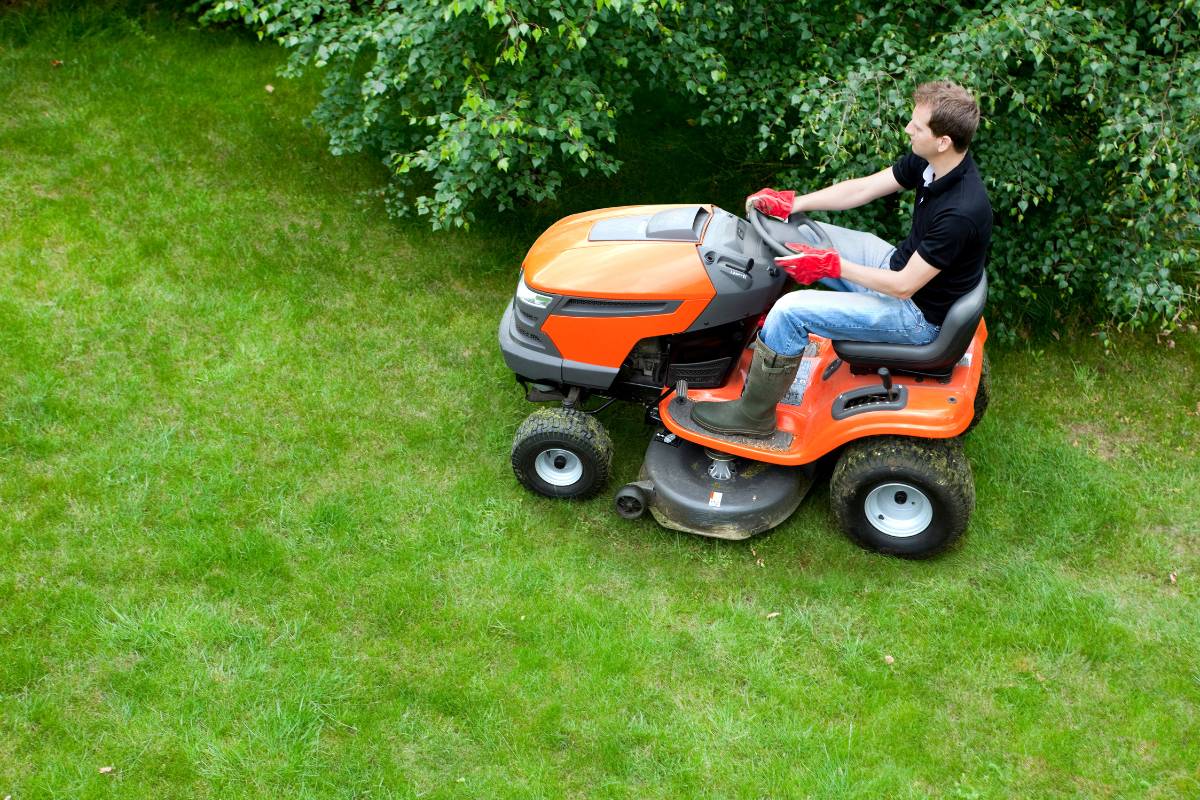
A small yard does not need a large riding mower. A large, open property may make a push mower tiring and slow. The right tank size is part of the choice, but it should not be the only factor.
Push Mowers
Most gas push mowers hold about 0.25 to 0.5 gallons. Some compact models hold less, while heavy-duty models may hold a little more.
A push mower requires the operator to provide the forward force. This can make it a good choice for small, flat yards. It may also be a practical gift for a new homeowner with a narrow gate and limited garage space.
Push mowers suit:
- Small lawns
- Flat or mildly sloped yards
- Narrow gates
- Buyers on a tighter budget
- People who want simple storage
They may not suit large lawns, steep hills, or users who have trouble walking for long periods.
Self-Propelled Mowers
A self-propelled mower drives its own wheels. The operator guides it but does not need to push its full weight across the yard. Most gas self-propelled mowers hold about 0.3 to 0.6 gallons.
The drive system can use more fuel than a basic push mower. Tall grass, slopes, and heavy bags can increase the load. Variable-speed controls may help the operator match the mower to a comfortable walking pace.
Self-propelled mowers can suit seniors and users with limited strength, but the machine may be heavier and more costly. Before buying one as a gift, check the controls, handle height, weight, and starting system.
Riding Lawn Mowers
A lawn tractor commonly holds 1.5 to 3 gallons of gasoline. Some compact models have smaller tanks. Larger tractors may hold more.
Riding mowers suit lawns that are too large for comfortable walk-behind mowing. They can be helpful on broad, open lots with moderate slopes. They require more storage space and a wider gate.
A lawn tractor may include a rear bagger, side discharge, or mulching kit. A mulching kit cuts grass into small pieces and returns them to the lawn. Side discharge throws clippings to the side. A grass catcher collects them for removal.
Zero-Turn Mowers
Zero-turn mowers often hold 2 to 5 gallons. Commercial units may have larger tanks. Their rear-wheel steering lets them turn within a very small space.
Zero-turn mowers suit large, open lawns with many trees, beds, and obstacles. They can reduce mowing time, but they need practice. They may be harder to control on slopes than a lawn tractor, especially for a new operator.
A zero-turn mower is usually too much machine for a small suburban yard. It can also require a trailer, wide storage door, and more repair knowledge.
Robotic and Electric Mowers
Robotic mowers and battery mowers do not use gasoline. A battery mower may list voltage and Ah, or amp-hours, instead of tank capacity. Amp-hours describe battery charge capacity, but they do not guarantee a certain mowing time.
Corded mowers use an extension cord and have no gas tank. Reel mowers use human power and also have no tank. These alternatives may suit small yards where noise, fumes, fuel storage, or local rules are concerns.
How Long Does a Full Tank Last?
A full tank may last anywhere from 30 minutes to several hours. The answer depends on the mower’s engine, load, speed, deck width, terrain, and fuel condition.

Manufacturers may publish fuel-use or runtime information, but not every brand does. Treat any estimate as a guide. Your mowing pattern may differ from the test conditions used by the manufacturer.
General Runtime Estimates
These ranges are broad. They are not a substitute for the owner’s manual.
| Mower type | Approximate runtime on a full tank | Factors that shorten runtime |
|---|---|---|
| Push mower | 45–120 minutes | Tall grass, dull blade, heavy clippings |
| Self-propelled mower | 40–100 minutes | Wheel drive, hills, full catcher |
| Lawn tractor | 2–4 hours | Heavy grass, slopes, towing |
| Zero-turn mower | 2–5 hours | Fast speed, thick turf, large deck load |
A sharp mower blade can help the engine work more smoothly. A dull blade tears grass and creates extra resistance. A clogged air filter, old spark plug, low tire pressure, or dirty deck can also affect performance.
Fuel Use per Mowing Session
Many small yards use only a fraction of a gallon per mowing session. A 5,000-square-foot lawn may require less fuel than a one-acre lawn, but mowing speed and obstacles matter.
A rough planning example can help:
- Mower tank: 0.5 gallon
- Estimated use: 0.25 gallon per hour
- Mowing time: 45 minutes
- Fuel used: about 0.19 gallon
This is only a planning estimate. Do not use it to decide how much fuel to pour into a hot or running mower.
How to Estimate Your Own Fuel Use
You can measure fuel use with care. Start with the mower cold and on level ground. Add a known amount of fresh fuel, mow normally, and then record how much fuel it takes to return to the same level.
Do not fill above the safe fill line. Leave room for fuel expansion. Perform this task outdoors, away from flames, sparks, cigarettes, and hot engine parts.
How Much Gas Should You Put in a Lawn Mower?
The safest rule is to add only the fuel amount stated in the manual or marked by the tank. Do not fill to the very top of the filler neck.
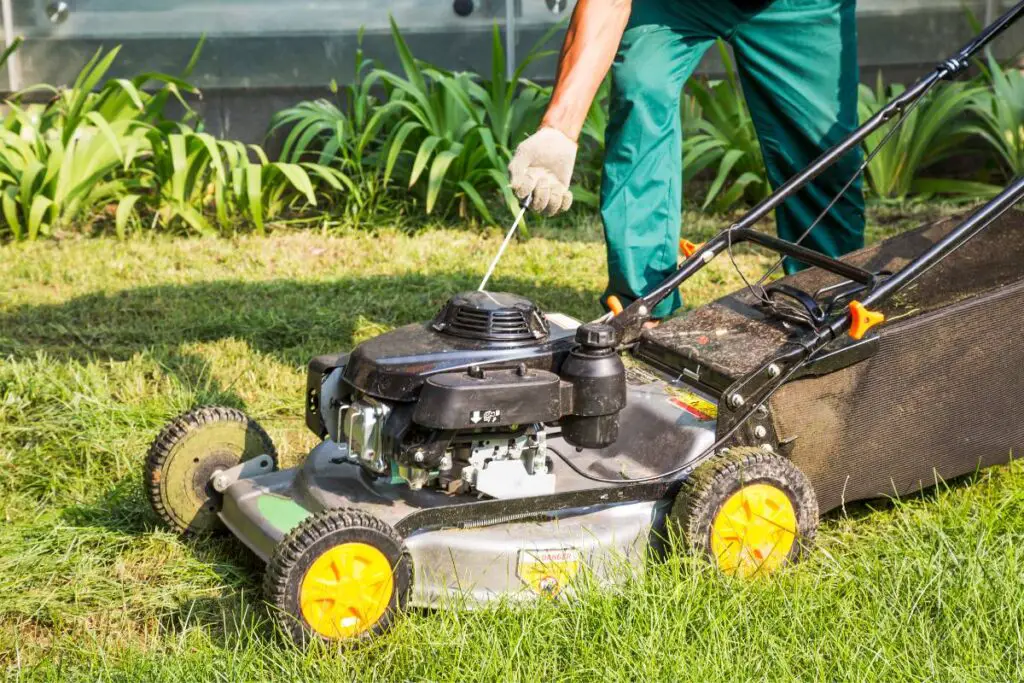
Gas expands as it warms. An overfilled tank can leak or push fuel into places it should not go. Spilled gasoline can damage painted surfaces and create a serious fire risk.
A Simple Filling Method
- Move the mower outdoors to a flat area.
- Turn off the engine and let it cool fully.
- Keep cigarettes, flames, and sparks away.
- Wipe dirt from the fuel cap.
- Remove the cap slowly.
- Add fresh gasoline with an approved fuel container.
- Stop below the filler neck or at the manual’s fill line.
- Tighten the cap.
- Wipe away any spill before starting.
Never refuel a hot engine. Never pour fuel while the mower is running. Do not use a kitchen measuring cup or an unapproved bottle.
⚠️ Safety Warning: Wear closed-toe shoes and eye protection when working around a mower. Keep children and pets away from fuel and the machine. Follow the owner’s manual for fuel type, octane, additives, and storage.
Is Regular Gasoline Usually Used?
Many modern small engines use regular unleaded gasoline. Some manufacturers recommend fuel with no more than a certain ethanol content. Others may approve gasoline with up to 10% ethanol, often called E10.
Never assume that every mower uses the same fuel. Check the manual or fuel label. Do not use diesel in a gasoline mower. Do not mix oil into the fuel unless the manual specifically calls for a two-stroke mixture.
Gas Tank Sizes and Yard Size
Your yard size can guide the mower type, but layout and terrain matter too. A small lot with many trees may take longer to mow than a larger open lot.
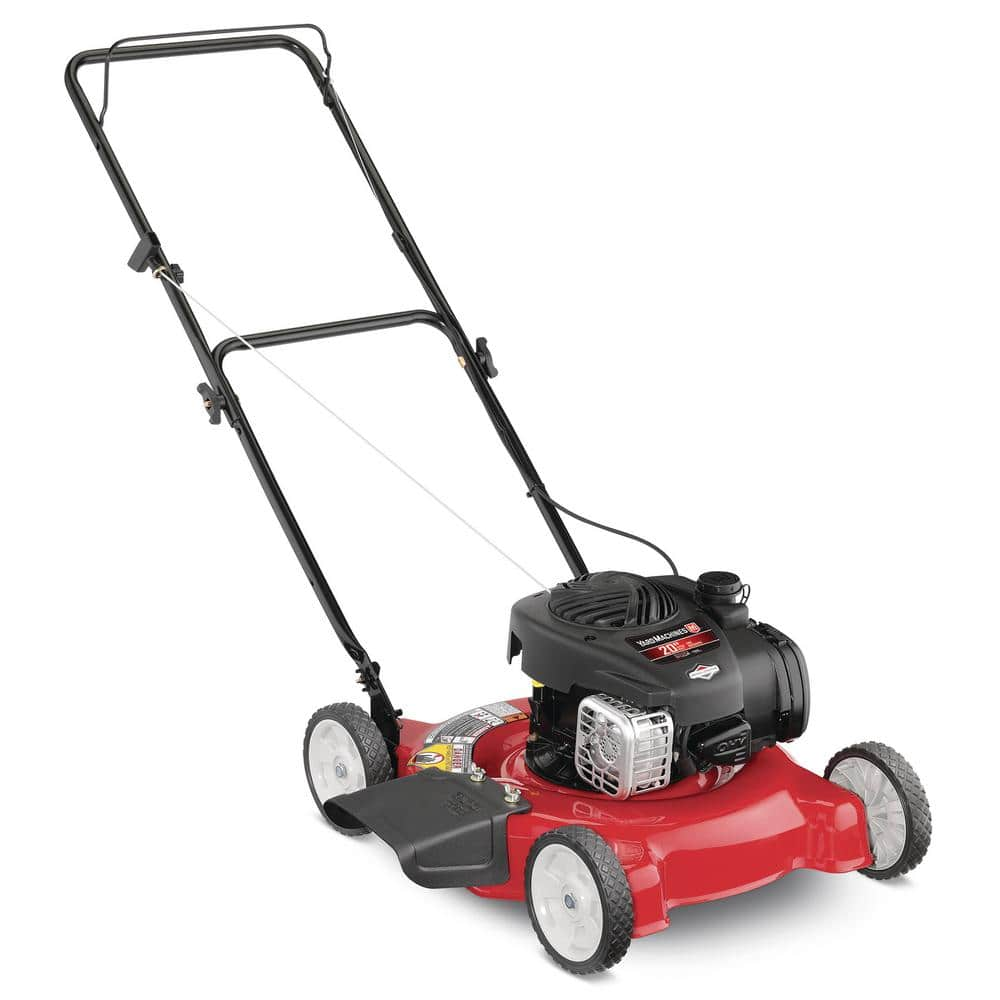
Measure the lawn before buying. Consider the gate width, slope, grass type, storage space, and distance to a fuel station. A mower that fits the yard but cannot fit through the gate will not be useful.
Mower Choices by Yard Type
| Yard condition | Mower type to consider | Fuel tank guidance |
|---|---|---|
| Under 5,000 square feet, flat | Push, reel, or battery mower | Small gas tank is enough |
| 5,000–12,000 square feet | Self-propelled or battery mower | 0.3–0.5 gallon is common |
| One-half to one acre | Lawn tractor or strong self-propelled mower | 1.5–3 gallons for tractor |
| One acre or more, open layout | Riding or zero-turn mower | 2–5 gallons may be useful |
| Hilly or uneven yard | Self-propelled or suitable tractor | Tank size matters less than control |
Takeaway: a larger tank does not make a mower safer on hills. Traction, steering, braking, deck height, and the manufacturer’s slope guidance matter more.
The Best Mower for Small Yards
For a small, flat lawn, a push mower can be the simplest choice. A 20- to 21-inch deck can fit through many gates and is easier to store than a riding mower.
A battery mower may suit a renter or homeowner who dislikes fuel storage. A reel mower can work for a small, level lawn with frequent mowing and short grass. It may struggle with tall weeds or rough turf.
The Best Mower for Hills
For moderate slopes, a self-propelled walk-behind mower may offer better control than a riding mower. Use the drive system to help manage the incline, but do not rely on it to make an unsafe slope safe.
Never mow across a slope with a riding mower unless the manual allows it. Avoid wet grass. Stop if the wheels lose traction or the mower begins to slide.
The Best Mower for Seniors
A senior user may benefit from a self-propelled mower with simple controls, an electric start, and an adjustable handle. Battery models can remove fuel mixing and pull-start effort.
Check the machine’s weight. Some self-propelled mowers are heavy to lift, turn, or load. A gift buyer should ask about the recipient’s yard size, slopes, gate width, and storage space before choosing.
Gas Mower Fuel Capacity Compared With Electric Options
Electric mowers replace fuel capacity with battery voltage, amp-hours, and charge time. They can reduce noise and routine engine maintenance, but they still require blade care and safe storage.

A battery mower may suit a small or medium yard. For large acreage, extra batteries or a riding battery mower may be needed. Battery performance can also change in very cold or hot conditions.
Gas, Battery, Corded, and Reel Mowers
| Mower power type | Main advantage | Main drawback |
|---|---|---|
| Gas | Long work periods with quick refueling | Noise, fumes, fuel care, engine service |
| Battery | Lower routine engine work and less noise | Charge planning and battery replacement cost |
| Corded | No fuel or battery charging | Cord management and outlet limits |
| Reel | Quiet and simple | Requires frequent mowing and human effort |
A battery mower does not need a gas can, spark plug, air filter, or oil change. It still needs a clean deck, sharp blade, dry battery storage, and the correct charger.
Voltage and Amp-Hours
Voltage describes the electrical pressure of the battery system. Amp-hours describe how much charge the battery can hold under rated conditions. A higher Ah battery may provide more working time, but actual results vary.
Grass height, blade sharpness, speed, moisture, and deck width affect battery use. Confirm battery compatibility before buying extra packs. A battery from one product family may not fit another family, even if the voltage looks similar.
What Happens When You Store Too Much Gas?
Gasoline can degrade over time, especially in a warm shed or garage. Old fuel can cause hard starting, rough running, surging, or a blocked carburetor.

A small mower tank can be an advantage because you may use the fuel before it becomes stale. A riding mower with a large tank may need more careful seasonal storage.
Fuel Stabilizer
Fuel stabilizer is an additive designed to slow fuel breakdown during storage. It does not repair bad gasoline or clean a badly blocked carburetor.
Add stabilizer to fresh fuel at the ratio stated on the product label. Run the engine long enough to move treated fuel through the system, if the mower manual allows this method.
Seasonal Storage
Before storing a gas mower for winter or a long break, check the manual. Some manufacturers recommend draining the tank and carburetor. Others allow stabilized fuel to remain in the system.
Store approved fuel containers in a cool, ventilated area away from ignition sources. Never keep gasoline in a living area, near a furnace, or in direct sun.
📜 Check Local Rules: Fuel storage limits vary by city, state, fire code, and housing rules. An HOA, apartment lease, or local fire department may restrict gasoline storage, gas equipment, or mower noise. Confirm the rules before storing fuel.
Fuel and Oil Disposal
Do not pour old gasoline, mixed fuel, or used engine oil onto soil, into a drain, or into household trash. Take them to a household hazardous-waste site or another approved collection point.
Recycle lithium-ion batteries through a designated battery drop-off. Do not place damaged batteries in curbside recycling. Donate or recycle a usable old mower instead of abandoning it.
🌿 Eco or Disposal Note: A small fuel can may seem harmless, but gasoline can pollute water and soil. Use an approved container, buy only what you need, and dispose of waste through a local program.
What Uses More Gas During Mowing?
The biggest fuel users are heavy grass, high engine load, poor maintenance, and difficult terrain. A full grass catcher can also add load and weight.
The mower’s blade must spin at the correct speed to cut well. If the blade is dull or the deck is packed with wet clippings, the engine may work harder. A clean deck and sharp blade can support normal operation.
Common Fuel-Use Factors
- Tall or wet grass
- Dull or damaged mower blades
- Clogged air filters
- Old or incorrect spark plugs
- Low tire pressure
- Steep slopes
- Fast travel speed
- Full grass catchers
- Heavy thatch or weeds
- A dirty carburetor
- Engaged self-propelled drive
- Towing or hauling with a riding mower
Thatch is a layer of dead stems and roots between green grass and soil. A thick layer can affect water movement and mowing conditions. Do not use a mower to solve a thatch problem unless the manual and machine are designed for that work.
Maintenance That Can Help Fuel Economy
Follow the service schedule in the manual. Common tasks include changing engine oil, cleaning or replacing the air filter, checking the spark plug, sharpening the blade, and cleaning the underside of the deck.
Disconnect the spark plug wire or remove the battery before working under the deck. On some machines, disconnecting the wire does not guarantee that the engine cannot start, so follow the manual’s full procedure.
How to Find Your Mower’s Exact Gas Capacity
The owner’s manual is the best source for exact fuel capacity. The manufacturer’s product page may also list the tank size under specifications.
Do not rely on the mower’s engine brand alone. The same engine may be installed on machines with different tanks. A replacement tank may also differ from the original part.
Where to Look
Check these places:
- The owner’s manual
- The fuel tank label
- The product specification page
- The model and serial number label
- An authorized dealer
- The replacement-parts diagram
When searching online, use the complete model number. A partial name may return information for a similar mower with a different fuel tank.
How to Measure Fuel Without Guessing
If no capacity is listed, ask the manufacturer or dealer first. Do not fill the tank to the brim as a test. If you must confirm the volume, follow the manual and use an approved container in a safe outdoor area.
Record the amount added. Leave the required expansion space. Stop at the marked fill line or the level stated in the manual.
Gas Mower Pros and Cons
Gas mowers still suit many large yards, but they require more care than electric machines. The right choice depends on your yard, storage, noise limits, and comfort with small-engine maintenance.
Here is a simple comparison of the main benefits and limits.
| Benefit of gas mowers | Limitation of gas mowers |
|---|---|
| Quick refueling | Fuel can become stale |
| Useful for large lawns | More engine maintenance |
| Strong power for tall grass | More noise and exhaust |
| No battery charging wait | Must store gasoline safely |
| Many deck and mower sizes | Oil and spark plug service required |
Gas may be worth it for a large property, thick grass, or a user who wants long work periods. It may not be worth it for a small yard near neighbors who value quiet operation.
Mower Fuel Capacity Mistakes to Avoid
Most fuel problems come from overfilling, using old gas, storing fuel badly, or choosing the wrong fuel type. These errors are easy to avoid with a few habits.
Mistake 1: Filling by Guess
Some people pour in half a gallon because that is what their gas can holds. The mower may need much less. Check the manual and fill line instead.
Mistake 2: Storing Gas for Too Long
Buying a large fuel can may seem convenient. It can create waste if the mower is used only a few times each month. Buy a practical amount and use stabilizer when the manual supports it.
Mistake 3: Mowing Until the Tank Is Completely Empty
Running out of fuel is not usually helpful. It can leave you on a slope or far from the garage. Watch the fuel level and stop before the mower begins to surge.
Mistake 4: Ignoring the Mower’s Weight
A full tank adds weight. On a walk-behind mower, that weight may affect turning and lifting. On a riding mower, fuel is only one part of the total machine weight.
Mistake 5: Choosing a Large Mower for a Small Yard
A zero-turn mower may hold several gallons, but that does not make it a good choice for a narrow lot. Measure the gate, storage area, and turning space first.
Mower Fuel Capacity by Price and Ownership Cost
Tank size is only one part of ownership cost. Gasoline, oil, blades, filters, belts, spark plugs, repairs, and storage supplies all affect the long-term budget.
A lower-priced gas mower may suit a small, flat yard. A more costly riding mower may save time on acreage but require a trailer, larger storage area, and more expensive parts.
| Ownership level | Usually suits | Costs to plan for |
|---|---|---|
| Basic walk-behind | Small yard and light use | Fuel, oil, blade, spark plug |
| Self-propelled | Medium yard or mild slope | Fuel, drive parts, belts, service |
| Lawn tractor | Large open yard | Fuel, oil, blades, belts, battery |
| Zero-turn | Large lawn and frequent use | Fuel, tires, belts, blades, repairs |
The parts that commonly wear first include blades, belts, tires, air filters, spark plugs, and batteries. Heavy use can shorten their service life. Check replacement part numbers before ordering.
Safety Rules for Gas Mowers
Gasoline and rotating blades require careful handling. A mower can cause serious injury even when the fuel tank is small.
Use the mower only as the manual directs. Read the controls before the first cut, and practice on a flat, dry area if the machine is new to you.
Basic Mowing Safety
- Wear safety glasses or other eye protection.
- Wear hearing protection around gas and riding mowers.
- Wear closed-toe shoes with good grip.
- Clear stones, sticks, wire, and toys before mowing.
- Keep children and pets away from the work area.
- Never mow wet grass on slopes.
- Do not carry passengers unless the mower is designed for them.
- Stop the blade before crossing gravel or hard surfaces.
- Turn off the engine before emptying a grass catcher.
- Disconnect the spark plug or remove the battery before servicing.
- Never refuel a hot engine.
- Follow the owner’s manual and slope limits.
Ear protection matters because gas mowers can create high noise near the operator. Hearing damage can build over time without pain.
Frequently Asked Questions
Q: How many gallons does a push lawn mower hold?
A: Most gas push mowers hold about 0.25 to 0.5 gallons. Check the manual because compact and heavy-duty models may differ.
Q: How many gallons does a riding lawn mower hold?
A: Many lawn tractors hold about 1.5 to 3 gallons. Larger models may hold more, and the exact capacity depends on the manufacturer and tank design.
Q: How many gallons does a zero-turn mower hold?
A: Many zero-turn mowers hold about 2 to 5 gallons. Commercial models may have larger tanks. Confirm the exact capacity using the model number and owner’s manual.
Q: How long will half a gallon of gas last in a mower?
A: Half a gallon may last about 45 minutes to two hours in a walk-behind mower. Grass height, slopes, engine size, blade condition, and self-propelled use change the result.
Q: Can I put a full gallon of gas in a lawn mower?
A: Only if the tank is designed to hold that amount. Never add fuel based on guesswork. Stop at the fill line and leave room for fuel expansion.
Q: Should I use premium gas in my lawn mower?
A: Use the fuel grade listed in the owner’s manual. Premium fuel is not automatically better for every small engine.
Q: Can I use gas with ethanol in a lawn mower?
A: Many mowers allow certain ethanol blends, but the approved amount varies. Check the manual and fuel label. Never use a fuel blend that the manufacturer does not approve.
Q: Does a self-propelled mower use more gas?
A: It can. The drive system uses engine power, especially on hills, thick grass, or soft ground. The difference depends on the mower and how often the drive is engaged.
Q: Is a bigger gas tank better?
A: A bigger tank can reduce refueling stops on a large lawn. It can also add weight, increase fuel storage needs, and leave more old fuel if the mower is used rarely.
Q: What is the best mower for a small yard?
A: A push mower, battery mower, or reel mower often suits a small, flat lawn. Choose based on grass height, storage space, noise needs, and the user’s strength.
Q: What is the best mower for hills?
A: A suitable self-propelled walk-behind mower may offer good control on moderate slopes. Always follow the manual’s slope guidance. No mower makes wet or dangerously steep ground safe.
Q: Do electric lawn mowers hold gas?
A: No. Battery, corded, robotic, and reel mowers do not use gasoline. Battery models use rechargeable packs measured by voltage and amp-hours.
Q: How should I store leftover mower gas?
A: Keep approved gasoline in an approved container in a cool, ventilated place away from flames and living areas. Follow local fire rules and the fuel stabilizer label.
Q: How long does a lawn mower last?
A: Service life varies with build quality, use, storage, maintenance, and repair history. Blades, belts, batteries, spark plugs, and tires may need replacement long before the mower itself is retired.
Q: Can I store a gas mower in a garage?
A: Often, but only if local rules and the owner’s manual allow it. Keep the mower and fuel away from heaters, flames, sparks, and living spaces. Make sure spills are cleaned and the area has suitable ventilation.
Final Advice
A gas push mower usually holds about 0.25 to 0.5 gallons, while a riding mower often holds 1.5 to 3 gallons. Zero-turn models commonly hold 2 to 5 gallons, with commercial machines sometimes holding more.
The right capacity depends on the yard and the user. A small, flat lawn may need only a light push mower or battery mower. A medium lawn with mild slopes may suit a self-propelled mower. A large open property may justify a lawn tractor or zero-turn mower with a larger tank.
Before buying, measure the yard, gate, slope, and storage area. Confirm deck width, engine size, fuel type, battery compatibility, blade type, and replacement part numbers. Check the latest product page and manual because specifications can change.
Affiliate disclosure: This article may contain affiliate links. If you buy through a link, the publisher may earn a commission at no extra cost to you. Product details, fuel capacity, compatibility, and safety instructions should always be confirmed with the manufacturer and the current owner’s manual.