Most lawn mowers have between 3 and 25 horsepower, depending on the mower type. Typical push mowers usually have about 4 to 7 horsepower, while riding mowers and lawn tractors commonly range from 12 to 25 horsepower.
Across the United States, homeowners use everything from compact walk-behind mowers for small suburban lawns to powerful riding tractors for several acres of grass. The horsepower a mower needs depends mainly on the size of the cutting deck, lawn conditions, terrain, and how much grass the machine must handle during each mowing session.
Horsepower measures an engine’s ability to perform work, but it is not the only factor that determines mowing performance. Engine torque, blade design, mower weight, transmission type, and maintenance condition also affect how well a lawn mower cuts through thick grass or climbs slopes.
A lawn mower’s horsepower depends on its category. Small electric and battery-powered models are often rated by voltage and watt-hours instead of horsepower, while gasoline-powered mowers are commonly described by horsepower or engine displacement.
For gasoline lawn mowers sold in the United States, horsepower ranges vary widely. A small walk-behind mower may have enough power for a quarter-acre yard, while a garden tractor designed for multiple acres may use an engine with more than 20 horsepower.
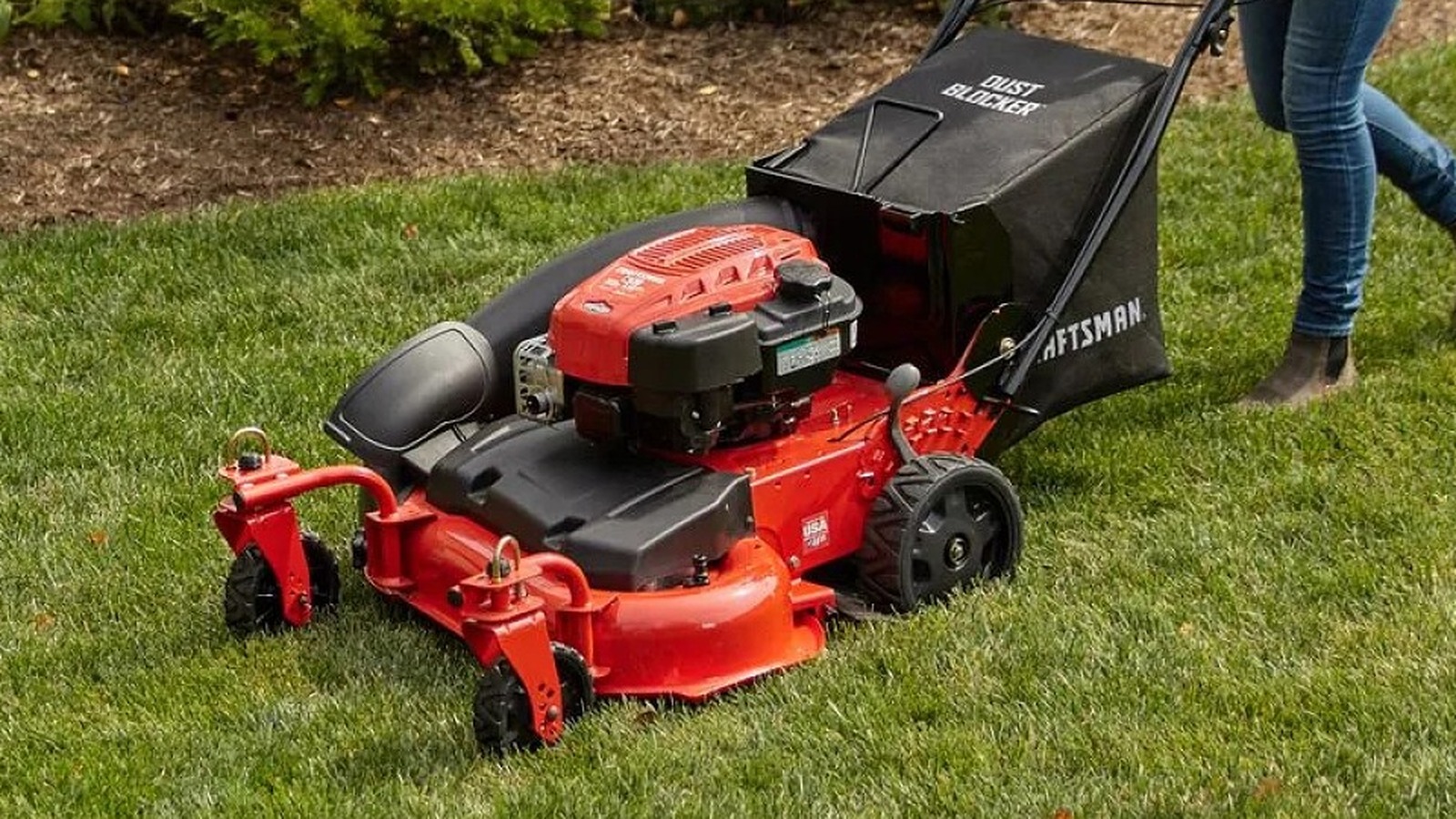
Source: www.slashgear.com
Push mowers
Most residential gas push mowers have approximately 4 to 7 horsepower. They are designed for flat lawns and moderate grass cutting tasks.
Self-propelled mowers
Self-propelled gas mowers often use similar engine power to push mowers, usually around 5 to 7 horsepower, but they add a drive system to move the mower forward.
Riding mowers
Residential riding mowers commonly range from about 12 to 25 horsepower because they operate larger decks and carry the operator.
Zero-turn mowers
Zero-turn models often use engines from roughly 15 to more than 30 horsepower for faster mowing and larger properties.
Why horsepower matters for lawn mowers
Horsepower affects how easily a mower can maintain blade speed while cutting grass. When grass becomes thick, wet, or tall, an engine with adequate power can keep the blades spinning more consistently.
A mower with insufficient power may slow down, leave uneven patches, or struggle on hills. However, excess horsepower can add cost, weight, and fuel consumption without providing a noticeable benefit for a small lawn.
Typical Lawn Mower Horsepower by Type
Different mower designs require different amounts of engine power. The table below shows common horsepower ranges for residential equipment, although exact ratings vary by manufacturer and model.
The best horsepower choice depends more on your mowing conditions than simply choosing the largest engine available.
Source: kawasakienginesusa.com
Small push mower
Approximately 4 to 6 horsepower for small, maintained residential lawns.
Large walk-behind mower
Approximately 6 to 7 horsepower for thicker grass or larger yards.
Entry-level riding mower
Approximately 12 to 18 horsepower for regular residential mowing.
Lawn tractor
Approximately 15 to 25 horsepower for larger lawns and attachments.
Commercial zero-turn mower
Often 20 horsepower or more for frequent heavy-duty mowing.
The horsepower you need depends on lawn size, terrain, grass type, and mowing frequency. A small flat yard does not require the same engine power as a large property with hills and heavy vegetation.
Selecting a mower with the right power level can help avoid paying for unnecessary engine capacity while still providing enough performance for your conditions.
Source: ar.inspiredpencil.com
Small yards under half an acre
A push mower with around 4 to 6 horsepower is usually sufficient for regularly maintained grass.
Half-acre to one-acre properties
A self-propelled mower or smaller riding mower may be more practical, especially if mowing takes significant time.
One to three acres
A riding mower with approximately 15 to 25 horsepower can provide better efficiency and comfort.
Large properties or challenging terrain
Higher-powered tractors or zero-turn mowers may be useful when dealing with slopes, thick grass, or frequent mowing.
Horsepower versus engine size in lawn mowers
Engine size is often listed in cubic centimeters (cc), especially for walk-behind mowers. Horsepower and cc measure different things: horsepower describes output, while cc describes engine displacement.
A larger engine may produce more power, but the relationship is not identical because design, tuning, and efficiency influence actual performance.
Factors That Affect Lawn Mower Performance Besides Horsepower
Horsepower is only one part of mower performance. Two machines with similar horsepower ratings can perform differently because of their design, maintenance, and operating conditions.
Understanding these factors helps explain why a lower-horsepower mower can sometimes perform well while a higher-powered model may not meet expectations.
Source: artofit.org
Cutting deck size
A wider deck requires more engine power because it cuts more grass with each pass.
Grass conditions
Wet, tall, or thick grass increases the workload on the engine and blades.
Terrain
Hills and uneven ground require more power and traction than flat lawns.
Maintenance
A sharp blade, clean air filter, fresh oil, and proper engine care help a mower use its available power effectively.
Common Mistakes When Comparing Lawn Mower Horsepower
Many buyers assume that the highest horsepower mower is always the best option. In reality, choosing the wrong power level can increase purchase cost and operating expenses without improving results.
Horsepower ratings should be considered alongside mower type, lawn size, and intended use.
Source: mowerliving.com
Choosing too little power
An underpowered mower may struggle with tall grass, hills, or large cutting decks.
Ignoring torque
Torque affects the mower’s ability to maintain blade speed under load, which is important in difficult mowing conditions.
Comparing only horsepower numbers
Features such as deck design, transmission, and build quality also influence real-world performance.
Frequently Asked Questions
Q
Is 5 horsepower enough for a lawn mower?
Yes, a 5 horsepower mower is usually enough for many small residential lawns that are flat and regularly maintained. Larger yards, thick grass, or hills may require more power.
Q
How much horsepower does a riding lawn mower have?
Most residential riding lawn mowers have about 12 to 25 horsepower. Larger lawn tractors and commercial machines can exceed this range.
Q
Does more horsepower make a lawn mower cut better?
More horsepower can help a mower handle difficult conditions, but cutting quality also depends on blade sharpness, deck design, mowing speed, and maintenance.
Q
What horsepower lawn mower do I need for one acre?
For around one acre, many homeowners choose a riding mower in the 15 to 20 horsepower range, although terrain and grass conditions can change the ideal choice.
Q
Can I increase my lawn mower horsepower?
In most cases, increasing horsepower is not practical because mower engines and components are designed as a matched system. Replacing the mower with a better-suited model is usually the safer option.
✦ Wrapping Up
Conclusion
Most lawn mowers have between 4 and 25 horsepower, with the exact amount depending on whether you use a push mower, riding mower, lawn tractor, or zero-turn machine. The right horsepower is determined by your lawn size, terrain, and mowing needs rather than choosing the highest number available.
Before buying or replacing a mower, compare horsepower with deck size, engine design, and maintenance requirements. A properly matched mower will deliver reliable performance while avoiding unnecessary cost and fuel use.
💡 Key Takeaway
Choose a lawn mower horsepower rating based on your property size and mowing conditions. Small yards usually need modest power, while larger or more demanding lawns benefit from higher horsepower machines.
Learn how to drive a zero turn mower safely and efficiently with beginner-friendly steps, steering tips, operating techniques, and common mistakes to avoid.
Nothing can ruin your mowing rhythm faster than when your Toro lawn mower self propel stops working halfway through the job. You push forward, expecting that smooth, steady pull you’re used to—but instead, the mower drags behind like it’s suddenly gained fifty extra pounds. If that sounds familiar, don’t worry—you’re not alone. Many Toro owners…
If you’ve ever tried pushing your Troy-Bilt lawn mower across uneven ground and felt it drag, pull, or lose traction, chances are your front tires are worn out. Over time, those small but mighty tires take a beating — from gravel driveways, thick grass, and even curb bumps. That wear doesn’t just affect how your…