
Ryobi Lawn Mower Not Starting: Quick Fixes
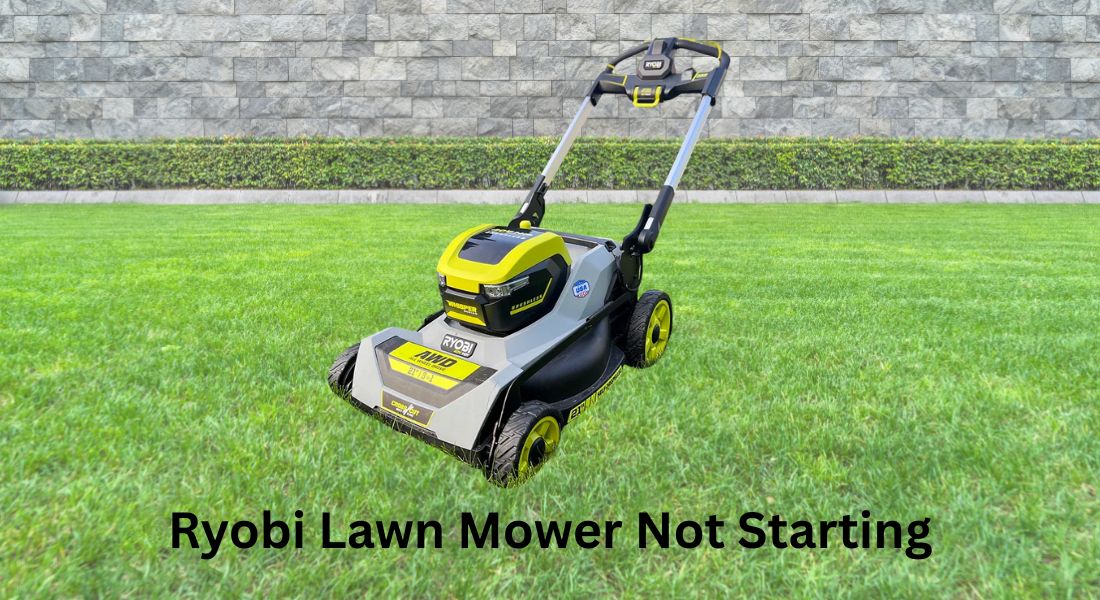
A Ryobi lawn mower that will not start can turn a simple mowing job into a frustrating afternoon. The good news is that many starting problems have a simple cause. A battery may be empty, the safety key may be missing, the handle may not be locked, or grass may block the blade area.
Ryobi makes both battery-powered and gas lawn mowers. The repair path depends on which type you own. Battery models need checks for the battery, charger, switches, and safety controls. Gas models also need fresh fuel, a spark plug, air, and a clean carburetor.
This guide explains why a Ryobi lawn mower may not start, what to check first, and when a repair shop makes more sense. It is written for new homeowners, DIY users, and anyone helping a senior family member get a mower working again.

Why a Ryobi lawn mower may not start
The main reason a Ryobi mower will not start is that one part of its start-and-run safety system is not ready. On a battery mower, the battery, key, handle, blade control, and wiring all matter. On a gas mower, fuel, spark, air, oil level, and the engine stop controls all matter.

A mower can also stop starting after winter storage, heavy rain, a blade jam, or a long period without cleaning. Cold weather can reduce battery output. Wet grass can overload the motor. Old gasoline can leave sticky deposits in the carburetor.
Before taking anything apart, note exactly what happens:
- Does nothing happen when you press the start button?
- Do you hear a click?
- Does the motor turn but fail to run?
- Does it start and then stop?
- Does it start only when the blade lever is released?
- Does the battery indicator flash?
- Does the mower smell strongly of gasoline?
These details point to different faults. A mower that is silent has a different problem from one that cranks but does not run.
Battery, gas, and hybrid differences
Ryobi battery mowers use rechargeable lithium-ion batteries. Many models use the Ryobi 40V system, but you should confirm the voltage and battery family on the mower label and in the manual. A battery from another voltage platform may not fit or may not be safe to use.
Gas Ryobi mowers use an internal combustion engine. That engine needs clean fuel, a working spark plug, enough air, and proper oil. Some gas models also have safety switches that stop the engine if the handle or blade control is not held correctly.

Do not assume that all Ryobi mowers use the same battery, blade, charger, spark plug, or control cable. Model numbers often look similar, while parts can differ. Check the product label before ordering a replacement.
Quick answer: what to check first
If your Ryobi lawn mower will not start, first remove the battery or disconnect the spark plug, then clear the deck and check for a jam. For a battery mower, charge the correct battery, seat it fully, insert the safety key, and hold the handle control as the manual shows. For a gas mower, check fresh fuel, oil, the spark plug, and the air filter. If it still fails, use the model manual or contact an authorized repair center.

Read the symptoms before repairing
The fastest way to troubleshoot a Ryobi mower is to match the symptom with the likely cause. Do not keep pressing the start button if the blade is stuck. Repeated attempts can heat the motor, drain the battery, or damage a starter system.

The table below covers common signs. It is a starting point, not a substitute for the owner’s manual.
| What you notice | Likely cause | First safe check |
|---|---|---|
| No sound at all | Dead battery, key missing, handle not engaged, switch fault | Charge battery and check safety controls |
| One click but no motor | Low battery, jammed blade, motor overload | Remove battery and inspect under deck |
| Motor turns but does not run | Bad fuel, weak spark, blocked air filter | Check fuel, spark plug, and air filter |
| Starts, then stops | Loose control, low oil, clogged filter, overload | Check handle control, oil, and deck |
| Runs but blade does not turn | Blade control, belt, clutch, or blade jam | Stop and inspect only when power is removed |
| Battery flashes or will not charge | Hot, cold, damaged, or incompatible battery | Let it reach room temperature and use the correct charger |
A silent mower often has an electrical or safety-control issue. A gas mower that cranks but will not run usually needs a fuel, spark, or air check.
No response when you press start
If the mower is completely quiet, start with the simple items. Check that the battery is installed, the safety key is in place, and the handle is fully opened or locked. Some models will not run if the handle is folded or only partly extended.
Check the battery indicator. A single bar does not always mean the battery can deliver enough power under load. Move the battery to the correct charger and look for the charger’s normal status light.
On a gas model, make sure the control bar is held against the handle. Some mowers will not crank unless the engine brake or operator-presence control is engaged.
A click, hum, or brief movement
A click can mean that power reaches the switch but the motor cannot turn. Grass, a stick, or a stone may be blocking the blade. A battery with low charge may also show enough voltage at rest but fail when the motor demands current.
Remove the battery before touching the blade area. For a gas mower, disconnect the spark plug wire and keep the wire away from the plug. Wear work gloves, but remember that gloves do not make a moving blade safe.
The engine cranks but does not start
This symptom applies mainly to gas mowers. The starter may turn the engine, but the engine does not fire. The most common causes are stale fuel, a wet or damaged spark plug, a blocked air filter, or a carburetor with varnish deposits.
Do not spray random fluids into the air intake. Use only products and procedures approved in the manual. Too much starting fluid can damage an engine and creates a fire risk.
It starts and then shuts off
A mower that starts and stops may have a control bar that is not staying engaged. It may also have low engine oil, a dirty air filter, a clogged fuel passage, or a blade that meets heavy wet grass.
Battery models can shut down when the motor senses overload or overheating. Let the mower cool, remove the battery, and clear packed grass from the deck. Do not mow thick, wet turf in one deep pass.
Common causes and solutions
Most Ryobi mower starting problems fit into a short list. The table below separates battery, gas, and mechanical causes so you can avoid replacing parts that are still good.

| Problem area | What can cause it | What to do |
|---|---|---|
| Power source | Empty, damaged, hot, cold, or wrong battery | Charge the correct battery and inspect the contacts |
| Safety system | Missing key, open handle, released control bar | Reset each control as shown in the manual |
| Blade and deck | Stick, stone, packed grass, bent blade | Remove power and clear the deck |
| Fuel system | Old gasoline, water, blocked filter, dirty carburetor | Drain old fuel and use fresh fuel as directed |
| Ignition | Fouled, loose, or damaged spark plug | Inspect and replace with the listed plug |
| Air system | Dirty or wet air filter | Clean or replace the filter |
| Mechanical drive | Loose belt, damaged blade adapter, seized bearing | Stop and arrange inspection if basic checks fail |
The first three checks are usually the safest for a homeowner. Fuel-system and mechanical repairs require more care and may not be worth doing without the correct tools.
Fixes for a Ryobi battery mower
A Ryobi battery mower works best when its battery, charger, controls, and deck are all in good condition. Begin with the power supply. Then move toward the cutting system.

1. Charge and inspect the battery
Remove the battery from the mower. Look for cracked plastic, melted areas, bent terminals, or signs of water entry. Do not use a battery that is swollen, smoking, leaking, or hot.
Place the battery on the charger specified for its voltage platform. Let it charge fully. If the charger shows a fault light, check the manual for the meaning. A battery that stays in fault mode may need professional testing or replacement.
Lithium-ion batteries can act differently in very cold or hot weather. Bring the battery indoors and let it return to room temperature before charging. Never place it on a heater or in direct sun.
⚠️ Safety Warning: Do not open a lithium-ion battery pack or try to repair its cells. Recycle a failed battery through a designated battery drop-off site.
2. Confirm battery compatibility
A battery can fit physically and still be wrong for the mower. Confirm the voltage, battery series, and model instructions. Do not force a battery into the slot.
If the mower belongs to a larger Ryobi 40V tool collection, use only batteries listed for that platform. A 40V pack is not interchangeable with an 18V ONE+ pack simply because both are made by Ryobi.
3. Check the safety key and controls
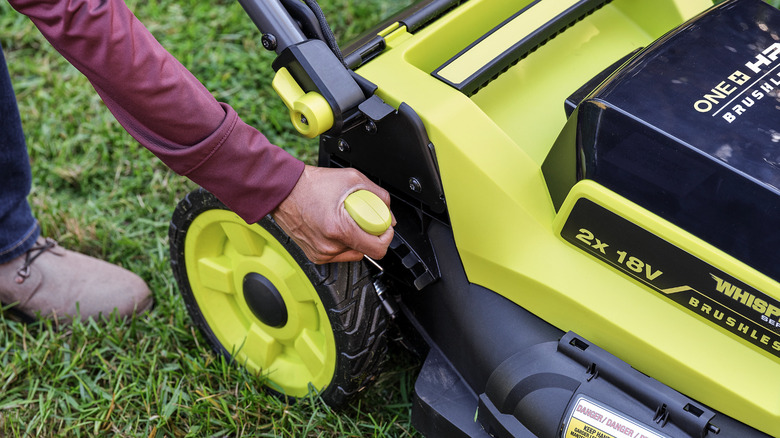
Many battery mowers use a removable safety key. The mower may appear ready but remain completely silent if the key is missing or not fully inserted.
Open the handle to its operating position. Lock any adjustment points. Then hold the operator control and press the start button in the order listed in your manual. Some models use a button first, while others use a key or lever sequence.
Keep the blade-control bar held only when you are ready to mow. Do not bypass a safety switch with tape, wire, or a homemade spacer.
4. Clear the blade and deck
Turn the mower off and remove the battery. Tip the mower only as the manual recommends. Keep the battery compartment and control panel away from water.
Look for:
- Long grass wrapped around the blade
- A branch or stone wedged near the blade
- A bent blade
- Packed clippings under the deck
- A loose blade bolt
- A damaged blade adapter
Use a wood stick or plastic scraper for stuck grass. Do not use your bare hand. A blade can hold stored tension and may move if the motor or spindle shifts.
5. Let an overheated mower cool
A battery mower can stop after mowing tall or wet grass. This is often a protective response. Move the mower to a dry, shaded place and let the motor and battery cool.
Do not immediately install a second hot battery and continue. Find the cause of the overload. Raise the mowing height and make a slower, narrower pass through tall turf.
6. Inspect the blade and cutting height
A dull or bent blade makes the motor work harder. It can also leave torn grass, clumps, or uneven stripes. The cutting height should match the grass type and current conditions.
Warm-season turf often needs a different height from cool-season turf. During drought, avoid cutting too short. A higher setting can reduce stress on the turfgrass and reduce the load on the mower.
If the blade is damaged, use the exact replacement part listed for your model. Confirm the blade length, center-hole shape, bolt, washer, and rotation direction.
Fixes for a Ryobi gas mower
A gas mower needs three basic things to run: fuel, spark, and air. It also needs enough oil and a functioning safety control. Work outside or in a well-ventilated place, away from flames and heaters.

1. Check the fuel age and condition
Gasoline can degrade during storage. Old fuel may smell sour, look dark, or contain deposits. Water in the tank can also prevent starting.
If you suspect bad fuel, follow the manual for draining the tank and carburetor. Use an approved fuel container. Never pour gasoline onto soil, down a drain, or into household trash.
Use fresh fuel of the type and octane listed in the manual. If the mower will sit for more than a short period, ask the manual whether fuel stabilizer is suitable. Stabilizer helps only when mixed with usable fuel; it cannot restore badly degraded gasoline.
💡 Pro Tip: Write the fuel date on a piece of masking tape placed on the storage container. This small habit helps prevent many spring-start problems.
2. Check the oil level
Low oil can prevent some engines from running or can trigger an oil-protection system. Park the mower on level ground. Check the dipstick exactly as the manual describes.
Do not overfill the crankcase. Too much oil can cause smoke, poor running, or engine damage. Use the listed oil grade for the temperature range in your area.
If the oil looks milky, smells strongly of gasoline, or contains metal particles, stop. Those signs need further diagnosis.
3. Inspect the spark plug
Disconnect the spark plug wire before removing the plug. Use the correct spark-plug socket and compare the plug with the manual’s part number.
A plug may be:
- Wet with fuel
- Covered in black carbon
- Cracked
- Worn at the electrode
- Loose
- Damaged at the ceramic insulator
Replace it if the manual lists it as a service item and you have the correct replacement. Do not guess the gap. Use the specified gap and torque, if provided.
A gas mower can crank with a weak spark and still fail to start. If a new plug does not help, the ignition coil, control wire, or flywheel key may need testing.
4. Check the air filter
A dirty air filter restricts airflow. A foam filter may need cleaning and oiling if the manual allows it. A paper filter usually needs replacement rather than washing.
Do not run the mower without its filter except for a brief, controlled diagnostic test approved by the manual. Dust can enter the engine and damage the cylinder.
5. Consider a blocked carburetor
The carburetor mixes fuel and air. Old gasoline can leave a sticky film that blocks small passages. The mower may start briefly with fuel already in the intake, then stop.
Carburetor cleaning can involve small springs, gaskets, jets, and linkages. Take photos before removing parts. If you cannot identify each piece, a repair shop may save time and prevent a larger problem.
6. Check the control cable and engine stop system
A damaged or loose cable can keep the engine stop switch engaged. Inspect the cable housing and attachment points. Do not remove or defeat the stop system.
The operator-presence control is a key safety feature. If the mower only runs when you hold the bar in an unsafe position, stop using it until the cable or switch is repaired.
Basic tools and parts that help
You do not need a full shop to handle simple checks. Use the right tool for the model and stop if a repair requires force, electrical testing, or fuel-system work beyond your skill.
| Tool or item | Useful for | Important note |
|---|---|---|
| Safety glasses and gloves | Deck cleaning and inspection | Gloves do not protect against a moving blade |
| Battery charger | Charging and testing battery power | Match the charger to the battery platform |
| Spark-plug socket | Removing a gas mower plug | Confirm the plug size first |
| Wood scraper or brush | Removing packed grass | Never use fingers near the blade |
| Multimeter | Testing switches and wiring | Use only if you know safe electrical testing |
| Approved fuel container | Draining old gasoline | Follow local disposal rules |
Keep a replacement blade, air filter, and spark plug only after confirming the exact model. Parts that look close may still be unsafe.
A safe troubleshooting sequence
Follow this order instead of changing several parts at once. The goal is to identify the fault with the least risk and cost.

- Park the mower on a flat, dry surface.
- Turn the mower off.
- Remove the battery, or disconnect the spark plug wire on a gas model.
- Clear children, pets, and bystanders from the area.
- Check the mower’s model number and read the starting section of the manual.
- Inspect the handle, safety key, control bar, and battery compartment.
- Check the blade area for grass, sticks, stones, and damage.
- For a battery model, charge the correct battery and try the normal start sequence.
- For a gas model, check fuel, oil, spark plug, and air filter.
- Test the mower only in a clear outdoor area.
- Stop if you smell burning plastic, see smoke, hear grinding, or find damaged wiring.
- Record what you found before ordering parts.
Do not test a mower with the deck raised near people. Keep your feet behind the handle and maintain control of the machine.
Problems that can look like a starting failure
Sometimes the mower starts, but another fault makes it seem dead. A blade that does not engage, a mower that stalls in grass, or a drive system that binds can all point to a deeper issue.

The motor runs but the blade does not
The blade may be loose, bent, blocked, or disconnected from its drive system. A belt may be worn or broken on models that use a belt. Some battery mowers use a direct-drive motor instead.
Remove power before inspecting. Never hold the blade control down while looking under the deck. Confirm the correct blade and hardware before reassembly.
The mower runs but stops in thick grass
The grass may be too tall, wet, or dense for one pass. Raise the mowing height and overlap less. A sharp blade also reduces the load.
Turfgrass should not be cut while soaking wet on a slope. The mower can lose traction, leave ruts, and become harder to control. Wet clippings can also pack the deck and block airflow.
The mower trips a breaker or shuts down
A corded electric mower may overload a circuit or use a cord that is too long or too light. A battery mower may shut down from a jam or heat. A gas mower may stall from an engine or fuel issue.
Corded mowers are often practical for very small, flat yards close to an outdoor outlet. They are less convenient when gates, trees, or long paths make cord control difficult.
The mower vibrates after starting
Severe vibration often means a bent blade, loose blade bolt, damaged adapter, or bent crankshaft. Stop immediately. Vibration can damage the deck and make the mower unsafe.
Do not keep mowing to “see if it settles down.” A blade failure can send metal or hardware outward at high speed.
Prevention and a simple maintenance schedule
The best way to prevent starting trouble is to reduce stress before it becomes a failure. Clean the deck, keep the blade sharp, store batteries correctly, and use fresh fuel.

| Interval | Battery mower task | Gas mower task |
|---|---|---|
| Before each use | Check battery, controls, blade, and debris | Check fuel, oil, controls, blade, and debris |
| After each use | Remove grass and store battery as directed | Clean deck and store fuel safely |
| Every few mowing sessions | Inspect blade and fasteners | Inspect blade, fasteners, filter, and plug wire |
| At the end of the season | Clean and store battery in a dry place | Stabilize or drain fuel as the manual says |
| Before spring mowing | Charge and inspect battery | Replace stale fuel and inspect plug and filter |
Battery packs should be stored away from moisture and extreme heat. Do not leave them in a hot vehicle or damp shed. Follow the manufacturer’s storage charge guidance.
Gas mowers need more seasonal care. Old fuel, a dirty carburetor, and a neglected spark plug are common reasons a mower fails after winter.
Keep the deck clean
Clippings hold moisture against metal. Over time, this can cause corrosion. Wet clumps also make the motor work harder and can affect discharge and mulching.
Before cleaning, remove the battery or disconnect the spark plug wire. Use a brush or scraper. Avoid spraying water into the motor, battery port, controls, air filter, or carburetor.
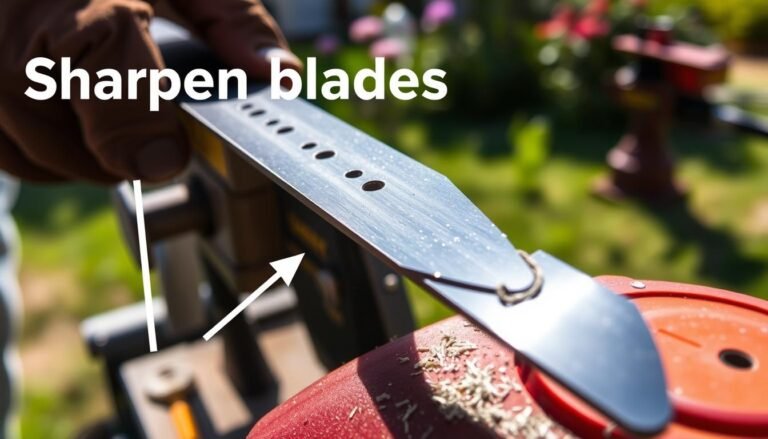
Sharpen or replace the blade
A mower blade is a wear part. Signs that it needs service include ragged grass tips, uneven cutting, vibration, and repeated overloads.
A sharp blade supports clean mowing, but balance matters too. An unbalanced blade can cause vibration. If you sharpen it yourself, remove equal material from both sides and use the correct angle from the manual.
Store the mower correctly
Store the mower in a dry garage or shed with enough room to keep the handle and deck clear. Do not block a door or walkway. Keep fuel away from heat and ignition sources.
If you are buying a mower for a senior or new homeowner, storage space matters as much as cutting width. A compact push mower may suit a small yard and narrow gate better than a larger self-propelled model.
What wears out first
Mower life depends on use, storage, climate, maintenance, and yard conditions. A small flat yard may put little strain on a mower. Thick grass, steep slopes, rocks, and long mowing seasons increase wear.

Common wear items include:
- Blades
- Batteries
- Spark plugs
- Air filters
- Belts
- Wheels
- Control cables
- Blade adapters
- Charger contacts
- Grass catcher fabric
A battery may lose capacity over years of charging cycles. That does not always mean the mower is bad. Check whether a replacement battery costs more than the value of keeping the mower.
Gas engines can last for many seasons when oil changes, air-filter care, and fuel storage are handled well. A neglected carburetor can create trouble much sooner.
Battery mower versus gas mower
The main difference between battery and gas mowers is the source of power and the service they need. Battery mowers are quieter at the point of use and avoid fuel mixing. Gas mowers can offer longer continuous use if you have fuel and a properly maintained engine.

| Mower type | Often suits | Main drawback |
|---|---|---|
| Battery push mower | Small to medium flat yards and noise-sensitive areas | Runtime depends on battery size, grass, and conditions |
| Battery self-propelled mower | Larger yards or gentle slopes where assistance helps | Uses more battery power and costs more |
| Gas push mower | Longer mowing sessions and areas without charging access | More noise, fumes, fuel care, and engine maintenance |
Neither type suits every yard. Measure the lawn, note slopes, check gate width, and confirm storage space before buying.
When a different mower may be a better fit
A Ryobi mower may be a sensible choice for homeowners who already use compatible Ryobi batteries or want a familiar outdoor tool brand. It may not be the best match for every property.
A reel mower can suit a very small, flat lawn with fine grass and frequent mowing. It needs no fuel or battery, but it requires more effort and may struggle with tall or wet turf.
A corded mower can work for a small yard close to an outlet. It needs careful cord management. A self-propelled mower may help on a larger yard or mild hill, but it adds weight, cost, and drive-system parts.
Riding mowers and zero-turn mowers suit larger properties where a walk-behind mower would take too long. They need more storage, more maintenance, and a safe operating area. Robotic mowers can reduce routine mowing work, but they require setup, boundary planning, charging space, and local rule checks.
A string trimmer, edger, or leaf blower does not replace a mower. These tools finish edges and clean paths after mowing.
Common troubleshooting mistakes
Many mower repairs become more expensive because the first step is rushed. Avoid these errors.
Forcing the blade
A stuck blade may indicate a bent part or a damaged motor. Do not use a long pipe to force it loose. Clear visible debris and arrange service if the blade does not move normally with power removed.
Using the wrong battery
A battery from another voltage family can damage equipment or create a safety hazard. Always confirm compatibility on the mower label, battery, charger, and product instructions.
Washing the mower with a hose
Water can enter switches, connectors, motor housings, and battery ports. Use a dry brush or lightly damp cloth where the manual permits.
Replacing parts without checking the model
Blades, spark plugs, belts, filters, and cables are not universal. Confirm the full model number and replacement part number.
Bypassing safety switches
A safety switch may seem like the cause of the problem, but it protects you from blade movement and loss of control. Replace a faulty switch or cable. Do not bypass it.
Mowing wet slopes
Wet grass reduces traction and can clog the deck. A slope increases the risk of slipping or losing control. Wait for safer conditions.
When to call a repair shop
A repair shop is the right choice when the fault involves fuel leaks, electrical damage, engine timing, a seized motor, a bent crankshaft, or repeated battery faults. It is also wise to seek help if you cannot safely lift or tilt the mower.
Call for service if:
- The mower smells of burning insulation.
- The battery is swollen, hot, cracked, or leaking.
- The blade spins unevenly or causes strong vibration.
- The gas tank or fuel line leaks.
- The engine has metal noise or heavy smoke.
- The mower starts only when a safety control is bypassed.
- A new battery, plug, or filter does not solve the issue.
- The mower is still under warranty.
Ask the shop whether diagnosis is included in the estimate. Give them the model number and describe the exact symptom. A short video of the starting attempt can help, but do not record with your hands near the blade.
Repair or replace?
Repair often makes sense when the mower is fairly new, the deck is solid, and the fault is a blade, plug, cable, filter, or charger. Replacement may make more sense when the deck is badly corroded, the battery and charger both need replacement, or the motor and control board have failed.
For a gift buyer, reliability and ease of storage may matter more than maximum cutting width. For a DIY owner, a serviceable gas engine or replaceable battery system may have greater value.
Safety rules to follow every time
A starting problem is never worth an injury. Use eye protection, hearing protection, closed-toe shoes, and work gloves when appropriate. Clear sticks, stones, toys, and wire from the yard before mowing.
Keep children and pets away from the mower and work area. Never mow wet grass on slopes. Remove the battery or disconnect the spark plug before servicing, clearing a jam, lifting the deck, or touching the blade.
Never refuel a hot gas engine. Let it cool outdoors before adding fuel. Store gasoline only in approved containers and follow local fire and fuel-storage rules.
Read the owner’s manual before changing oil, draining fuel, sharpening a blade, or testing electrical parts. The manual is the final source for model-specific instructions.
📜 Check Local Rules: Some HOAs and cities restrict gas-powered equipment, mowing hours, fuel storage, or outdoor noise. Confirm local ordinances before buying or using a mower.
Responsible disposal and environmental care
Do not place lithium-ion batteries in household trash or curbside recycling unless your local program specifically accepts them. Take them to a designated battery recycling site.
Old gasoline and used engine oil belong at a household hazardous-waste location or another approved collection point. Never pour them on the ground or into a storm drain.
A working mower can often be donated, sold, or repaired. Usable metal parts may be recyclable. Remove fuel and batteries according to local rules before transport.
Frequently asked questions
Q: Why will my Ryobi battery mower not start after charging?
A: Check that the battery is the correct voltage and fully seated. Confirm the safety key, handle position, and start sequence. If the charger shows a fault or the battery has damage, stop using it and arrange testing or recycling.
Q: Why does my Ryobi mower click but not start?
A: A click can point to low battery power, a jammed blade, or a motor overload. Remove the battery, clear the deck, and inspect the blade for damage. Do not keep trying to start it while the blade is blocked.
Q: Why does my Ryobi gas mower crank but not start?
A: Check fresh fuel, oil level, spark plug condition, and the air filter. Old gasoline and a dirty carburetor are common causes after storage. Follow the manual before draining fuel or cleaning the carburetor.
Q: Can I use any Ryobi battery in my mower?
A: No. Use only the battery family and voltage listed for your mower. Confirm compatibility on the mower label and in the manual. Do not force a battery that does not fit correctly.
Q: How do I clear grass from under a Ryobi mower?
A: Turn the mower off and remove the battery, or disconnect the spark plug wire on a gas model. Wear gloves and use a brush or wood tool. Never reach under the deck with power connected.
Q: Why does my Ryobi mower stop in tall grass?
A: Tall or wet grass can overload the motor. Raise the cutting height, mow more slowly, and take narrower passes. Keep the blade sharp and clean packed grass from the deck after removing power.
Q: How often should I sharpen a mower blade?
A: The timing depends on yard size, mowing frequency, soil, and contact with rocks. Inspect the blade when the grass looks torn, the mower vibrates, or cutting becomes uneven. Balance the blade after sharpening.
Q: Is a Ryobi battery mower good for hills?
A: A self-propelled model may help on gentle slopes, but a battery push mower can be difficult on steep or uneven ground. Never mow a wet slope. Check the manual’s slope guidance and local safety advice.
Q: How long does a Ryobi lawn mower last?
A: Service life depends on storage, maintenance, climate, yard conditions, and parts availability. Blades, batteries, belts, plugs, filters, and cables may wear before the deck or motor. Good care can extend useful service, but no mower lasts forever.
Q: Can I leave a Ryobi battery in the mower?
A: Follow the storage instructions for your specific model. Removing the battery after use can reduce accidental starts and makes it easier to store the battery in a dry, moderate-temperature location.
Q: Should I repair or replace my Ryobi mower?
A: Repair is often sensible for a worn blade, plug, filter, cable, or simple control issue. Replacement may be better when the deck, motor, battery, and charger all need major work. Compare the repair estimate with the cost of a compatible new mower.
Q: What should I do if my mower is under warranty?
A: Avoid opening sealed electrical parts or changing wiring. Keep the receipt, model number, battery details, and a record of the symptom. Contact the seller or authorized Ryobi service channel for current warranty instructions.
Final thoughts
The best way to fix a Ryobi lawn mower that will not start is to move from simple checks to deeper repairs. Confirm the power source, safety controls, blade area, fuel, oil, spark, and air in that order. Stop when you find damaged wiring, a swollen battery, a fuel leak, severe vibration, or a fault that requires bypassing a safety device.
For a small, flat yard, a battery push mower may offer simple routine care and lower operating noise. For hills or longer mowing sessions, a self-propelled model or a properly maintained gas mower may be a better fit. Measure your yard, check storage space and gate width, and verify every battery and replacement part before buying.
Affiliate disclosure: This article may contain affiliate links. If you buy through one of those links, the publisher may earn a commission at no extra cost to you. Product compatibility, current features, prices, and warranty terms can change, so confirm details on the manufacturer’s product page and in the owner’s manual.


One Comment