What Is E10 Gas For A Lawn Mower: Safe Fuel Guide
E10 gas is regular gasoline blended with up to 10% ethanol. It is the fuel sold at many gas stations for cars, trucks, and outdoor power equipment. For most modern lawn mowers, E10 works well when it is fresh, stored correctly, and used as the owner’s manual allows.
Still, lawn mower engines are small and often sit for weeks between cuts. That makes fuel age, moisture, storage, and the right oil mix more important than they are in a daily-driven car. A first-time homeowner may wonder why a mower is hard to start after winter. A DIY user may want to know whether E10 harms carburetors. A gift buyer may simply want to avoid giving someone the wrong fuel.
This guide explains what E10 means, how it works in push mowers and riding mowers, when to use it, when to avoid it, and how to store it with less trouble. It also covers E10 versus ethanol-free gas, E10 versus E15, fuel stabilizer, cold weather, hot weather, local rules, and safe disposal.
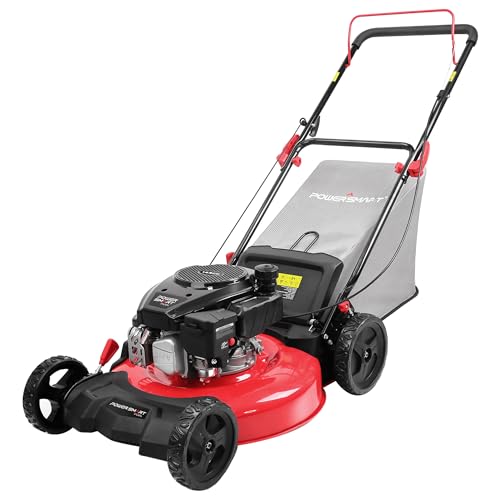
Quick answer: E10 is gasoline with up to 10% ethanol
E10 gas contains up to 10% ethanol and at least 90% gasoline. Most modern four-stroke lawn mowers are designed to run on fresh E10, but you should confirm the fuel grade and ethanol limit in the owner’s manual.
E10 is not the same as E15, E85, or two-stroke fuel. Use regular unleaded E10 only if your mower maker permits it. Keep the fuel fresh, use a stabilizer when the mower will sit, and never pour straight gasoline into an engine that needs a gasoline-and-oil mix.

What does the “10” in E10 mean?
The “E” means ethanol. The “10” means the blend can contain up to 10% ethanol by volume. Ethanol is an alcohol made from plant materials such as corn and other crops.
A gallon of E10 may contain as much as 0.1 gallon of ethanol and about 0.9 gallon of gasoline. The exact blend can vary by fuel supplier and season. The pump label and your mower manual are the best sources for the fuel sold in your area.
Is E10 regular gasoline?
In most areas, E10 is sold as regular unleaded gasoline. It often has an octane rating of 87, but the octane number can vary. Octane measures resistance to engine knock. It does not tell you whether fuel contains ethanol.
A mower that calls for regular unleaded gasoline will often accept E10. A mower that requires premium fuel, ethanol-free fuel, or a special two-stroke mix needs different care. Read the fuel label and manual instead of guessing.
How E10 works in a lawn mower engine
E10 burns in the same basic way as other gasoline blends. The carburetor or fuel-injection system sends fuel to the engine, where it mixes with air, compresses, and burns to create power.
A small amount of ethanol can help raise octane. It can also act as an oxygen-bearing part of the fuel blend. Yet ethanol has different storage behavior from gasoline. It can attract moisture from the air, and old fuel may create more problems in a mower than in a car that gets driven every day.

Four-stroke mowers and E10
Most walk-behind push mowers, self-propelled mowers, riding mowers, and zero-turn mowers use four-stroke engines. These engines keep gasoline in the fuel tank and engine oil in a separate crankcase.
For these mowers, E10 normally goes into the gas tank by itself. Do not mix engine oil into the fuel unless the manual specifically calls for it. Instead, check the engine oil level before use and change the oil on the schedule listed by the manufacturer.
Four-stroke mower types that may use E10 include:
- Push mowers
- Self-propelled mowers
- Riding mowers
- Zero-turn mowers
- Some riding lawn tractors
- Some portable outdoor power equipment
Two-stroke equipment needs special attention
Some older string trimmers, edgers, leaf blowers, chainsaws, and a few older mowers use two-stroke engines. These engines need gasoline mixed with two-stroke oil or a pre-mixed fuel made for two-stroke equipment.
E10 may be allowed in some two-stroke engines, but the fuel must have the correct oil ratio. A common ratio may be 50:1, but never assume. The wrong ratio can cause poor running, excess smoke, piston damage, or a seized engine.
If you are buying fuel for a senior family member or a new homeowner, check whether the equipment is four-stroke or two-stroke first. A marked fuel can and a clear label can prevent a costly mistake.
Carburetors, fuel lines, and seals
Ethanol can affect some older rubber parts, plastic parts, gaskets, and fuel lines. Many newer mowers use materials made to handle approved ethanol blends. Older equipment may not.
E10 does not automatically ruin every carburetor. Problems often come from stale fuel, water contamination, a clogged fuel passage, or a fuel line that has aged. The blend can make those problems more likely when equipment sits for long periods.
E10 and mower fuel systems at a glance
The table below shows how E10 may affect common mower parts. It is a guide, not a replacement for the engine manual.
| Mower part | What E10 may do | What helps |
|---|---|---|
| Fuel tank | Holds approved E10 in most modern mowers | Keep the cap tight and use fresh fuel |
| Carburetor | Old fuel may leave varnish or gum | Run fresh fuel and clean the carburetor when needed |
| Fuel lines | Older materials may soften or crack | Inspect lines and use approved replacement parts |
| Fuel filter | Debris and stale fuel may clog it | Replace it on the maker’s schedule |
| Spark plug | Poor fuel can cause deposits or hard starts | Inspect or replace it as the manual states |
Fresh fuel and good storage usually matter more than the word “ethanol” alone. A mower can run well on E10 and still fail after months of neglected fuel.
E10 compared with other lawn mower fuels
The main difference between E10 and other mower fuels is the ethanol content and the way the fuel handles storage. E10 is common and often costs less. Ethanol-free fuel can offer easier long-term storage, while E15 and E85 are not safe choices for many small engines.

E10 versus ethanol-free gasoline
Ethanol-free gasoline contains no added ethanol. It is often sold as recreational fuel or small-engine fuel, though availability differs by state and station. It may cost more, but it can be useful for equipment that sits for long periods.
Ethanol-free fuel is worth considering for:
- A seasonal riding mower
- A backup mower used only a few times
- A snowblower or generator stored for months
- An older machine with fuel-system concerns
- A mower kept in a hot shed or detached garage
Ethanol-free gas still goes bad. It can still collect dirt, lose quality, or become contaminated by water. It is not a reason to ignore fuel rotation or the owner’s manual.
E10 versus E15
E15 contains up to 15% ethanol. It may be approved for some cars and light-duty vehicles, but many small-engine makers warn against using it in lawn mowers and other outdoor power equipment.
Do not assume that a higher ethanol blend is better because it may have a similar octane number. The fuel system, seals, carburetor, and engine design all matter. If the manual says not to use E15, follow that instruction.
E10 versus E85
E85 contains a much higher share of ethanol, often between 51% and 83%, depending on the season and region. It is made for flexible-fuel vehicles, not normal lawn mower engines.
Never use E85 in a standard push mower, riding mower, zero-turn mower, string trimmer, or leaf blower unless the manufacturer clearly approves it. A mower that will not start after E85 is added may need the tank drained and the fuel system serviced.
E10 versus pre-mixed fuel
Pre-mixed fuel is gasoline already blended with two-stroke oil. It is sold in small cans for compatible two-stroke tools. It is not the same as E10 sold at a car fuel pump.
A four-stroke mower does not need pre-mixed fuel. A two-stroke trimmer may need it. Check the label before pouring fuel into the tank.
Fuel type comparison
This chart gives a simple starting point. Always check the exact engine model and manual before buying fuel.
| Fuel type | Typical use | Lawn mower guidance |
|---|---|---|
| E10 | Cars and many modern small engines | Usually acceptable when the manual allows it |
| Ethanol-free gasoline | Seasonal or older equipment | Useful for storage, but still needs care |
| E15 | Some approved vehicles | Avoid unless the mower maker allows it |
| E85 | Flexible-fuel vehicles | Do not use in a standard mower |
| Two-stroke premix | Compatible two-stroke tools | Use only at the correct oil ratio |
The safest choice is the fuel type printed in the manual. Fuel color, price, and octane alone do not identify the correct product.
Benefits and drawbacks of E10 for lawn mowers
E10 is popular because it is widely available and often works in modern four-stroke mower engines. Its main weakness is storage. A mower used every week may have fewer fuel issues than one that sits all winter.

Benefits of E10
E10 can be a practical choice for many homeowners. Its benefits include:
- Easy availability at many gas stations
- Use in many modern four-stroke engines
- Regular-octane options for common mowers
- Often lower cost than specialty fuel
- No need for a separate fuel source when used often
For a small, flat yard, a basic push mower may use very little fuel. If you mow every week during the growing season, a small can of fresh E10 may be used before it has time to age.
Drawbacks of E10
E10 also has limits. It can create more risk when fuel sits in a vented container, a hot shed, or a mower through a long winter.
Possible drawbacks include:
- It can attract moisture
- Old fuel may form deposits
- Phase separation can occur after water contamination
- It may stress some older fuel-system parts
- It can cause hard starts after long storage
- It may have a shorter practical storage life than fresh ethanol-free fuel
Phase separation happens when water causes the ethanol and gasoline to separate. The heavier water-and-ethanol layer can settle at the bottom of the tank. An engine may then draw that layer first, which can lead to rough running or failure to start.
Pros and cons of E10
The table below sums up the main tradeoff. E10 is convenient, but convenience does not remove the need for clean storage.
| Pros | Cons |
|---|---|
| Widely available | Can absorb moisture |
| Often works in modern mowers | Stale fuel may clog small passages |
| Usually suitable for regular-octane engines | May be less suitable for long storage |
| Often costs less than specialty fuel | Can trouble older fuel-system parts |
E10 usually suits an owner who mows often and buys small amounts of fresh fuel. It may not suit someone who uses a mower only a few times each year.
💡 Pro Tip: Buy only enough fuel for about 30 days of normal use when possible. Smaller purchases reduce the chance that a half-full can sits through the whole winter.
How long E10 lasts in a lawn mower
Fresh E10 is best used promptly. There is no single storage time that fits every climate, container, mower, or fuel brand. Heat, sunlight, moisture, air space in the can, and contamination can all shorten fuel life.
Many fuel stabilizer makers state that treated fuel can last much longer than untreated fuel, but the product label is the authority. Stabilizer does not restore fuel that is already badly stale or water-contaminated.
In the mower tank
Fuel in a mower tank may remain usable for a short period when the tank is clean, the cap is secure, and the mower is stored in a cool, dry place. A mower used weekly cycles fuel through the system faster than a mower used once a month.
Before spring mowing, check for:
- A sour or varnish-like odor
- Dark or cloudy fuel
- Water at the bottom of a clear fuel sample
- Hard starting
- Surging or hunting
- Stalling under load
- A clogged fuel filter
Do not taste fuel or smell it closely. Use normal caution and work in a well-ventilated place away from flames.
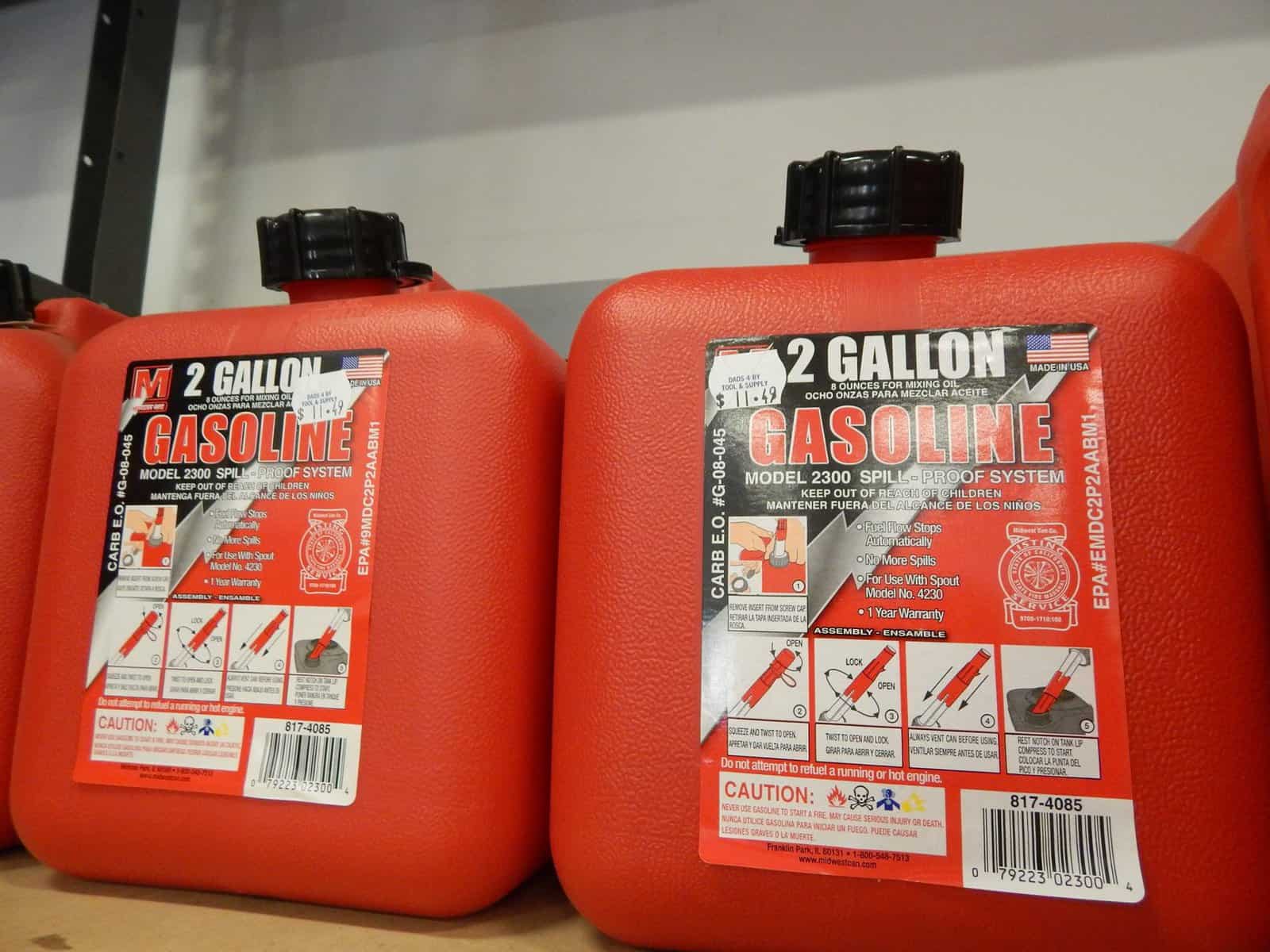
In a portable gas can
A certified, tightly closed fuel can protects fuel better than an open container. Keep the can out of direct sunlight and away from furnaces, pilot lights, electrical sparks, and living areas.
Do not store gasoline in a thin drink bottle or an unmarked container. Children, guests, and gift recipients may mistake it for water or another liquid. Follow local rules for the amount of fuel allowed in a garage or shed.
Fuel stabilizer
Fuel stabilizer can slow oxidation and help protect fuel during storage. Add it to fresh gasoline in the correct amount. Then run the mower long enough for treated fuel to reach the carburetor or fuel system.
Stabilizer is not a magic repair product. It cannot fix water-contaminated fuel, a clogged carburetor, a bad spark plug, or a cracked fuel line.
E10 storage checklist
Use this short checklist before storing a mower for more than a few weeks.
| Storage step | Why it matters | Good practice |
|---|---|---|
| Use fresh fuel | Old fuel may form deposits | Fill from a clean, known source |
| Add stabilizer | May slow fuel aging | Follow the bottle label |
| Run the engine | Moves treated fuel through the system | Follow the mower manual |
| Close the fuel cap | Limits moisture and vapor loss | Check that the cap seals |
| Store in a cool place | Heat speeds fuel aging | Avoid sun and hot metal sheds |
The correct winter method differs by engine. Some manuals advise running the tank dry. Others advise storing with treated fuel. Follow the instructions for your engine model.
The right way to use E10 in a mower
The best way to use E10 is to buy fresh regular unleaded fuel, confirm that the mower allows up to 10% ethanol, and keep the fuel system clean. Never mix fuel types without understanding what is already in the tank.

Step 1: Read the owner’s manual
Find the fuel section in the manual or search the engine model on the manufacturer’s official website. Confirm:
- Maximum ethanol content
- Minimum octane rating
- Whether fuel stabilizer is recommended
- Whether the tank should be drained for storage
- Whether the engine is four-stroke or two-stroke
- The correct oil type and change interval
If the manual is missing, look for the engine model and serial information on the mower. Do not rely on a random online comment when the fuel instruction is unclear.
Step 2: Buy the right fuel
Use a clean, approved fuel can. Check the pump label for regular unleaded gasoline and the ethanol percentage when listed.
Avoid fuel that has been sitting in an unknown can. Do not buy more than you can use in a reasonable time. A small push mower for a 2,000-square-foot yard needs far less fuel than a 54-inch zero-turn mower used on several acres.
Step 3: Check the mower before filling
Turn the mower off and let the engine cool. Place it on a stable, level surface. Keep cigarettes, flames, heaters, and tools that can spark away from the fuel.
Inspect the tank, cap, fuel line, and filter area. If you see a leak, cracked line, or wet fuel stain, do not start the mower until the problem is fixed.
Step 4: Fill without overfilling
Remove the fuel cap slowly. Pour carefully and leave room for fuel expansion. Do not fill to the top of the neck unless the manual says to do so.
Wipe up spills at once. Keep fuel off the mower deck, belts, tires, skin, and clothing. Close the can and tank when finished.
Step 5: Use stabilizer for storage
If the mower will sit, add stabilizer to fresh fuel before filling or according to the stabilizer instructions. Run the engine so the treated fuel reaches the carburetor.
Some engines have a fuel shutoff valve. If the manual recommends using it, close the valve before storage. Never use a storage method that conflicts with the mower maker’s instructions.
E10 in different climates and yard conditions
Climate changes how quickly fuel ages and how hard a mower may be to start. Hot sheds, humid air, cold winters, and wet mowing conditions all call for extra care.
Hot and humid weather
Heat speeds fuel evaporation and aging. Humid air adds more moisture risk when a tank or gas can has a loose cap. A dark metal shed can become much hotter than outdoor air.
Store fuel in a cool, shaded, well-ventilated place that meets local fire rules. Do not keep gasoline beside a water heater, furnace, charger, or other heat source.
Cold weather and winter storage
Cold weather can expose a fuel problem that began months earlier. A mower may crank but fail to start because old fuel has restricted the carburetor or because the spark plug is fouled.
Before winter, clean grass from the deck and air intake. Follow the manual for fuel draining, stabilizer, battery care, and oil changes. Store a battery mower’s battery in the temperature range listed by the maker; do not assume gas-mower storage rules apply.
Wet grass and hilly lawns
E10 does not make wet grass safe to mow. Wet grass can clog the deck, reduce traction, and increase the risk of slipping. Never mow wet grass on a slope.
For a hilly lawn, choose equipment based on slope, traction, and operator strength. A self-propelled mower may help on moderate slopes, but it does not remove the need for safe footing. Riding mowers and zero-turn mowers have special slope limits listed in their manuals.
Small yards and frequent mowing
A small, flat yard often suits a lightweight push mower, battery mower, reel mower, or corded mower. A push mower may use so little fuel that a small amount of fresh E10 is easier to manage than a large can.
A battery mower avoids gasoline storage, but it needs a charged battery and safe charging space. A corded mower avoids fuel too, but the cord can limit reach and require careful handling around trees and flower beds.
Common E10 problems and what they mean
Hard starting after storage is often linked to stale fuel, a dirty carburetor, a weak spark, or a restricted air filter. E10 may contribute when moisture or age affects the fuel, but it is not the only possible cause.

Problem and solution table
Use the symptoms below as a first check. Disconnect the spark plug wire or remove the battery before servicing moving parts, as the manual directs.
| Symptom | Likely cause | First safe check |
|---|---|---|
| Engine will not start | Old fuel, no fuel flow, weak spark | Check fuel age, cap, and spark plug |
| Engine surges | Restricted carburetor or air leak | Inspect the air filter and fuel system |
| Engine stalls after a few seconds | Blocked fuel passage or bad fuel | Check fuel quality and fuel flow |
| Strong fuel smell | Spill, flooding, or leak | Stop and inspect before restarting |
| Rough running under load | Dirty air filter, dull blade, or fuel issue | Check filter, blade, and fuel |
| White or cloudy fuel | Water contamination | Stop using it and drain safely |
When stale E10 is the likely cause
Old fuel may smell sharp or sour. It may look darker than fresh fuel. The mower may start with choke, then stall when the choke is moved to run.
A dirty carburetor can have similar symptoms. If fresh fuel does not help, the mower may need carburetor cleaning, a new fuel filter, a spark plug, or professional service.
What not to do
Do not keep pulling the starter for minutes while raw fuel enters the engine. Do not spray large amounts of starting fluid into a mower. Do not burn or pour old gasoline onto soil, gravel, a drain, or a compost pile.
Do not guess at carburetor adjustments if the manual does not explain them. A repair shop can test fuel flow, compression, ignition, and governor operation.
🔧 Quick Fix: If a mower ran well before storage but now will not start, check the fuel age, air filter, spark plug, and fuel shutoff before buying a new mower. A simple maintenance issue may be the real cause.
Is E10 worth using in a lawn mower?
E10 is worth using for many homeowners because it is common, affordable, and approved by many modern mower engines. It suits people who mow often and can use fresh fuel before it ages.
Ethanol-free gasoline may be worth the extra cost for seasonal equipment, older engines, or owners who want simpler long-term storage. The choice depends on fuel availability, mower age, use pattern, climate, and storage space.

Best fuel choice by user and yard
There is no single fuel choice for every lawn. Use this guide to match the fuel plan to the user and yard.
| User and yard | Practical fuel approach | Why it fits |
|---|---|---|
| New homeowner with a small flat yard | Fresh E10 in small amounts | Easy to find and often enough for frequent mowing |
| Senior using a push mower weekly | Fresh approved fuel with a clear storage routine | Simple handling reduces confusion |
| DIY owner with an older mower | Check the manual; consider ethanol-free fuel | May reduce storage and material concerns |
| Large yard with a riding mower | Fresh fuel, stabilizer, and a clean approved can | Higher fuel use makes rotation important |
| Seasonal cabin owner | Ethanol-free or stabilized fuel | Equipment may sit for long periods |
| Hilly yard owner | Follow fuel rules plus slope limits | Fuel choice cannot solve traction or rollover risk |
The best choice for a gift buyer is often not the cheapest gallon. It is a safe, clearly labeled fuel plan that matches the mower and the recipient’s storage space.
How fuel choice affects the mower budget
E10 may lower the cost per gallon, but a fuel-related repair can cost much more than the savings. Good storage, regular air-filter care, sharp mower blades, and fresh oil often matter more to the total cost of ownership.
For a small lawn, a battery mower may cost more at first but remove gasoline storage and spark plug changes. For several acres, a gas riding mower may still make sense because of cutting width, refueling speed, and long work sessions.
E10 safety rules every mower owner should follow
Gasoline safety matters more than convenience. A mower, gas can, and garage can create fire risk if fuel spills, vapors collect, or the engine is refueled while hot.

Fuel and mowing safety
Follow these basic rules:
- Wear safety glasses, hearing protection, gloves, and closed-toe shoes.
- Clear sticks, stones, toys, and wire from the lawn before mowing.
- Keep children and pets away from the mower and fuel.
- Never refuel a hot engine.
- Refuel outdoors or in a well-ventilated area.
- Keep fuel away from flames, heaters, and sparks.
- Never smoke while handling gasoline.
- Disconnect the spark plug wire or remove the battery before servicing.
- Never mow wet grass on slopes.
- Follow the owner’s manual and local fuel rules.
Hearing protection is useful even when a mower does not seem loud. Repeated exposure to engine noise can harm hearing. Eye protection helps shield against grass, gravel, and broken debris.
Fuel can safety
Use an approved gasoline container with a secure cap. Keep it upright and label it clearly. Never store fuel in a food or drink container.
Do not leave a gas can in a vehicle. Heat can raise vapor pressure. Transport fuel only as allowed by local fire rules and the container maker.
⚠️ Safety Warning: Never refuel a hot mower. Shut it off, move it away from the cutting area, and allow the engine to cool before opening the tank.
Local rules and environmental care
Some cities, states, and HOAs restrict gas-powered lawn equipment, work hours, noise, or fuel storage. Rules may apply to push mowers, riding mowers, string trimmers, edgers, and leaf blowers.
[📜 Check Local Rules: Confirm gas-equipment limits, noise ordinances, HOA rules, and fuel-storage laws with your city, county, fire department, or HOA before buying equipment or storing gasoline.]
Take old gasoline and oil to a household hazardous-waste site or an approved collection center. Do not pour them down a drain or onto the ground. Recycle lithium-ion batteries at designated battery drop-offs, and donate or recycle usable mowers when replacement makes more sense than repair.
How E10 fits with mower maintenance
Fuel is only one part of lawn mower care. A dull blade can make the engine work harder. A dirty air filter can restrict airflow. Old oil can reduce engine protection. Poor maintenance may look like a fuel problem.
Routine maintenance checklist
Use the mower manual for exact intervals. The checklist below covers common service points.
| Maintenance item | What to check | Why it matters |
|---|---|---|
| Mower blade | Sharpness, bends, cracks | Supports cleaner cutting and lower strain |
| Air filter | Dirt, oil, damage | Helps the engine get clean air |
| Spark plug | Wear, deposits, gap | Supports reliable ignition |
| Engine oil | Level, color, change interval | Protects four-stroke engine parts |
| Fuel line | Cracks, softness, leaks | Helps prevent fuel loss and fire risk |
| Deck | Packed grass and rust | Supports airflow and safe operation |
| Battery | Charge and terminal condition | Helps electric starting systems |
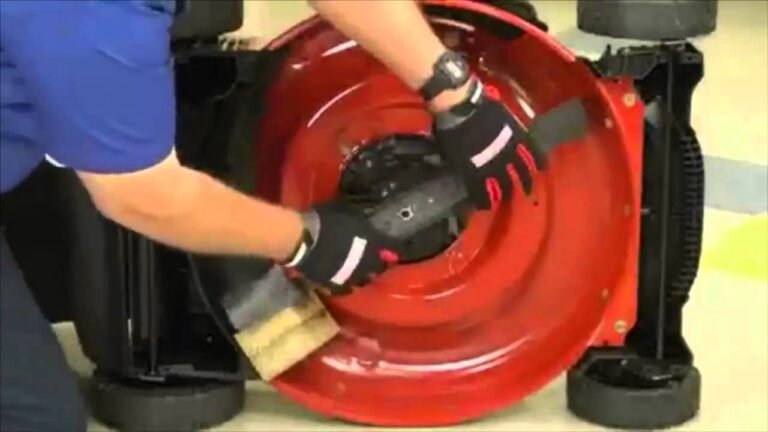
Clean the underside of the deck only with the engine off and the spark plug wire disconnected or battery removed. Never place hands near a blade unless the mower is fully disabled and the manual’s service steps are followed.
Blade care and fuel use
A sharp blade can help the mower cut grass without excessive strain. A dull or bent blade may cause rough cutting, torn grass, vibration, or slower work. It does not turn E10 into a better fuel, but it can affect how the engine feels under load.
Balance a sharpened blade and tighten it to the manual’s torque requirement when listed. Replace a cracked or badly bent blade instead of trying to reshape it.
Air filters and spark plugs
A dirty air filter can make the engine run rich, which means too much fuel for the available air. A worn spark plug can make starting difficult. Both problems may be blamed on E10 when the fuel is not the main issue.
Replace filters and plugs with the correct part numbers. Confirm the plug type, gap, filter shape, and engine model before ordering. Product listings can change, so compare the part number with the manual and the maker’s current page.
Alternatives to gas mowers and E10
E10 is not the only path to lawn care. Battery, corded, reel, robotic, and manual options may suit some yards better. The right choice depends on lot size, grass type, terrain, gate width, storage, noise limits, and budget.

Battery electric mowers
Battery mowers use rechargeable lithium-ion battery packs. Voltage describes the electrical system, while amp-hours, or Ah, describe battery capacity. A higher Ah rating often means more stored energy within a compatible system, but actual runtime depends on grass height, moisture, blade condition, speed, and terrain.
Battery mowers suit small to medium yards where charging space is available. They can be a good fit for seniors who prefer no fuel handling and for neighborhoods with gas-equipment rules. Check battery compatibility, charger type, deck width, replacement battery cost, and storage temperature.
Corded electric mowers
Corded mowers can suit small, flat yards near a safe outdoor outlet. They do not need E10, oil, or fuel storage. The cord can be a major limit around trees, fences, beds, and slopes.
Never mow over the cord. Use the correct outdoor-rated extension cord and follow the mower maker’s instructions.
Reel mowers
A manual reel mower uses a cylinder of blades and human power. It can suit a small, flat yard with frequently cut fine turfgrass. It is quiet and has no fuel system, battery, or motor.
Reel mowers are less suitable for tall grass, rough ground, thick weeds, and large lawns. They also need a sharp, correctly adjusted cutting reel.
Robotic mowers
Robotic mowers use programmed schedules and boundary systems. They may suit a regularly maintained yard with suitable terrain, clear boundaries, and a safe place for the charging station.
They cost more than basic push mowers and need setup, boundary planning, and regular blade changes. They are not a simple answer for every slope, yard shape, or region.
Choosing an alternative by yard
A mower alternative should match the actual lawn, not just the fuel concern.
| Yard condition | Option to consider | Main limitation |
|---|---|---|
| Small, flat yard with nearby outlet | Corded mower | Cord management |
| Small yard with quiet-use needs | Reel or battery mower | Less suited to tall or wet grass |
| Small to medium yard with storage space | Battery mower | Battery and charger cost |
| Large lawn or several acres | Gas riding or zero-turn mower | Fuel, noise, and maintenance |
| Regularly cut enclosed lawn | Robotic mower | Setup and terrain limits |
For a senior or first-time homeowner, simple controls, manageable weight, easy blade access, and local service support may matter more than maximum cutting width.
Common E10 misconceptions
Many fuel myths come from a real problem that was explained too broadly. E10 can create storage challenges, but it is not automatically harmful to every lawn mower.

“E10 always damages small engines”
This is too broad. Many modern small engines are designed to use approved gasoline blends containing up to 10% ethanol. The manual sets the limit for that engine.
Older equipment, poor storage, and stale fuel can raise the chance of trouble. Inspect the fuel system and use the approved fuel instead of blaming every issue on ethanol.
“Premium gas is always better”
Premium fuel has a higher octane rating. That does not make it automatically better for an engine designed for regular gas. Use the octane listed in the manual.
Higher octane cannot clean a clogged carburetor or repair a cracked fuel line. It also does not replace fresh fuel and proper storage.
“Fuel stabilizer makes old gas new”
Stabilizer helps protect fresh fuel during storage. It does not reliably restore fuel that has separated, become cloudy, or formed heavy deposits.
If fuel is badly stale, drain it into an approved container and take it to a hazardous-waste collection site. Do not dump it outdoors.
“Run the tank dry every time”
Some manuals recommend draining or running the engine dry for storage. Other manuals recommend leaving treated fuel in the system. The correct method depends on the engine and fuel system.
Read the manual. Running an engine dry while tipping or moving a mower can also create unsafe conditions.
“A full tank is always safer for storage”
A full tank may reduce air space in some storage situations, but it can also leave old fuel in the system for months. The manual’s storage method matters more than a general rule.
Keep the cap secure, use stabilizer if directed, and inspect for leaks before storage.
Questions beginners and mower owners ask
Q: Can I use E10 gas in my push mower?
A: Most modern four-stroke push mowers allow gasoline containing up to 10% ethanol, but confirm the limit in the owner’s manual. Use fresh regular unleaded fuel if that is the listed grade. Do not add two-stroke oil unless the engine requires a fuel-and-oil mix.
Q: Can I use E10 in a self-propelled mower?
A: Usually, if the self-propelled mower has a modern four-stroke engine and the manual allows up to 10% ethanol. The self-propelled drive system does not change the fuel requirement. Check the engine label and manual.
Q: Is E10 safe for a riding mower?
A: Many riding mowers use approved E10 gasoline. Because riding mowers often hold more fuel and may sit between seasons, use fresh fuel and follow the manufacturer’s storage plan. Check the manual before using E15 or ethanol-free fuel.
Q: Can E10 damage a lawn mower carburetor?
A: Old or contaminated E10 can contribute to deposits, restricted passages, and hard starting. E10 does not automatically damage every carburetor. Fresh fuel, a sealed tank, stabilizer, and regular use can reduce storage problems.
Q: Should I use ethanol-free gas in my lawn mower?
A: Ethanol-free gas can be useful for older equipment, seasonal machines, or long storage. It may cost more and still needs proper storage. Use it only if the fuel grade and octane meet the manual’s requirements.
Q: Can I mix E10 with ethanol-free gasoline?
A: In many standard gasoline engines, mixing approved gasoline types does not create an immediate problem. However, avoid mixing fuels if the manual gives a special instruction, and do not use the mixture to justify E15 or E85 use. Keep the blend fresh.
Q: How do I know if E10 fuel has gone bad?
A: Signs include a sour odor, dark color, cloudiness, hard starting, surging, stalling, and poor response under load. Do not taste fuel. If you suspect water or phase separation, stop using it and dispose of it through an approved hazardous-waste program.
Q: Can I leave E10 in my mower over winter?
A: Only use the storage method listed in the manual. It may call for treated fuel, draining the tank, or running the carburetor dry. Never leave untreated fuel for a long off-season without checking the manufacturer’s instructions.
Q: Does E10 make a mower use more fuel?
A: Ethanol contains less energy per gallon than pure gasoline, so fuel economy can differ. In a lawn mower, the real result also depends on grass height, blade condition, mowing speed, terrain, and engine load. Do not change fuel grade without checking the manual.
Q: Can I use E10 in a two-stroke string trimmer?
A: Only if the trimmer maker allows the ethanol percentage and you mix the fuel with the correct two-stroke oil ratio. Many users choose labeled premix to reduce measuring errors. Never put straight E10 into a two-stroke engine that needs oil in the fuel.
Q: What fuel is best for a mower that sits for months?
A: Follow the manual. Fresh fuel with the correct stabilizer or approved ethanol-free gasoline may suit seasonal storage, but no fuel remains perfect forever. Drain or dispose of old fuel safely before restarting.
Q: Is E10 safe in a hot garage?
A: Gasoline storage in a hot garage can raise vapor and fire risks. Keep approved containers closed, upright, shaded, and away from ignition sources. Check local fire rules for allowed storage amounts and locations.
Q: Does E10 affect battery or electric mowers?
A: No. Battery and corded electric mowers do not use gasoline. They have different concerns, such as battery compatibility, charging temperatures, cord safety, and battery recycling.
Q: When should I call a mower repair shop?
A: Call a repair shop for a fuel leak, repeated stalling after fresh fuel, severe surging, a damaged tank, suspected phase separation that will not clear, or a mower that still will not start after basic checks. Stop using equipment with a strong fuel smell or visible leak.
Q: How long does a lawn mower last if I use E10?
A: Service life depends on engine design, mowing hours, cleaning, oil changes, storage, blade care, and repairs. E10 alone does not determine how long a mower lasts. Proper maintenance and correct storage can help protect the fuel system and engine.
Final advice for using E10 in a lawn mower
E10 is gasoline blended with up to 10% ethanol, and it is a practical fuel for many modern lawn mowers. It usually suits homeowners who mow often, buy fresh fuel, and follow the mower maker’s fuel and storage instructions.
The key is not to treat E10 as harmless in every situation or dangerous in every situation. Fresh fuel, a tight cap, clean fuel lines, a good air filter, a sound spark plug, and safe storage all matter. E10 may be a sensible choice for a small push mower, a self-propelled mower, or a riding mower, but ethanol-free fuel may be easier for equipment that sits for long periods.
Before you buy fuel, confirm the ethanol limit, octane, engine type, oil requirement, and storage method in the manual. Measure your yard, consider slope and mowing frequency, and check local noise and fuel rules. For a gift buyer, include a labeled approved gas can, safety glasses, hearing protection, and a simple maintenance reminder rather than handing over an unknown fuel container.
Affiliate disclosure: This article may contain affiliate links. If you buy a product through one of these links, the publisher may earn a commission at no extra cost to you. Product prices, availability, specifications, and compatibility can change, so confirm current details on the manufacturer’s page and in the owner’s manual before purchasing.